
Key Takeaways
-
Hormone therapy (MHT) is the gold standard for menopausal night sweats, with 80%+ of women experiencing symptom relief using low-to-moderate doses, significantly outperforming unproven alternatives.
-
Peptide therapy has no clinical evidence for treating menopausal night sweats directly and should not be used as a replacement for hormone therapy, though peptides may support related sleep and energy issues.
-
Not everyone qualifies for hormone therapy; those with certain cancers, blood clots, or liver disease need alternative treatments like fezolinetant (FDA-approved nonhormonal option) or lifestyle modifications.
-
Night sweats result from vasomotor symptoms caused by hormonal shifts, but other conditions like thyroid disorders, infections, and medications can trigger them, so medical evaluation is essential before assuming menopause.
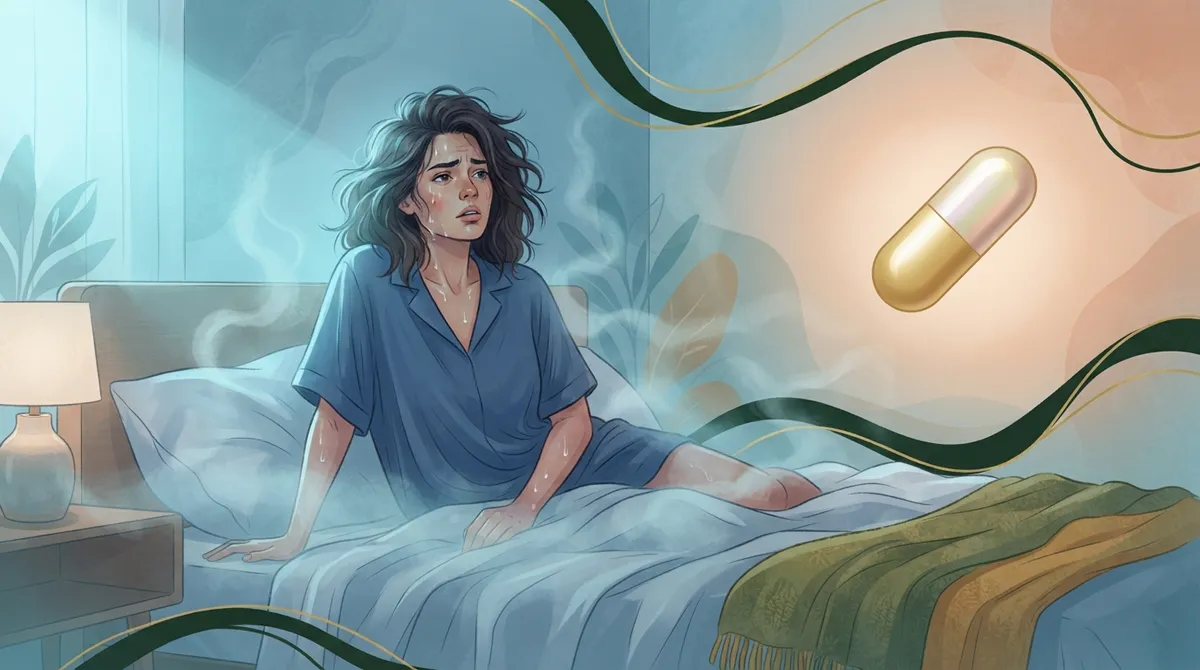
Waking up drenched at 3 a.m. is nobody’s idea of a good night. If you’re in perimenopause or menopause, night sweats can feel like they’re running the show, wrecking your sleep and leaving you exhausted before your day even starts. The good news? You have real options, and understanding them clearly can help you sleep soundly again.
This guide breaks down what actually works for menopausal night sweats, where hormone therapy fits in, and where peptide therapy realistically stands today. We’ll keep things simple and honest, because you deserve straight answers, not hype. Whether you’re a busy professional who can’t afford another sleepless night, a wellness seeker exploring your options, or someone just trying to feel like yourself again, this article is for you. Let’s get into the five key facts everyone should know before making a decision.

1. Night Sweats Are a Vasomotor Symptom, Not Just an Inconvenience
Night sweats fall into a category doctors call vasomotor symptoms, or VMS. These are sudden waves of heat, flushing, and sweating that happen because your body’s temperature control system gets thrown off balance during hormonal shifts. Menopause is the most common cause, but it’s not the only one.
If you’re having new or unusually intense night sweats, it’s worth getting checked out. Thyroid issues, infections, certain medications, and other conditions can also trigger sweating at night. A clinician can help rule out other causes before assuming it’s simply menopause. This kind of individualized evaluation is exactly what you’ll get when you request a consultation with a licensed provider who reviews your full health picture.
Common Triggers Beyond Menopause
- Thyroid disorders affecting metabolism
- Certain antidepressants or blood pressure medications
- Low blood sugar episodes overnight
- Infections or chronic inflammatory conditions
- Anxiety or high stress levels

2. Hormone Therapy Remains the Most Effective Proven Treatment
Let’s be clear about the research here. Menopausal hormone therapy, often called MHT, is still considered the gold standard for treating bothersome night sweats and hot flashes. This typically means estrogen alone for women without a uterus, or estrogen combined with a progestogen for those who still have one.
According to the 2025 International Menopause Society recommendations, low-to-moderate-dose MHT eases vasomotor symptoms in more than 80% of postmenopausal women. That’s a huge number. A 2025 Korean Society of Menopause guideline summary reported similar results, with standard-dose MHT reducing symptoms by around 75%, and low-dose regimens cutting them by about 65%.
| Treatment Type | Reported Symptom Reduction | Best Candidate Profile |
|---|---|---|
| Standard-dose MHT | ~75% | Symptomatic, under 60, within 10 years of menopause |
| Low-dose MHT | ~65% | Those preferring a gentler hormonal approach |
| Nonhormonal options (e.g., fezolinetant) | Varies by individual | Those unable or unwilling to use hormones |
These numbers are guideline estimates, not guarantees. Your results depend on your personal health history, timing, and how your body responds. That’s why individualized evaluation matters so much, and why working with a knowledgeable provider beats guessing on your own.
3. Peptide Therapy Has Not Been Proven to Treat Menopausal Night Sweats
Here’s where we need to be completely transparent with you. Despite what you might see floating around online, there is currently no peptide approved or clinically proven to treat menopausal night sweats specifically. No reliable research supports peptide therapy as a direct replacement for hormone therapy when it comes to vasomotor symptoms like night sweats and hot flashes.
This doesn’t mean peptide therapy lacks value. It just means it plays a different role. Peptides are short chains of amino acids that act as messengers in your body, and you can learn more about how they work in this overview of what are peptides. Some peptides are well studied for things like energy, sleep quality, muscle recovery, and metabolic support. But claiming a peptide can replace estrogen for night sweats isn’t backed by solid evidence, and you deserve to know that upfront.
What Peptides Can Realistically Help With During Menopause
- Supporting deeper, more restorative sleep patterns
- Helping with energy levels that dip during hormonal transitions
- Assisting with metabolism and body composition changes
- Supporting skin elasticity and collagen production
- Helping with muscle recovery as activity levels shift
If sleep disruption from night sweats is wearing you down, addressing sleep quality alongside your primary treatment can make a real difference. You can explore this further in our guide on how to evaluate peptides for sleep before you try them.
4. Not Everyone Is a Candidate for Hormone Therapy, and That’s Okay
Hormone therapy works wonders for many people, but it’s not right for everyone. Guidelines generally describe the benefit-risk balance as most favorable for healthy, symptomatic women younger than 60 or within 10 years of menopause onset, assuming there are no major contraindications.
If you have a history of certain cancers, blood clots, liver disease, or unexplained vaginal bleeding, your provider may recommend a different path. This is never a one-size-fits-all decision. According to the National Library of Medicine, treatment choice should always be individualized based on medical history, symptom severity, and personal preference.
Who Typically Qualifies for MHT
- Women experiencing moderate to severe hot flashes or night sweats
- Those within 10 years of their final menstrual period
- People without significant cardiovascular or clotting risk factors
- Those without a history of hormone-sensitive cancers
- Individuals who understand and accept the discussed risks and benefits
If you have a uterus, a progestogen is generally needed alongside estrogen to protect the uterine lining. This is a standard safety measure your provider will walk you through in detail.
5. Nonhormonal Options Exist If Hormone Therapy Isn’t Right for You
If MHT isn’t suitable, or you’d simply rather avoid hormones, you’re not out of options. Fezolinetant is an FDA-approved nonhormonal medication designed specifically for vasomotor symptoms. It works differently than estrogen, targeting the brain’s temperature-regulating pathway directly.
Lifestyle adjustments can also help take the edge off. Things like keeping your bedroom cool, wearing moisture-wicking sleepwear, limiting alcohol and spicy foods in the evening, and managing stress can all contribute to fewer nighttime flare-ups. None of these replace medical treatment, but they can support whatever plan you and your provider land on.
| Approach | Type | Best For |
|---|---|---|
| Estrogen (with progestogen if needed) | Hormonal | Symptomatic women without contraindications |
| Fezolinetant | Nonhormonal | Those avoiding or unable to use hormones |
| Lifestyle changes | Supportive | Everyone, as a complement to treatment |
| Peptide therapy for sleep/energy | Supportive, not primary VMS treatment | Those managing related fatigue or sleep issues |
Why Personalized Care Matters More Than Ever
Every woman’s hormonal journey looks different. What worked for your sister or your coworker might not work for you, and that’s completely normal. Blood work matters here. Understanding your actual hormone levels, not just your symptoms, gives your provider the full picture needed to build a plan that fits your body.
At Allura Longevity, care starts with a simple virtual consultation and LabCorp blood work, so your treatment plan is based on real data, not guesswork. Ashley, our board-certified Family Nurse Practitioner, and our licensed medical team design six-month plans tailored to your goals, whether that’s easing menopausal symptoms, restoring energy, or supporting overall vitality. You can read more about how personalized care works in our piece on how to build a women’s wellness peptide plan.
If sleep disruption and fatigue are part of your menopause experience, pairing the right primary treatment with supportive peptide options may help you feel more like yourself day to day. Learn more about combining approaches in our article on how to ease mood swings with HRT and peptides.
When to Talk to a Provider About Your Night Sweats
Don’t wait until you’re at your breaking point to reach out. Consider scheduling an evaluation if:
- Night sweats are disrupting your sleep several nights a week
- You’ve noticed new or worsening symptoms without a clear cause
- Over-the-counter remedies and lifestyle tweaks aren’t cutting it
- You’re unsure whether hormone therapy is safe for your specific history
- You want a plan based on actual lab work, not guesswork
A qualified clinician can review your symptoms, run appropriate labs, and walk you through every option available, hormonal and nonhormonal alike. For general education on the subject, resources like what are peptides can help you understand terminology as you research your choices.
Your Next Step Toward Better Sleep and Balance
Night sweats don’t have to control your life, and you don’t have to figure this out alone. Whether hormone therapy, a nonhormonal medication, or a supportive peptide protocol fits your needs best, the right answer starts with real conversation and real labs, not internet rumors. You deserve a plan built around your body, your history, and your goals. If you’re ready to stop guessing and start feeling better, our team at Allura Longevity is here to help you build that plan together. Reach out today to request a consultation and take the first step toward calmer nights and steadier days. Spots for new clients are limited each month, so don’t wait to get started.
FAQs
Q: Can hormone therapy stop night sweats during menopause?
A: Yes, for many women hormone therapy dramatically reduces or stops night sweats. Guidelines report symptom relief in more than 80% of postmenopausal women using low-to-moderate-dose therapy, though results vary by individual health history.
Q: How quickly does menopausal hormone therapy help night sweats?
A: Many women notice improvement within a few weeks of starting treatment, with fuller benefits often appearing within one to three months. Your provider can help set realistic expectations based on your specific plan.
Q: Are peptides effective for menopause-related night sweats?
A: Right now, there’s no reliable evidence that peptides treat night sweats directly. Peptides can support related concerns like sleep and energy, but they shouldn’t be used as a substitute for proven hormone therapy.
Q: Can peptide therapy replace estrogen or hormone replacement therapy?
A: No, peptide therapy isn’t a proven replacement for estrogen or hormone replacement therapy when it comes to vasomotor symptoms. They serve different purposes, and combining approaches under medical guidance may offer the most complete support.
Q: What can I use for night sweats if I cannot or do not want to take hormone therapy?
A: Fezolinetant is an FDA-approved nonhormonal option worth discussing with your provider. Lifestyle changes like cooling your bedroom and reducing alcohol can also help, alongside a personalized evaluation of your symptoms.





