
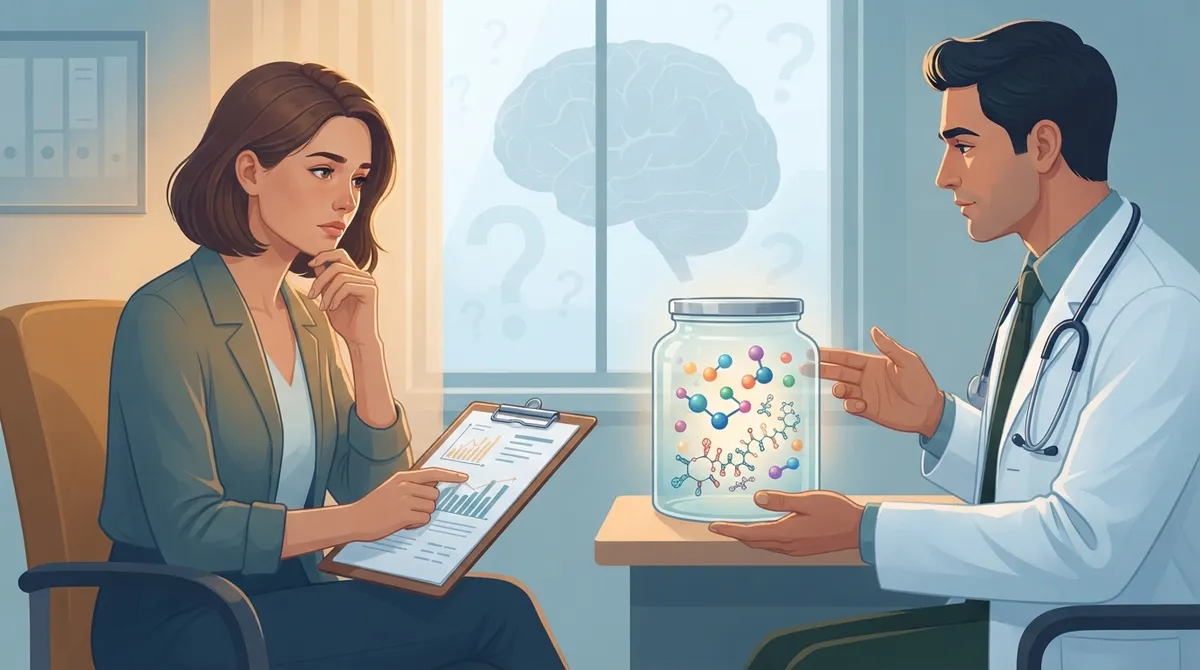
Key Takeaways
-
Hormone therapy may help anxiety and depression only if symptoms coincide with menopause-related sleep disruption and hot flashes; it is not a general treatment for primary mood disorders and cannot replace therapy or psychiatric medication.
-
Peptides like Selank, Semax, and BPC-157 are not FDA-approved for anxiety or depression, with most research limited to small studies from Russia or animal models that lack large-scale Western replication.
-
Before starting hormone or peptide therapy for mood, get a full clinical evaluation using validated screening tools like PHQ-9 and GAD-7 to rule out thyroid disease, anemia, medication side effects, and primary mood disorders.
-
Work only with licensed providers who require blood work before prescribing, transparently explain that peptides lack psychiatric approval, and provide ongoing monitoring rather than promising 'cures' for depression or anxiety.
-
Seek immediate emergency help by calling 988 if experiencing suicidal thoughts, severe agitation, psychosis, or inability to care for basic needs—hormone and peptide therapy should never delay urgent psychiatric care.
-
Peptide therapy can support broader wellness goals like energy, sleep, and recovery when medically supervised with proper lab work, but should be separated from and never replace primary mental health treatment.
If you’ve been feeling anxious, low, or just not like yourself, you’re not alone. Many women going through perimenopause and menopause ask the same question: could hormone therapy fix these mood changes? And if you’ve been researching peptide therapy too, you may wonder if peptides like Selank or BPC-157 can help your mood as well. Let’s talk through what the science actually says, in plain language, so you can make a confident and informed choice.
This topic matters to us at Allura Longevity because we believe in honest, evidence-based care. We’re not here to promise miracle fixes. We’re here to help you understand your options, connect you with licensed medical providers, and support you with personalized treatment plans built around your actual blood work and health goals. So let’s dig into what hormone therapy can and cannot do for anxiety and depression, and where peptide therapy fits into the bigger picture.
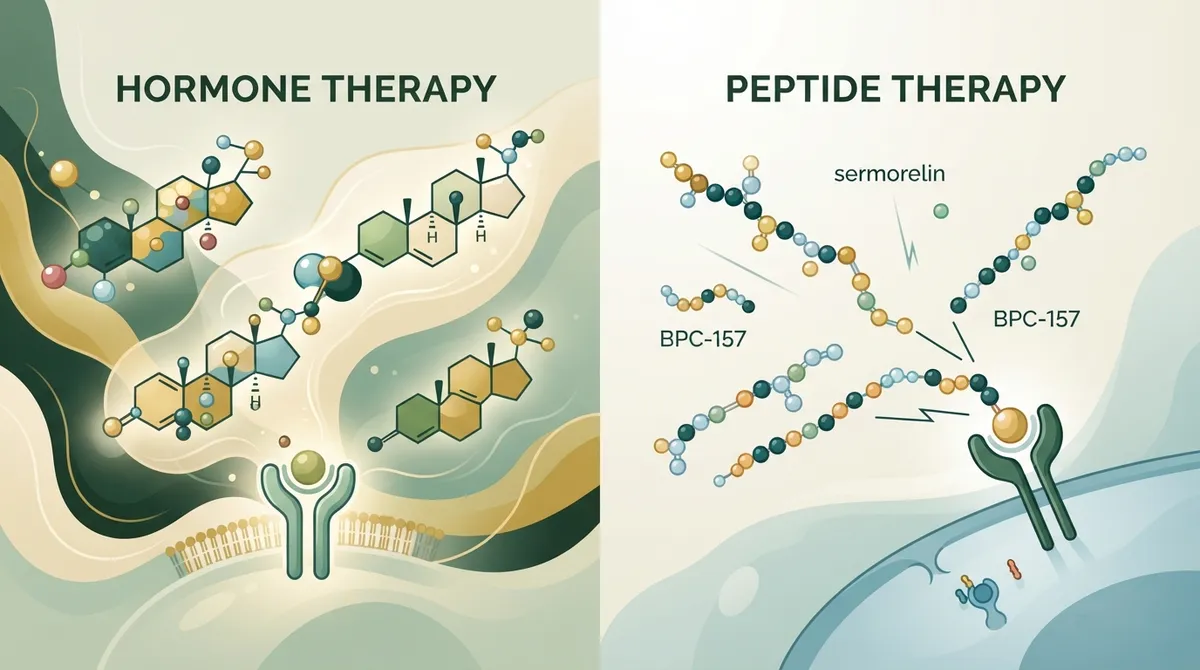
Understanding the Difference Between Hormone Therapy and Peptide Therapy
First things first: hormone therapy and peptide therapy are not the same thing. They work differently, and they’re studied differently too. Hormone replacement therapy (HRT) usually involves estrogen, sometimes combined with a progestogen, to address symptoms of menopause. Peptide therapy uses small protein-like molecules to support things like recovery, metabolism, and cellular repair.
Both categories get mentioned a lot in wellness conversations, but mixing them up can lead to confusion about what treatment actually does. Here’s a simple breakdown:
| Category | What It Is | Common Use | Approved for Anxiety/Depression? |
|---|---|---|---|
| Hormone Replacement Therapy (HRT) | Estrogen, with or without progestogen | Menopause symptom relief | Not specifically approved, but may help mood tied to menopause |
| Peptide Therapy (e.g., Selank, Semax, BPC-157) | Small protein-based compounds | Recovery, energy, longevity support | No, not FDA-approved for psychiatric conditions |
| GLP-1 Medications | Peptide-based diabetes/obesity drugs | Weight management, blood sugar control | No, not approved for mood disorders |
| Intranasal Oxytocin | Peptide hormone | Studied for social bonding, anxiety | No, evidence is mixed |

Can Hormone Therapy Help With Anxiety and Depression?
Here’s the honest answer: sometimes, but not always, and not for everyone. If your anxiety or low mood shows up alongside classic menopause symptoms like hot flashes, night sweats, and poor sleep, hormone therapy might help. Fixing the sleep disruption and physical discomfort can naturally improve your mood too.
But hormone therapy is not a general treatment for major depressive disorder or anxiety disorders. It’s not designed to replace therapy or medication for people whose mental health struggles are unrelated to hormone shifts. Think of it this way: if your house alarm keeps going off because of a loose wire, fixing the wire helps. But if the alarm is going off because of something else entirely, rewiring won’t solve the real problem.
Who Might Benefit Most
Women who may see mood improvements from hormone therapy often share these traits:
- Symptoms started or worsened during perimenopause
- Anxiety or sadness appears alongside hot flashes and night sweats
- Sleep problems are a major contributing factor
- No history of major depressive disorder before menopause
- No safety concerns like increased clotting risk, migraine with aura, or breast cancer history
If any of these don’t apply to you, that doesn’t mean you’re out of options. It just means your care team needs to look deeper to find the right approach, which might include therapy, medication, or a peptide-supported wellness plan focused on other health goals.
What About Peptides Like Selank, Semax, and BPC-157?
You’ve probably seen peptides like Selank, Semax, Dihexa, or BPC-157 mentioned online as mood boosters. Here’s the truth: none of these are FDA-approved to treat anxiety, depression, or any psychiatric condition. That doesn’t mean the research is meaningless, but it does mean you should approach the claims with a healthy dose of skepticism.
What the Research Actually Shows
- Selank: This peptide has the most human anxiety research among “brain peptides.” Still, most studies come from Russia and involve small groups, around 192 participants across three studies combined. These trials haven’t been replicated in large, independent Western studies required for FDA approval.
- Semax: A commonly cited study involved just 34 stroke patients, with anxiety measured as a secondary outcome in an open-label design. That’s a long way from proving Semax treats anxiety.
- BPC-157: Most mood-related claims here come from animal studies looking at inflammation and neuroplasticity. Promising in mice doesn’t mean proven in people.
- Intranasal Oxytocin: A 2019 systematic review of randomized controlled trials found no clear, consistent benefit for anxiety or depression. One small study of 14 people with treatment-resistant depression showed some improvement, but the design was too limited to draw firm conclusions.
- GLP-1 Medications: These are approved for diabetes and weight management, not mental health. Some observational studies have explored mood connections, but the evidence remains inconsistent according to recent reporting from recent medical news coverage.
For a deeper look at how GLP-1 peptide therapy actually works for metabolic health, you can check out our guide on how to understand GLP-1 peptide therapy in 2026.
Why Peptide Quality and Safety Matter So Much
If you’re considering peptide therapy for any reason, quality control is non-negotiable. Compounded or research-grade peptides sold online may have uncertain purity, sterility, and dosing accuracy. Injectable products carry added risks like infection, allergic reactions, or dosing mistakes.
This is exactly why working with licensed medical providers matters so much. At Allura Longevity, every treatment plan starts with real blood work through LabCorp, not guesswork. Our team, led by board-certified Family Nurse Practitioner Ashley, reviews your labs and health history before recommending anything. You can learn more about what this process looks like in our article on how to start peptide therapy safely and see real results.
Signs You’re Working With a Trustworthy Provider
- They require lab work before prescribing anything
- They explain that peptides are not FDA-approved for psychiatric use
- They screen for underlying conditions before treatment
- They offer ongoing monitoring and dose adjustments
- They never promise peptides will “cure” depression or anxiety
What a Proper Mental Health Evaluation Looks Like
Before jumping to hormone therapy or peptides for mood symptoms, a proper evaluation should rule out other causes. This includes checking for thyroid disease, anemia, medication side effects, substance use, and primary mood disorders like major depressive disorder or bipolar disorder.
Two tools commonly used in this process are the PHQ-9 for depression and the GAD-7 for anxiety. These are simple questionnaires that help your provider understand the severity of your symptoms. Hormone testing alone cannot diagnose depression, and it definitely can’t tell you whether a peptide will work for you. According to the National Library of Medicine, thorough clinical evaluation remains essential before starting any hormone-related mood treatment.
Steps to Take Before Starting Any Treatment
- Get a full evaluation from a licensed provider, not just a hormone panel
- Ask about validated screening tools like PHQ-9 and GAD-7
- Discuss your full symptom history, including sleep and physical changes
- Review any current medications for interactions
- Set realistic expectations for what hormone or peptide therapy can and cannot do
If you’re also curious about how hormone therapy might interact with peptide protocols for other goals like energy or recovery, our article on how to ease mood swings with HRT and peptides offers helpful context.
When to Seek Urgent Help Instead of Starting Treatment
This part is important, so please read closely. Peptide or hormone treatment should never delay emergency mental health care. If you or someone you love is experiencing any of the following, please seek immediate help:
- Thoughts of suicide or self-harm
- Signs of psychosis or severe confusion
- Mania or extreme agitation
- Inability to care for basic daily needs
- Dangerous reactions to medications or supplements
In these situations, call 988 (the Suicide and Crisis Lifeline) or go to your nearest emergency room. No wellness treatment, including hormone therapy or peptides, should ever replace urgent psychiatric care.
Building a Safe, Realistic Wellness Plan
So where does this leave you if you’re genuinely trying to feel better, more energized, and more like yourself? The good news is there are safe, evidence-informed ways to support your overall wellness while keeping mental health care separate and properly managed.
Peptide therapy can be a valuable part of a broader wellness plan focused on things like energy, sleep quality, metabolism, and recovery, especially when it’s guided by real lab work and licensed oversight. For women exploring hormone-related symptoms alongside general wellness goals, our guide on peptides for women walks through what personalized, medically supervised options can look like.
A Balanced Approach Looks Like This
| Goal | Recommended First Step | Who to Involve |
|---|---|---|
| Mood symptoms tied to menopause | Full hormone panel and symptom review | Licensed provider or OB-GYN |
| Primary anxiety or depression | PHQ-9/GAD-7 screening, therapy referral | Mental health professional |
| Energy, recovery, or metabolic goals | Comprehensive blood work | Peptide therapy provider |
| Severe or urgent symptoms | Immediate crisis support | Emergency services or crisis line |
This kind of layered approach respects both your mental health and your broader wellness goals. It also keeps you safe from products that promise more than they can deliver. If you’re curious about what a thoughtful, blood-work-based plan looks like from start to finish, our piece on blood work analysis steps before peptides is a great next read.
Why Personalized, Licensed Care Makes the Difference
We understand why the promise of a quick fix feels appealing. Life is busy, and dealing with mood changes on top of everything else is exhausting. But the safest path forward is one built on real data, not internet trends. That means working with providers who order proper labs, explain the evidence honestly, and monitor your progress over time.
According to what are peptides, these compounds serve many roles in the body, but that doesn’t mean every peptide marketed online is safe, effective, or appropriate for your specific situation. This is exactly why Allura Longevity starts every client relationship with a $50 virtual consultation and LabCorp blood work, so your six-month treatment plan is based on your actual biology, not guesswork.
We’re proud to offer telehealth peptide therapy across Florida, Georgia, Texas, Connecticut, Indiana, Maryland, New York, and California. Our licensed providers, led by board-certified Family Nurse Practitioner Ashley, are here to help you build a plan that supports your energy, sleep, recovery, and overall vitality, always with safety and transparency first.
FAQs
Q: Can hormone replacement therapy help anxiety and depression during perimenopause?
A: It might help, especially if your mood symptoms show up alongside hot flashes, night sweats, and poor sleep. But it’s not a universal fix for anxiety or depression, so a full evaluation is always the smart first step.
Q: Are peptide therapies like Selank or Semax FDA-approved for anxiety or depression?
A: No, neither Selank nor Semax has FDA approval for treating anxiety or depression. The available research is small, mostly from Russia, and hasn’t been replicated in large Western trials, so we recommend treating these claims with caution.
Q: Can GLP-1 medications improve depression or anxiety?
A: GLP-1 medications are approved for diabetes and weight management, not mood disorders. Some studies have looked at possible mood connections, but the evidence is mixed and doesn’t support using them as antidepressants.
Q: Should hormone levels be tested before treating anxiety or depression?
A: Hormone testing can be part of a full evaluation, but it doesn’t diagnose depression on its own. A proper assessment should also rule out thyroid issues, medication effects, and primary mood disorders using tools like the PHQ-9 and GAD-7.
Q: When should someone seek urgent help for depression or suicidal thoughts?
A: If you or someone you love is having thoughts of suicide, severe agitation, or can’t care for basic needs, please seek help immediately by calling 988 or going to the nearest emergency room. No hormone or peptide treatment should ever delay urgent psychiatric care.





