
Key Takeaways
-
Oral hydrolyzed collagen peptides have the strongest clinical evidence for skin rejuvenation, with studies showing hydration improvements by week 4 and wrinkle/elasticity benefits by 8-12 weeks at 1,650 mg daily.
-
Not all peptides are equally effective; results depend on exact sequence, size, dose, and delivery method—oral collagen has strong evidence, topical peptides show limited promise, and injectable options lack standardized safety data.
-
Topical peptide creams face a critical penetration challenge; a 2024 review found inconsistent evidence for fine lines and elasticity with limited, mixed results across available products.
-
Personalized peptide protocols based on individual blood work and lab markers outperform generic approaches, as hormone levels, nutrient deficiencies, and inflammation all influence skin aging differently.
-
Peptides should enhance, not replace, foundational skincare: daily broad-spectrum sunscreen, retinoids, moisturizing, good nutrition, and not smoking remain essential for skin health.
-
Injectable or compounded peptides carry real risks including infection, dosing errors, and sterility issues; medical supervision is essential, and no FDA-approved topical peptide products exist for skin rejuvenation.
If you’ve been scrolling through skincare shelves or telehealth menus wondering whether peptides can actually turn back the clock on your skin, you’re not alone. So many of our clients ask the same thing: do peptides for skin rejuvenation really work, or is it just clever marketing? The honest answer is a little of both, depending on which peptide you’re talking about. Let’s break down what the science actually shows, so you can make a confident, informed choice for your skin and your health.
Whether you’re a busy professional squeezing self-care between meetings, a biohacker who wants data before you commit, or simply someone who wants glowing skin as you age gracefully, this guide is for you. We’ll walk through the most talked-about peptides, what the research says, and how to separate real results from wishful thinking.

What Are Peptides, and Why Do They Matter for Skin?
Peptides are short chains of amino acids, basically tiny building blocks that tell your cells what to do. Think of them as little messengers. Some peptides signal your skin to make more collagen. Others help repair the skin barrier or reduce inflammation. You can learn more about how these signaling molecules work in our detailed guide on what peptides are and how they function.
Here’s the important part: not all peptides are created equal. Their effect depends on the exact sequence, size, dose, and how you take them, whether that’s a pill, a cream, or an injection. According to WebMD’s overview of what are peptides, these molecules can influence everything from muscle repair to skin structure, but results vary widely by type and delivery method.
1. Oral Hydrolyzed Collagen Peptides
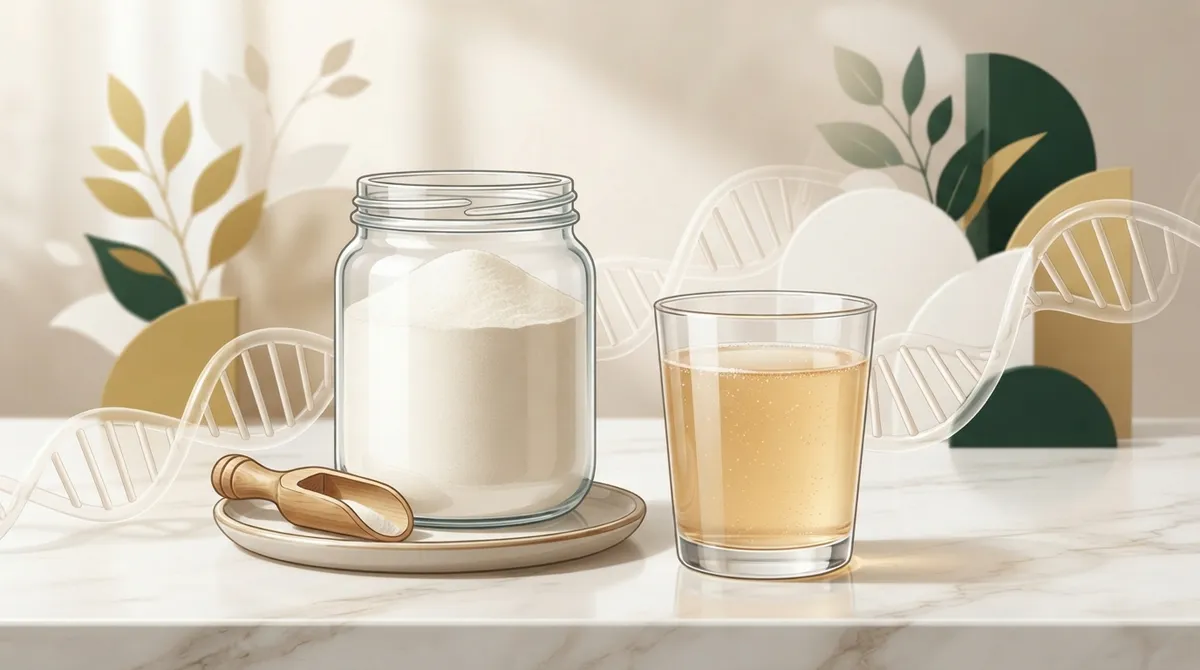
This is where the strongest human evidence currently lives. Oral collagen peptides are broken-down collagen molecules you drink or swallow, usually as a powder or capsule. Your gut absorbs them, and research suggests they may signal your skin to make more of its own collagen.
A 2023 randomized, double-blind, placebo-controlled trial followed 100 women aged 30 to 60. They took 1,650 mg of collagen peptides daily for 12 weeks. By around week 4, hydration and skin desquamation (the natural shedding process) had already improved. Wrinkles and elasticity showed improvement later in the study.
A 2025 randomized placebo-controlled study backed this up, finding that 12 weeks of bioactive collagen peptide supplementation improved dermal density, hydration, and water loss through the skin. A broader 2022 review of collagen supplementation also reported consistent improvements in moisture, elasticity, wrinkling, and roughness across multiple trials, though study designs varied quite a bit.
2. Topical Signal Peptides
Signal peptides in creams and serums are designed to tell your skin cells to produce more collagen or repair themselves. Popular examples include palmitoyl pentapeptides and similar compounds found in anti-aging skincare lines.
The catch? Getting a peptide molecule to actually penetrate the skin barrier is tricky. A 2024 review of topical peptide and exosome literature looked at nine peptide studies. It found some evidence for improved fine lines, elasticity, texture, and skin thickness, but the review was clear that the evidence remains limited and inconsistent, especially for products developed after 2010.
3. Copper Peptides (GHK-Cu)
Copper peptides, especially GHK-Cu, get a lot of buzz in skincare circles. They’re thought to support wound healing and may influence collagen production at the cellular level. However, GHK-Cu is also marketed as an injectable in the broader peptide-therapy space, and that’s where things get murkier.
There’s currently no strong, standardized human evidence that injectable GHK-Cu delivers reliable anti-aging results. If you’re curious about how this compound is evaluated for safety and appropriate use, our article on evaluating GHK-Cu peptide safely is a helpful next stop.
4. BPC-157 and Systemic Repair Peptides
BPC-157 is popular in wellness circles for tissue and gut repair, and some people wonder if it has skin benefits too. Here’s the truth: it should not be presented as an established anti-aging skin treatment. Human evidence, dosing standards, and long-term safety data are still developing for this compound.
If you’re interested in what BPC-157 is actually well-supported for, check out our resource covering key facts about BPC-157 before you start.
5. Low-Molecular-Weight Collagen Peptides
Newer research is looking at smaller collagen fragments, sometimes called low-molecular-weight peptides, for their skin-anti-aging and moisturizing potential. A recent study found these smaller peptides may be absorbed more efficiently, possibly boosting hydration and reducing signs of aging faster than standard collagen powders.
This is a promising area, but like most peptide research, it’s still evolving. More large-scale human trials are needed before we can call this a proven standard.
6. Multi-Peptide Cosmetic Blends
Many skincare brands now combine several peptides into one product, hoping to hit multiple targets: collagen support, barrier repair, and antioxidant protection all at once. A 2025 review of commercially available cosmetic peptides identified 102 different products or peptide ingredients on the market.
The review noted something important: much of the supporting evidence for these blends comes from lab studies (in vitro or ex vivo), not large, long-term human trials. That doesn’t mean they don’t work at all, it just means we should keep our expectations realistic.
7. Growth-Hormone-Releasing Peptides (Indirect Skin Support)
Some peptides used in longevity and wellness protocols, like sermorelin or CJC-1295, are designed to support the body’s natural growth hormone production. Growth hormone plays a role in tissue repair and skin quality over time, though these peptides are prescribed for broader wellness goals rather than as direct skin treatments.
If you’re curious how these fit into a bigger picture longevity plan, our guide on picking the best peptides for aging covers this in more depth.
8. Personalized Peptide Protocols Based on Your Labs
Here’s the peptide that actually might matter most: the one chosen specifically for you. Skin aging isn’t one-size-fits-all. Hormone levels, nutrient deficiencies, and inflammation markers all play a role in how your skin looks and feels.
This is where working with a licensed provider makes a real difference. At Allura Longevity, treatment plans start with blood work through LabCorp, so your peptide protocol is built around your actual biology, not a generic template. Our guide on starting peptide therapy safely walks through exactly what that process looks like.
Oral vs. Topical vs. Injectable: A Quick Comparison
Choosing the right delivery method matters just as much as choosing the right peptide. Here’s a simple breakdown to help you understand the tradeoffs.
| Delivery Method | Evidence Strength | Typical Use | Regulatory Status |
|---|---|---|---|
| Oral collagen peptides | Moderate to strong (multiple RCTs) | Daily supplement, hydration and elasticity support | Dietary supplement, not a drug |
| Topical peptide creams | Limited, promising but inconsistent | Fine lines, texture, barrier support | Cosmetic, no FDA-approved skin-rejuvenation claim |
| Injectable/systemic peptides | Insufficient for broad skin claims | Research or off-label use under supervision | Varies; many are not FDA-approved for this purpose |
How Long Does It Take to See Results?
Patience is part of the process here, and that’s okay. Based on the clinical research we have, here’s a general timeline you can expect with oral collagen peptides specifically.
- Weeks 1 to 4: Early improvements in hydration and skin desquamation may begin.
- Weeks 4 to 8: Some people notice smoother texture and less transepidermal water loss.
- Weeks 8 to 12: Wrinkle appearance and skin elasticity improvements tend to show up in later study measurements.
- Beyond 12 weeks: Continued, consistent use appears necessary to maintain benefits, since collagen turnover is an ongoing process.
For a broader look at realistic expectations across different peptide types, our article on when peptide therapy results actually show is worth a read.
Safety First: What to Know Before You Start
Not all peptide products carry the same risk. Understanding the difference helps you make smarter, safer decisions.
- Oral collagen peptides are generally well tolerated, though mild digestive upset or allergy to the source animal (fish, bovine, etc.) is possible.
- Topical peptides carry low risk overall, but formulation stability and skin penetration limit how effective they may be.
- Injectable or compounded peptides carry real risks: infection, dosing errors, immune reactions, sterility issues, and unclear purity if not sourced properly.
- Regulatory gaps matter. According to a 2024 review, there are currently no FDA-approved topical peptide products specifically indicated for skin rejuvenation. Cosmetic products cannot legally claim to treat disease or change your body’s structure without meeting drug requirements.
This is exactly why medical supervision matters so much, especially for injectable or systemic peptides. Learn more about safe sourcing in our piece on FDA-approved versus compounded peptides.
Peptides Are a Helper, Not a Replacement
Here’s something we want to be really clear about: peptides work best as part of a bigger skin-health strategy, not a magic fix on their own. Daily broad-spectrum sunscreen, appropriate retinoid use, consistent moisturizing, good nutrition, and not smoking all remain foundational for skin aging. Peptides can support these habits, but they shouldn’t replace them.
According to research summarized by the National Library of Medicine, combining lifestyle strategies with targeted supplementation tends to produce more consistent, longer-lasting results than any single intervention alone.
Why Personalized, Medically Supervised Care Matters
We get it: the peptide world can feel overwhelming, with dozens of products claiming to be the next big thing. That’s exactly why a personalized approach, guided by real lab work and a licensed provider, tends to outperform guesswork every time.
At Allura Longevity, your journey starts with a simple $50 virtual consultation. From there, you’ll complete blood work through LabCorp, and our team, led by board-certified Family Nurse Practitioner Ashley, builds a customized six-month treatment plan just for you. Everything ships straight to your door, and you get ongoing monitoring and adjustments along the way. We’re proud to offer this nationwide, with licensing in Florida, Georgia, Texas, Connecticut, Indiana, Maryland, New York, and California.
Ready to Explore Peptides for Skin Rejuvenation?
Your skin tells a story, and you deserve a plan that’s written just for you, not a one-size-fits-all approach pulled off a shelf. Whether you’re curious about collagen support, exploring hormone-related skin changes, or want a full-picture longevity plan, we’re here to help you figure out what actually makes sense for your body.
Spots fill up each month, so if you’re ready to get personalized answers backed by real lab data, request a consultation with our team today, or give us a call at (813) 510-6277. We’d genuinely love to help you feel confident and comfortable in your own skin, inside and out.
FAQs
Q: What are the best peptides for skin rejuvenation?
A: Right now, oral hydrolyzed collagen peptides have the strongest human evidence for improving hydration, elasticity, and wrinkle appearance. Topical peptides show promise but need more research, and injectable options should only be considered under medical supervision.
Q: Do oral collagen peptides really reduce wrinkles and improve elasticity?
A: Studies suggest they can, though results take time. A 2023 trial found hydration improved by week 4, while wrinkle and elasticity benefits showed up later in the 12-week study.
Q: How long does it take for collagen peptides to improve skin?
A: Most studies show initial hydration improvements around 4 weeks, with more noticeable elasticity and wrinkle changes appearing closer to the 8 to 12 week mark. Consistency really is key here.
Q: Are GHK-Cu or BPC-157 FDA approved for skin rejuvenation?
A: No, neither is currently FDA-approved specifically for skin rejuvenation. They’re used in research and wellness settings, so it’s important to work with a licensed provider who can guide safe, appropriate use.
Q: Can peptides replace sunscreen, retinol, or in-office treatments?
A: Not at all, peptides work best as a helpful addition, not a replacement. Daily sunscreen, appropriate retinoids, and dermatologist-guided procedures remain foundational for healthy, youthful-looking skin.





