

Key Takeaways
-
Get a proper diagnosis before starting any treatment—check thyroid function, iron levels, and hormone status through blood work, as other conditions like thyroid disease or iron deficiency can cause similar hair loss patterns.
-
Minoxidil (2% for women, 5% for men) and finasteride (men only, 1mg daily) are the only proven, FDA-approved treatments with strong evidence; expect 6-12 months to see meaningful results before judging effectiveness.
-
Peptide therapy is still investigational with no completed Phase III trials for hair loss as of 2026—treat it as a potential supervised add-on to proven treatments, not a replacement for minoxidil or finasteride.
-
Sudden, patchy hair loss or loss accompanied by fatigue, weight changes, or irregular periods may indicate conditions other than hormone-driven hair loss and requires investigation before assuming DHT sensitivity.
-
Work with a licensed medical provider rather than trying treatments based on social media trends; personalized plans adjusted to your blood work and individual response deliver better results than one-size-fits-all products.
-
Be cautious with compounded or unregulated peptide products due to inconsistent dosing, purity concerns, and lack of long-term safety data—verify product sourcing and ensure medical supervision before starting any new protocol.
Finding a few extra hairs on your pillow or noticing your part looking wider can be unsettling. If you’ve started searching for answers, you’ve probably come across a mix of confusing terms: hormone therapy, DHT blockers, minoxidil, and now peptides. It’s a lot to sort through, and honestly, a lot of it sounds more complicated than it needs to be.
Here’s the good news. Hair loss tied to hormones is one of the most studied conditions in dermatology, which means there’s real, trustworthy guidance available. And peptide therapy is opening up new, exciting possibilities for people who want to support their body from the inside out. In this guide, we’ll walk through what hormone therapy hair loss actually means, what treatments have solid evidence behind them, and where peptides fit into the bigger picture. Think of this as the friendly, no-jargon conversation you wish your first search result had given you.
What Does Hormone Therapy Hair Loss Actually Mean?
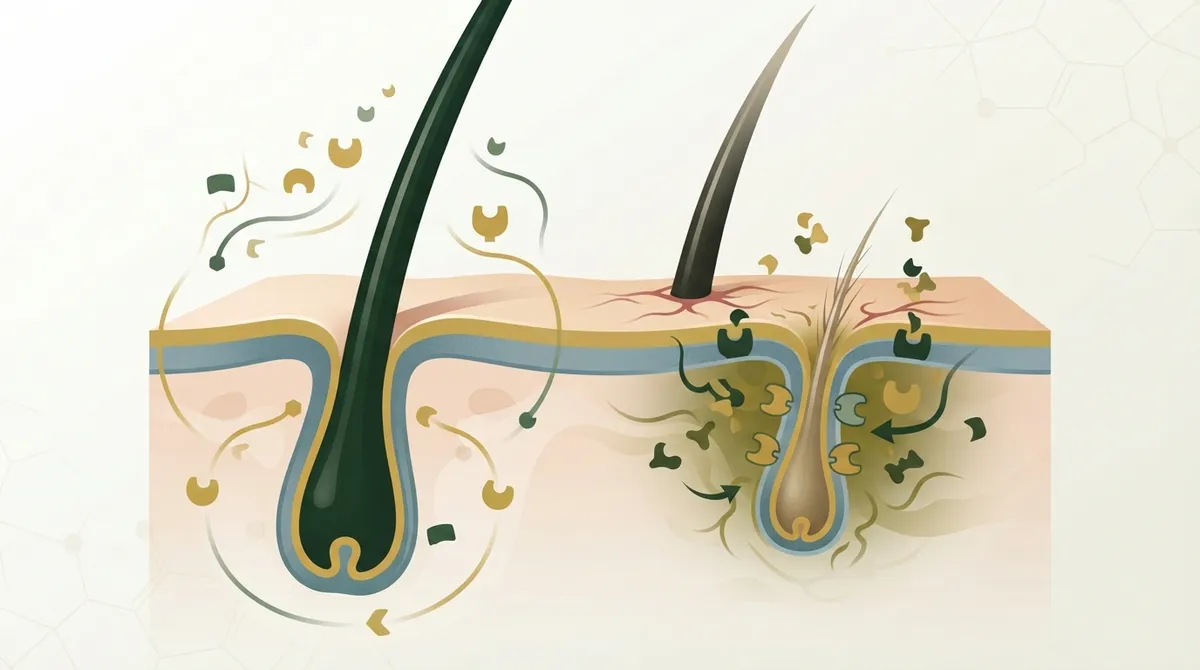
When people say “hormone therapy hair loss,” they’re usually talking about androgenetic alopecia. This is the medical name for male-pattern or female-pattern hair loss. It happens when hair follicles that are genetically sensitive slowly shrink over time. The culprit behind this shrinking is a hormone called dihydrotestosterone, or DHT for short.
DHT is made from testosterone, and some follicles are simply more sensitive to it than others. Over months and years, exposed follicles produce thinner, shorter hairs until they eventually stop growing altogether. This process affects a huge number of adults, and it’s honestly more common than most people realize.
It’s worth knowing that not everyone with thinning hair needs a full hormone workup. According to an evidence-based guideline for androgenetic alopecia, hormonal testing becomes more important when hair loss is sudden, patchy, or paired with other symptoms like irregular periods, acne, unwanted hair growth, or thyroid issues.
Signs Your Hair Loss Might Be Hormone-Related
- Gradual thinning at the crown or a widening part (common in women)
- Receding hairline or thinning at the temples (common in men)
- Hair loss that runs in your family
- Thinning paired with acne, irregular cycles, or excess facial or body hair
- Slow, steady progression rather than sudden clumps of shedding
If your hair loss looks more sudden, patchy, or comes with fatigue, weight changes, or scalp pain, it’s worth getting checked for other causes like thyroid disease, iron deficiency, or alopecia areata before assuming it’s hormone-driven.
Proven Treatments for Hormone-Related Hair Loss
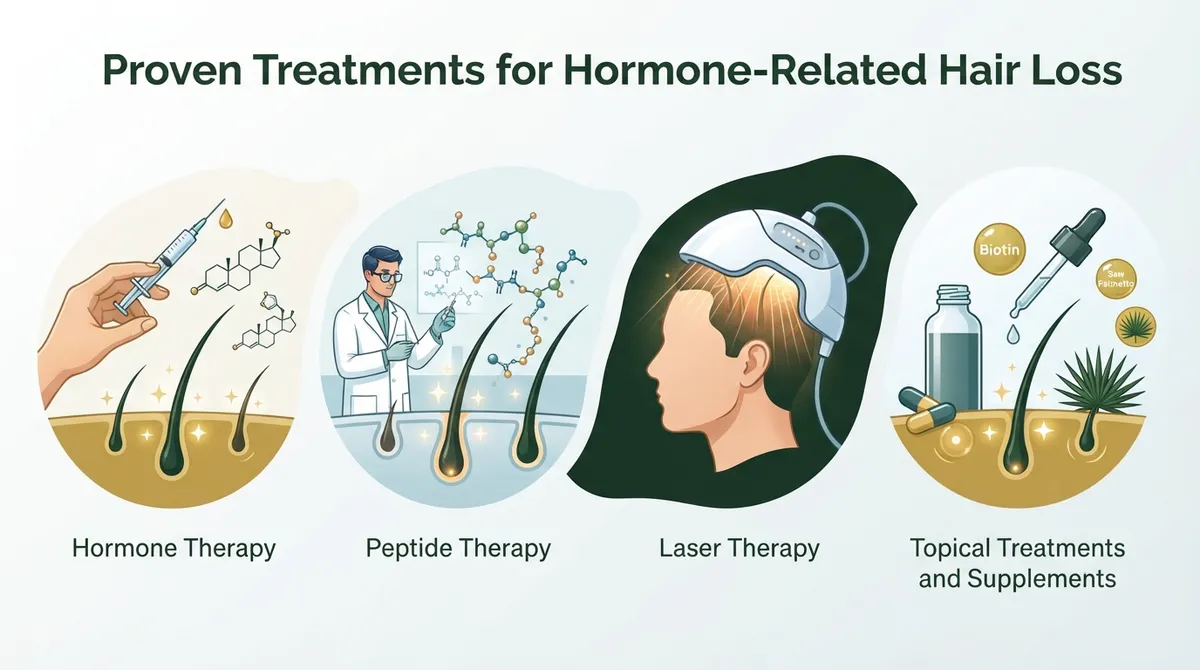
Before we talk about newer options like peptides, let’s cover what’s actually backed by strong research. This matters because you deserve treatments that have been tested, not just trendy ones.
1. Topical Minoxidil
Minoxidil is one of the most well-studied hair loss treatments available. It has strong, Level 1 evidence for slowing progression and improving hair density in both men and women. For women, the typical recommendation is a 2% solution applied twice daily, with results usually assessed after about six months. Men often use a 5% solution, which tends to work slightly better than the 2% version.
2. Oral Finasteride (For Men)
Finasteride is a well-established treatment for male-pattern hair loss. It works by blocking the enzyme that converts testosterone into DHT, which slows down follicle miniaturization. The standard dose is 1 mg daily, and most men need six to twelve months before seeing meaningful results. Finasteride is not appropriate for women who are pregnant, may become pregnant, or are breastfeeding, since it can cause serious harm to a developing baby.
3. Antiandrogens Like Spironolactone (For Women)
For women with female-pattern hair loss and signs of excess androgens, a doctor may consider spironolactone or a similar antiandrogen. This isn’t a one-size-fits-all fix. It requires an individualized evaluation, careful monitoring, and a conversation about contraindications with a licensed provider.
| Treatment | Who It’s For | Typical Timeline to Assess Results |
|---|---|---|
| Topical Minoxidil (2% or 5%) | Men and women | About 6 months |
| Oral Finasteride (1 mg/day) | Men only | 6–12 months |
| Spironolactone (antiandrogen) | Select women with hyperandrogenism | Individualized, several months |
| Peptide therapy (investigational) | Adults seeking adjunct support, under supervision | Varies; long-term data limited |
Where Peptide Therapy Fits Into the Hair Loss Conversation
This is where things get interesting for anyone already exploring what peptides are and how they support the body. Peptides are short chains of amino acids that act like messengers, telling cells what to do. Some peptides are being studied for their potential to support hair follicle health, reduce inflammation, and encourage the hair growth cycle.
It’s important to be honest here: peptide-based hair treatments are still an emerging area. They are not a replacement for finasteride, minoxidil, or antiandrogen therapy. Instead, think of them as a possible additional layer of support, used under medical guidance alongside proven treatments.
Peptides Being Studied for Hair Support
- GHK-Cu (copper peptide): Studied for its potential role in supporting healthy tissue and possibly influencing hair follicle activity.
- Biomimetic peptides: Designed to mimic natural signaling molecules involved in the hair growth cycle.
- Follicle-stem-cell-targeting peptides: An experimental category aimed at supporting the stem cells that generate new hair.
A 2026 peptide-focused review noted that no peptide has yet completed a Phase III randomized controlled trial for hair loss as its primary goal. That’s a meaningful gap between exciting lab research and proven, everyday treatment. One early example is PP405, a Phase 2A study involving 78 participants, where 31% saw more than a 20% increase in hair density after 8 weeks. That’s a promising early signal, but it’s just one small study, not confirmation that any peptide works long-term for everyone.
If you want to understand how peptides support broader wellness goals beyond hair, our article on why hormone therapy for hair loss may benefit from peptides dives deeper into this connection.
Approved Medicine vs. Off-Label vs. Investigational: Know the Difference
One of the most important things you can do before starting any hair loss treatment is understand exactly what you’re getting. Not all products labeled “hormone therapy” or “peptide therapy” are created equal.
- FDA-approved medicines: Topical minoxidil and oral finasteride have gone through rigorous testing and approval.
- Physician-prescribed off-label treatments: Some medicines, like low-dose oral minoxidil, are used off-label for hair loss based on clinical judgment, even though that’s not their original approved use.
- Compounded products: These are custom-made by pharmacies and can vary in purity, dose consistency, and sterility.
- Cosmetic products: Shampoos and serums that support scalp health but aren’t medical treatments.
- Investigational peptides: Compounds still being studied, with limited long-term human safety data.
This distinction matters because purity, dosing accuracy, and safety monitoring can vary widely, especially with compounded or unregulated peptide products. Learning more about FDA-approved versus compounded peptides can help you ask smarter questions before starting anything new.
How to Get the Right Diagnosis First
Before jumping into any treatment plan, getting a proper diagnosis really pays off. Here’s a simple step-by-step overview of what a thorough hair loss evaluation typically involves:
- Physical exam and dermoscopy: A close look at your scalp and hair pattern helps distinguish androgenetic alopecia from other conditions.
- Medical and family history review: Your provider will ask about medications, past illnesses, and whether hair loss runs in your family.
- Blood work: Tests may check thyroid function, iron levels, and hormone levels if your symptoms suggest an endocrine cause.
- Ruling out other conditions: Telogen effluvium, alopecia areata, nutritional deficiencies, and scarring alopecia all need different treatment approaches.
- Baseline photos: Standardized photos help track progress accurately over time, since natural shedding cycles can make early results hard to judge.
This is exactly the kind of personalized approach used at Allura Longevity, where treatment plans are built around your actual blood work and health goals, not guesswork. If you’re curious about starting this process the right way, our guide on how to start peptide therapy safely walks through what to expect.
Safety Considerations Before Starting Any Protocol
Peptides carry real promise, but they also carry real questions that deserve honest answers. Here’s what to keep in mind:
| Consideration | Why It Matters |
|---|---|
| Product sourcing | Purity and sterility vary between compounded and unregulated products |
| Dose consistency | Inconsistent dosing can affect both safety and results |
| Long-term safety data | Many peptides lack years of human safety research |
| Underlying conditions | Thyroid disease, PCOS, and iron deficiency need their own treatment |
| Medical supervision | Licensed providers can catch interactions and adjust plans safely |
Peptide therapy should never replace the diagnosis and treatment of conditions like thyroid disorders, polycystic ovary syndrome, or scarring alopecia. It works best as a supervised, personalized addition to your overall wellness plan, not a stand-alone fix for hormone imbalances.
Why Personalized, Medically Supervised Care Matters
Every person’s hair loss story is different. Genetics, hormones, stress, nutrition, and even sleep all play a role. That’s why cookie-cutter protocols rarely deliver the results people hope for.
At Allura Longevity, care starts with a $50 virtual consultation and complete blood work through LabCorp. From there, licensed providers, led by board-certified Family Nurse Practitioner Ashley, build a customized six-month plan based on your actual lab results and goals. Everything ships directly to your door, and your plan is adjusted along the way based on how your body responds.
This approach reflects a broader philosophy in peptides for women and peptides for men: real results come from personalization, not one-size-fits-all products. If you’re weighing your options between hormone-focused treatments and peptide-based support, our comparison guide on choosing between bioidentical hormones and peptides can help clarify the differences.
What to Expect From a Realistic Timeline
Patience really is part of the process here. Hair grows in cycles, and most treatments, whether it’s minoxidil, finasteride, or peptide support, need several months before you can fairly judge results. Shedding phases can even look worse briefly before things improve, which is completely normal and expected.
- Months 1–3: Early adjustment phase; shedding may temporarily increase
- Months 3–6: First visible signs of change for many people
- Months 6–12: More meaningful improvement, if treatment is working
- Ongoing: Continued treatment usually needed to maintain results
According to the National Library of Medicine, consistent evaluation and standardized follow-up are key to accurately measuring progress, since natural hair cycle changes can otherwise be misleading.
Bringing It All Together
Hormone-related hair loss is common, well understood, and manageable with the right approach. Proven treatments like topical minoxidil, finasteride, and antiandrogens remain the foundation of care. Peptide therapy, while still emerging in this specific area, offers an exciting potential layer of support when guided by real diagnostics and licensed medical oversight. Understanding what peptides are and how they work in the body can help you have more informed conversations with your provider.
You don’t have to figure this out alone or rely on guesswork from social media trends. A personalized plan, built around your own blood work and goals, gives you the clearest path forward. If you’re ready to explore whether peptide therapy could support your hair, energy, and overall vitality goals, request a consultation with Allura Longevity’s licensed providers today. Spots are limited each month, so reaching out early gives you the best chance to start your personalized plan soon.
FAQs
Q: Can hormone therapy help with hair loss?
A: Yes, for many people it can! Treatments like finasteride and spironolactone target the hormonal process behind pattern hair loss, but they need a proper diagnosis and medical supervision first. It’s never a one-size-fits-all answer, so a personalized evaluation really is the best starting point.
Q: Is hair loss caused by high testosterone or DHT reversible?
A: It depends on how far along the miniaturization process is. Catching it early with treatments like minoxidil or finasteride tends to work better than waiting, so don’t be afraid to reach out to a provider as soon as you notice changes.
Q: Can peptides like GHK-Cu or BPC-157 regrow hair?
A: Some peptides show promising early research for supporting hair follicle health, but they’re not proven, FDA-approved regrowth treatments yet. Think of them as an emerging, supervised addition to your plan rather than a guaranteed fix.
Q: Are peptide injections FDA approved for hair loss?
A: Not currently. As of 2026, no peptide has completed a Phase III trial specifically for hair loss, so this remains an investigational area. That’s exactly why working with a licensed provider matters so much.
Q: How long does hormone or peptide treatment take to work for hair loss?
A: Most treatments need at least six months before you can fairly judge results, and continued use is usually needed to maintain them. We know that feels like a long wait, but hair growth is a slow, steady process worth being patient for.





