

Key Takeaways
-
Online hormone therapy is legal in the US when a licensed provider in your state conducts real-time video evaluation, requires bloodwork, prescribes for medical reasons, and uses a legitimate pharmacy—legitimacy depends on who prescribes, not the telehealth platform itself.
-
The DEA extended telemedicine flexibilities through December 31, 2026, allowing DEA-registered providers to prescribe controlled substances like testosterone via live video without requiring an in-person exam first, but state licensing rules still apply.
-
Peptides and hormones have different legal classifications: testosterone is Schedule III controlled substance requiring DEA registration, while most therapeutic peptides must follow FDA drug-approval or compounding regulations under Section 503A or 503B rules.
-
Legitimate providers require comprehensive health evaluations with lab testing (baseline and follow-up), ongoing monitoring with dose adjustments, and transparent credentials—red flags include no bloodwork required, vague clinician licensing, or pressure for bulk upfront purchases.
-
Research-use-only peptides labeled 'not for human consumption' sold online for treatment create legal risk and lack medical oversight; safe peptide therapy requires a prescription and licensed compounding pharmacy, not unregulated overseas suppliers.
-
Quality online hormone therapy includes baseline and follow-up labs, informed consent documentation, contraindication screening, ongoing provider access for questions, and transparent pricing—skipping monitoring is where unregulated sellers cut corners.
If you have typed “is online hormone therapy legal” into a search bar late at night, you are not alone. Maybe you are tired, your labs look off, and you just want real answers without taking a half day off work for a doctor’s visit. Good news: online hormone therapy is legal in the United States, as long as it follows the right rules. But like most good things, there is a bit of fine print worth understanding before you commit.
This guide breaks down what makes online hormone and peptide therapy legal, what to watch out for, and how to spot a program that actually plays by the rules. Whether you are a busy professional squeezing in a lunchtime telehealth visit, a biohacker who tracks every lab marker, or someone simply hoping to feel like yourself again, you deserve clear, honest information. Let’s walk through it together, in plain English.

Is Online Hormone Therapy Legal? The Short Answer
Yes, online hormone therapy is generally legal in the United States. It becomes legal and safe when a licensed medical provider evaluates you properly, holds a license in the state where you are located, prescribes for a real medical reason, and works with a legitimate pharmacy. Telehealth itself is not the legal gray area. The details around the provider, the medication, and the pharmacy are what matter most.
Think of it like ordering food delivery. The app itself is not the issue. What matters is whether the restaurant has a health permit and whether the food is prepared safely. Online hormone therapy works the same way. The convenience is legal. The legitimacy depends on who is behind the screen.
Why Telehealth Rules Matter So Much Right Now
In late 2025, the DEA extended special telemedicine flexibilities through December 31, 2026. These rules allow DEA-registered providers to prescribe certain controlled substances, including testosterone, through live video visits without requiring an in-person exam first. This has been a huge win for people who want hormone support without traveling to a clinic.
However, these flexibilities come with conditions. The visit generally must include real-time audio and video, not just a written questionnaire. And state laws still apply on top of federal rules. This is why choosing a provider who takes licensing seriously is so important.
Hormones vs. Peptides: Why the Legal Rules Are Different
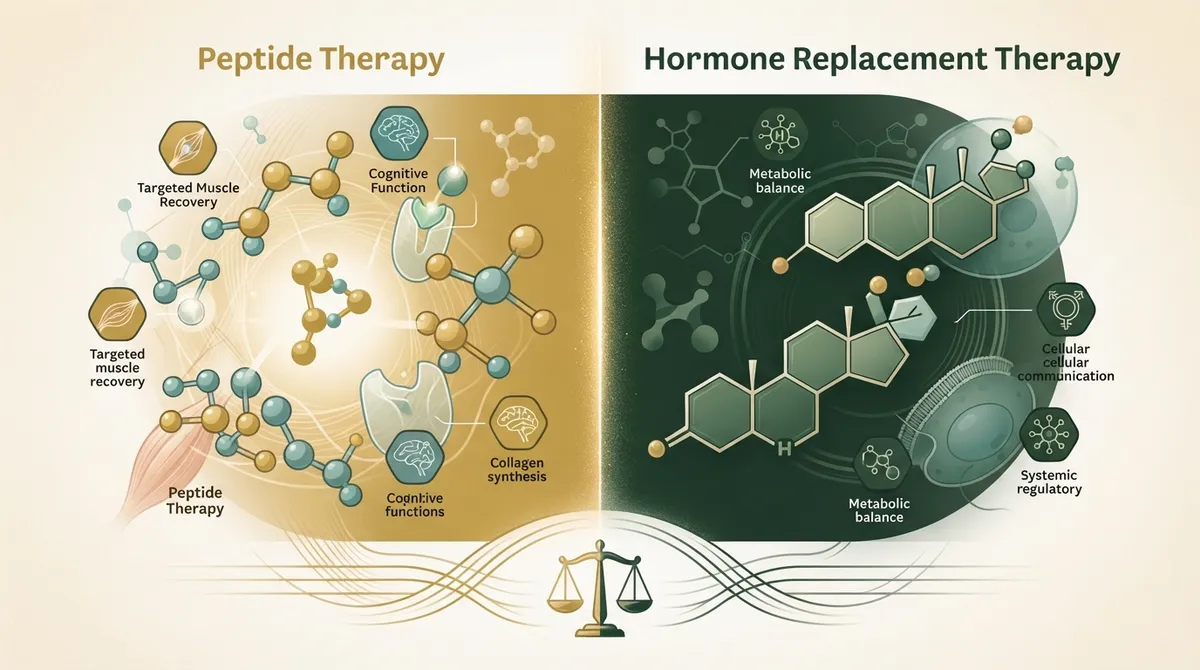
Here is where things get interesting for anyone exploring peptide therapy alongside hormone support. Testosterone is classified as a Schedule III controlled substance under federal law. That means extra rules apply, including the DEA telemedicine requirements mentioned above.
Most therapeutic peptides, on the other hand, are not federally scheduled controlled substances. But that does not mean they are automatically legal to sell or prescribe. Many peptides still fall under FDA drug-approval rules or compounding regulations. If you want a deeper dive into how peptides are classified, this article on 8 Facts That Explain What Are Peptides in 2026 is a great starting point.
A Quick Comparison Table
| Category | Legal Status | Extra Requirements |
|---|---|---|
| Testosterone | Schedule III controlled substance | DEA registration, video visit, valid prescription |
| FDA-approved peptide drugs (e.g., certain GLP-1 medications) | Legal with prescription | Must be prescribed within approved use |
| Compounded peptides | Legal only under 503A or 503B rules | Patient-specific prescription, licensed compounding pharmacy |
| “Research-use-only” peptides sold online | Not legal for human use | No medical oversight, no quality guarantee |
This is why working with a provider who understands both hormone rules and peptide compounding law matters so much. It is not just about convenience. It is about making sure what lands on your doorstep is actually safe and legitimate.
How to Know If an Online Provider Is Operating Legally
Not every online clinic is created equal. Some are run by licensed medical teams who follow every rule. Others are little more than a website with a shopping cart. Here is how to tell the difference.
- Check for a real medical evaluation. A legitimate provider reviews your health history, current medications, and symptoms, not just a five-question form.
- Confirm bloodwork is required. Responsible hormone and peptide therapy starts with lab testing, often through a trusted lab like LabCorp, to understand your actual hormone levels.
- Ask about state licensing. Your provider must be licensed in the state where you are physically located during your visit, not just the state where their office sits.
- Look for ongoing monitoring. Legal, ethical hormone therapy includes follow-up labs and dose adjustments, not a one-and-done prescription.
- Verify the pharmacy. Compounded medications should come from a licensed 503A or 503B pharmacy, not an unregulated overseas supplier.
According to the Federation of State Medical Boards’ 2025 overview, every state medical board, plus Washington, D.C., Puerto Rico, and the U.S. Virgin Islands, requires some form of licensure or authorization for telemedicine providers treating patients in their jurisdiction. That is not a small detail. It is the backbone of legal online care.
Red Flags That Signal a Risky Provider
- No bloodwork required before prescribing
- Vague or missing information about the prescribing clinician’s license
- Peptides labeled “not for human consumption” being sold for treatment
- No follow-up appointments or monitoring after your first order
- Pressure to buy large quantities upfront without a real consultation
If you see even one of these red flags, it is worth pausing before you hit “purchase.” Your health deserves better than a shortcut.
What This Means for Peptide Therapy Specifically
Peptide therapy has exploded in popularity among health optimizers and biohackers who want more than a one-size-fits-all approach. Peptides can support metabolism, sleep, recovery, and even skin health. But because most peptides are not FDA-approved drugs in the traditional sense, the legal path to getting them safely is through compounding pharmacies that follow federal Section 503A or 503B rules.
This is different from buying “research peptides” online, which are legally intended for lab use only, not for injecting into your body. Marketing these products for human treatment, or selling them without a prescription when one is required, can create real legal risk for the seller, not just a technicality.
If you are curious about specific peptides and how they fit into a legal, medically supervised plan, articles like 13 Peptides for Fat Loss That Really Work in 2026 and How to Understand GLP-1 Peptide Therapy in 2026 offer helpful, grounded explanations. For a broader look at what “what are peptides” actually means medically, WebMD’s overview on what are peptides is a solid, trustworthy resource.
Telehealth vs. In-Person: Which One Fits Your Life?
Some people assume in-person visits are automatically “more legal” or safer. That is not quite accurate. What matters is the quality of the evaluation, not the location. Still, there are practical differences worth weighing.
| Factor | Telehealth | In-Person Clinic |
|---|---|---|
| Convenience | High, fits into busy schedules | Requires travel and waiting rooms |
| Lab testing | Often coordinated through local labs like LabCorp | Done on-site |
| Medication delivery | Shipped directly to your home | Picked up in person |
| Provider licensing requirement | Must be licensed in your state | Must be licensed in the clinic’s state |
| Follow-up visits | Video calls, easy to schedule | Requires another office visit |
For a deeper comparison, check out Local Clinic vs. Telehealth: Best Peptide Therapy Near You? It walks through the pros and cons in more detail, especially for people juggling demanding careers or family schedules.
Steps to Starting Legal, Personalized Hormone and Peptide Therapy
- Book a virtual consultation with a licensed provider in your state.
- Complete bloodwork through an accredited lab to establish your baseline hormone and health markers.
- Review your personalized results with your provider, not a chatbot or automated form.
- Receive a treatment plan tailored to your goals, whether that is energy, recovery, weight loss, or vitality.
- Get your medication shipped to your home from a licensed pharmacy.
- Attend follow-up visits so your provider can monitor progress and adjust your plan as needed.
This is exactly the model that Allura Longevity follows. Clients start with an affordable virtual consultation, complete bloodwork through LabCorp, and receive a custom six-month plan built around their actual lab results and goals. Every plan is overseen by licensed providers, led by Ashley, a board-certified Family Nurse Practitioner, so you know real clinical judgment is behind every decision.
Staying Safe: What Real Monitoring Looks Like
Legal hormone and peptide therapy is not just about the first prescription. It is about what happens after. According to research published by the National Library of Medicine, appropriate patient monitoring, including lab follow-up and contraindication screening, is a core part of responsible hormone management. Skipping this step is where a lot of unregulated online sellers cut corners.
A trustworthy provider should offer:
- Baseline and follow-up labs to track hormone levels over time
- Clear informed consent explaining risks and benefits
- A real conversation about contraindications, not just a checkbox
- Ongoing access to your provider for questions or side effects
- Transparent pricing with no hidden surprises
If you are wondering how to start peptide therapy the smart way, this guide on How to Start Peptide Therapy Safely and See Real Results lays out a clear, safe path from first consultation to real results.
Bringing It All Together
So, is online hormone therapy legal? Yes, when it is done right. That means a licensed provider, a real evaluation, proper lab testing, a lawful pharmacy, and ongoing monitoring. The convenience of telehealth does not cancel out the need for careful, personalized medical care. If anything, the best online programs raise the bar by combining accessibility with real clinical oversight.
Whether you are chasing better sleep, faster recovery, steady energy, or simply want to feel like yourself again, you deserve a program built around your actual biology, not guesswork. Allura Longevity offers exactly that: personalized peptide and hormone support designed around your bloodwork, delivered to your door, and guided by licensed providers who actually check in. Spots are limited each month, so if you are ready to get real answers, request a consultation today or call (813) 510-6277 to learn more.
FAQs
Q: Is online testosterone replacement therapy legal in the United States?
A: Yes, it can be legal when a DEA-registered provider conducts a live video visit and follows current telemedicine rules. Testosterone is a controlled substance, so extra federal requirements apply, but the 2026 DEA extension makes video-based prescribing possible without an in-person exam first.
Q: Can a doctor prescribe testosterone through telehealth without an in-person visit?
A: In many cases, yes, thanks to the DEA and HHS telemedicine flexibilities extended through December 31, 2026. The visit typically needs real-time audio and video, and your provider still must follow state rules where you live.
Q: Are compounded hormones and peptides legal to buy online?
A: They can be, but only when prepared by a licensed compounding pharmacy following Section 503A or 503B rules with a valid, patient-specific prescription. Buying compounded products without any prescription or medical oversight is where things get risky.
Q: Are peptides like BPC-157, CJC-1295, or ipamorelin FDA approved?
A: Most popular research peptides are not FDA-approved drugs, which means they typically need to be handled through proper compounding channels with medical supervision. That is different from being illegal outright, but it does mean sourcing matters a lot.
Q: How can I tell if an online peptide or hormone provider is legitimate?
A: Look for required bloodwork, a real conversation with a licensed provider, clear state licensing, and follow-up monitoring after your first order. If a site skips labs and just wants your credit card, that is a sign to slow down and ask more questions.





