
Key Takeaways
-
PRP therapy and peptide therapy are not interchangeable: PRP uses your own blood with stronger clinical evidence for joint and tendon conditions, while peptides like BPC-157 are investigational and lack FDA approval for human use.
-
PRP preparation varies significantly between clinics, affecting results: platelet concentrations range from 2-7x normal levels depending on the device and protocol, so always ask your provider their specific preparation method and expected concentration.
-
PRP works best for specific conditions with strong research support: knee osteoarthritis, lateral epicondylitis, and plantar fasciitis have Level-I evidence, while achilles tendinopathy and spinal disorders show mixed results.
-
Professional medical oversight is essential before PRP treatment: providers must review medications, bleeding disorders, infections, cancer history, and blood work to ensure the treatment is appropriate for your individual health profile.
-
PRP requires patience and realistic expectations: most people need multiple sessions spaced weeks apart with results appearing over several weeks to months, and it works best alongside physical therapy rather than as a standalone treatment.
-
Common short-term PRP side effects include pain, swelling, bruising, and temporary stiffness at injection sites, with rare risk of infection—understanding these risks helps set proper expectations before treatment begins.
Thinking about PRP therapy but not sure how it fits with peptide treatments? You are definitely not alone. So many of our readers ask us the same question: is PRP just another type of peptide therapy, or is it something totally different? We love this question because getting it right can save you time, money, and a whole lot of confusion. Let’s clear things up together, in plain, friendly language.
PRP therapy stands for platelet-rich plasma therapy. It uses your own blood to help your body heal and repair itself. It sits in the same neighborhood as peptide therapy because both work with your body’s natural signaling systems. But they are not the same thing, and mixing them up can lead to real mistakes. In this guide, we will walk through the four biggest PRP therapy mistakes people make, so you can make smart, informed choices for your health journey. If you are also curious about what peptides actually are, we have you covered too.
What Is PRP Therapy, Really?
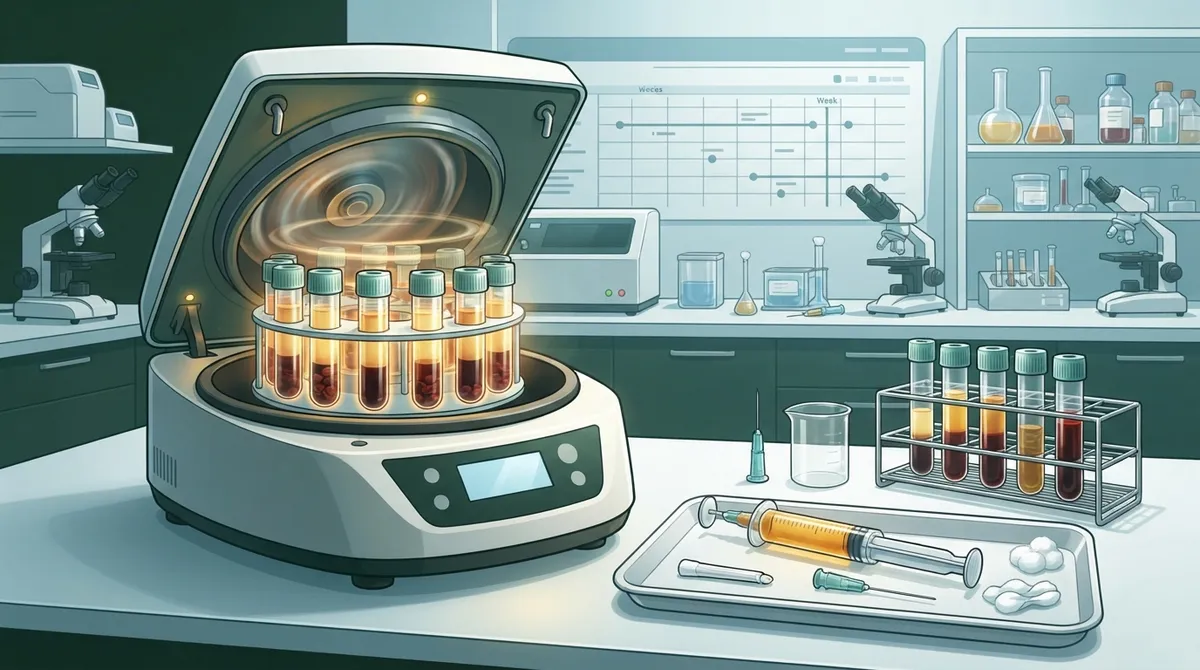
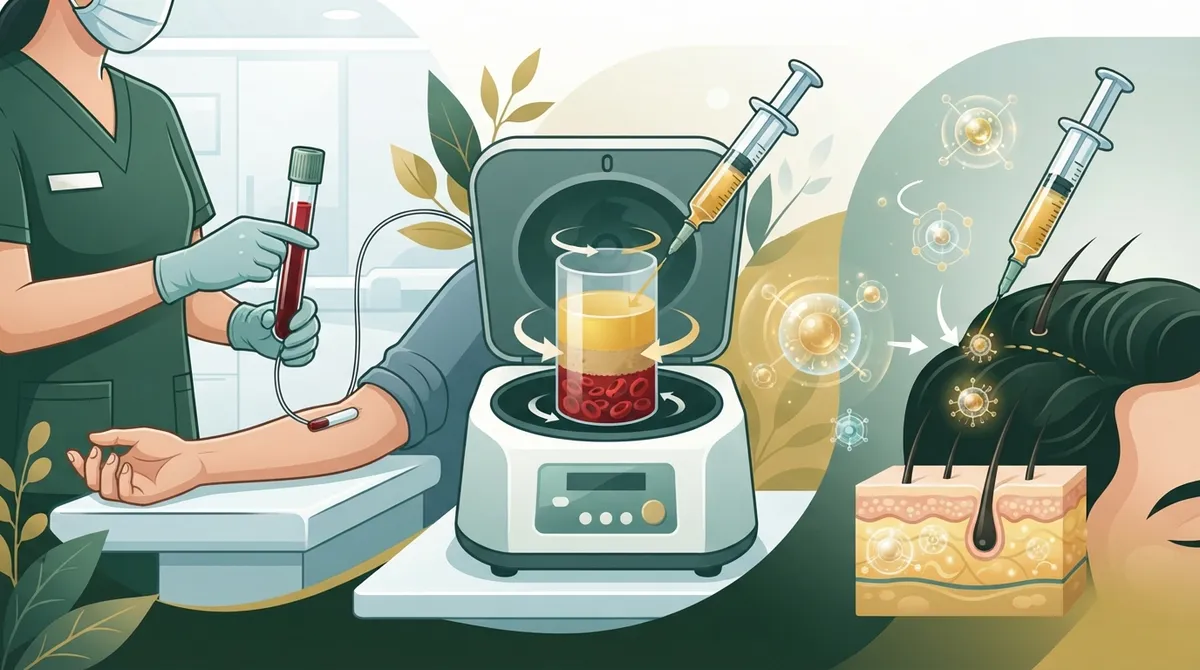
Let’s start with the basics, since this trips up a lot of people. PRP therapy takes a small sample of your own blood and spins it in a centrifuge. This process separates and concentrates your platelets, which are tiny cells packed with healing power.
Those platelets release growth factors, cytokines, and other helpful molecules. These signals can support tissue repair, reduce inflammation, and encourage new blood vessel growth in the treated area. It is your body’s own repair crew, just concentrated and redirected to where you need it most.
Here is the important part: PRP is not a peptide. It is a biologic product made from your blood, not a lab-made or synthetic peptide chain. According to the National Library of Medicine, PRP and peptide therapies work through related biological pathways, but they are distinct treatments with different origins and different levels of research behind them.
How PRP Compares to Peptide Therapy
Since both PRP and peptides deal with growth factors and healing signals, people often lump them together. But there are real differences worth understanding before you invest your time or money.
| Feature | PRP Therapy | Peptide Therapy |
|---|---|---|
| Source | Your own blood | Synthetic or compounded amino acid chains |
| Delivery Method | Injection or topical application, usually in-office | Often self-administered injections at home |
| Regulatory Status | Used clinically for select orthopedic and skin conditions | Varies widely; some are investigational, unapproved for human use |
| Research Depth | Larger human clinical literature for certain conditions | Mixed, with strong data for some and limited data for others |
| Personalization | Based on your own blood composition | Based on blood work, goals, and health history |
Understanding this table can help you avoid mistake number one, which we will get into now.
Mistake 1: Assuming PRP and Peptide Injections Are Interchangeable
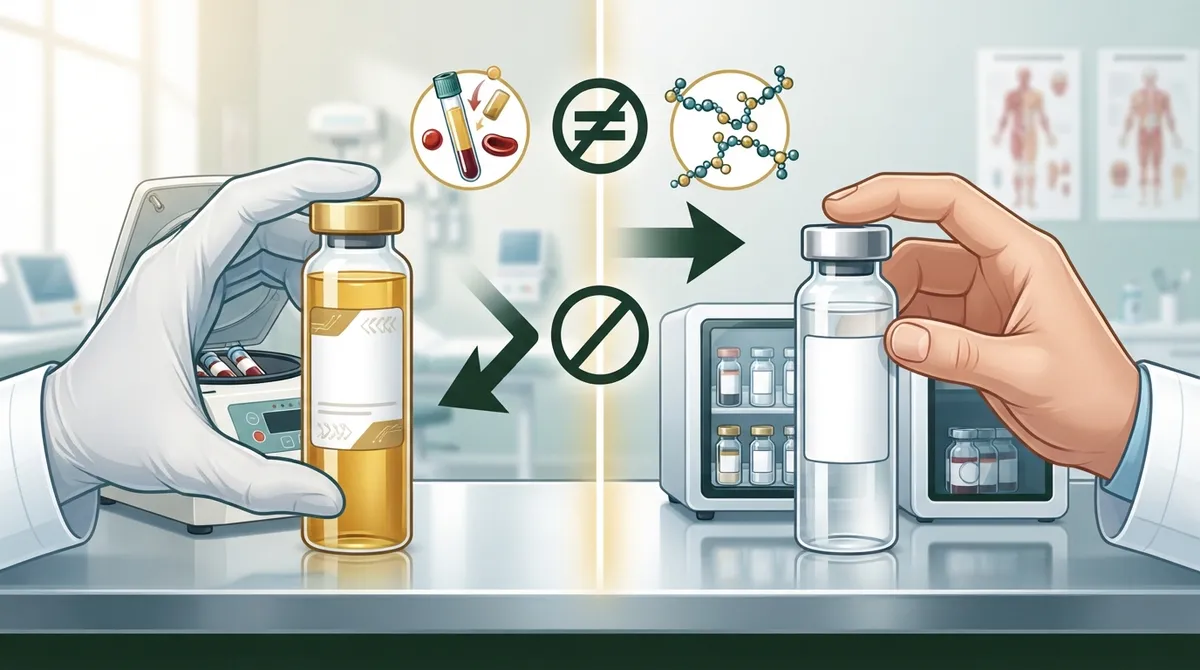
This is the biggest mix-up we see. Some people think PRP and peptide injections like BPC-157 or TB-500 do the same job. They do not. PRP has a much larger body of human research behind it, especially for certain joint and tendon conditions.
Peptides like BPC-157 and TB-500 remain investigational. They are not FDA-approved for human therapeutic use, and there is limited safety data available. The FDA has even flagged concerns about compounded BPC-157, including risks tied to impurities and unclear long-term safety. If you want to learn more about this specific peptide, check out our article on 9 BPC-157 Peptide Facts to Know Before You Start.
Here is a simple way to remember the difference:
- PRP uses your own biological material, so allergic reactions are uncommon.
- Peptides are often synthetic and may carry different manufacturing and purity risks.
- PRP has stronger clinical evidence for specific orthopedic and skin uses.
- Peptides like BPC-157 lack standardized dosing protocols recognized by regulators.
- Combining PRP and peptides has no established, evidence-backed protocol yet.
Mistake 2: Expecting PRP Results Without Understanding the Variables
PRP is not a one-size-fits-all treatment. The way it is prepared can change everything about how well it works. This is something a lot of people never learn until after they have already spent money on a disappointing session.
Several factors affect your results, including:
- Platelet concentration, which typically ranges from two to six times normal blood levels.
- Whether white blood cells are included in the final preparation.
- How much red blood cell contamination is present in the sample.
- The activation method used before injection.
- The volume injected and how many sessions you receive.
Some clinical reviews report platelet concentrations as high as three to seven times baseline levels, depending on the device and protocol used. This wide range means two people getting “PRP therapy” at two different clinics could get very different results. Always ask your provider how their PRP is prepared and what concentration they aim for.
Conditions With Stronger PRP Evidence
Not every condition responds to PRP the same way. Some have much stronger research support than others, and knowing this can help set realistic expectations.
| Condition | Evidence Strength |
|---|---|
| Knee osteoarthritis | Strong, with a 2024 review finding 54 relevant studies, 36 rated high quality |
| Lateral epicondylitis (tennis elbow) | Level-I evidence reported in several reviews |
| Plantar fasciitis | Level-I evidence reported in several reviews |
| Achilles tendinopathy | Mixed and inconsistent results |
| Spinal disorders | Mixed and inconsistent results |
This is why working with a knowledgeable provider matters so much. They can tell you honestly whether PRP is a good fit for your specific situation, rather than promising results that the research does not fully support yet.
Mistake 3: Skipping Professional Guidance and Going the DIY Route
We get it. The wellness world is full of information, and it can be tempting to try to manage your own health decisions without expert input. But PRP therapy, like peptide therapy, works best with proper medical oversight.
A qualified clinician should review your full health picture before recommending PRP or any regenerative treatment. This includes:
- Current medications, especially blood thinners
- Bleeding disorders or clotting issues
- Active infections at or near the treatment site
- Cancer history
- Pregnancy status
- Overall inflammation and healing capacity based on blood work
This same principle applies to peptide therapy. At Allura Longevity, every treatment plan starts with a virtual consultation and lab work through LabCorp, so your provider can build a plan around your actual biology, not guesswork. If you are curious how this process works, our guide on How to Start Peptide Therapy Safely and See Real Results walks through it step by step.
Why Personalized Plans Matter
Everyone’s body responds differently to regenerative treatments. Your age, activity level, hormone status, and overall health all play a role in how well any therapy works for you.
This is one reason telehealth providers who require blood work before treatment tend to deliver better outcomes than one-size-fits-all clinics. You can read more about this approach in our article comparing Local Clinic vs. Telehealth: Best Peptide Therapy Near You.
Mistake 4: Ignoring Side Effects and Realistic Timelines
PRP therapy is generally considered safe since it uses your own blood. But that does not mean it is completely without risk, and pretending otherwise sets you up for disappointment or worse.
Common short-term effects can include:
- Pain or soreness at the injection site
- Mild swelling or bruising
- Temporary stiffness in the treated area
- Rare risk of infection
- Short-term flare-up of symptoms before improvement
Results also take time. PRP is not a magic overnight fix. Most people need multiple sessions spaced weeks apart, and full benefits can take several weeks to a few months to appear. The same patience applies to peptide therapy, where consistent use over a full treatment cycle typically produces the best outcomes. Our article on When Do Peptide Therapy Before and After Results Show offers a helpful, realistic timeline.
It also helps to understand that PRP is not meant to replace good rehab habits. It works best alongside physical therapy, smart load management, and other evidence-based care, not instead of it.
How PRP Fits Into a Bigger Wellness Picture
For our health optimizers and biohackers out there, PRP can be one piece of a much larger puzzle. Many people pair regenerative approaches with lab-guided peptide protocols to support energy, recovery, and healthy aging from multiple angles.
If you are a busy professional short on time, telehealth makes this easier than ever. You can get personalized guidance, blood work, and a treatment plan delivered right to your door, without spending your lunch break in a waiting room. Learn more about building a complete plan in our guide on How to Build a Smart Longevity Care Plan in 2026.
For those focused on recovery and healing specifically, it is worth exploring how peptides like BPC-157 are researched separately from PRP. Our article on 6 Peptides for Wound Healing Worth Knowing in 2026 breaks this down clearly.
Questions to Ask Before Starting Any Regenerative Treatment
Before committing to PRP, peptide therapy, or both, bring these questions to your provider:
- What is your PRP preparation method and expected platelet concentration?
- How many sessions will I likely need?
- What blood work do you require before treatment?
- Are there any peptides you recommend alongside or instead of PRP for my goals?
- What are the realistic risks and expected timeline for my specific condition?
According to what are peptides, understanding the basic science behind these treatments helps you ask better questions and make better decisions. A good provider will welcome these questions, not dodge them.
Why Personalized, Licensed Care Matters Most
At the end of the day, the biggest mistake anyone can make is choosing convenience over quality. Regenerative and peptide therapies are powerful tools, but they work best in the hands of licensed, experienced providers who actually look at your labs and listen to your goals.
Allura Longevity was built around this exact philosophy. Every client starts with an affordable virtual consultation, completes blood work through LabCorp, and receives a custom six-month plan built specifically for their body. Care is led by Ashley, a board-certified Family Nurse Practitioner, with ongoing monitoring and adjustments along the way. We proudly serve clients in Florida, Georgia, Texas, Connecticut, Indiana, Maryland, New York, and California through convenient telehealth visits.
Whether you are exploring recovery support, hormone balance, or overall vitality, our team can help you understand where PRP-adjacent regenerative approaches fit alongside personalized peptides for women or peptides for men. We keep things simple, honest, and centered on your actual health data.
Final Thoughts on Avoiding PRP Therapy Mistakes
PRP therapy can be a genuinely helpful tool for certain joint, tendon, and skin concerns, but only when you understand what it is and is not. It is not a peptide, it is not one-size-fits-all, and it is not a substitute for professional guidance and realistic expectations.
By avoiding these four common mistakes, you set yourself up for a smarter, safer, and more satisfying wellness journey. Spots for new clients open up each month, and our team would love to help you figure out the right path for your goals. Request a consultation today, or give us a call at (813) 510-6277 to get started. You deserve a plan built just for you, not a guessing game.
FAQs
Q: What is PRP therapy and how does it work?
A: PRP therapy uses your own blood, spun in a centrifuge to concentrate platelets, then injected into the treatment area. Those platelets release growth factors that can support healing, reduce inflammation, and encourage tissue repair. It’s a natural, personalized approach since it comes straight from your own body.
Q: Is PRP therapy a peptide treatment?
A: Not quite, and this trips up a lot of people! PRP is a blood-derived biologic, while peptides are lab-made or compounded amino acid chains. They work through some similar biological pathways, but they are different treatments with different levels of research behind them.
Q: What is the difference between PRP therapy and peptides like BPC-157 or TB-500?
A: PRP has a much larger body of human clinical research, especially for joint and tendon conditions. BPC-157 and TB-500 are investigational peptides, not FDA-approved for human use, with limited standardized dosing or safety data available right now.
Q: Can PRP therapy be combined with peptide therapy?
A: Right now, there is no standardized, evidence-backed protocol for combining PRP with peptide therapy. That said, a licensed provider can help you understand whether pursuing both, at separate times and for separate goals, makes sense for your unique health picture.
Q: How many PRP treatments are usually needed to see results?
A: Most people need more than one session, often spaced a few weeks apart. Results tend to build gradually over several weeks to a few months, so patience really is part of the process here.





