

Key Takeaways
-
Blood work and lab analysis must come first before any peptide is prescribed, as it reveals hormone levels and organ function needed to guide safe, effective treatment and prevent interactions with existing conditions.
-
Personalized peptide plans require ongoing monitoring and adjustment based on your body's response, not a static 'set it and forget it' approach—your provider should track symptoms, labs, and side effects to fine-tune dosing as needed.
-
FDA-approved peptides have undergone rigorous testing, while compounded peptides may lack complete evidence; ask your provider whether your peptide is FDA-approved or compounded and demand honest explanations of the evidence gap.
-
A legitimate personalized plan includes your health history review, current medications audit, baseline lab work, individualized dosing instructions, and scheduled follow-ups with clear criteria for adjustments or stopping treatment.
-
Work with licensed medical providers through established telehealth or in-person clinics rather than purchasing peptides based on social media trends or friends' experiences, as dosing errors and contamination risks require professional oversight.
-
Ask your provider specific questions upfront: which lab tests guide your plan, is the peptide FDA-approved, how often will progress be monitored, what are the specific risks, and how will your plan adjust if you don't respond as expected.
Ever wonder why your friend’s peptide therapy worked wonders, but the same peptide did nothing for you? You’re not alone in asking this. The truth is, no two bodies are the same, and that’s exactly why personalized treatment plans matter so much in peptide therapy. Grabbing a peptide off the internet based on a friend’s success story is a bit like borrowing someone else’s prescription glasses. It might work for them, but it won’t fix your vision.
Whether you’re a busy professional hunting for more energy, a biohacker who loves data, or simply someone ready to feel like yourself again, this guide walks you through what a real personalized treatment plan looks like. We’ll cover the tests, the process, the risks worth knowing, and the questions you should always ask before starting. Grab a cup of coffee, and let’s dig in together.
What Makes a Peptide Treatment Plan Truly Personalized
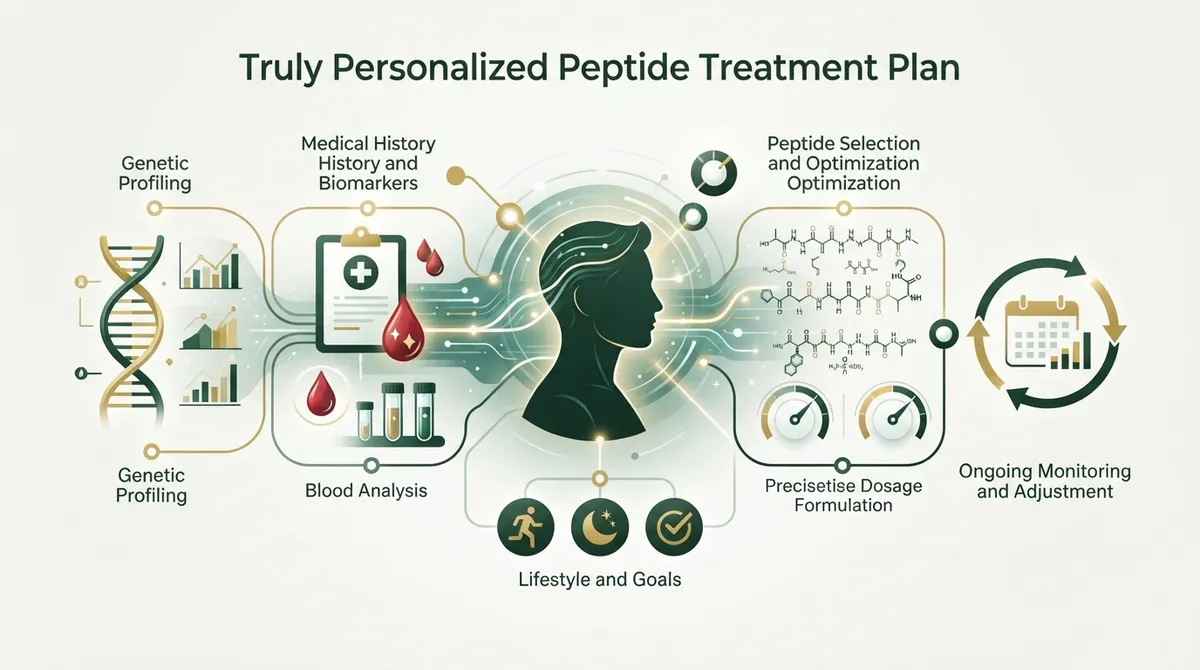
A personalized treatment plan is more than picking a trendy peptide because it worked for someone on social media. It’s a clinical strategy built around your body, your goals, and your health history. This means your provider looks at your diagnosis, your current medications, your lab results, and any health conditions before recommending anything.
Real personalization also means the plan can change. If your body responds differently than expected, a good provider adjusts your dose or switches your approach. This is very different from a one-size-fits-all product you might find online without any medical guidance. To understand the basics first, check out this helpful resource on what are peptides in 2026 and how they work in the body.
Why Guesswork Doesn’t Belong in Peptide Therapy
Peptides are powerful. They interact with very specific pathways in your body, like hormone receptors or growth factors. Using the wrong peptide, or the right peptide at the wrong dose, can lead to disappointing results or unwanted side effects.
This is why providers rely on lab work and clinical evaluation, not guesswork. According to what are peptides, these small protein chains act as messengers, telling your cells what to do. Getting that message right requires precision, not a random guess based on trends.
The Building Blocks of a Personalized Peptide Plan
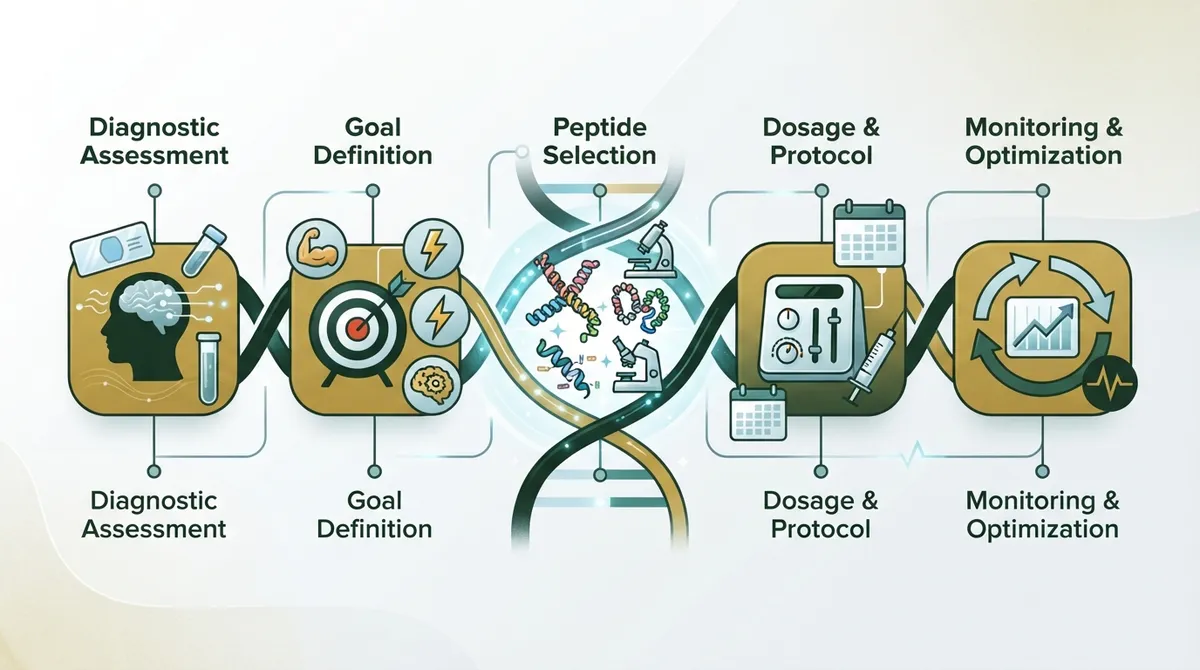
Every solid peptide plan follows a similar framework, even though the details change from person to person. Here’s what a clinically responsible approach typically includes:
- An initial evaluation of your health history, symptoms, and goals
- A full review of current medications and supplements
- Baseline lab work and measurements, often through a trusted lab like LabCorp
- Selection of an appropriate peptide based on your specific needs
- Individualized dosing and administration instructions
- Scheduled follow-up visits to track your progress
- Clear criteria for adjusting or stopping treatment if needed
This structured process protects you. It also gives your provider the information they need to fine-tune your plan as your body responds. If you’re wondering how this looks in practice, this guide on how to start peptide therapy safely and see real results breaks it down step by step.
Why Blood Work Comes First
Before any peptide is prescribed, your provider needs a clear picture of what’s happening inside your body. Blood work reveals hormone levels, organ function, and other markers that guide safe, effective treatment.
Skipping this step is risky. You could end up taking a peptide that doesn’t address your actual problem, or worse, one that interacts poorly with an existing condition. Lab-based personalization is the foundation of safe peptide therapy.
Common Health Goals and Matching Peptide Approaches
Different goals call for different strategies. Here’s a general look at how personalized plans might align with common wellness goals, though your provider will always tailor this to your specific labs and history.
| Health Goal | Common Focus Areas | Monitoring Priorities |
|---|---|---|
| Weight Management | Metabolism support, appetite regulation | Weight trends, glucose markers, side effects |
| Muscle Recovery | Tissue repair, inflammation reduction | Recovery time, injury site healing |
| Energy and Vitality | Cellular support, hormone balance | Energy levels, sleep quality, hormone panels |
| Skin and Aging Support | Collagen production, cellular renewal | Skin changes, overall response over time |
| Hormone Optimization | Testosterone or hormone-related support | Hormone levels, symptoms, liver and kidney function |
If weight loss is your focus, you might explore options detailed in 13 peptides for fat loss that really work in 2026. For muscle recovery, resources like 14 peptides for muscle gain worth knowing offer helpful context, though your final plan should always come from a licensed provider reviewing your labs.
Understanding the Difference: FDA-Approved vs Compounded Peptides
This part matters a lot, and it’s often misunderstood. Not every peptide you hear about has the same level of testing or oversight. Some peptides are FDA-approved, meaning they have gone through rigorous trials with clear evidence of safety and effectiveness. Others are compounded or investigational, meaning the evidence may be less complete.
Compounded peptides fall under two main regulatory categories in the United States. Section 503A covers patient-specific prescriptions made by state-licensed pharmacies. Section 503B applies to FDA-registered outsourcing facilities that follow strict manufacturing standards. Knowing the difference helps you ask the right questions before starting treatment.
Why This Distinction Matters for Your Safety
A 2025 review published in Signal Transduction and Targeted Therapy highlighted ongoing progress in peptide-based treatments, but also pointed out real challenges around formulation and delivery. This means not all peptides behave the same way, even if they sound similar.
The FDA also released product-specific guidance in 2026 addressing 17 generic peptide products. This guidance emphasized checking immune responses, impurity levels, and biological activity. In simple terms, quality control is complicated, and it’s not something you should assume just because a peptide is popular.
Marketing claims can also be misleading. Compounded drugs should never be promoted as identical to FDA-approved medications, according to current FDA guidance. If a provider tells you a compounded peptide is “just as good” without explaining the evidence gap, that’s a red flag worth noticing.
Steps to Get Started With a Personalized Peptide Plan
Ready to explore peptide therapy the right way? Here’s a simple roadmap most reputable telehealth providers follow:
- Schedule a virtual consultation to discuss your health history and goals
- Complete lab work through a trusted provider like LabCorp
- Review your results with a licensed medical provider
- Receive a customized treatment plan based on your specific needs
- Get your peptides delivered directly to your home
- Follow the administration instructions provided by your care team
- Attend follow-up visits to monitor progress and adjust as needed
This process removes the guesswork and puts your safety first. For more detail on getting matched with the right prescription, this article on how to get prescription peptides safely in 2026 is worth a read.
What Ongoing Monitoring Actually Looks Like
Personalization doesn’t stop after your first shipment arrives. Ongoing monitoring is what separates a real medical plan from a random purchase. Depending on your peptide and goals, your provider may track:
- Symptoms and how you’re feeling day to day
- Body weight or composition changes
- Glucose-related measures for metabolic health
- Kidney and liver function through lab panels
- Hormone levels relevant to your treatment
- Injection site reactions or other side effects
This ongoing check-in process helps your provider decide whether to continue, adjust, or stop your treatment. It’s not a “set it and forget it” approach, and that’s a good thing for your long-term health.
Risks and Honest Expectations
Personalization reduces risk, but it doesn’t erase it completely. It’s important to go into peptide therapy with realistic expectations. Some potential concerns include:
- Allergic or immune reactions to certain peptides
- Dosing errors if instructions aren’t followed carefully
- Contamination risks with poorly sourced injectable products
- Interactions with other medications or supplements
- Side effects specific to the peptide’s biological target
A trustworthy provider will walk you through these risks honestly, rather than glossing over them. According to research published by the National Library of Medicine, peptide-based therapies show promise, but individualized attention to dosing, sourcing, and monitoring remains essential for safety.
It’s also worth noting that in 2025, regulatory agencies issued more than 50 warning letters related to peptide and GLP-1 marketing and compounding practices. This shows how important it is to work with a licensed provider who follows current guidelines rather than shortcuts.
Comparing Telehealth and In-Person Peptide Care
Many people wonder whether telehealth peptide therapy can really match the personalization of an in-person clinic visit. Here’s a quick comparison to help clarify things.
| Feature | Telehealth Peptide Therapy | Traditional In-Person Clinic |
|---|---|---|
| Convenience | Virtual visits, home delivery | Requires travel to a physical location |
| Lab Work | Coordinated through trusted labs like LabCorp | Often done on-site |
| Follow-Up Access | Scheduled virtual check-ins | In-office appointments |
| Provider Oversight | Licensed medical providers review your case | Licensed medical providers review your case |
| Geographic Reach | Available across multiple licensed states | Limited to local area |
If you’re weighing your options, this comparison guide on local clinic vs telehealth peptide therapy dives even deeper into the pros and cons of each approach.
How Allura Longevity Approaches Personalization
At Allura Longevity, personalized treatment plans start with a simple $50 virtual consultation. From there, clients complete blood work through LabCorp, giving providers a clear, accurate picture of their health. Led by Ashley, a board-certified Family Nurse Practitioner, the care team designs a customized six-month treatment plan based on those results and your personal goals.
Peptides are shipped directly to your home, making the entire process convenient for busy professionals and anyone juggling a demanding schedule. Ongoing monitoring and adjustments ensure your plan evolves as your body responds, rather than staying static for months on end. This approach reflects the same standards discussed throughout this article: real evidence, real labs, and real medical oversight.
Because spots for new clients are limited each month, many people choose to request a consultation early to secure their place in the program. Allura Longevity is licensed in Florida, Georgia, Texas, Connecticut, Indiana, Maryland, New York, and California, with telehealth access available nationwide within those states.
Questions to Ask Before Starting Your Plan
Before committing to any peptide therapy program, it helps to come prepared. Here are some smart questions to bring to your first consultation:
- What lab tests will be used to guide my treatment plan?
- Is this peptide FDA-approved, or is it compounded?
- How often will my progress be monitored and reviewed?
- What are the specific risks or side effects I should watch for?
- How will my plan change if I don’t respond as expected?
Asking these questions shows you’re taking your health seriously, and any good provider will welcome the conversation. For a longer list of smart questions, check out this resource on peptide consultation questions to ask before your first visit.
Bringing It All Together
Personalized treatment plans aren’t just a nice phrase used in marketing. They represent a real, evidence-based approach to peptide therapy that puts your safety and results first. From initial blood work to ongoing monitoring, every step matters when it comes to building a plan that actually works for your unique body.
You deserve care that listens to your goals, respects your health history, and adjusts as you grow and change. If you’re ready to explore what a truly personalized peptide plan could look like for you, it might be time to schedule your consultation today and take that first confident step toward feeling like the best version of yourself.
FAQs
Q: What is a personalized peptide therapy treatment plan?
A: It’s a custom plan built around your own health history, lab results, and goals, rather than a generic peptide protocol. Your provider selects the right peptide, dose, and monitoring schedule specifically for you. Think of it like a tailored suit instead of something off the rack.
Q: How does a provider decide which peptide is right for me?
A: Providers look at your diagnosis, current medications, lab work, and overall health before recommending anything. They also consider your specific goals, whether that’s more energy, better recovery, or hormone support. It’s a thoughtful process, not a guessing game.
Q: What tests are needed before starting peptide therapy?
A: Most personalized plans start with baseline blood work, often through a trusted lab like LabCorp. This helps your provider check hormone levels, organ function, and other important markers. These results guide every decision in your treatment plan.
Q: Are compounded peptides as safe as FDA-approved options?
A: Not necessarily, and this is an important distinction to understand. FDA-approved peptides have gone through rigorous testing, while compounded peptides may have less complete evidence. A good provider will explain these differences honestly so you can make an informed choice.
Q: How often should my peptide therapy be monitored?
A: This depends on the peptide and your goals, but ongoing check-ins are essential. Many plans include scheduled follow-ups to track symptoms, labs, and overall progress. Regular monitoring lets your provider adjust your plan if something isn’t working as expected.





