

Key Takeaways
-
Legitimate telemedicine peptide therapy requires licensed provider evaluation, bloodwork through trusted labs, and use of FDA-approved or properly compounded peptides—convenience without medical oversight creates serious safety risks.
-
FDA-approved peptides like semaglutide and tirzepatide have rigorous clinical trials and established safety profiles, while ‘research peptides’ like BPC-157 and CJC-1295 lack FDA approval and vary widely in long-term safety evidence.
-
Red flags indicating illegitimate clinics include guarantees of dramatic results, selling injectables without prescriptions, using research-only products, refusing to disclose compounding pharmacies, and skipping bloodwork or licensed provider involvement.
-
Responsible telemedicine providers follow a standardized protocol: verify licensing, collect full medical history, order labs, screen for contraindications, use licensed pharmacies, and schedule regular follow-up visits for monitoring.
-
Personalized peptide therapy plans based on individual bloodwork and hormone levels are essential, as fatigue and other symptoms may stem from multiple factors that require tailored treatment rather than copy-paste protocols.
-
Most non-controlled peptides don’t require prior in-person visits under federal law, allowing convenient telehealth prescribing, but providers must still be licensed in your state and follow all state telemedicine and pharmacy regulations.
Picture this: you’re curled up on your couch after a long day, laptop open, chatting with a licensed provider about your energy levels, your sleep, or that stubborn weight that just won’t budge. No waiting room. No scrubs-covered small talk. Just you, your goals, and someone who actually listens. That’s the promise of telemedicine peptide therapy, and honestly, it’s one of the best things to happen to personalized health care in years.
But here’s the thing we want you to know before you get started: convenience should never come at the cost of safety. Not all online peptide clinics are created equal, and understanding how legitimate telemedicine peptide therapy actually works can save you time, money, and unnecessary risk. Whether you’re a busy professional squeezing wellness into a packed calendar, a biohacker who loves optimizing every data point, or someone simply looking to feel like yourself again, this guide will walk you through everything you need to know. Let’s dig in together.

What Is Telemedicine Peptide Therapy, Exactly?
Telemedicine peptide therapy is a remote care model. A licensed clinician evaluates you through video (or sometimes phone, depending on your state) instead of an in-person office visit. From there, they can prescribe and monitor either an FDA-approved peptide medicine or a compounded peptide formulation, depending on your health needs and lab results.
It sounds simple, and in many ways it is. But there’s real medical infrastructure behind a properly run program. Your provider still needs to review your health history, order labs, check for contraindications, and follow up regularly. If you want to understand the basics before diving deeper, this guide on what are peptides in 2026 is a great starting point. You can also learn more about what are peptides from a trusted medical resource.
Why This Model Has Exploded in Popularity
People are busy. Really busy. Between work, family, and everything in between, driving across town for a 20-minute appointment feels like a luxury few can afford. Telemedicine removes that barrier while still keeping a licensed medical provider in the driver’s seat.
- No commute or waiting room time
- Appointments that fit around work and family schedules
- Peptides shipped directly to your door
- Ongoing check-ins without taking a day off work
- Access to specialized care even if you live in a rural area
- Privacy and comfort of discussing health goals from home
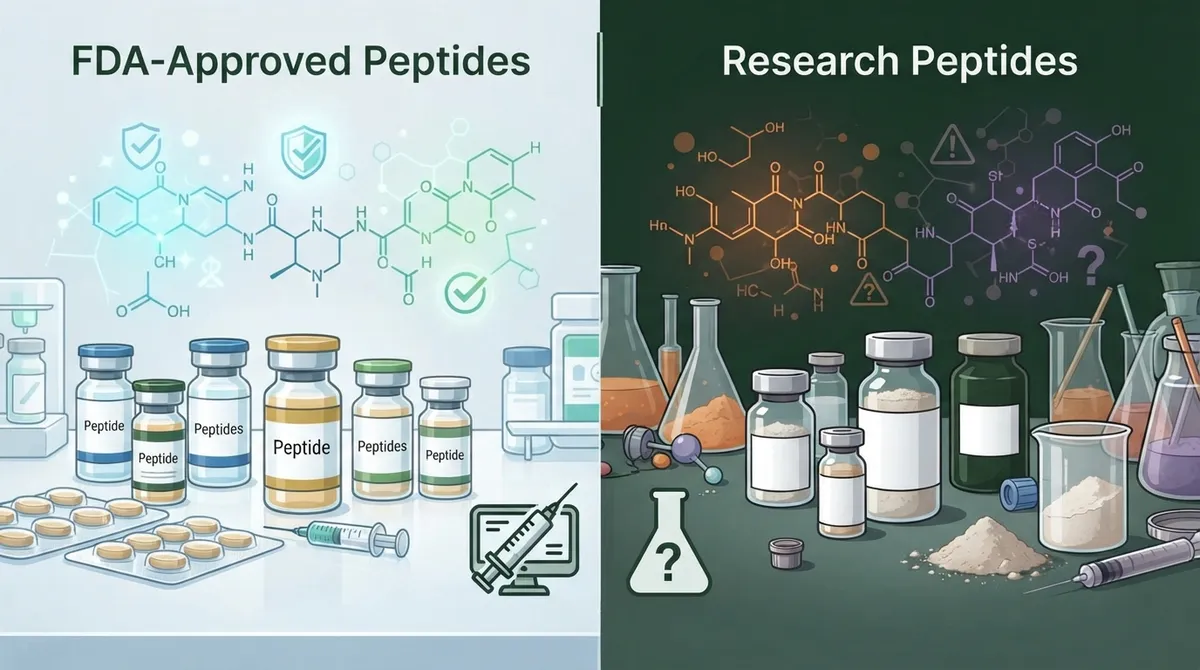
FDA-Approved Peptides vs. Research Peptides: A Critical Distinction
This is where things get important, and honestly, where a lot of shady clinics try to cut corners. Not every peptide you see advertised online is legal or clinically validated for human use. Telehealth does not magically make an unapproved peptide safe or effective.
Peptides like BPC-157, TB-500, CJC-1295, and ipamorelin are often labeled as “research peptides.” That label matters. It means they are not FDA-approved for treating human disease, and the evidence supporting long-term safety varies widely by ingredient. On the other hand, FDA-approved peptide medicines like semaglutide (Wegovy, Ozempic) and tirzepatide (Zepbound, Mounjaro) have gone through rigorous clinical trials and have established dosing and safety profiles.
How to Tell the Difference
| Category | Examples | Regulatory Status | What This Means for You |
|---|---|---|---|
| FDA-Approved | Semaglutide, Tirzepatide | Approved for specific indications | Established dosing, safety data, and labeling |
| Compounded | Custom semaglutide, BPC-157 blends | Regulated under 503A/503B rules | Requires valid prescription and licensed pharmacy |
| Research-Use Only | Various “research peptides” | Not approved for human use | Should not be prescribed or self-administered |
If you’re curious how compounding works behind the scenes, this breakdown of 503A vs. 503B compounding explains the difference clearly. And for a deeper look at the safety side of things, check out this piece on FDA-approved vs. compounded peptides.
Is It Legal? Understanding the Regulatory Landscape
Good news: most peptide therapies are not controlled substances. That means the federal Ryan Haight Act, which restricts prescribing controlled substances online without a prior in-person exam, generally does not apply to peptides. But that doesn’t mean anything goes.
Clinicians still have to follow state telemedicine laws, prescribing rules, and pharmacy regulations. Licensing matters a lot here. A provider needs to be authorized to practice in the state where you, the patient, are physically located at the time of your visit. This is one reason it’s smart to choose a clinic licensed in multiple states rather than one operating in a legal gray area.
What About Controlled Substances?
Some hormone therapies and related treatments do fall under controlled substance rules. According to the Federal Register rule published December 31, 2025, the DEA and HHS extended telemedicine flexibilities for prescribing Schedule II through V controlled substances through December 31, 2026. This allows qualifying practitioners to prescribe these medications via interactive audio-video telemedicine without a prior in-person visit, but this rule does not generally apply to non-controlled peptides. Requirements can and do change, so always confirm your provider is following current guidelines.
What a Responsible Telemedicine Peptide Provider Should Do
Not all telehealth clinics operate the same way. Here’s a step-by-step look at what a trustworthy provider does before, during, and after prescribing peptide therapy.
- Clearly identify the prescribing clinician and their license status
- Verify your identity and confirm your physical location
- Collect a full medical history and current medication list
- Screen for contraindications specific to the peptide being considered
- Order or review recent laboratory testing, often through a trusted lab like LabCorp
- Explain the risks, benefits, and alternatives in plain language
- Use a licensed, regulated compounding pharmacy for any compounded products
- Schedule follow-up visits and provide support for side effects
This is exactly the model that Allura Longevity follows. Clients start with an affordable $50 virtual consultation, complete comprehensive blood work through LabCorp, and receive a fully customized six-month treatment plan. Everything ships directly to your door, and ongoing monitoring is led by Ashley, a board-certified Family Nurse Practitioner who genuinely cares about your progress.
Red Flags to Watch For
We want you to feel empowered, not anxious, as you explore your options. But knowledge is protection. Here are warning signs that a clinic might not have your best interests at heart.
- Guarantees of dramatic weight loss or anti-aging results
- Selling injectable peptides with no prescription required
- Using “research use only” labeled products for human injection
- Refusing to disclose which pharmacy compounds their products
- Skipping bloodwork or a real clinical evaluation entirely
- No licensed medical provider named or available for questions
If you spot any of these, it’s worth pausing and asking more questions. A legitimate provider will never rush you or dodge your concerns. For more guidance, this article on how to find legal peptide therapy you can trust offers a helpful checklist.
Which Peptides Can Be Prescribed Through Telehealth?
The peptide landscape is broad, and different peptides serve very different purposes. Here’s a quick look at commonly requested categories and what they’re generally used for.
| Goal | Common Peptides | Typical Use Case |
|---|---|---|
| Weight Management | Semaglutide, Tirzepatide | FDA-approved for appetite regulation and metabolic support |
| Recovery & Healing | BPC-157 (compounded) | Injury recovery support under provider guidance |
| Growth Hormone Support | CJC-1295, Ipamorelin (compounded) | Muscle recovery, sleep, and energy support |
| Sexual Wellness | PT-141 | Libido and intimate wellness support |
| Hormone Balance | Testosterone therapy | Addressing low testosterone symptoms |
Curious how these compare in real-world use? Take a look at 13 peptides for fat loss that really work in 2026 or explore how GLP-1 peptide therapy works in 2026 for a deeper dive into weight management options.
Preparing for Your First Telemedicine Visit
Feeling a little nervous about your first appointment? That’s completely normal. Here’s how to make the most of it.
- Gather your recent medical records and medication list
- Write down your top three health goals, whether it’s energy, weight, or recovery
- Complete any requested lab work ahead of time
- Find a quiet, private space with good internet connection
- Prepare a list of questions about safety, dosing, and expected timelines
- Be honest about your full health history, including supplements
This kind of preparation helps your provider build a plan that actually fits your body and your life. If you want a full walkthrough, this guide on how to start peptide therapy safely and see real results covers the entire process step by step.
Telehealth vs. In-Person: Which Should You Choose?
Some people wonder if they’re missing something by skipping the in-person visit. The truth is, for most peptide therapies, telehealth offers equal or better quality care because it removes logistical barriers without sacrificing medical oversight.
- Telehealth often allows more frequent check-ins since there’s no travel involved
- Labs can still be drawn locally through partners like LabCorp
- Providers can review your data digitally, often with more time to analyze trends
- You get the same licensed oversight without disrupting your schedule
Still weighing your options? This comparison of local clinic vs. telehealth peptide therapy breaks down the pros and cons in more detail. Research published through the National Library of Medicine also supports telehealth as a viable model for chronic condition management when proper protocols are followed.
Why Personalized Plans Matter So Much
Peptide therapy isn’t one-size-fits-all, and any provider who treats it that way isn’t serving you well. Your hormone levels, metabolism, lifestyle, and goals are unique. That’s why bloodwork matters so much before starting any protocol.
A thoughtful provider uses your labs to identify what’s actually going on, not just what you assume is wrong. Maybe your fatigue is thyroid-related. Maybe it’s testosterone. Maybe it’s a combination of factors that only show up when someone looks at the full picture. This is the entire philosophy behind personalized care, and it’s why peptides for men and peptides for women programs are built around individual data rather than guesswork.
Bringing It All Together
Telemedicine peptide therapy genuinely can be a wonderful tool for improving energy, recovery, weight management, and overall vitality. But the convenience only pays off when it’s paired with real medical oversight, transparent pharmacy practices, and a provider who takes your safety seriously. You deserve a plan built specifically for you, not a copy-paste protocol pulled from a sales page.
At Allura Longevity, that personalized approach is the whole point. Licensed providers, real bloodwork, and a six-month plan shipped right to your home make it easy to feel supported every step of the way, no matter where you live in Florida, Georgia, Texas, Connecticut, Indiana, Maryland, New York, or California. Spots fill up each month, so if you’re ready to feel like yourself again, now is a great time to request a consultation and start your journey with a team that truly has your back.
FAQs
Q: Is peptide therapy available through telemedicine?
A: Yes! Many peptides, especially FDA-approved options like semaglutide and tirzepatide, can be prescribed through telehealth as long as your provider is licensed in your state. Compounded peptides may also be available depending on your health needs and local regulations.
Q: Which peptide medications can legally be prescribed online?
A: FDA-approved peptides like Wegovy, Ozempic, Zepbound, and Mounjaro can be legally prescribed through telehealth when clinically appropriate. Compounded peptides can also be prescribed, but only through licensed 503A or 503B pharmacies following proper regulations.
Q: Do I need an in-person visit before starting peptide therapy?
A: Not usually! Most peptide therapies aren’t controlled substances, so an in-person visit typically isn’t required by federal law. Your provider will still need a thorough health history, bloodwork, and a real evaluation, just done conveniently through video instead.
Q: What medical tests and lab work are needed before peptide therapy?
A: Bloodwork is a must, and it usually includes hormone levels, metabolic markers, and other health indicators depending on your goals. Most reputable clinics, including Allura Longevity, use trusted labs like LabCorp to build your personalized plan.
Q: How can I verify that an online peptide clinic and compounding pharmacy are legitimate?
A: Ask directly which pharmacy compounds your peptides and confirm they’re properly licensed. A trustworthy clinic will happily share this information and will never pressure you into skipping bloodwork or a real medical evaluation.





