

Key Takeaways
-
Metabolic weight loss programs combine peptide medications (GLP-1 or GIP/GLP-1 agonists) with nutrition coaching and medical monitoring—neither the medication nor lifestyle changes alone are effective without the other piece working together.
-
Three FDA-approved peptides for weight loss are Wegovy (semaglutide, 12.7-17.7 kg loss), Zepbound (tirzepatide, higher average loss), and Saxenda (liraglutide, 4.2-5.6 kg loss), each requiring BMI 30+ or BMI 27+ with related health conditions.
-
Tirzepatide (dual GIP/GLP-1 agonist) shows stronger clinical results than semaglutide and liraglutide (GLP-1 only) because it activates additional receptors that may enhance weight reduction and metabolic benefits.
-
Compounded semaglutide and tirzepatide lack FDA oversight and differ from approved versions—verify your prescriber's license, pharmacy reputation, exact ingredients, and product storage before starting any peptide program.
-
Weight regain is common after stopping treatment since obesity is a chronic condition; programs must include long-term maintenance planning, gradual tapering, and ongoing support from day one, not after initial results.
-
Common side effects (nausea, constipation, diarrhea) typically appear during dose increases and ease over time, while serious risks like pancreatitis (3.4 per 1,000 patients) and gallbladder issues (2.5-2.6%) require ongoing licensed provider monitoring.
If you have tried every diet, tracked every calorie, and still feel like your body is working against you, you are not alone. Millions of people are turning to metabolic weight loss programs that use peptide medications to finally get real, lasting results. These programs are not magic shots. They are medically supervised plans that combine science-backed medications with nutrition, movement, and ongoing support to help your body work with you instead of against you.
At Allura Longevity, we believe you deserve a plan built around your own blood work, your own goals, and your own life. Whether you are a busy professional squeezing in telehealth visits between meetings or a wellness seeker ready to go deeper than supplements, this guide will walk you through exactly what metabolic weight loss programs involve, what the research really shows, and how to choose one that is safe and effective.

What Are Metabolic Weight Loss Programs, Really?
Metabolic weight loss programs are structured plans designed to help your body burn fat, manage hunger, and regulate blood sugar more efficiently. In the peptide therapy world, these programs typically center on GLP-1 receptor agonists or GIP/GLP-1 dual agonists, paired with lifestyle coaching and medical monitoring.
Think of it like this: the medication helps quiet the constant hunger signals in your brain, while the rest of the program teaches your body new habits. Neither piece works well alone. Together, they can create meaningful, sustainable change. If you want a deeper dive into how these medications interact with your biology, check out this guide on how to understand GLP-1 peptide therapy in 2026.
The Core Ingredients of a Strong Program
Not every program is created equal. A responsible, medically sound metabolic weight loss program usually includes these pieces:
- A full health history review and baseline blood work
- An eligibility check based on BMI and health conditions
- A slow, careful dose increase to reduce side effects
- Nutrition guidance that supports muscle and energy
- Regular check-ins to track progress and adjust treatment
- A plan for long-term maintenance, not just short-term loss
Which Peptide Medications Are FDA-Approved for Weight Loss?
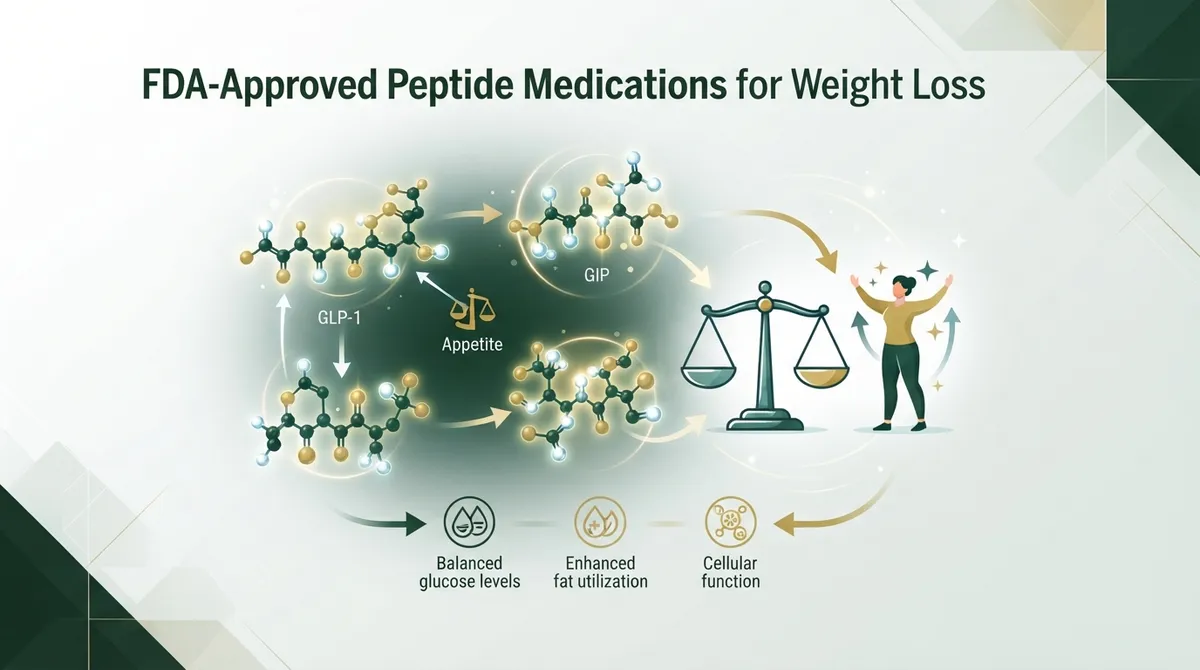
This is one of the most common questions we hear, and it matters a lot. There are currently three FDA-approved injectable medications for chronic weight management. Each works a little differently, and knowing the differences helps you have a smarter conversation with your provider.
| Medication | Active Ingredient | Mechanism | Average Weight Loss (Trial Data) |
|---|---|---|---|
| Wegovy | Semaglutide | GLP-1 receptor agonist | 12.7–17.7 kg over 68 weeks |
| Zepbound | Tirzepatide | GIP/GLP-1 dual agonist | Higher average loss in trials vs. GLP-1 alone |
| Saxenda | Liraglutide | GLP-1 receptor agonist | 4.2–5.6 kg over 56 weeks |
These medications are approved for adults with a BMI of 30 or higher, or a BMI of 27 or higher with a weight-related health condition like high blood pressure or type 2 diabetes. They are meant to be used alongside a reduced-calorie diet and regular physical activity, not as a stand-alone fix. The FDA approved Zepbound in November 2023 specifically for this kind of comprehensive chronic weight management approach.
Semaglutide vs. Tirzepatide vs. Liraglutide: What Is the Difference?
Semaglutide and liraglutide both work primarily on the GLP-1 receptor, which slows digestion and increases feelings of fullness. Tirzepatide goes a step further by also activating GIP receptors, which may explain its strong results in clinical trials. A 2025 meta-analysis of 47 randomized controlled trials involving over 23,000 participants found that GLP-1 receptor agonists produced an average additional weight reduction of 4.57 kg compared to placebo, along with meaningful reductions in BMI and waist circumference.
If you are curious how these compare in real-world use, this breakdown of GLP-1 vs. dual-agonist peptides offers a helpful side-by-side look.
Who Actually Qualifies for These Programs?
Eligibility is not just about a number on the scale. A licensed provider will look at your full health picture before recommending any medication. Here is a general list of what gets evaluated:
- Current BMI and body composition
- Blood pressure, cholesterol, and blood sugar levels
- Personal and family medical history
- Current medications and possible interactions
- History of pancreatitis or thyroid conditions
- Pregnancy status or plans for pregnancy
People with a personal or family history of medullary thyroid carcinoma or multiple endocrine neoplasia syndrome type 2 are typically not candidates for GLP-1 based therapy. This is exactly why blood work and a real medical review matter so much before starting. You can learn more about what that process looks like in this guide to starting peptide therapy safely.
What Results Can You Realistically Expect?
Everyone wants to know the number. While results vary from person to person, clinical data gives us a solid range to work with. Weekly semaglutide combined with lifestyle changes produced an average of 12.7 to 17.7 kg of weight loss over 68 weeks in major clinical trials. Liraglutide trials showed smaller but still meaningful average losses of 4.2 to 5.6 kg over 56 weeks.
These numbers come from structured trials with consistent medical supervision, which is exactly why the support side of your program matters as much as the medication itself. Genetics, starting weight, activity level, and consistency all play a role in your personal outcome.
Why Nutrition and Movement Still Matter
It can be tempting to think the medication does all the heavy lifting. But peptides work best when paired with real lifestyle habits. Here is why:
- Resistance training helps preserve lean muscle while you lose fat
- Protein-focused meals support satiety and metabolic health
- Hydration helps manage common GI side effects
- Sleep quality affects hunger hormones and cravings
- Consistent movement supports long-term metabolic rate
For a closer look at combining these pieces, this resource on losing weight with peptide therapy walks through practical daily strategies.
What Side Effects Should You Watch For?
No medication is without risk, and it is important to go in with realistic expectations. The most common side effects tend to show up during dose increases and often ease over time.
| Side Effect Category | Examples | When It Typically Occurs |
|---|---|---|
| Common/Mild | Nausea, constipation, diarrhea, reduced appetite | During dose escalation |
| Less Common | Gallbladder issues, dehydration | Any point during treatment |
| Rare but Serious | Pancreatitis, hypoglycemia (with insulin use) | Any point during treatment |
Research cited in an RACGP review found gallbladder-event rates of approximately 2.5% to 2.6% with liraglutide and semaglutide compared to about 1% to 1.2% with placebo. Pancreatitis was reported at roughly 3.4 cases per 1,000 patients in trial data, though this figure should not be treated as an individual risk prediction. This is exactly why ongoing monitoring by a licensed provider is non-negotiable. If you want to understand how to manage these symptoms proactively, this article on what causes GLP-1 side effects and how to manage them is a great next read.
Are Compounded Peptides Safe to Use?
This is a question every smart consumer should be asking. Compounded semaglutide and tirzepatide are not the same as FDA-approved Wegovy, Zepbound, or Saxenda. The FDA has issued clear warnings about unapproved GLP-1 products, especially those sold as “research chemicals” or unapproved salt forms.
Before starting any peptide program, verify these details:
- Who is prescribing the medication, and are they licensed
- Which pharmacy is dispensing it, and is it reputable
- What the exact active ingredient and dose are
- How the product should be stored and administered
- Whether the product has any FDA oversight at all
This is one of the biggest reasons working with a trusted, licensed telehealth provider matters so much. To understand the full picture, this comparison of FDA-approved vs. compounded peptides breaks down exactly what to look for. According to what are peptides, these small protein molecules can have powerful effects on the body, which is exactly why sourcing and dosing accuracy matter so much.
What Happens When You Stop Treatment?
This is a question that deserves an honest answer. Obesity is considered a chronic, relapsing condition, and appetite-regulating effects from GLP-1 medications may fade once treatment stops. That means weight regain is a real possibility without a maintenance plan.
A responsible program should talk about this from day one, not after you finish your first six months. Long-term thinking should include:
- A gradual tapering plan discussed with your provider
- Continued nutrition and movement habits built during treatment
- Regular follow-up labs to track metabolic markers
- A plan for possible maintenance dosing if needed
- Ongoing support to prevent falling back into old patterns
Research published through the National Library of Medicine supports the idea that obesity treatment works best as an ongoing, chronic care model rather than a one-time fix. A 2025 WHO guideline echoed this, concluding that GLP-1 and GIP/GLP-1 medications may be appropriate for long-term use within comprehensive care, subject to clinical assessment.
How Allura Longevity Builds a Personalized Metabolic Program
Here is what makes a real difference: personalization. At Allura Longevity, every client starts with a simple, affordable $50 virtual consultation. From there, we run complete blood work through LabCorp to understand your unique metabolic picture before recommending anything.
Your six-month treatment plan is designed around your actual labs, health history, and goals, not a one-size-fits-all template. Peptides are shipped directly to your home, and our licensed providers, led by board-certified Family Nurse Practitioner Ashley, monitor your progress and adjust your plan as needed. We are proud to offer this care through telehealth in Florida, Georgia, Texas, Connecticut, Indiana, Maryland, New York, and California.
If you are ready to see whether a metabolic weight loss program built around your own biology could work for you, you can request a consultation today. Spots for new clients are limited each month, so it helps to reach out early.
Steps to Start Your Own Metabolic Weight Loss Journey
Feeling ready to take the leap? Here is a simple roadmap to help you get started with confidence:
- Schedule an initial virtual consultation with a licensed provider
- Complete baseline blood work to check your metabolic health
- Review your eligibility and discuss which medication fits your goals
- Start with a low dose and follow a gradual escalation schedule
- Build simple nutrition and movement habits alongside treatment
- Attend regular follow-ups to track progress and manage side effects
- Discuss a long-term maintenance plan before you ever stop treatment
For more detail on getting matched with the right approach for your body, this guide on getting prescription peptides safely is worth a read before your first appointment.
Your Next Step Toward Real, Lasting Change
Metabolic weight loss programs built around peptide therapy are not about quick fixes or empty promises. They are about giving your body the support it needs to actually change, with real medical oversight every step of the way. Whether you are optimizing your health, managing midlife changes, or simply tired of programs that do not work, a personalized plan can make all the difference.
You deserve a program that treats you like a whole person, not just a number on a chart. Our team at Allura Longevity is here to walk beside you, answer your questions, and build a plan around your actual biology. Ready to get started? Request your consultation today, or give us a call at (813) 510-6277. We would love to help you take this next step.
FAQs
Q: What are metabolic weight loss programs and how do peptides fit in?
A: Metabolic weight loss programs are medically supervised plans that combine peptide medications, like semaglutide or tirzepatide, with nutrition, movement, and regular check-ins. The peptide helps manage hunger and blood sugar, while the rest of the plan builds habits that last. Think of it as a team effort between medicine and lifestyle, not a solo act.
Q: Which peptide medications are FDA-approved for weight loss?
A: Right now, three injectable medications are FDA-approved for chronic weight management: Saxenda (liraglutide), Wegovy (semaglutide), and Zepbound (tirzepatide). Each is approved for adults with a BMI of 30 or higher, or 27 or higher with a related health condition. They are meant to be used alongside diet and exercise, not instead of them.
Q: How much weight can I realistically expect to lose?
A: Clinical trials show semaglutide can produce about 12.7 to 17.7 kg of average weight loss over 68 weeks when paired with lifestyle changes. Liraglutide trials showed smaller average losses of around 4.2 to 5.6 kg over 56 weeks. Your own results will depend on your starting point, consistency, and how your body responds.
Q: Are compounded semaglutide and tirzepatide safe to use?
A: Compounded versions are not the same as FDA-approved medications, and the FDA has raised real concerns about unapproved products sold without proper oversight. It is so important to verify your prescriber, pharmacy, and the actual ingredients before starting anything. Working with a licensed telehealth provider helps you avoid this guesswork entirely.
Q: What happens if I stop taking my weight loss medication?
A: Since obesity is considered a chronic condition, appetite-regulating effects can fade once you stop treatment, which may lead to weight regain. That is exactly why a good program talks about long-term maintenance from the very beginning. Building strong nutrition and movement habits during treatment gives you the best shot at keeping results.





