

Key Takeaways
-
Always start with a medical evaluation and bloodwork before any treatment—check testosterone levels, cardiovascular health, and blood pressure, as ED is often vascular or metabolic, not just hormonal.
-
PT-141 (bremelanotide) works through brain arousal pathways, not blood flow like Viagra/Cialis, making it useful for men who don't respond to PDE5 inhibitors, but it's only FDA-approved for women and remains off-label and investigational in men.
-
Avoid unregulated online peptide sources; compounded products often have inconsistent purity and unclear dosing—work only with licensed telehealth providers connected to regulated compounding pharmacies.
-
Common PT-141 side effects include nausea, flushing, headache, and blood pressure increases; it's contraindicated for uncontrolled hypertension or cardiovascular disease, requiring full disclosure to your provider.
-
ED affects over 50% of men aged 40-70 and is rarely caused by testosterone alone—cardiovascular disease, diabetes, medications, sleep apnea, and stress are frequent culprits requiring personalized treatment plans.
-
Personalized care combining bloodwork results, lifestyle factors (sleep, stress, smoking), proven options first (PDE5 inhibitors), and regular monitoring beats one-size-fits-all approaches for sustainable results.
If you have been Googling men’s sexual health treatment at 1 a.m., you are not alone, and you are definitely not broken. Millions of men deal with low desire, weak erections, or that frustrating feeling that their body just is not keeping up anymore. The good news? Science has given us more tools than ever, from familiar little blue pills to newer peptide options like PT-141 that work in a totally different way. Let’s walk through this together, friend to friend.
This guide breaks down what actually works, what is still being studied, and what questions you should ask before trying anything new. Whether you are a busy professional squeezing in a telehealth visit between meetings, or a biohacker who wants to know exactly how a compound works before it touches your bloodstream, you deserve clear answers. We will compare PT-141 (bremelanotide) with traditional ED medications, look at hCG and other peptides for hormone support, and talk honestly about safety. Grab a coffee, and let’s dig in.
What Counts as Men’s Sexual Health Treatment?
Men’s sexual health treatment is not just one thing. It covers a range of concerns, and figuring out which one you are dealing with is the first real step toward feeling better.
- Erectile dysfunction (ED), or trouble getting and keeping an erection
- Low sexual desire or libido
- Delayed ejaculation or other performance concerns
- Fertility challenges
- Symptoms related to low testosterone, like fatigue or fewer spontaneous erections
- Psychological or relationship factors that affect intimacy
Here is the important part: real treatment should always start with a medical evaluation, not a peptide order form. A good provider looks at your full health picture, including blood pressure, heart health, and hormone levels, before recommending anything. If you want to understand how peptides fit into the bigger picture, this overview of what are peptides in 2026 is a great place to start.

PT-141 vs. Viagra: How Do They Actually Compare?
This is the comparison everyone wants to understand, so let’s break it down clearly. PT-141, also called bremelanotide, and PDE5 inhibitors like sildenafil (Viagra) and tadalafil (Cialis) are not the same type of medicine at all. They work through completely different pathways in your body.
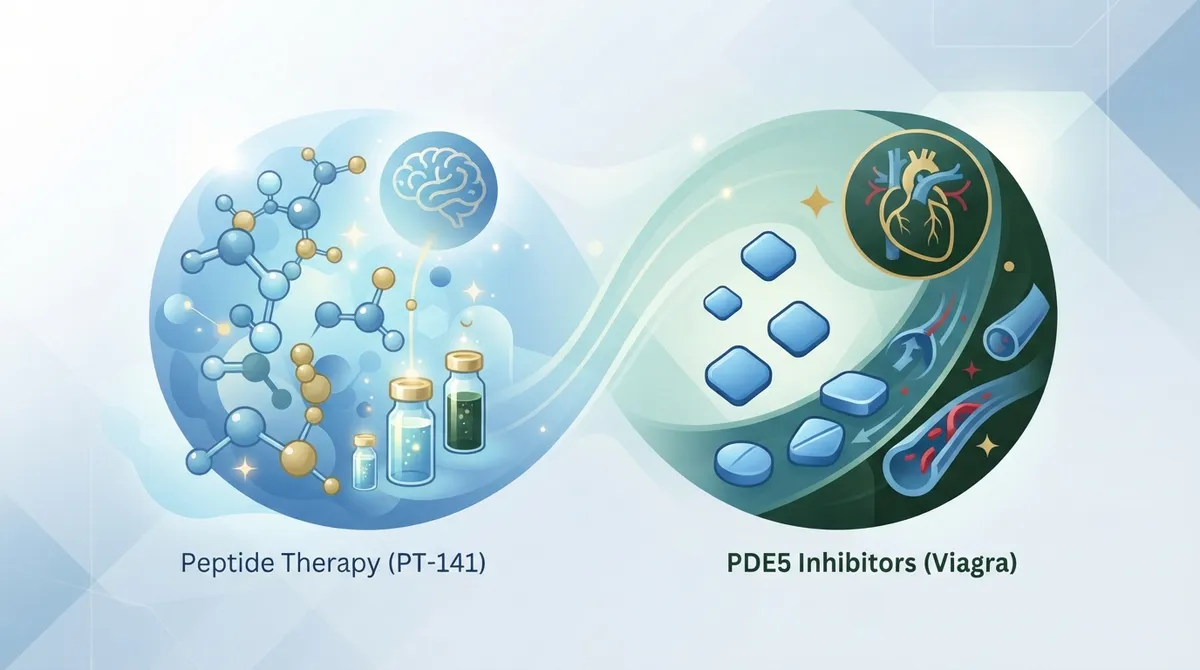
PDE5 inhibitors work locally. They boost blood flow to the penis by enhancing nitric-oxide signaling in penile tissue. This is well-studied, guideline-supported, and backed by decades of use. PT-141, on the other hand, works centrally, meaning it acts on your brain’s arousal pathways, specifically the MC3R and MC4R melanocortin receptors. Think of PDE5 inhibitors as working on the plumbing, while PT-141 works on the wiring.
| Feature | PT-141 (Bremelanotide) | PDE5 Inhibitors (Viagra, Cialis) |
|---|---|---|
| FDA Approval Status | Approved only for HSDD in premenopausal women; off-label in men | FDA-approved for male ED |
| Mechanism | Central nervous system, melanocortin receptors | Local blood flow via nitric oxide |
| Onset Time | About 30 minutes (intranasal studies) | 30 to 60 minutes typically |
| Common Side Effects | Nausea, flushing, headache, blood pressure changes | Headache, flushing, nasal congestion |
| Evidence Base | Small, early-phase studies | Large, guideline-defining clinical trials |
A well-known 2004 study published in the Journal of Urology tested intranasal PT-141 in men, including those with mild-to-moderate ED. Doses above 7 mg produced statistically significant erectile responses, with effects starting around 30 minutes after dosing. The half-life was short, roughly 1.85 to 2.09 hours. That is genuinely interesting research, but it is not the same as the massive evidence base supporting PDE5 inhibitors.
Is PT-141 FDA-Approved for Men? Let’s Be Honest
Here is something every man deserves to know clearly: no peptide is currently FDA-approved specifically to treat male erectile dysfunction. Bremelanotide was approved by the FDA in 2019 under the brand name Vyleesi, but only for acquired, generalized hypoactive sexual desire disorder in premenopausal women. Its use in men is off-label, meaning providers can prescribe it, but it has not gone through the same rigorous approval process for male sexual health.
This does not mean PT-141 is useless for men. It means the evidence is still developing, and it should be described honestly as investigational rather than a guaranteed fix. Reputable sources like the National Library of Medicine continue to track ongoing research into melanocortin agonists for sexual health.
Why Men Ask About PT-141 After Trying Viagra
Some men turn to PT-141 because PDE5 inhibitors did not work well for them, or caused side effects they could not tolerate. Small studies have shown that some men with an inadequate response to sildenafil experienced improved erectile activity with PT-141. That said, this is based on limited trials, not large-scale guideline data, so it should be discussed carefully with a licensed provider rather than assumed as a backup plan.
Beyond PT-141: Other Peptides Men Ask About
PT-141 gets most of the attention, but it is not the only peptide connected to men’s sexual health treatment. Here are a few others worth knowing about.
- Kisspeptin — This peptide affects the hypothalamic GnRH signaling pathway, which influences reproductive hormones. Research is exploring its role in libido and fertility, but it remains investigational, not an approved treatment.
- hCG (Human Chorionic Gonadotropin) — This one actually has FDA-approved uses, but for specific conditions like hypogonadotropic hypogonadism and certain fertility issues. It can stimulate the testes to produce more testosterone and support sperm production, but it is not a general ED treatment.
- Growth hormone-related peptides — These are more commonly discussed for recovery, sleep, and metabolism, though some men explore them as part of a broader vitality plan.
If low testosterone is part of your picture, it helps to understand how hormone levels connect to desire and energy. Our guide on the real benefits of hormone therapy for men breaks this down in plain language.
What Actually Causes ED, and Why Testosterone Isn’t Always the Answer
Here is a truth that surprises a lot of men: erectile dysfunction is often not primarily a testosterone problem. Low T can reduce libido and spontaneous erections, sure, but ED itself is frequently vascular, metabolic, medication-related, or psychological.
Consider this: the Massachusetts Male Aging Study found that about 52% of men aged 40 to 70 experienced some degree of ED. That is more than half. It is common, and it is rarely caused by just one thing.
- Cardiovascular disease and poor blood flow
- Diabetes and metabolic syndrome
- Smoking and obesity
- Certain medications, including some blood pressure drugs and antidepressants
- Sleep disorders like sleep apnea
- Anxiety, depression, or relationship stress
Because ED can be an early warning sign of heart problems, persistent symptoms deserve a real medical evaluation, not just a supplement order. This is exactly why platforms like peptides for women and peptides for men pair every treatment plan with actual lab work first.
What Tests Should Come Before Any Peptide Treatment?
Before starting any men’s sexual health treatment, whether it involves a peptide, a PDE5 inhibitor, or hormone support, a proper workup matters. Here is a simple sequence most licensed providers follow.
- Full medical and sexual history, including current medications
- Blood pressure and cardiovascular risk assessment
- Morning testosterone level, often confirmed with a repeat test if low
- Additional labs based on symptoms, such as thyroid or metabolic panels
- Discussion of lifestyle factors like sleep, stress, alcohol, and smoking
- A personalized plan built around your actual results, not guesswork
This is the exact process behind how to start peptide therapy safely and see real results. Skipping bloodwork is a little like trying to fix your car without ever popping the hood.
The Compounded Peptide Question: Buyer Beware
Let’s talk about something important. A lot of PT-141 and other peptides sold online come from compounded or unregulated sources. That word “unregulated” should catch your attention.
Compounded products may have inconsistent purity, unclear dosing, and questionable sterility. Some are marketed with bold promises that go far beyond what actual clinical research supports. According to what are peptides, these compounds need careful handling and medical oversight, not casual online ordering.
| Source Type | Regulatory Status | Key Concern |
|---|---|---|
| FDA-approved medication | Fully regulated | Reliable dosing, tested safety profile |
| Licensed telehealth provider with compounding pharmacy | Regulated pharmacy oversight | Requires proper prescription and monitoring |
| Direct-to-consumer online peptide sellers | Largely unregulated | Uncertain purity, potency, and legality |
This is exactly why working with a licensed telehealth clinic matters so much. Learn more about the difference in our comparison of local clinic vs. telehealth options for peptide therapy.
Side Effects and Safety: What You Need to Know
No treatment is completely risk-free, and honesty here builds trust. Bremelanotide’s most commonly reported side effects include nausea, flushing, headache, and temporary increases in blood pressure. It is contraindicated for people with uncontrolled hypertension or known cardiovascular disease.
- Always disclose your full medication list to your provider
- Mention any history of heart disease, stroke, or uncontrolled blood pressure
- Report unusual symptoms immediately, even if they seem minor
- Never combine unapproved peptides without medical supervision
- Ask about interactions with other medications you take regularly
Providers should also consider your overall cardiovascular risk before recommending any option, whether it is a PDE5 inhibitor, PT-141, or hormone therapy.
Why Personalized Care Beats One-Size-Fits-All
Every man’s body tells a different story. That is why cookie-cutter treatment plans rarely deliver the results people hope for. A thoughtful approach looks at your bloodwork, your goals, your lifestyle, and your risk factors together.
At Allura Longevity, care starts with a simple $50 virtual consultation, followed by comprehensive bloodwork through LabCorp. From there, licensed providers, led by board-certified Family Nurse Practitioner Ashley, build a personalized six-month plan just for you. Peptides and medications arrive at your door, and your plan gets adjusted along the way based on how your body responds. It is medical care that actually fits your real life, not the other way around.
Who Tends to Benefit Most
- Health optimizers who want data-backed, personalized protocols
- Busy professionals who need convenient telehealth visits, not waiting rooms
- Aging adults focused on maintaining vitality and confidence
- Biohackers who appreciate transparent bloodwork and tracking
- Wellness seekers ready to go beyond basic supplements
If hormone imbalance seems like part of your picture too, it is worth reading about how to know if you need hormone therapy in 2026 before jumping to conclusions about peptides alone.
Putting It All Together: A Realistic Path Forward
So where does this leave you? Here is a simple, friendly roadmap.
- Get evaluated by a licensed provider, not a random online form
- Complete bloodwork to understand your actual hormone and health status
- Discuss proven options first, like PDE5 inhibitors, if ED is your main concern
- Talk openly about PT-141 or other peptides if you want to explore additional options
- Address lifestyle factors like sleep, stress, and cardiovascular health alongside any treatment
- Follow up regularly so your plan can be adjusted as your body changes
Men’s sexual health treatment is not about chasing the newest trend. It is about combining solid evidence, honest expectations, and a provider who actually listens. Peptides like PT-141 offer real promise for some men, especially those who have not responded well to traditional options, but they work best as part of a bigger, personalized strategy.
Ready to Take the Next Step?
You deserve care that treats you like a whole person, not just a prescription refill. Allura Longevity offers licensed, telehealth-based peptide therapy with real bloodwork, real monitoring, and real people who care about your results. Spots fill up each month, so if you are ready to feel like yourself again, now is a great time to reach out. Request a consultation today and let’s build a plan that actually fits your life. You can also call the team directly at (813) 510-6277 with any questions.
FAQs
Q: Is PT-141 FDA-approved for erectile dysfunction in men?
A: Not quite, friend. PT-141, or bremelanotide, is FDA-approved as Vyleesi only for low sexual desire in premenopausal women. Its use in men is off-label, so think of it as promising but still investigational rather than an official ED treatment.
Q: How does PT-141 work differently from Viagra or Cialis?
A: Great question! Viagra and Cialis boost blood flow locally in the penis, while PT-141 works through your brain’s arousal centers instead. It is like comparing plumbing repair to rewiring the control panel, both aim for the same result but through very different paths.
Q: Can PT-141 help men who do not respond well to PDE5 inhibitors?
A: Some small studies suggest it might help men who had limited success with sildenafil, which is encouraging news. That said, the research pool is still fairly small, so this option should always be discussed with a licensed provider first.
Q: What are the side effects of bremelanotide in men?
A: The most common ones reported are nausea, flushing, headache, and a temporary bump in blood pressure. If you have uncontrolled high blood pressure or heart disease, it is important to flag that with your provider before considering it.
Q: What tests should I get before starting any peptide-based sexual health treatment?
A: A good starting point includes a full medical history, blood pressure check, and morning testosterone levels, often confirmed with a repeat test. This kind of bloodwork helps your provider build a plan that actually matches what your body needs, not just a guess.





