

Key Takeaways
-
Peptides work upstream by signaling your body to produce its own hormones rather than supplying them directly, making the process feel more natural and sustainable long-term compared to traditional HRT.
-
Results typically appear gradually over 2-4 weeks for early changes, with fuller effects emerging over 2-3 months, requiring patience and regular bloodwork adjustments rather than immediate hormone level spikes.
-
Common peptides like Sermorelin and Ipamorelin target the pituitary gland to release growth hormone naturally, while others like PT-141 support sexual wellness through nervous system signaling instead of direct hormone replacement.
-
Quality sourcing and medical supervision are critical for safety since many peptides lack broad market standardization; working with licensed providers using LabCorp bloodwork reduces risks far more than unregulated online sellers.
-
Peptide therapy and traditional HRT can be combined under medical supervision, allowing you to leverage peptides for recovery and energy support while maintaining targeted hormone replacement for specific deficiencies.
-
Telehealth delivery enables convenient at-home peptide injections and virtual consultations with licensed providers, eliminating waiting room visits while building personalized 6-month treatment plans based on individual lab data.
Feeling tired, foggy, or just not like yourself lately? You’re definitely not alone. So many of us reach a point where our energy, sleep, and mood just don’t feel right anymore, and we start wondering if our hormones are to blame. If you’ve been searching for answers, you’ve probably typed “how does hormone therapy work” into Google more than once. The good news? There’s a gentler, more targeted path than you might expect, and it starts with understanding how peptide therapy fits into the picture.
Think of this article as a friendly conversation over coffee, where we break down the science without the confusing medical jargon. Whether you’re a busy professional squeezing self-care into a packed schedule, or someone who loves tracking every biomarker, we’ve got you covered. Let’s talk about how peptides actually help your body produce and balance its own hormones, and why so many people are choosing this approach in 2026.

What Does Hormone Therapy Actually Mean Today?
When most people hear “hormone therapy,” they picture traditional hormone replacement therapy, or HRT. That’s when a doctor prescribes hormones like estrogen, progesterone, or testosterone to directly replace what your body isn’t making enough of anymore. It’s a well-known approach, and it works well for many people.
But there’s another path that’s gaining serious traction: peptide therapy. Instead of adding hormones directly, peptides send signals that encourage your body to make, release, or regulate its own hormones more effectively. It’s a bit like the difference between refilling a car’s gas tank versus tuning up the engine so it runs better on its own fuel.
Peptides as Messenger Molecules
Peptides are short chains of amino acids, the same building blocks that make up proteins in your body. You can think of them as tiny messengers that carry instructions to your cells. According to what are peptides, these molecules occur naturally and play a role in everything from immune function to tissue repair.
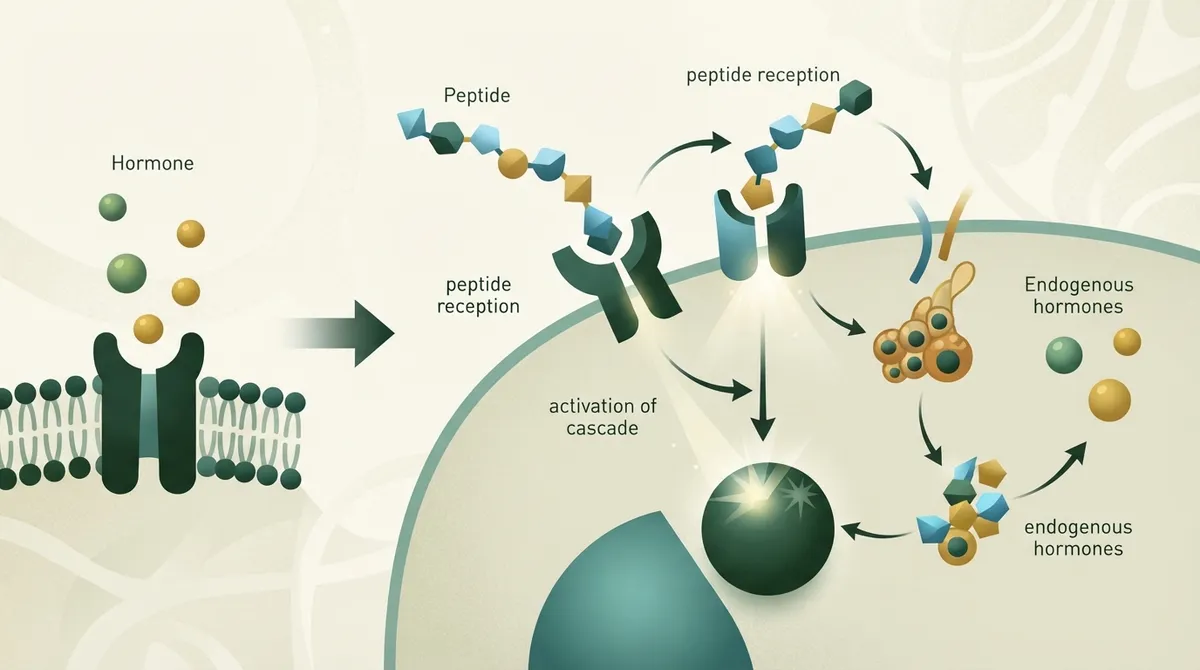
In the context of hormone health, certain peptides act upstream of your hormone glands. Instead of replacing testosterone directly, for example, a peptide might tell your pituitary gland to release more growth hormone naturally. This upstream approach is a big part of why so many people are curious about peptide-based options today.
How Does Hormone Therapy Work With Peptides, Step by Step?
Let’s break this down into a simple sequence so you can see exactly what happens once you start a peptide protocol.
- Signal delivery: The peptide is injected or absorbed, then travels through your bloodstream to specific receptor sites.
- Receptor binding: The peptide attaches to receptors on cells in glands like the pituitary, hypothalamus, or gonads.
- Signal activation: This binding triggers a chain reaction, prompting the gland to release its own natural hormones.
- Hormone release: Your body responds by producing more of the hormone in question, whether that’s growth hormone, testosterone, or another key player.
- Feedback and regulation: Your body’s natural feedback loops adjust over time, helping maintain balance rather than overshooting.
This is fundamentally different from traditional HRT, where the hormone is supplied ready-made. Peptides work more like a nudge, encouraging your body’s own systems to do the heavy lifting. Research published through the National Library of Medicine highlights how these signaling pathways can support metabolic and hormonal function when used appropriately.
Why This Matters for Long-Term Wellness
Because peptides often work by supporting your body’s own production, some people find the results feel more natural over time. It’s not about flooding your system, it’s about restoring communication between glands and tissues. For many of our clients at Allura Longevity, this distinction is exactly what draws them toward peptide protocols in the first place.
Peptide Therapy vs Traditional Hormone Replacement Therapy
It helps to see these two approaches side by side. Here’s a simple breakdown.
| Feature | Peptide Therapy | Traditional HRT |
|---|---|---|
| How it works | Signals the body to produce or regulate its own hormones | Directly supplies hormones from an outside source |
| Onset of effects | Gradual, often 2-4 weeks for early changes | Can be faster since hormone levels rise immediately |
| Customization | Highly individualized based on labs and goals | Often standardized dosing with adjustments over time |
| Delivery method | Subcutaneous injections, often at home | Pills, patches, gels, pellets, or injections |
| Common goals | Metabolic support, recovery, energy, anti-aging | Menopause symptoms, low testosterone, andropause |
Some people even combine both approaches under medical supervision, using peptides to support the body’s natural rhythms alongside targeted hormone replacement. If you’re trying to decide which path fits your goals, our guide on how to choose between bioidentical hormones and peptides walks through the key differences in more detail.
Common Peptides Used for Hormonal Support
Not all peptides do the same job. Each one has a specific target and purpose. Here are some of the most commonly used options in 2026.
- Sermorelin: Encourages the pituitary gland to release more growth hormone naturally.
- Ipamorelin: Works similarly to sermorelin but with a gentler, more selective effect on growth hormone release, as explained in our Ipamorelin peptide therapy benefits, dosing, and safety guide.
- CJC-1295: Often paired with other peptides to extend and stabilize growth hormone release, covered in our article on how to use CJC-1295 peptide safely for real results.
- PT-141: Supports sexual wellness by acting on the nervous system rather than sex hormones directly.
- BPC-157: While primarily known for tissue repair, it can support overall recovery, which indirectly benefits hormonal balance, as outlined in our BPC-157 peptide facts guide.
GLP-1 Peptides and Metabolic Hormone Support
GLP-1 peptides are another category worth mentioning. While they’re best known for weight loss support, they also interact with hormones related to appetite regulation and blood sugar control. If you want to understand this category more deeply, check out our breakdown of how to understand GLP-1 peptide therapy in 2026.
What Results Can You Realistically Expect?
Patience is key with peptide therapy. Unlike some medications that work overnight, peptides usually take a bit of time to show their full effect. Here’s a general timeline many clients experience.
- Weeks 1-2: Your body begins adjusting to the new signaling pattern. Some people notice subtle changes in sleep quality or energy.
- Weeks 2-4: Early improvements often become more noticeable, including better recovery after workouts or clearer thinking.
- Months 2-3: Fuller effects typically emerge, with more consistent energy, mood, and physical changes.
- Months 3-6: Providers often reassess bloodwork and adjust the protocol to keep progress moving in the right direction.
This gradual pattern is normal and expected. It reflects how the body naturally ramps up hormone production rather than experiencing an artificial spike. For a deeper look at what to expect, our article on when peptide therapy before and after results show offers a helpful timeline breakdown.
Is Peptide Therapy Safe for Hormonal Support?
Safety always comes first, and that’s true no matter which therapy you’re considering. The good news is that peptide therapy has a generally favorable safety profile when it’s properly prescribed, sourced, and monitored by licensed providers.
Common Side Effects to Know About
Like any medical treatment, peptides can come with some side effects. Here’s what research shows so far.
- Nausea has been reported in 15-44% of patients across major GLP-1 peptide trials, depending on the specific compound and dose.
- Injection-site reactions occur in about 2-8% of patients receiving subcutaneous peptide injections.
- Mild headaches or fatigue can occur temporarily as the body adjusts to new signaling patterns.
- Rarely, allergic reactions can happen, which is why medical screening matters so much before starting.
To get a fuller picture of what side effects look like and how to manage them, our article on what causes GLP-1 side effects and how to manage them is a great resource.
Who Should Avoid Peptide Therapy
Peptide therapy isn’t right for everyone. Common screening concerns include:
- Active cancer or a recent cancer diagnosis
- Pregnancy or breastfeeding
- Prior allergic reactions to peptides or related compounds
- Certain uncontrolled medical conditions, depending on the specific peptide
This is exactly why bloodwork and a real medical consultation matter so much before starting. A licensed provider can review your health history and labs to determine what’s safe and appropriate for your body. Our guide on the peptide safety checklist outlines fifteen essential rules worth reviewing before starting any protocol.
How Sourcing and Standardization Affect Safety
One thing that sets responsible peptide therapy apart is quality control. Because many peptides aren’t broadly standardized across the market, sourcing matters enormously. Regulatory guidance has noted that novel peptide impurities should not introduce higher-affinity immune responses that could increase risk, which is a technical way of saying quality control really does matter.
This is why working with a licensed telehealth provider, rather than an unregulated online seller, makes such a big difference. At Allura Longevity, every treatment plan starts with a $50 virtual consultation and complete bloodwork through LabCorp, ensuring your protocol is based on your actual biology rather than guesswork.
Combining Peptide Therapy With Traditional HRT
Some people wonder if they have to choose one path or the other. In many cases, peptide therapy and traditional hormone replacement therapy can be used together under medical supervision. For example, someone on testosterone replacement therapy might also use recovery peptides like BPC-157 to support healing, or growth hormone peptides to complement their overall wellness goals.
This combined approach is becoming more common as providers recognize that hormonal health isn’t one-size-fits-all. If you’re curious how these two therapies can work side by side, our comparison on how to compare peptide therapy vs testosterone replacement breaks it down clearly.
Getting Started the Right Way
If you’re ready to explore whether peptide therapy is right for you, here’s a simple roadmap to follow.
- Schedule a virtual consultation with a licensed provider to discuss your goals and health history.
- Complete comprehensive bloodwork to establish a clear baseline of your current hormone levels.
- Receive a personalized treatment plan built around your specific labs, not a generic template.
- Start your protocol with peptides delivered directly to your home for convenient at-home use.
- Follow up regularly with your provider so your plan can be adjusted as your body responds.
This is exactly the model we use at Allura Longevity. Led by Ashley, a board-certified Family Nurse Practitioner, our team builds six-month treatment plans based on real lab data, not one-size-fits-all guesses. For a deeper dive into the process, check out our guide on how to start peptide therapy safely and see real results.
Why Telehealth Makes This Easier Than Ever
Gone are the days of taking time off work for a doctor’s appointment just to talk about your energy levels. Telehealth has completely changed how people access personalized hormone and peptide care. You can complete labs locally, have a virtual visit, and get your peptides shipped right to your door.
This convenience matters most for busy professionals who don’t have hours to spend in a waiting room, and for people in areas without easy access to specialized clinics. If you’re weighing your options, our comparison of local clinic vs telehealth for the best peptide therapy near you can help you decide what fits your lifestyle best.
Allura Longevity currently serves clients in Florida, Georgia, Texas, Connecticut, Indiana, Maryland, New York, and California, with plans to expand as demand grows. Spots for new clients are limited each month, so if you’ve been thinking about starting, now is a great time to explore your options.
Final Thoughts on How Hormone Therapy Works With Peptides
Understanding how hormone therapy works doesn’t have to feel overwhelming. At its core, peptide therapy is about giving your body better instructions, not just more raw material. It’s a gentler, more personalized way to support your energy, recovery, sleep, and overall vitality as you age.
If you’re ready to feel like yourself again, the next step is simple. Request a consultation with our licensed providers today and start building a peptide therapy plan designed around your unique bloodwork and goals. Your future self will thank you for taking this step, and our team is genuinely excited to help you get there.
FAQs
Q: How does peptide therapy support hormone balance?
A: Peptides act like little messengers that tell your glands to produce or release hormones more effectively. Instead of adding hormones directly, they help your body do what it’s naturally designed to do, just a bit better and more consistently.
Q: What is the difference between peptide therapy and hormone replacement therapy?
A: Traditional hormone replacement therapy supplies hormones directly from an outside source, while peptide therapy works upstream by signaling your body to produce its own. Think of it as the difference between adding fuel versus fine-tuning the engine.
Q: How long does peptide therapy take to work?
A: Most people notice early changes within 2 to 4 weeks, with fuller results building over 2 to 3 months. Everyone’s timeline is a little different, which is why ongoing bloodwork and check-ins really matter.
Q: Is peptide therapy safe for hormone imbalance?
A: Peptide therapy is generally safe when it’s prescribed and monitored by a licensed provider using quality-sourced peptides. That said, screening for things like active cancer, pregnancy, or allergic history is an essential first step.
Q: Can peptide therapy be combined with HRT?
A: Yes, many people successfully combine peptide therapy with traditional hormone replacement therapy under medical supervision. It really comes down to your individual goals, labs, and what your provider recommends for your specific situation.





