
Key Takeaways
-
Testosterone naturally declines starting in men's 30s, causing fatigue, low libido, muscle loss, and brain fog; peptide therapy works by signaling your body to produce more hormones naturally rather than replacing them directly.
-
Peptides like gonadorelin and kisspeptin work upstream in hormone pathways and may better preserve fertility than traditional TRT, which can suppress sperm production over time.
-
Before starting any hormone or peptide protocol, comprehensive blood work including testosterone, LH, FSH, IGF-1, and metabolic panels is essential to create a personalized treatment plan.
-
Peptide therapy is often off-label or investigational, so choosing a licensed medical provider who requires baseline labs, monitors progress, and adjusts doses is critical for safety and effectiveness.
-
Men with mild symptoms or recovery goals, those prioritizing fertility preservation, and busy professionals often benefit more from peptide-based approaches than traditional testosterone replacement therapy.
-
Growth hormone secretagogues like ipamorelin and CJC-1295 support better sleep, faster recovery, and healthier body composition by boosting growth hormone and IGF-1 rather than directly increasing testosterone.
If you’ve been feeling tired, unmotivated, or just not like yourself lately, you’re not alone. Thousands of men hit their 30s, 40s, and 50s wondering why their energy has vanished and their gym gains have stalled. The good news? You don’t have to just accept it. Understanding why do men need hormone therapy is the first step toward feeling like yourself again, and peptide therapy has become a popular, personalized way to get there.
This guide breaks down what’s really going on in your body, how peptides fit into the picture, and why so many men are turning to peptides for men as part of their wellness routine. Whether you’re a busy professional trying to squeeze in self-care or a biohacker who tracks every lab number, we’ll walk through this together in plain, friendly language.
Why Do Men Need Hormone Therapy in the First Place?
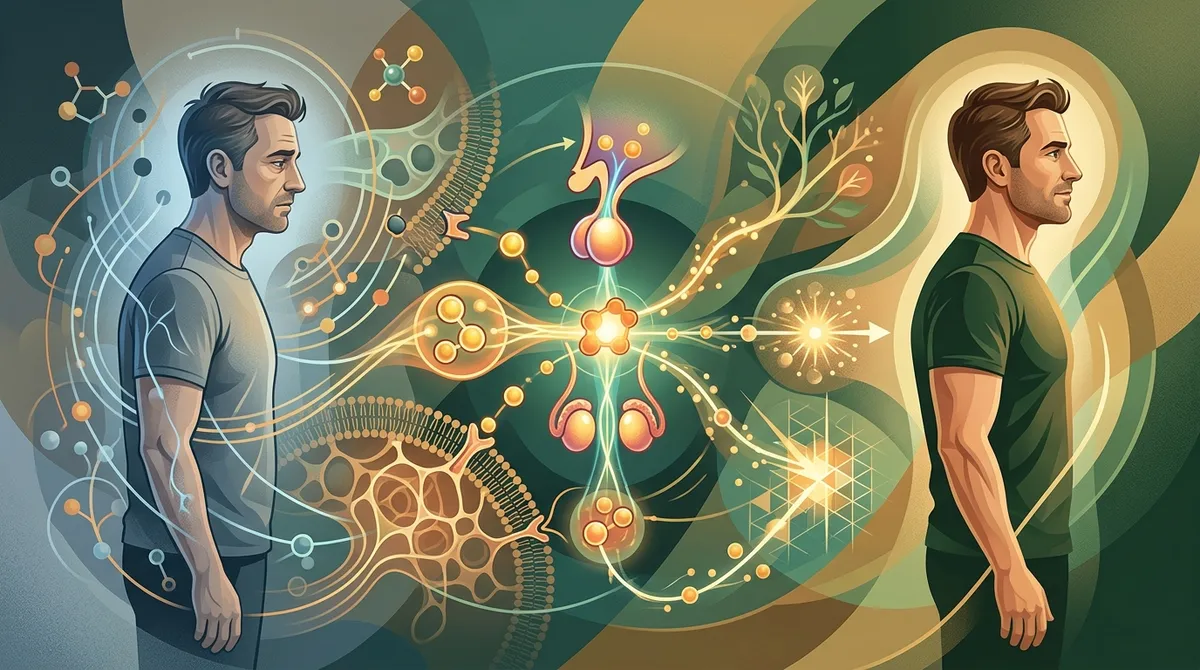
As men age, hormone production naturally slows down. Testosterone levels can start dropping as early as your 30s, and by your 40s or 50s, many guys notice real changes. This isn’t just about vanity or vibes. It affects your energy, mood, sleep, and even your ability to recover from a hard workout.
Here are some common reasons men explore hormone-related support:
- Persistent fatigue that doesn’t improve with more sleep
- Low sex drive or performance changes
- Difficulty building or keeping muscle
- Stubborn weight gain, especially around the belly
- Brain fog or trouble concentrating
- Mood swings, irritability, or low motivation
If several of these sound familiar, it might be time to check your labs. The National Library of Medicine has published research showing how hormone decline connects to many of these everyday symptoms, so you’re definitely not imagining things.
Peptide Therapy vs. Testosterone Replacement: What’s the Difference?
This is where a lot of men get confused, and honestly, that’s completely understandable. Peptide therapy and testosterone replacement therapy (TRT) are not the same thing, even though they often get lumped together.
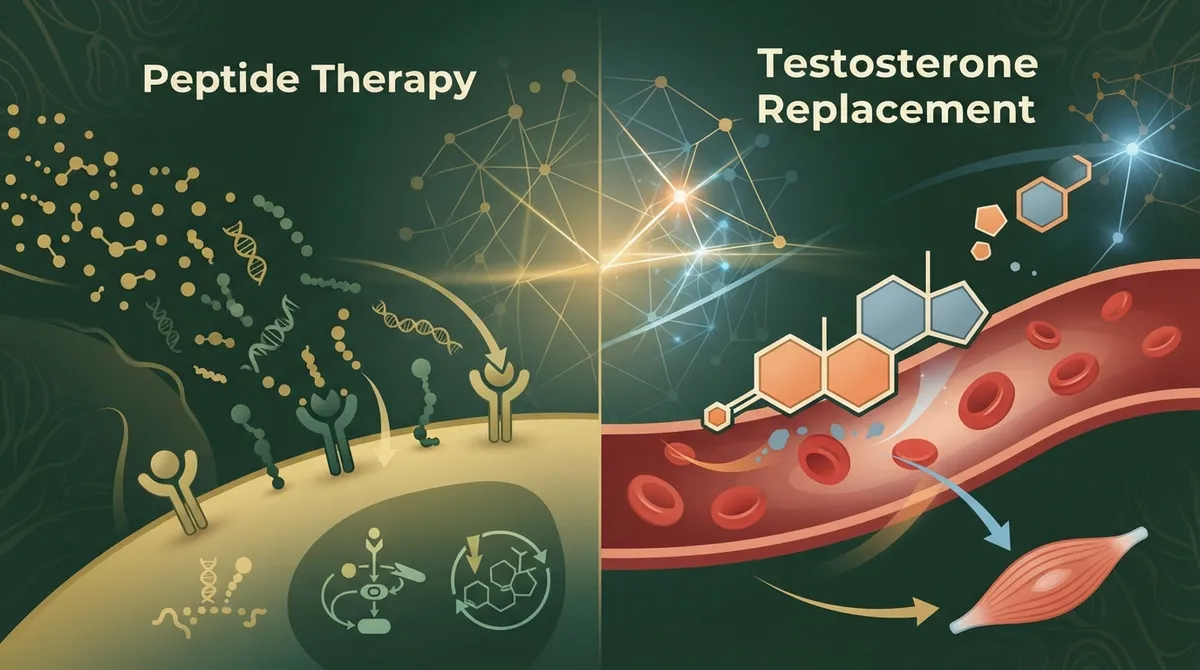
TRT works by directly supplying testosterone to your body. Peptides work differently. Many peptides act like little messengers, signaling your body to produce more of its own hormones rather than replacing them outright. Think of it like the difference between hiring someone to do a job for you versus giving your own team better tools to do it themselves.
| Feature | Testosterone Replacement Therapy | Peptide Therapy |
|---|---|---|
| How it works | Supplies testosterone directly | Signals the body to produce more hormones naturally |
| Effect on fertility | Can suppress sperm production | May help preserve fertility better |
| Best for | Confirmed hypogonadism | Milder symptoms, recovery, and supportive goals |
| FDA status | Approved for diagnosed low testosterone | Often off-label or investigational |
| Evidence base | Strong, well-studied (Testosterone Trials, 788 men, NEJM 2016) | Growing, but less standardized |
If you want a deeper dive into how these two approaches stack up, check out this breakdown on TRT vs. Peptides: Which Hormone Fix Wins for Men? It’s a great next read if you’re weighing your options.
How Peptides Support Male Hormone Health
Peptides are short chains of amino acids that act like messengers in your body. According to what are peptides, they can influence everything from tissue repair to hormone signaling. In men’s health, certain peptides are commonly discussed for their supportive role in hormone pathways.
Growth Hormone Secretagogues
Peptides like ipamorelin and CJC-1295 are popular in men’s wellness circles. They primarily boost growth hormone and IGF-1 levels rather than testosterone directly. This can support better recovery, improved sleep, and healthier body composition over time. If you’re curious how these work together, this guide on how to use CJC-1295 peptide safely for real results is worth a look.
GnRH-Related Peptides
Peptides such as gonadorelin and kisspeptin act higher up in the hormone chain, closer to where your brain signals your testes to produce testosterone. These are the most directly relevant peptides when we talk about male hormone signaling, since they work upstream in the same pathway TRT can suppress.
Recovery and Wellness Peptides
Some men focus less on testosterone and more on feeling good day to day. Peptides aimed at recovery, sleep, and energy can make a real difference, especially for busy professionals who need to perform at their best without a lot of downtime.
Common Goals Men Have With Peptide Therapy
Most men who explore peptide therapy are chasing one (or more) of these three goals:
- Growth hormone axis support: Better sleep, improved recovery, and healthier body composition.
- Recovery and repair: Faster healing from workouts, injuries, or general wear and tear.
- Sexual and hormone health: Improved libido, energy, and overall vitality.
These goals often overlap. A man chasing better sleep might also notice improved mood and sex drive. That’s the beauty of a well-designed, personalized plan rather than a one-size-fits-all approach.
Does Peptide Therapy Affect Fertility?
This is a big one for men who are still hoping to have kids, or who simply want to keep their options open. TRT can suppress the hypothalamic-pituitary-gonadal axis, which basically means it tells your body to stop making its own testosterone and sperm. Over time, this can reduce fertility.
Peptides like gonadorelin work differently because they support that same pathway instead of shutting it down. This is one reason some men consider peptide-based approaches, especially if fertility preservation is a priority. It’s a nuanced topic, so working with a knowledgeable provider matters a lot here.
Is Peptide Therapy Safe for Men?
Safety always comes first, and that’s exactly why a personalized, medically supervised approach matters so much. Many peptide therapies are considered off-label or investigational, meaning they haven’t received broad FDA approval for general men’s health optimization. That doesn’t mean they’re unsafe, but it does mean you need proper medical guidance.
Here’s what a responsible approach typically looks like:
- Comprehensive blood work before starting any treatment
- A licensed provider reviewing your labs and health history
- A customized plan based on your specific goals and numbers
- Ongoing monitoring and dose adjustments over time
- Clear communication about what’s evidence-based versus experimental
If you want a step-by-step look at getting started responsibly, this article on how to start peptide therapy safely and see real results walks through the process in detail.
What Blood Tests Do You Need Before Starting?
Before jumping into any hormone or peptide protocol, your provider should order labs. This isn’t just a formality. It’s how they figure out exactly what your body needs.
| Common Lab Test | What It Measures |
|---|---|
| Total and Free Testosterone | Overall testosterone levels in your blood |
| LH and FSH | Signals from your brain to your testes |
| IGF-1 | Growth hormone activity in your body |
| Comprehensive Metabolic Panel | Kidney, liver, and overall metabolic health |
| Lipid Panel | Cholesterol and cardiovascular risk markers |
| Thyroid Panel | Thyroid function, which affects energy and metabolism |
At Allura Longevity, clients start with a simple $50 virtual consultation, followed by comprehensive blood work through LabCorp. From there, a licensed provider builds a six-month treatment plan tailored to your specific results and goals.
Who Should Consider Hormone or Peptide Therapy?
Not every man needs the same approach, and that’s actually a good thing. Here’s a quick way to think about it:
- Confirmed low testosterone: Men with clear hypogonadism often do best with traditional TRT, since it has the strongest evidence behind it.
- Mild symptoms or supportive goals: Peptides may be a better fit for men who want to support recovery, sleep, and energy without jumping straight to full hormone replacement.
- Fertility-focused men: Those hoping to preserve fertility often lean toward peptide-based options that support natural hormone production.
The truth is, there’s no universal answer. That’s exactly why working with a provider who reviews your actual labs, not just your symptoms, makes such a difference. If you’re also dealing with visible signs of aging alongside low energy, this resource on how to pick the best peptides for aging in 2026 might be helpful too.
What Makes a Good Peptide Therapy Provider
Choosing the right provider matters just as much as choosing the right peptide. Here’s what to look for:
- Licensed medical providers who review your full health history
- Required blood work before starting any protocol
- Transparent conversations about off-label versus approved treatments
- Ongoing check-ins and dose adjustments, not a one-time prescription
- Home delivery and telehealth convenience for busy schedules
Allura Longevity checks every one of these boxes. Led by Ashley, a board-certified Family Nurse Practitioner, the clinic offers fully personalized six-month plans built around your unique blood work. Everything ships right to your door, and licensed providers monitor your progress the entire time. It’s telehealth care that fits into a real, busy life, not the other way around.
Bringing It All Together
So, why do men need hormone therapy? Because aging naturally slows down hormone production, and that slowdown shows up in ways that affect your daily life: energy, mood, muscle, and confidence. Peptide therapy offers a thoughtful, science-informed way to support your body’s own systems, often with fewer trade-offs than traditional testosterone replacement.
Whether your goal is better sleep, faster recovery, or simply feeling like yourself again, a personalized plan based on real data beats guesswork every time. And if fertility matters to you, peptides that support your natural hormone pathway are worth a serious conversation with your provider.
Ready to Take the Next Step?
You deserve to feel energized, clear-headed, and confident in your own body. Allura Longevity makes it simple to get started with a $50 virtual consultation, comprehensive blood work, and a custom plan designed just for you. Spots are limited each month, so don’t wait to get answers. Request a consultation today and take the first step toward feeling like your best self again. You can also call (813) 510-6277 to speak with the team directly.
FAQs
Q: Why would a man need hormone therapy in the context of peptide therapy?
A: As men age, natural hormone production slows down, leading to fatigue, low libido, and slower recovery. Peptide therapy can support the body’s own hormone pathways, offering a gentler option compared to traditional replacement therapy.
Q: How do peptides support male hormone levels?
A: Many peptides act as signals, encouraging your body to produce more of its own hormones rather than supplying them directly. Peptides like gonadorelin work upstream in the same pathway that controls natural testosterone production.
Q: What is the difference between peptide therapy and testosterone replacement therapy?
A: TRT supplies testosterone directly, while peptide therapy nudges your body to make more on its own. This means peptides may be gentler on fertility, since TRT can sometimes suppress natural sperm production.
Q: Does peptide therapy affect fertility in men?
A: Peptides like gonadorelin may actually help preserve fertility better than TRT, since they support your natural hormone pathway instead of shutting it down. This makes them appealing to men who want to keep their options open.
Q: What blood tests are needed before starting hormone or peptide therapy?
A: Most providers start with tests like total and free testosterone, LH, FSH, and IGF-1, along with a metabolic panel. These labs help your provider build a plan that’s actually tailored to your body, not a generic template.





