
Key Takeaways
-
Oral estrogen carries significantly higher blood clot risk (relative risk 1.63-2.09 for VTE/DVT) compared to transdermal options, which bypass first-pass liver metabolism and appear safer for long-term hormone therapy.
-
Most peptides are destroyed by stomach acid before absorption, making injection the most reliable delivery method for fat loss, muscle recovery, and tissue healing goals with consistent, predictable dosing.
-
Recent research shows oral polypeptides actually outperformed topical versions for skin hydration (5.80 mean improvement) and wrinkle reduction, challenging the assumption that topical is always better for skin benefits.
-
Transdermal hormone patches and gels offer comparable symptom relief to oral estrogen for menopause while reducing clotting risks, making them preferable for women with existing clotting risk factors.
-
Topical peptide creams are designed primarily for localized skin effects with minimal systemic absorption, making them low-risk but limited for goals requiring whole-body hormone optimization.
-
Oral formulations only work for specially engineered compounds like troches, enteric-coated capsules, and certain polypeptides; most standard peptides cannot survive digestive breakdown.
Picking the right way to take your peptides or hormones can feel confusing. Should you swallow a pill? Rub on a cream? Or go with an injection instead? If you have ever stood in your bathroom holding two different products and wondering which one actually works, you are not alone. This question comes up constantly for people exploring what are peptides and how to use them safely. Today, we are breaking down topical hormone therapy versus oral options in a way that actually makes sense, so you can make a confident, informed choice for your body.
Whether you are a busy professional squeezing wellness into a packed schedule, or a biohacker who tracks every lab result, this guide is for you. We will walk through how each delivery method works, what the science says, and why the right choice depends on your specific goals. Grab a cup of coffee and let’s dig in together.
What Do We Mean By Topical Versus Oral Hormone Therapy?
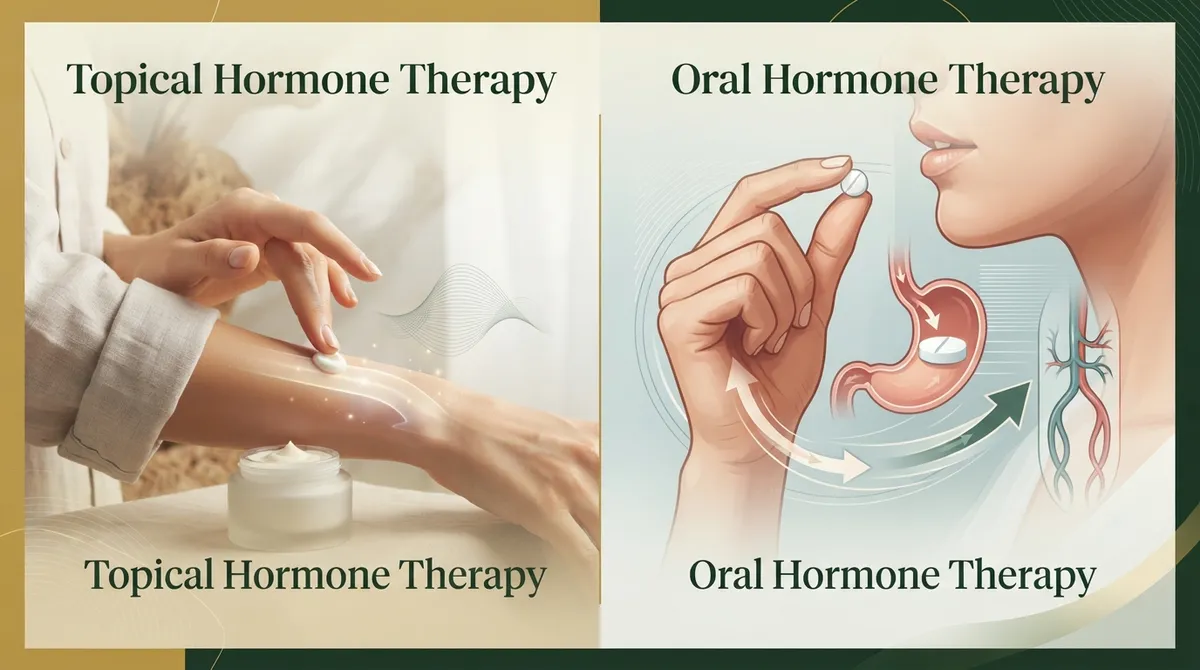
Topical hormone therapy means applying a cream, gel, or patch directly to your skin. Oral therapy means swallowing a pill, capsule, or sometimes a dissolvable troche. Both routes aim to get helpful compounds into your body, but they get there in very different ways.
With topical products, the hormone or peptide absorbs through your skin. Some of it may enter your bloodstream, while some stays local to treat that specific area. Oral products travel through your stomach and intestines first, which changes how much active ingredient actually makes it into your system.
Why the Delivery Method Actually Matters
Your body treats every delivery route differently. This is not just a minor detail. It can change how well a treatment works, how fast you see results, and even your risk for side effects.
Think of it like mailing a letter versus handing it directly to someone. Oral delivery has to pass through several checkpoints, including stomach acid and liver processing, before it reaches its destination. Topical delivery skips some of those checkpoints but has its own limitations too.

How Oral Delivery Works for Peptides and Hormones
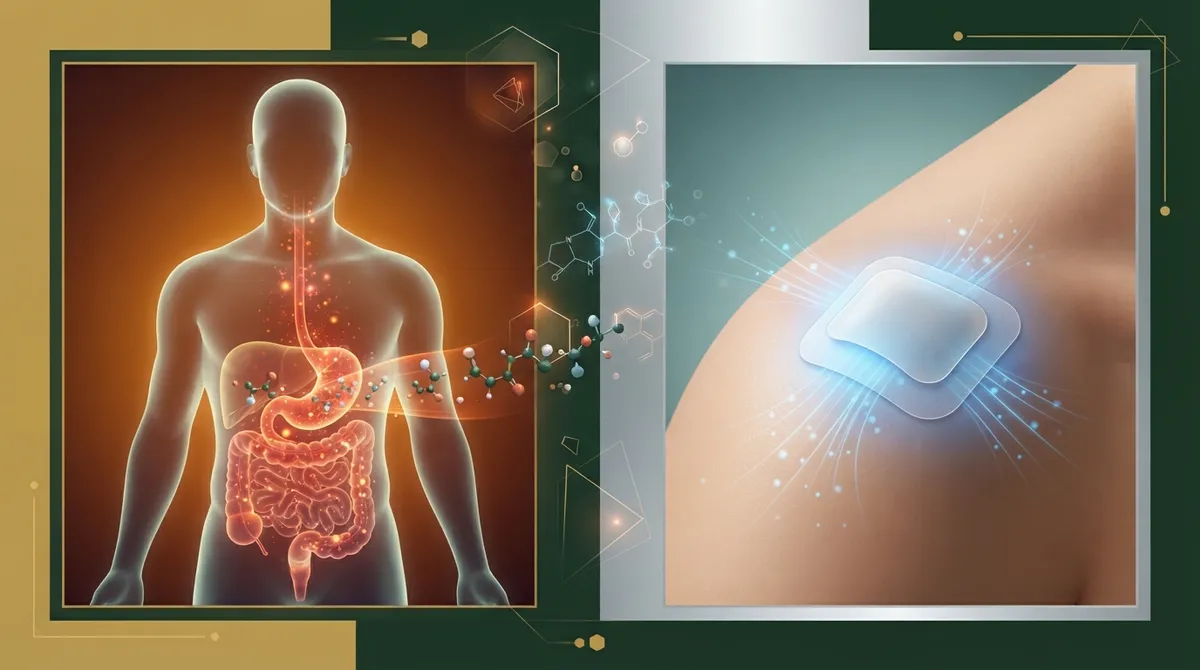
When you swallow a pill, it travels to your stomach first. Stomach acid and digestive enzymes are designed to break down proteins, and unfortunately, most peptides are proteins. This means many peptides get destroyed before they ever reach your bloodstream.
This is a big reason injection remains the gold standard for most peptide therapies. According to the National Library of Medicine, peptides are especially vulnerable to digestive breakdown, which limits their oral bioavailability significantly.
When Oral Formulations Do Work
That said, oral is not always off the table. Some specially designed formulas can survive the digestive process. These include:
- Troches or lozenges that dissolve under the tongue, bypassing the stomach
- Enteric-coated capsules built to resist stomach acid
- Certain hormone compounds engineered for oral stability
- Specific polypeptides studied for skin benefits
Interestingly, a 2025/2026 systematic review found that oral polypeptides actually outperformed topical versions for improving skin hydration and reducing wrinkles in subgroup analysis. Hydration improved by a mean difference of 5.80, and wrinkle reduction showed a mean difference of 0.35. So for certain skin-focused goals, oral options may have an edge.
How Topical Hormone Therapy Works
Topical products are applied directly to the skin. They are usually designed for one of two goals: local skin action or systemic absorption into the bloodstream.
Most topical peptide creams and serums target local effects. Think firmer skin, reduced fine lines, or improved texture right where you apply the product. Systemic absorption from these creams tends to be low, which is often exactly the point.
Transdermal Hormones: A Different Story
Transdermal hormone patches and gels are a bit different. These are specifically formulated to push hormones like estrogen through the skin and into your bloodstream for full-body effects. This route has become popular in broader hormone replacement therapy because it avoids something called first-pass liver metabolism.
Here is why that matters. When you swallow oral estrogen, your liver processes it before it circulates through your body. This process can increase certain clotting factors. Transdermal estrogen skips this liver pass entirely, which appears to lower some risks.
The Research: Oral Versus Transdermal Estrogen
Let’s talk numbers, because they tell an important story. A meta-analysis found that oral estrogen carried a higher risk of venous thromboembolism, or VTE, compared to transdermal estrogen. The relative risk was 1.63, with a confidence interval of 1.40 to 1.90.
The same analysis found an even bigger gap for deep vein thrombosis, or DVT. Oral estrogen showed a relative risk of 2.09 compared to transdermal, with a confidence interval of 1.35 to 3.23. These are not tiny differences, and they matter for anyone considering hormone therapy long term.
Symptom Relief: Is One Route Better?
Good news here. Clinical reviews suggest that transdermal and oral estrogen offer fairly similar benefits for many menopause symptoms. However, some evidence points to transdermal estrogen offering better relief for hot flashes and improved sleep quality compared to oral options.
This makes transdermal an appealing choice for many women dealing with disruptive symptoms, especially those already managing clotting risk factors. Always discuss your personal risk profile with a licensed provider before choosing a route.
Comparing Topical and Oral Delivery Side By Side
| Factor | Oral Delivery | Topical/Transdermal Delivery |
|---|---|---|
| Absorption Path | Digestive system, then liver | Skin, sometimes directly into bloodstream |
| First-Pass Liver Metabolism | Yes, significant | No, largely bypassed |
| Best For | Select hormones, some polypeptides, troches | Local skin treatment, transdermal hormone therapy |
| VTE/DVT Risk (Estrogen) | Higher (RR 1.63-2.09) | Lower |
| Peptide Stability | Often broken down by stomach acid | Limited systemic absorption for most peptides |
| Convenience | Easy to take, no application needed | Requires consistent skin application |
Why Injection Still Leads for Most Peptide Therapy
If oral and topical routes have limitations, why does injection remain the top choice for peptide therapy? The answer comes down to reliability. Injection delivers peptides directly into your tissue or bloodstream, skipping digestion entirely.
This means the peptide arrives intact and at a predictable dose. For therapies focused on fat loss, muscle recovery, or hormone optimization, this consistency is incredibly valuable. If you are curious about specific options, our guide on 13 Peptides for Fat Loss That Really Work in 2026 breaks down popular injectable choices.
Common Peptides and Their Preferred Delivery Routes
- BPC-157: Typically injected for tissue repair and gut healing, though some use topical forms for localized joint support
- CJC-1295: Almost always injected to stimulate growth hormone release effectively
- Ipamorelin: Delivered by injection for reliable systemic effects on growth hormone
- Melanotan: Usually injected, since oral absorption is poor
- Collagen-stimulating peptides: Often topical for skin texture, though oral forms show promise per recent research
- GLP-1 medications: Available in both injectable and select oral formulations engineered for stability
Want a deeper look at how these work in your body? Check out our article on How Do GHRP Peptides Really Work in Your Body? for more detail.
Choosing the Right Route for Your Goals
The best delivery method truly depends on what you are trying to achieve. Here is a simple way to think it through:
- If you want localized skin improvement, a topical peptide cream may be perfect
- If you need reliable systemic hormone replacement, transdermal patches might reduce clotting risk versus oral pills
- If your goal is fat loss, muscle recovery, or tissue healing, injectable peptides usually offer the most dependable results
- If you are managing menopause symptoms and have clotting risk factors, transdermal estrogen may be the safer path
- If convenience matters most and the peptide is specially formulated, an oral troche could be worth exploring
This is exactly why personalized care matters so much. What works beautifully for your friend may not be right for you, especially since everyone’s blood work, hormone levels, and health history are different.
Steps to Finding Your Ideal Hormone or Peptide Delivery Plan
Feeling a little overwhelmed? Totally normal. Here is a simple roadmap to help you move forward with confidence.
- Start with a virtual consultation to discuss your goals and health history
- Complete blood work through a trusted lab like LabCorp to understand your baseline hormone and health markers
- Review your results with a licensed provider who can explain what they mean for you
- Discuss which delivery route fits your goals, whether that is injectable, topical, or a specially formulated oral option
- Receive a customized treatment plan, often delivered right to your home for easy at-home use
- Stay in touch with your provider for ongoing monitoring and adjustments as your body responds
This is the exact process our team follows at Allura Longevity. Every plan starts with real data from your own blood work, not guesswork. If you are ready to explore your options, you can request a consultation to get started with a $50 virtual visit.
Safety Considerations Worth Knowing
No matter which route you choose, safety should always come first. Here are a few things to keep in mind:
- Oral estrogen carries a higher documented risk of blood clots than transdermal forms
- Topical peptide creams are generally low risk since systemic absorption is minimal
- Injectable peptides require proper technique and sterile handling to avoid infection
- Working with a licensed provider ensures your dosage and delivery method match your actual lab results
- Compounded or unregulated products can carry unknown risks, so sourcing matters
If you are new to injections and feeling nervous, our guide on How to Prepare for Safe, Effective Peptide Injections can help ease those first-time jitters.
Why Personalized Guidance Makes All the Difference
Here is the honest truth. There is no single “best” delivery method that works for everyone. Your ideal choice depends on your hormone levels, your goals, your health history, and even your lifestyle preferences.
This is exactly why Allura Longevity builds every treatment plan around your unique blood work rather than a one-size-fits-all approach. Led by Ashley, a board-certified Family Nurse Practitioner, our team designs six-month plans tailored specifically to you, with peptides shipped directly to your door. We proudly serve clients across Florida, Georgia, Texas, Connecticut, Indiana, Maryland, New York, and California through convenient telehealth visits.
Curious how the whole process works from start to finish? Our article on How to Start Peptide Therapy Safely and See Real Results walks through every step in detail.
Bringing It All Together
So, topical hormone therapy versus oral? The honest answer is that it depends entirely on your goals. Oral delivery works well for select formulations and shows real promise for skin-focused polypeptides. Topical and transdermal routes shine for local skin treatment and lower-risk systemic hormone therapy. And for most peptide goals like fat loss, recovery, and muscle support, injection remains the most reliable path.
You deserve a treatment plan built around your actual biology, not a generic formula pulled off a shelf. That is the whole philosophy behind Allura Longevity’s approach to personalized, telehealth-based peptide therapy. With spots limited each month for new clients, now is a great time to explore what a customized plan could look like for you. Reach out today at (813) 510-6277 or schedule your virtual consultation to take the next step toward feeling your best.
FAQs
Q: What is the difference between topical and oral hormone therapy?
A: Topical hormone therapy is applied to your skin and can either stay local or absorb into your bloodstream depending on the formula. Oral therapy is swallowed and passes through your digestive system and liver first, which can affect how much active ingredient actually reaches your body.
Q: Are oral peptides as effective as topical peptides?
A: It really depends on the peptide! Interestingly, a recent 2025/2026 systematic review found oral polypeptides actually outperformed topical versions for skin hydration and wrinkle reduction, so oral is not always the weaker option.
Q: Why are peptides usually given by injection instead of orally?
A: Most peptides are proteins, and your stomach acid and digestive enzymes are really good at breaking down proteins before they can work. Injection skips that whole process, delivering the peptide intact for much more reliable results.
Q: Is oral estrogen safer or riskier than transdermal estrogen?
A: Research shows oral estrogen carries a higher risk of blood clots compared to transdermal options, with one meta-analysis showing a relative risk of 1.63 for venous thromboembolism. Transdermal estrogen avoids first-pass liver metabolism, which appears to lower this risk.
Q: Do topical peptide creams work systemically or only locally?
A: Most topical peptide creams are designed for local effects, like improving skin texture right where you apply them. Systemic absorption from these creams tends to be low, which is usually intentional rather than a flaw.





