
Key Takeaways
-
Compounded hormone pellets are not FDA-approved, while many oral hormone pills are FDA-approved; pellet safety and efficacy data remain limited compared to well-studied oral options.
-
Pellets last 3-6 months but difficult to adjust if side effects occur, while pills taken daily offer flexibility to change dose or stop immediately if needed.
-
Pills require daily consistency but allow fine-tuning based on how you feel, while pellets require minor surgical insertion every few months but eliminate daily tasks.
-
Pellet therapy costs around $1,536 yearly versus potentially lower pill costs depending on insurance, making budget and long-term commitment important factors to discuss upfront.
-
Research shows mixed results: pellets may provide steadier hormone levels, but individual response varies significantly, making regular lab work more important than delivery method alone.
-
Hormone pellets and pills differ fundamentally from peptide therapy, which signals your body to produce its own hormones rather than replacing them directly, offering a different approach to wellness.
If you have been down the hormone rabbit hole online, you have probably landed on this exact question. Should you go with hormone pellets versus pills? Maybe your friend swears by her pellet insertion. Maybe your doctor mentioned a daily pill instead. It can feel confusing, especially when you are already juggling work, family, and a million other things on your plate.
Here is the good news. You do not need a medical degree to understand the basics. This guide breaks down hormone pellets versus pills in plain language, so you can have a smarter conversation with your provider. We will also touch on how this decision fits into the bigger picture of peptide therapy, since many people exploring hormone balance are also curious about peptides for energy, recovery, and healthy aging. By the end, you will feel more confident, not more confused. Let us get into it.
What Are Hormone Pellets and Pills, Really?
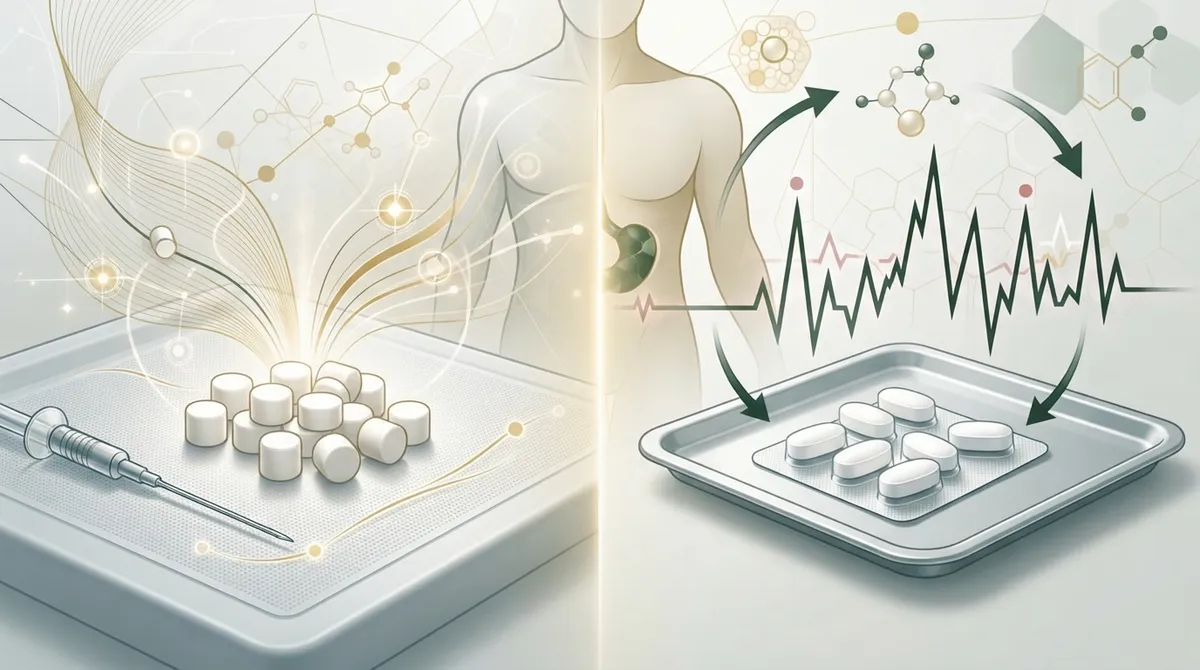
Before comparing hormone pellets versus pills, let us define each one simply. Both are ways to deliver hormones like estrogen, progesterone, or testosterone into your body. The hormone itself might be similar. The delivery method is what changes.
Hormone Pellets Explained
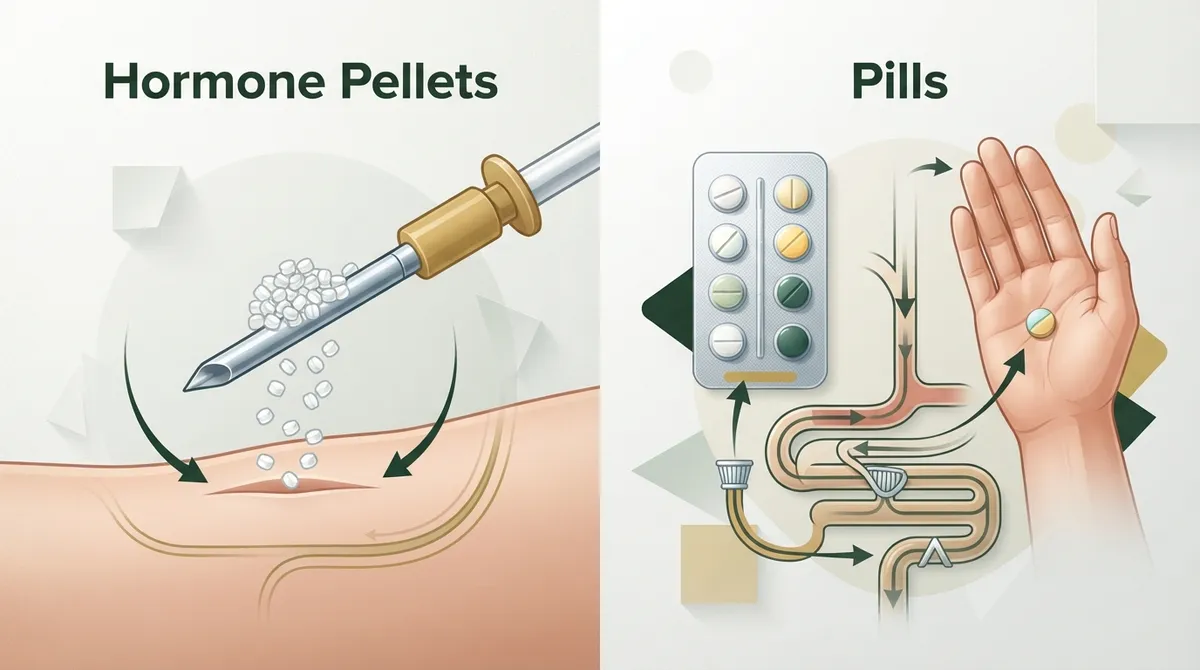
Hormone pellets are tiny, rice-sized implants placed under the skin, usually in the hip area. A provider does a small in-office procedure to insert them. Once in place, they slowly release hormones into your bloodstream over time.
Hormone Pills Explained
Hormone pills are oral tablets you take by mouth, typically once a day. They are absorbed through your digestive system and processed by your liver before entering your bloodstream. No procedure needed, just a daily habit.
Hormone Pellets Versus Pills: The Core Differences
The biggest difference between hormone pellets versus pills comes down to how long they last and how easy they are to adjust. Pellets are inserted once and can release hormones for about 3 to 6 months before you need a replacement. Pills, on the other hand, are taken daily, which means more flexibility if your dose needs tweaking.
This matters more than it might seem. Life changes fast. Your stress levels shift, your labs change, and your body responds differently over time. Here is a simple table to help you compare the two side by side.
| Feature | Hormone Pellets | Hormone Pills |
|---|---|---|
| Dosing Frequency | Every 3 to 6 months | Daily |
| Insertion Method | Minor in-office procedure | Swallowed at home |
| Dose Adjustments | Difficult once inserted | Easy to change or stop |
| FDA Approval Status | Compounded pellets are not FDA-approved | Many oral options are FDA-approved |
| Convenience Factor | Fewer daily tasks | Requires daily consistency |
| Removal If Side Effects Occur | Requires another procedure | Simply stop taking it |
What the Research Actually Says
Here is where things get interesting. A lot of marketing around hormone pellets makes them sound like the gold standard. But the science tells a more nuanced story.
Major menopause guidance does not currently recommend compounded hormone pellets as a routine option. In fact, a recent critical review found that safety, efficacy, and pharmacokinetic data for compounded hormonal pellets were low quality or simply lacking. That does not mean pellets never work. It means the evidence base is thinner than many people assume, according to research summarized in the National Library of Medicine.
One clinical review of testosterone pellets did find they can provide sustained hormone levels for 3 to 6 months, which is genuinely helpful for some patients. Meanwhile, another comparative review found improved symptom relief with pellet therapy compared to a transdermal group in several menopause-related areas. So the picture is mixed, not black and white.
Key Takeaways From the Evidence
- Compounded hormone pellets are not FDA-approved, unlike many oral hormone medications.
- Pellet data on long-term safety and dosing precision remains limited.
- Pills generally allow faster adjustments if side effects show up.
- Pellets may offer steadier hormone levels without daily reminders.
- Individual response varies, so lab work matters more than the delivery method alone.
Why Delivery Method Matters for Your Lifestyle
Choosing between hormone pellets versus pills is not just a medical decision. It is a lifestyle decision too. Think about how you actually live day to day.
- Do you travel often and worry about forgetting a daily pill?
- Are you someone who likes fine-tuning your dose based on how you feel?
- Do you dislike the idea of a minor procedure every few months?
- Would you rather deal with hormones once and forget about it for months?
- Are you sensitive to medications and need flexibility to stop quickly?
If flexibility and easy adjustments matter most to you, pills may feel more comfortable. If you prefer fewer daily tasks and do not mind an in-office visit twice a year, pellets might appeal to you more. There is no universally “better” answer here, only what fits your body and your routine.
How This Connects to Peptide Therapy
Now here is an important distinction many people miss. Hormone pellets and pills are both forms of direct hormone replacement. Peptide therapy works differently. Peptides are short chains of amino acids that signal your body to produce or regulate its own biological responses, rather than replacing hormones outright, as explained in this overview of what are peptides.
For example, some peptides support your body’s natural growth hormone production. Others help regulate metabolism, support tissue repair, or improve immune function. This is a very different mechanism than pellets or pills delivering estrogen, progesterone, or testosterone directly into your system.
That said, many people use both approaches together as part of a broader wellness plan. If you are curious about the differences, our guide on how to choose between bioidentical hormones and peptides breaks it down further. You might also enjoy learning 8 facts that explain what are peptides in 2026 if you want a deeper foundation.
Bioidentical Hormones Come in Many Forms
It is worth noting that bioidentical hormone therapy is not limited to pellets and pills. It can also be delivered through patches, gels, creams, or injections. Each method has its own pros and cons, and your provider should help you weigh them based on your labs and goals, as outlined by university health resources on hormone delivery options.
Cost Considerations You Should Know
Budget matters, and it is okay to ask about it upfront. Hormone pellet therapy has been estimated at around $1,536 per year by some consumer sources, though actual costs vary widely by provider, region, and dosage needs.
Pills can sometimes be more budget-friendly depending on insurance coverage and the specific medication prescribed. If cost is a major factor for you, our article on 6 hormone therapy cost mistakes that drain your wallet offers helpful guidance before you commit to either option.
Common Risks to Discuss With Your Provider
Every hormone delivery method carries some level of risk. This is not meant to scare you, just to help you ask smart questions.
- Pellets require a minor surgical insertion, which carries small risks like infection or bruising.
- If a pellet dose turns out to be too high, it cannot be adjusted quickly since it must run its course or be surgically removed.
- Pills processed through the liver may carry different risk profiles than pellets, depending on the hormone type.
- Compounded pellets lack FDA oversight, meaning dosing consistency can vary between batches.
- Both methods require regular lab monitoring to ensure hormone levels stay in a healthy range.
This is exactly why working with a licensed provider matters so much. At Allura Longevity, treatment plans are built around your actual blood work, not guesswork. That personalized approach helps reduce the risks associated with any hormone delivery method, whether it involves pellets, pills, or peptides.
Steps to Decide What Is Right for You
Feeling overwhelmed is normal. Here is a simple step-by-step approach to make this decision easier.
- Get comprehensive blood work done to understand your current hormone levels.
- Talk openly with your provider about your daily routine and comfort with procedures.
- Ask about FDA approval status for any specific pellet or pill product being considered.
- Discuss how quickly you would want to adjust or stop treatment if side effects appear.
- Review cost, insurance coverage, and long-term commitment before starting.
- Schedule follow-up labs to track how your body responds over the first few months.
If you are also curious about how peptides might fit into your wellness plan alongside hormone support, take a look at how to start peptide therapy safely and see real results. It is a great next step for anyone building a complete, personalized health strategy.
Why Telehealth Makes This Easier
Gone are the days when you had to take time off work for every hormone consultation. Telehealth has changed the game, especially for busy professionals and anyone juggling a packed schedule.
- Virtual consultations save time and eliminate waiting rooms.
- Blood work can often be done locally through labs like LabCorp.
- Treatment plans are shipped directly to your home.
- Ongoing monitoring happens remotely with licensed providers.
- You get personalized adjustments without constant office visits.
Allura Longevity offers exactly this kind of convenient, telehealth-based care. Clients start with an affordable $50 virtual consultation, complete blood work through LabCorp, and receive a customized six-month treatment plan delivered right to their door. Care is led by Ashley, a board-certified Family Nurse Practitioner, and the team monitors your progress closely to make adjustments as needed. It is a smart, modern way to explore peptides for women or peptides for men without disrupting your busy life.
Final Thoughts on Pellets, Pills, and Your Wellness Journey
When it comes to hormone pellets versus pills, there is no one-size-fits-all winner. Pellets offer convenience with fewer daily tasks but less flexibility. Pills offer easier adjustments but require daily consistency. Both come with real considerations around FDA approval, cost, and evidence quality that deserve your attention.
What matters most is finding a path that fits your body, your goals, and your lifestyle. Whether that means hormone therapy, peptide therapy, or a thoughtful combination of both, the right choice starts with real lab work and a provider who actually listens to you.
Ready to take the next step toward feeling like yourself again? Allura Longevity’s licensed providers create personalized plans based on your unique blood work, with convenient at-home delivery and ongoing support every step of the way. Spots are limited each month, so do not wait. Request a consultation today and start your journey toward better energy, balance, and vitality.
FAQs
Q: Are hormone pellets better than pills for menopause symptoms?
A: It really depends on your body and preferences. Some research shows pellets can offer strong symptom relief, but the evidence base is still limited compared to well-studied oral options. Your best bet is discussing your specific labs and symptoms with a licensed provider.
Q: Are hormone pellets FDA-approved?
A: Compounded hormone pellets are not FDA-approved, which is an important detail many people overlook. Major menopause guidance does not currently recommend them as a routine treatment option, so it is worth asking your provider plenty of questions before choosing this route.
Q: How long do hormone pellets last before needing replacement?
A: Most hormone pellets last about 3 to 6 months before they need to be replaced. This can feel convenient since you skip daily dosing, but it also means less flexibility if your dose needs adjusting sooner.
Q: Can hormone pellets be used alongside peptide therapy?
A: Yes, some people combine hormone support with peptide therapy as part of a broader wellness plan, since peptides work differently by signaling your body rather than replacing hormones directly. A personalized provider can help you figure out if combining approaches makes sense for your goals.
Q: Do hormone pills have more side effects than pellets?
A: Not necessarily. Both delivery methods carry their own risks, and side effects depend on the specific hormone, dose, and your individual body chemistry. The nice thing about pills is that you can usually stop or adjust them quickly if something feels off.





