

Key Takeaways
-
FDA-approved peptides undergo rigorous clinical trials with documented safety data and standardized dosing, while compounded peptides are custom-made by specialty pharmacies with less standardized evidence—choose based on your specific goals and provider guidance.
-
The global peptide therapeutics market reached $140.9 billion in 2025 and is expected to nearly double to $294.6 billion by 2033, driven by genuine results and growing clinical evidence supporting peptide therapy effectiveness.
-
Always work with a licensed provider who reviews blood work, monitors your progress every 3-6 months, and can adjust dosing or switch peptides to manage side effects like injection-site redness, fatigue, or digestive changes.
-
FDA-approved peptides like semaglutide and tirzepatide are best for weight loss with strong clinical backing, while compounded peptides like BPC-157 and CJC-1295 work well for targeted goals like injury recovery and anti-aging support.
-
Most peptide therapy programs cost $200-$600 monthly; telehealth options often provide more affordable and transparent pricing with personalized plans delivered to your door without traditional clinic overhead.
-
Before starting any peptide protocol, ask your provider whether the peptide is FDA-approved or research-only, what blood work is needed, monitoring frequency, potential side effects, and the reputation of the compounding pharmacy if applicable.
So you keep hearing about peptide therapy from friends, on social media, or maybe your doctor mentioned it at your last check-up. You’re curious, but also a little confused. Are these the same shots athletes use? Are they safe? Understanding peptide therapy starts with one big question that trips up almost everyone: what’s the real difference between FDA-approved peptides and the compounded or research-only versions floating around online?
Grab a cup of coffee and let’s break this down together, friend to friend. No confusing medical jargon, no scare tactics. Just the honest facts about how these tiny protein chains work, which ones have real backing, and how to make a smart choice for your body. Whether you’re a busy professional looking for an energy boost, a biohacker who loves data, or someone simply trying to feel like yourself again, this guide is for you.
What Is Peptide Therapy, Really?
Peptides are short chains of amino acids, usually between 2 and 50 of them linked together. Think of them as tiny messengers that tell your cells what to do. According to what are peptides, these molecules occur naturally in your body and play a role in everything from hormone production to healing wounds.
Therapeutic peptides work by binding to specific receptors on your cells, kind of like a key fitting into a lock. Once they connect, they trigger a chain reaction that can boost metabolism, support tissue repair, or improve sleep. This precision is exactly why peptide therapy has become such a hot topic in wellness and longevity circles.
If you want a deeper dive into the basics, our article on 8 Facts That Explain What Are Peptides in 2026 covers the science in plain, friendly language.

FDA-Approved Peptides vs. Compounded Peptides: The Core Comparison
Here’s where things get interesting, and honestly, a little confusing if nobody explains it clearly. Not all peptides are created equal, and understanding this distinction protects both your wallet and your health.
What Makes a Peptide FDA-Approved
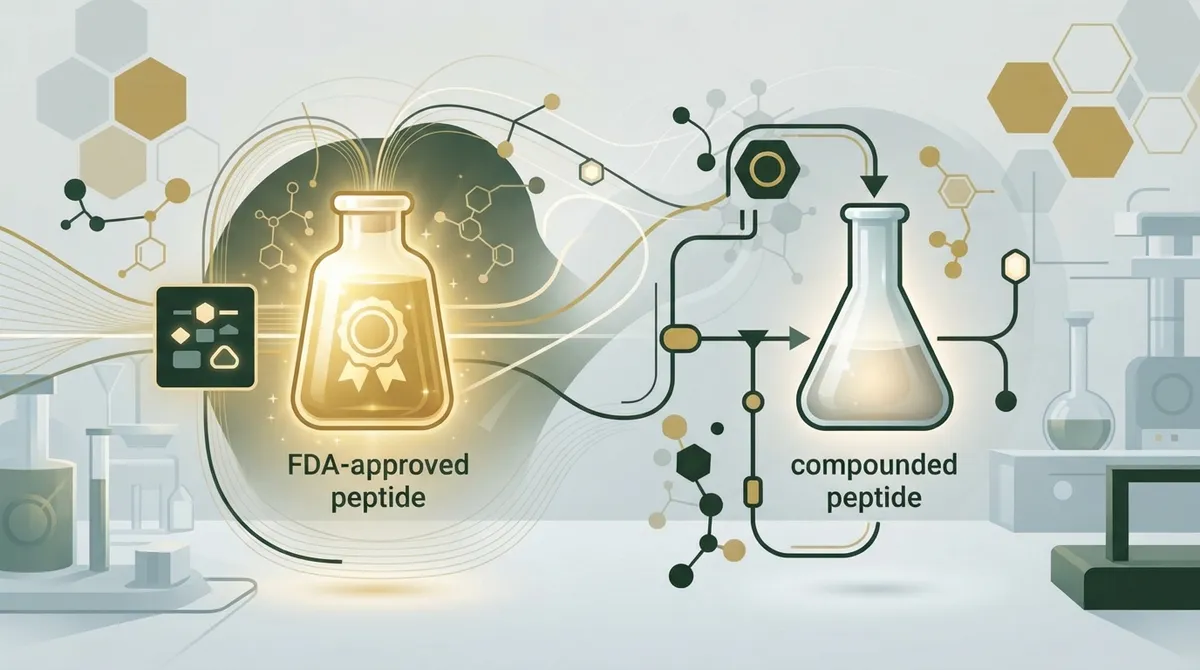
FDA-approved peptides have gone through rigorous clinical trials. They have documented safety data, standardized dosing, and manufacturing oversight. Semaglutide and tirzepatide are great examples. These medications have years of research behind them and clear guidelines for use.
What Compounded Peptides Actually Are
Compounded peptides are custom-mixed by specialty pharmacies, often based on a provider’s prescription. They can be incredibly useful for personalized care, especially when a standard dose doesn’t fit your needs. However, they don’t go through the same FDA approval process, so quality and evidence can vary between pharmacies.
The National Library of Medicine notes that National Library of Medicine research on many peptides is still developing, which is why working with a knowledgeable provider matters so much.
| Category | FDA-Approved Peptides | Compounded Peptides | Research-Only Peptides |
|---|---|---|---|
| Regulatory Status | Fully approved | Prescribed, pharmacy-compounded | Not approved for human use |
| Evidence Level | Strong clinical trial data | Moderate, provider-guided | Limited or animal-only studies |
| Examples | Semaglutide, Tirzepatide | BPC-157, CJC-1295, Ipamorelin | Various experimental compounds |
| Best For | Weight loss, metabolic health | Recovery, anti-aging, wellness | Not recommended without oversight |
| Typical Monitoring | Every 3-6 months | Every 3-6 months | Rarely monitored properly |
Why This Comparison Actually Matters for You
You might be wondering why this distinction is such a big deal. Here’s the truth: peptide therapy is not one single treatment. It’s a whole category, and the peptide you choose should match your specific goals, your health history, and your provider’s clinical judgment.
People often explore peptide therapy for these common goals:
- Losing stubborn weight and improving metabolic health
- Recovering faster from workouts or injuries
- Boosting energy and mental clarity throughout the day
- Supporting healthier skin, hair, and overall appearance
- Improving sleep quality and immune function
- Balancing hormones for better sexual wellness
Knowing whether your peptide of choice is FDA-approved or compounded helps you set realistic expectations. It also helps you ask better questions during your consultation.
The Growing Popularity of Peptide Therapy
This isn’t a small niche trend anymore. The global peptide therapeutics market was valued at $140.9 billion in 2025, and it’s expected to nearly double to $294.6 billion by 2033. That kind of growth tells you people are genuinely seeing results, and the science is catching up fast.
Most therapeutic peptides have molecular weights around 500 to 5000 Da, which allows them to interact precisely with your cells without the broader effects you might see from other treatments. This precision is part of why so many wellness seekers and biohackers are drawn to peptide therapy over more generic options.
How to Choose Between Peptide Types: A Step-by-Step Approach
Feeling a little overwhelmed? That’s totally normal. Here’s a simple process to help you figure out what’s right for you.
- Identify your primary goal. Are you focused on weight loss, recovery, energy, or anti-aging support?
- Get your blood work done. A provider needs real data about your hormones, metabolism, and overall health before recommending anything.
- Discuss FDA-approved options first. If a proven medication exists for your goal, it’s usually the safest starting point.
- Consider compounded peptides for specialized needs. These work well for targeted concerns like joint recovery or skin support.
- Avoid research-only compounds entirely. These lack the safety data you need for confident, informed use.
- Set a monitoring schedule. Most supervised programs check in every 3 to 6 months to adjust your plan.
Our guide on How to Start Peptide Therapy Safely and See Real Results walks through this process in even more detail, especially if you’re brand new to the idea.
Common Uses: Which Peptide Category Fits Your Goal
Let’s get practical. Here’s how the two categories typically line up with common wellness goals.
| Goal | Typical Category | Notes |
|---|---|---|
| Weight Loss | FDA-approved (GLP-1s) | Strongest evidence base, widely studied |
| Injury Recovery | Compounded (BPC-157) | Popular for tissue repair support |
| Muscle Growth | Compounded (CJC-1295, Ipamorelin) | Used alongside strength training |
| Anti-Aging Skin Support | Compounded | Often paired with collagen-stimulating routines |
| Immune Support | Compounded (Thymosin Alpha 1) | Growing interest, moderate evidence |
If weight loss is your main focus, check out 13 Peptides for Fat Loss That Really Work in 2026 or Which Weight Loss Peptides Actually Work in 2026? for more specific guidance. For recovery-focused readers, our piece on 13 Facts About TB-500 Peptide You Need in 2026 is a great next read.
Safety First: What You Need to Know
No matter which type of peptide you consider, safety should always come first. Here are the most common side effects reported across peptide therapy programs:
- Mild redness or irritation at the injection site
- Occasional headaches, especially when starting a new peptide
- Temporary fatigue as your body adjusts
- Digestive changes like nausea or bloating
- Changes in blood sugar levels with certain metabolic peptides
These effects are usually mild and temporary, but they’re exactly why medical supervision matters so much. A licensed provider can adjust your dose, switch peptides, or add support to keep you comfortable.
Questions to Ask Before You Start
Before committing to any peptide protocol, ask your provider these important questions:
- Is this peptide FDA-approved, compounded, or research-only?
- What blood work do I need before and during treatment?
- How often will my plan be monitored and adjusted?
- What side effects should I watch for?
- Where does the compounded peptide come from, and is that pharmacy reputable?
For more on avoiding costly errors, take a look at 12 Mistakes That Ruin How Peptide Therapy Works or Is Peptide Therapy Safe? What You Really Need to Know.
Cost Considerations for Both Categories
Budget is a real factor, and it’s smart to plan ahead. Monthly peptide therapy costs commonly range between $200 and $600, though this varies based on the specific peptide, dosage, and formulation. FDA-approved medications sometimes carry different pricing structures than compounded options, especially if insurance coverage applies.
Working with a telehealth provider often streamlines this process. You get transparent pricing, home delivery, and ongoing support without the overhead of a traditional clinic visit. If cost planning is on your mind, our resource on 6 Hormone Therapy Cost Mistakes That Drain Your Wallet offers helpful tips that apply to peptide budgeting too.
Why Telehealth Makes This Comparison Easier
Here’s something that makes this whole decision less stressful: you don’t have to figure it out alone. Telehealth peptide therapy connects you with licensed providers who review your blood work, understand your goals, and recommend the right category of peptide for your specific situation.
Allura Longevity, for example, starts every client with a simple $50 virtual consultation, followed by comprehensive blood work through LabCorp. From there, a board-certified Family Nurse Practitioner builds a personalized six-month plan, delivered right to your door. This kind of individualized, medically supervised approach takes the guesswork out of choosing between FDA-approved and compounded options.
Curious how telehealth stacks up against a traditional clinic visit? Our comparison, Local Clinic vs. Telehealth: Best Peptide Therapy Near You?, breaks it all down.
Your Next Steps Toward Feeling Your Best
Understanding peptide therapy doesn’t have to feel overwhelming. Once you know the difference between FDA-approved medications and compounded options, you’re already ahead of most people exploring this space. The key is working with someone who genuinely listens, reviews your labs, and builds a plan around you, not a one-size-fits-all template.
Whether you’re chasing more energy, faster recovery, or simply want to feel vibrant again, there’s a peptide approach designed with your goals in mind. And you deserve a provider who treats you like a real person, not just a prescription number.
Ready to get personalized answers about which peptide path fits your life? Request a consultation with Allura Longevity today, or call (813) 510-6277 to speak with our team. Spots fill up each month, so don’t wait too long to start your journey toward feeling like yourself again.
FAQs
Q: What is the difference between FDA-approved and compounded peptides?
A: FDA-approved peptides go through years of clinical trials and strict manufacturing standards, so they come with solid safety data. Compounded peptides are custom-made by specialty pharmacies based on a provider’s prescription, which offers flexibility but comes with less standardized evidence. Both can be valuable, but it really depends on your goals and your provider’s guidance.
Q: Is peptide therapy safe for beginners?
A: Yes, when it’s done under medical supervision, peptide therapy is generally considered safe for most healthy adults. You might notice mild side effects like injection-site redness or a bit of fatigue at first, but these usually fade quickly. The real key to safety is working with a licensed provider who checks your blood work and adjusts your plan along the way.
Q: How much does peptide therapy typically cost?
A: Most peptide therapy programs run somewhere between $200 and $600 per month, depending on which peptide you’re using and your specific dosage. Telehealth options often make this more affordable since you skip extra clinic overhead. It’s always worth asking your provider for a clear breakdown before you commit.
Q: How do I know which peptide is right for my goals?
A: The best way is to start with a consultation and comprehensive blood work so your provider can see exactly what your body needs. From there, they’ll recommend either an FDA-approved medication or a compounded peptide based on your goals, whether that’s weight loss, recovery, or better energy. Honestly, this personalized approach makes such a big difference compared to guessing on your own.
Q: Can peptide therapy help with both weight loss and recovery at the same time?
A: Absolutely, many people combine different peptides to address multiple goals in one personalized plan. For example, someone might use a GLP-1 medication for weight loss while also incorporating a recovery-focused peptide for muscle repair. Your provider can help design a plan that supports several goals safely and effectively.





