

Key Takeaways
-
CJC-1295 is a synthetic peptide that mimics GHRH and encourages your body to produce more growth hormone naturally rather than directly injecting it, making it appealing for those preferring a biological nudge over hormone replacement.
-
CJC-1295 comes in two versions with dramatically different half-lives: the DAC version lasts 6-8 days allowing weekly dosing, while the no-DAC version clears in 30 minutes creating natural pulsatile patterns, requiring different dosing schedules based on your lifestyle.
-
CJC-1295 is not FDA-approved and remains investigational; it's listed by WADA as a prohibited substance in sports, so anyone competing in regulated events should avoid it before consulting a licensed provider.
-
Comprehensive blood work measuring baseline growth hormone and IGF-1 levels is essential before starting CJC-1295, as individual hormone baselines vary significantly by age, sex, activity level, and health status.
-
CJC-1295 is commonly paired with ipamorelin because both work as growth hormone secretagogues through slightly different pathways, potentially creating a more complete signal to the pituitary gland when combined.
-
Start with a licensed peptide therapy provider who can review your lab results, explain the DAC vs. no-DAC differences for your needs, monitor IGF-1 levels over time, and adjust your plan based on individual response rather than following internet dosing guidelines.
If you’ve spent any time researching growth hormone support, you’ve probably seen the name CJC-1295 pop up again and again. Maybe a friend at the gym mentioned it, or you stumbled across it while reading about better sleep and faster recovery. Whatever brought you here, you’re in the right place. This guide breaks down exactly what CJC-1295 peptides are, how they work, and what you need to know before considering them as part of a personalized wellness plan.
We know peptide therapy can feel like learning a new language. Between the acronyms, the dosing schedules, and the science jargon, it’s easy to feel overwhelmed. That’s exactly why we wrote this guide in plain, friendly language. By the end, you’ll understand the basics well enough to have an informed conversation with a licensed provider about whether CJC-1295 fits your goals.

What Are CJC-1295 Peptides?
CJC-1295 is a lab-made peptide that mimics a hormone your body already makes called growth hormone-releasing hormone, or GHRH. Think of it as a messenger that taps the pituitary gland on the shoulder and says, “Hey, time to release more growth hormone.” This is different from injecting growth hormone directly. Instead, CJC-1295 encourages your own body to produce more of it naturally.
This approach is popular in the world of peptide therapy because it works with your biology instead of replacing it entirely. Many people find this idea appealing because it feels more like giving your body a nudge rather than overriding its natural systems. If you want a deeper primer on how these molecules function in the body, WebMD has a helpful overview of what are peptides and how they differ from typical medications.
The Science Behind the Name
CJC-1295 isn’t just a random string of letters. It refers to a synthetic analog of GHRH, built from a chain of amino acids. According to FDA-related documentation, its molecular formula is C165H269N47O46, with a molecular weight of about 3647.15. A 2011 paper indexed on PubMed described it as a 29-amino-acid peptide with a special C-terminal amide structure that helps it stay active longer than the natural hormone.
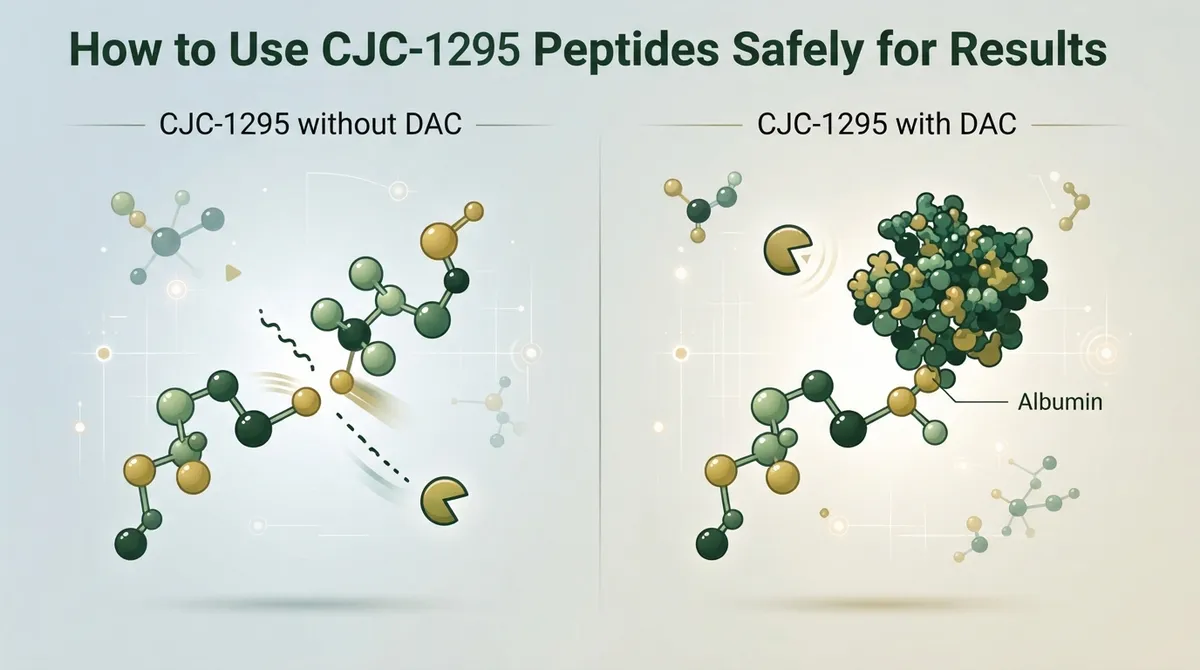
CJC-1295 With DAC vs Without DAC
Here’s where things get interesting. CJC-1295 actually comes in two different versions, and they behave quite differently in the body. Understanding this distinction is one of the most important things you can learn before exploring this peptide further.
- CJC-1295 with DAC binds to a protein in your blood called albumin, which extends its activity significantly
- CJC-1295 without DAC, also called Modified GRF 1-29, clears the body much faster
- The DAC version supports less frequent dosing schedules
- The no-DAC version creates a shorter, more natural pulse similar to how your body releases hormones on its own
- Both versions are discussed in peptide therapy circles, but neither is FDA-approved
Comparing the Two Versions
| Feature | CJC-1295 with DAC | CJC-1295 without DAC |
|---|---|---|
| Half-life | About 6 to 8 days | About 30 minutes |
| Dosing frequency | Less frequent (weekly-type schedule) | More frequent injections needed |
| Release pattern | Sustained, steady activity | Short, pulsatile bursts |
| Common pairing | Sometimes used alone | Often paired with ipamorelin |
Neither version has been approved by the FDA for medical treatment. Both are generally described as investigational, meaning research is still ongoing and long-term clinical data is limited. This is an important detail to keep in mind as you weigh your options with a licensed provider.
Why CJC-1295 Is Often Paired With Ipamorelin
You’ll notice that CJC-1295 rarely travels alone in conversations about peptide therapy. It’s almost always mentioned alongside ipamorelin. Why is that? Both peptides work as growth hormone secretagogues, meaning they both encourage the pituitary gland to release growth hormone, but they do it through slightly different pathways.
When combined, some practitioners believe the two peptides may work together to create a more complete signal to the pituitary gland. This pairing is popular in wellness discussions, though it’s worth repeating that this combination is not FDA-approved either. If you’re curious about how ipamorelin works on its own, our guide on ipamorelin peptide therapy benefits, dosing, and safety covers the details.
Potential Benefits Discussed in Peptide Therapy Circles
People exploring CJC-1295 often mention a handful of goals they hope to support. It’s important to understand that many of these ideas come from hormone physiology and smaller studies rather than large-scale clinical trials. Still, here’s what tends to come up most often:
- Supporting improved sleep quality, since growth hormone release naturally peaks during deep sleep
- Assisting with muscle recovery after exercise or physical activity
- Helping with body composition goals related to lean muscle and fat metabolism
- Supporting steady energy levels throughout the day
- Contributing to overall vitality as part of a broader longevity-focused plan
One often-cited research summary suggests CJC-1295 may increase growth hormone levels by 200% to 1000%, with elevated production lasting up to six days in some cases. That’s a wide range, and it highlights how individual results can vary quite a bit from person to person.
Why Individual Blood Work Matters So Much
Here’s the thing about hormones: everyone’s baseline is different. Your natural growth hormone and IGF-1 levels depend on your age, sex, activity level, sleep habits, and overall health. That’s why cookie-cutter dosing rarely makes sense. A thoughtful approach starts with lab work through a trusted provider like LabCorp, followed by a plan built around your actual numbers, not guesswork.
This is exactly the philosophy behind personalized care. At Allura Longevity, every client begins with a virtual consultation and comprehensive blood work before any peptide is recommended. This isn’t about following a trend. It’s about making informed decisions based on your unique biology.
Is CJC-1295 FDA-Approved?
Let’s address this clearly because it matters: no, CJC-1295 is not FDA-approved for any medical use. It’s generally described as investigational or research-oriented. This doesn’t mean it’s automatically unsafe, but it does mean the evidence base is still developing, and any use should happen under the guidance of a licensed medical provider who understands the current research landscape.
It’s also worth noting that CJC-1295 has been identified in scientific literature as a growth-hormone-releasing factor and is listed by the World Anti-Doping Agency as a prohibited substance. If you compete in regulated sports or bodybuilding events, this is a critical detail to keep in mind before considering any growth hormone secretagogue.
Steps to Approach CJC-1295 Responsibly
If you’re seriously considering CJC-1295 as part of your wellness journey, here’s a simple roadmap to follow. Skipping steps is where most people run into trouble, so take your time with each one.
- Start with a conversation with a licensed medical provider who specializes in peptide therapy
- Complete comprehensive blood work to understand your current hormone and IGF-1 levels
- Discuss your specific goals, whether that’s better sleep, recovery, or overall vitality
- Review the differences between CJC-1295 with DAC and without DAC based on your lifestyle and dosing preferences
- Ask about potential side effects and how they’ll be monitored over time
- Follow a structured treatment plan with regular check-ins and lab reviews
- Adjust the plan as needed based on how your body responds
This structured approach is far safer than ordering peptides online without any medical oversight. For a broader look at getting started the right way, check out our article on how to start peptide therapy safely and see real results.
Common Questions About Dosing and Safety
Because CJC-1295 isn’t FDA-approved, there’s no single official dosing guideline. Instead, licensed providers rely on published research, clinical experience, and your individual lab results to determine an appropriate plan. This is very different from picking a dose off an internet forum.
- Dosing schedules differ significantly between the DAC and no-DAC versions
- Some people report mild injection site reactions, which is common with many peptides
- Monitoring IGF-1 levels over time helps track how your body is responding
- Working with a provider reduces the risk of improper handling or dosing errors
- Ongoing lab work helps catch any concerning changes early
A 2011 research paper on PubMed, part of the broader collection available through the National Library of Medicine, documented CJC-1295’s classification and prohibited status, reinforcing why professional guidance is so important when exploring this peptide.
How CJC-1295 Fits Into a Bigger Longevity Picture
Growth hormone support is just one piece of a much larger puzzle when it comes to healthy aging and vitality. Sleep, nutrition, movement, stress management, and other hormones all play a role too. That’s why the most effective plans often combine multiple strategies rather than relying on a single peptide alone.
If you’re also curious about weight management alongside growth hormone support, our guide on which weight loss peptides actually work in 2026 is a great next read. And if muscle building is more your focus, take a look at 14 peptides for muscle gain worth knowing in 2026 for additional context.
Why Telehealth Makes This Easier
Gone are the days of taking time off work for multiple in-person appointments. Telehealth has made personalized peptide therapy far more accessible, especially for busy professionals juggling packed schedules. You can complete lab work locally, then have virtual check-ins with your provider from home or even during a lunch break.
This convenience doesn’t mean sacrificing quality of care. In fact, ongoing monitoring and easy communication often lead to better adherence and more consistent results. If you want to compare your options, our article on local clinic vs telehealth for peptide therapy breaks down the pros and cons of each approach.
Quick Reference: CJC-1295 at a Glance
| Detail | Information |
|---|---|
| Type | Synthetic GHRH analog |
| FDA Status | Not FDA-approved; investigational |
| Common Pairing | Often discussed alongside ipamorelin |
| WADA Status | Listed as a prohibited substance |
| Half-life (with DAC) | Approximately 6 to 8 days |
| Half-life (without DAC) | Approximately 30 minutes |
Bringing It All Together
CJC-1295 is a fascinating piece of the peptide therapy conversation, but it’s not a magic solution or a one-size-fits-all answer. It works by encouraging your body’s own growth hormone production, and it comes in two distinct forms with very different dosing patterns. While early research and physiological reasoning suggest potential benefits for sleep, recovery, and body composition, it remains an investigational compound without FDA approval.
The smartest path forward is always the same: get your blood work done, talk to a licensed provider, and build a plan around your actual body and goals. At Allura Longevity, our team led by board-certified Family Nurse Practitioner Ashley works with clients across Florida, Georgia, Texas, Connecticut, Indiana, Maryland, New York, and California to create personalized, medically supervised plans delivered right to your door. We start with a simple $50 virtual consultation and comprehensive LabCorp testing, so every recommendation is based on real data, not guesswork.
Spots for new clients are limited each month, so if you’re ready to explore whether CJC-1295 or another peptide protocol fits your goals, now is a great time to reach out. You can request a consultation today and take the first step toward a plan built just for you. Feel free to call us at (813) 510-6277 with any questions along the way. We’re here to help you feel confident, informed, and supported every step of the way.
FAQs
Q: What is CJC-1295 used for in peptide therapy?
A: CJC-1295 is used to encourage your pituitary gland to release more growth hormone naturally. People often explore it as part of plans focused on recovery, sleep, energy, and body composition, though it’s important to remember it’s still investigational and not FDA-approved.
Q: What is the difference between CJC-1295 with DAC and without DAC?
A: The DAC version binds to albumin in your blood, extending its activity for about 6 to 8 days, which allows for less frequent dosing. The no-DAC version, also called Modified GRF 1-29, clears in about 30 minutes and creates shorter, more pulse-like releases.
Q: Is CJC-1295 FDA-approved?
A: No, CJC-1295 is not approved by the FDA for any medical use. It’s generally described as investigational, so it’s best explored under the guidance of a licensed provider who can walk you through the current research and safety considerations.
Q: Why is CJC-1295 often combined with ipamorelin?
A: Both peptides work as growth hormone secretagogues, meaning they both signal the pituitary gland to release growth hormone, just through slightly different pathways. Many wellness discussions pair them together, though this combination is also not FDA-approved.
Q: Is CJC-1295 allowed in sports or bodybuilding competitions?
A: No, CJC-1295 is listed by the World Anti-Doping Agency as a prohibited substance under the growth hormone releasing factor category. If you compete in regulated sports, this is definitely something to discuss with your provider before considering it.





