
Key Takeaways
-
Testosterone injections cost $40-$100/month and are the cheapest option, while topicals run $150-$500/month; bundled pricing that includes labs, supplies, and consultations prevents surprise fees.
-
Peptide therapy adds $150-$500+ monthly to TRT costs, with tesamorelin ranging from $300-$400 (compounded) to $3,000-$4,500 (brand-name); sermorelin is the most budget-friendly peptide option at $80-$150/month.
-
Insurance rarely covers peptide therapy for optimization purposes, making it cash-pay; compounded medications cost significantly less than brand-name versions but require licensed provider oversight for proper dosing.
-
Telehealth models reduce costs by eliminating office overhead; ask providers upfront whether labs, supplies, follow-up consultations, and price changes after introductory periods are included to avoid unexpected expenses.
Trying to figure out testosterone therapy cost can feel like reading a menu with no prices. One clinic quotes you $80 a month. Another mentions thousands per year. Which one is right? Honestly, both can be, depending on what you’re actually getting.
Whether you’re chasing better energy, deeper sleep, or just want to feel like yourself again, understanding the real numbers matters. This guide breaks down what testosterone therapy and peptide add-ons actually cost in 2026, so you can budget with confidence instead of guessing. We’ll cover injections, topicals, peptide stacks, insurance quirks, and the sneaky fees that catch people off guard. Grab a coffee, and let’s make sense of this together.

1. Basic TRT Injections Are Usually the Cheapest Starting Point
If you’re comparing options, testosterone injections tend to win on price. Most consumer guides report monthly costs somewhere between $40 and $100, though some clinics charge $80 to $200 depending on what’s bundled in.
The wide range comes down to what’s included. A bare-bones prescription might just cover the medication. A fuller package could include syringes, provider check-ins, and basic lab review.
- Self-administered injections are typically the most budget-friendly format
- Prices often depend on dosage and injection frequency
- Clinic-based injections (where staff administer them) usually cost more than at-home options
2. Topical Testosterone Costs More Than You’d Expect
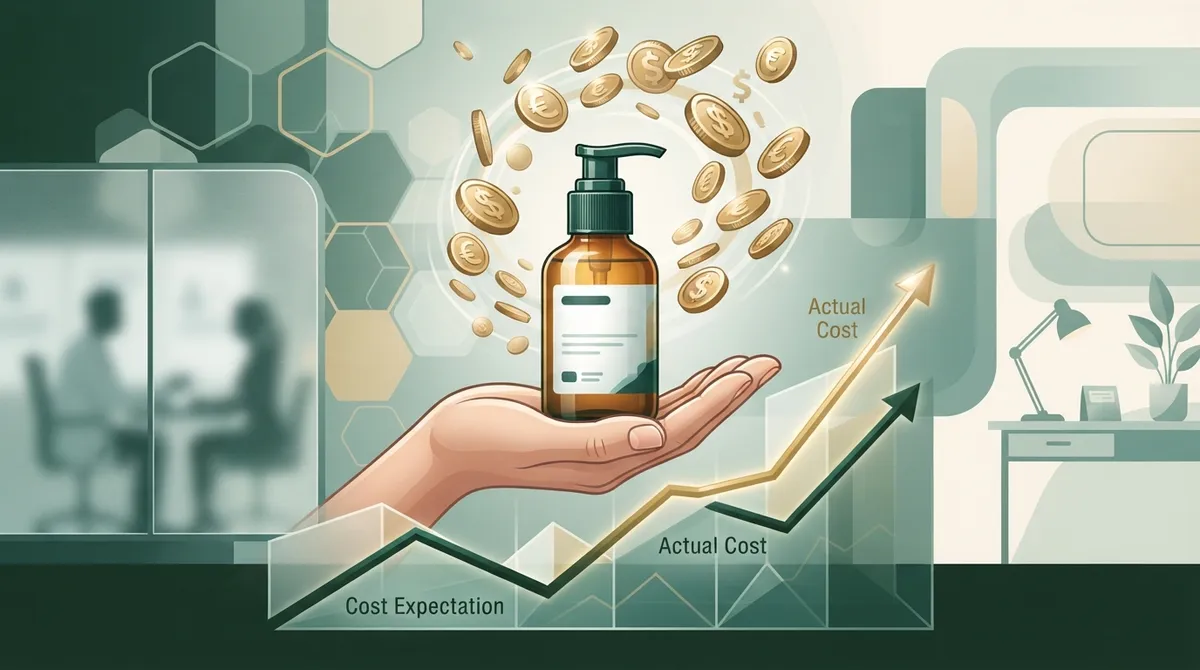
Gels and creams sound convenient, but they come with a bigger price tag. Expect to pay roughly $150 to $500 per month for topical testosterone, according to recent pricing breakdowns. Brand-name formulas can climb even higher without insurance help.
Why the jump in cost? Topical products often require more frequent dosing, and manufacturing gels is pricier than producing injectable solutions. If your budget is tight, this is worth factoring into your decision.
3. Peptide Therapy Pricing Has Its Own Range
Peptides aren’t testosterone, but they’re often paired with it to support energy, recovery, sleep, and hormone balance. Basic peptide protocols typically run $150 to $500 per month, based on clinic pricing guides, while more advanced stacks can cost significantly more.
If you’re new to this world, it helps to start with the basics. Our article on 8 Facts That Explain What Are Peptides in 2026 breaks down exactly how these tiny protein chains work in the body, according to resources like what are peptides.
Common Peptide Price Ranges
- Basic single-peptide protocols: $150–$500 per month
- Peptide added to existing TRT plan: $150–$400 per month
- Multi-peptide stacks: often $500 or more per month
4. Growth Hormone Peptides Vary Wildly in Price
Not all peptides cost the same, even within the same category. Sermorelin, a popular growth hormone secretagogue, is generally one of the more affordable options, priced around $80 to $150 per month in some breakdowns, or closer to $100 in consumer guides.
Tesamorelin tells a very different story. Depending on whether it’s compounded or brand-name, prices range from $300–$400 per month on the low end to a staggering $3,000–$4,500 per month for branded prescriptions. That’s a massive gap, so always ask your provider exactly which version you’re getting.
| Peptide | Typical Monthly Cost | Notes |
|---|---|---|
| Sermorelin | $80–$150 | Often the budget-friendly choice |
| Tesamorelin (compounded) | $300–$400 | Off-label pricing |
| Tesamorelin (brand) | $3,000–$4,500 | Significantly higher than compounded |
5. Combining TRT and Peptides Changes the Math
Here’s where things get real for your wallet. Pairing testosterone therapy with a single peptide can push your first-year total to roughly $3,200 to $4,500. Add a full peptide stack, and you’re looking at $4,500 to $7,000 or more annually.
That sounds like a lot, but remember: you’re paying for a personalized plan, not a one-size-fits-all shot. If you’re curious how single peptides stack up against combination protocols, check out Single Peptides vs. Peptide Stacks: Which Wins? for a deeper comparison.
6. Lab Work and Monitoring Add to the Total
Testosterone therapy cost isn’t just about the medication. Bloodwork before and during treatment is essential for safety and dosing accuracy. Some clinics fold this into a membership fee. Others bill it separately, which can catch people off guard.
Ongoing monitoring helps your provider adjust your protocol as your body responds. This is a core part of how Allura Longevity approaches care, starting with a $50 virtual consultation and LabCorp bloodwork before building a customized six-month plan.
- Initial consultation and bloodwork
- Provider review of results and health history
- Custom treatment plan creation
- Ongoing labs every few months to track progress
- Dose adjustments based on how you’re responding
7. Insurance Rarely Covers Optimization-Focused Treatment
Here’s the honest truth: insurance coverage is one of the biggest variables in testosterone therapy cost. If you have a diagnosed medical condition like clinically low testosterone, some insurance plans may help cover TRT.
But peptide therapy used for longevity, recovery, or performance is almost always considered cash-pay. According to the National Library of Medicine, many peptide-based treatments remain outside standard insurance frameworks because they’re used for optimization rather than disease treatment. If insurance and paperwork make your head spin, our guide on How to Navigate Hormone Therapy Insurance Coverage walks through what to expect.
8. Compounded Options Can Lower Your Bill
Compounded medications, made by specialized pharmacies rather than big manufacturers, are often significantly cheaper than brand-name versions. We saw this clearly with tesamorelin earlier, but it applies across many peptides and hormone therapies.
That said, cheaper isn’t always simpler. Compounded medications require a provider who understands proper dosing and sourcing. This is exactly why working with a licensed team matters instead of chasing the lowest price online.
- Compounded peptides typically cost less than branded pharmaceutical versions
- Quality and sourcing matter more than price alone
- Licensed providers should oversee dosing regardless of formulation type
9. Membership-Style Pricing Can Simplify Budgeting
Some providers now offer bundled monthly or six-month pricing that includes medication, supplies, provider oversight, and lab monitoring. This model can make testosterone therapy cost far easier to predict.
Instead of surprise bills for labs or consultations, you know your cost upfront. This structure is popular among busy professionals who want predictable expenses without spreadsheet gymnastics every month.
Why Bundled Pricing Appeals to Many Clients
- No surprise fees for follow-up visits
- Easier to plan a yearly wellness budget
- Simplifies comparing providers side-by-side
10. Your Goals Shape Your Total Cost
Someone treating diagnosed low testosterone has a different cost path than someone optimizing energy, muscle recovery, or sexual wellness with peptides. Your goals determine which peptides, doses, and monitoring schedule make sense.
For example, someone focused on fat loss might explore options detailed in 13 Peptides for Fat Loss That Really Work in 2026, while someone focused on injury recovery might look into BPC-157 protocols, covered in 9 BPC-157 Peptide Facts to Know Before You Start. Each goal brings its own price tag.
| Goal | Common Approach | Cost Impact |
|---|---|---|
| Low T symptoms | TRT injections | Lower monthly cost |
| Energy & recovery | TRT + single peptide | Moderate increase |
| Full optimization | TRT + peptide stack | Highest annual cost |
11. Telehealth Can Reduce Your Overall Expenses
Traditional in-person clinics often carry higher overhead, and that gets passed to you. Telehealth models can lower costs by cutting out office visits while still providing licensed medical oversight.
Allura Longevity uses this exact model: a $50 virtual consultation, LabCorp bloodwork, and a personalized six-month plan delivered right to your door. Ongoing monitoring comes from licensed providers, led by Ashley, a board-certified Family Nurse Practitioner. It’s convenient care without sacrificing medical supervision. If you’re weighing your options, our comparison in Local Clinic vs. Telehealth: Best Peptide Therapy Near You? lays out the pros and cons clearly.
Steps to Get Started With Telehealth Testosterone and Peptide Therapy
- Book a virtual consultation to discuss your goals
- Complete bloodwork through a local LabCorp location
- Review your personalized six-month plan with your provider
- Receive your medication and supplies at home
- Check in regularly for monitoring and dose adjustments
Avoiding Common Cost Mistakes
Many people overspend simply because they don’t know what questions to ask upfront. Before committing to any provider, get clarity on what’s actually included in your quoted price.
- Ask if labs are included or billed separately
- Confirm whether pricing covers supplies like syringes and alcohol wipes
- Clarify if follow-up consultations cost extra
- Find out if pricing changes after an introductory period
For a deeper dive into pricing pitfalls, take a look at 6 Hormone Therapy Cost Mistakes That Drain Your Wallet. It’s a helpful checklist before you sign anything.
Final Thoughts on Testosterone Therapy Cost
Testosterone therapy cost isn’t one-size-fits-all, and that’s actually good news. It means you can build a plan that fits your goals and your budget, whether that’s simple TRT injections or a more robust peptide-supported protocol.
The key is working with a provider who’s transparent about pricing and genuinely invested in your results, not just your wallet. Allura Longevity checks that box with personalized six-month plans, licensed oversight, and nationwide telehealth access across Florida, Georgia, Texas, Connecticut, Indiana, Maryland, New York, and California.
Ready to see what a personalized plan could look like for you? Request a consultation today and take the first step toward feeling like your best self. Spots are limited each month, so don’t wait too long to get started.
FAQs
Q: How much does testosterone therapy cost per month?
A: It really depends on the format you choose. Basic TRT injections often run $40–$100 monthly, while topical options can climb to $150–$500. If you add peptides to the mix, expect another $150–$400 per month on top of that.
Q: Is testosterone replacement therapy covered by insurance?
A: Sometimes, if you have a diagnosed medical condition like clinically low testosterone. However, most peptide therapies used for optimization or longevity are typically cash-pay, so it’s smart to ask your provider directly.
Q: What is the cheapest peptide therapy option for men?
A: Sermorelin is generally one of the most budget-friendly peptides, often priced around $80–$150 per month. It’s a popular starting point for folks curious about growth hormone support without a huge price jump.
Q: Does adding peptides to TRT increase the total cost significantly?
A: Yes, it can. A single peptide add-on might bring your first-year total to $3,200–$4,500, while a full peptide stack can push that number to $4,500–$7,000 or more. It’s worth planning your budget around your specific goals.
Q: Why do peptide therapy prices vary so much between clinics?
A: Great question! Pricing differences usually come down to what’s bundled in, like labs, supplies, and provider check-ins, plus whether you’re getting compounded or brand-name medication. Always ask for a full breakdown before committing.





