

Key Takeaways
-
Verify your specialist holds proper medical licensing (physician, nurse practitioner, or licensed clinician) registered with your state medical board, as unlicensed sellers calling themselves ‘specialists’ are a major red flag.
-
Insist on comprehensive blood work before starting treatment through labs like LabCorp to check hormone levels, metabolic markers, and organ function—not doing labs means the provider is guessing rather than personalizing your protocol.
-
Choose a provider licensed in your specific state who offers ongoing monitoring with scheduled follow-ups and protocol adjustments based on your results, not one-time prescriptions that disappear after the first shipment.
-
Avoid choosing based on price alone; extremely low costs often mean skipped labs, no follow-up care, or unregulated products, while quality care requires real expertise and staff investment.
Picking the wrong peptide therapy specialist can waste your money, your time, and even your health. You deserve better than guesswork. Whether you’re chasing more energy, faster recovery, or healthy weight loss, the specialist you choose matters more than almost anything else in this journey.
Here’s the good news: you don’t have to figure this out alone. We’ve talked with clients, reviewed clinic practices, and dug into what actually makes a peptide therapy specialist trustworthy versus risky. This article walks through the nine most common mistakes people make when choosing one, so you can skip the trial and error and get straight to real results.
Think of this as a friendly guide from someone who’s been in your shoes. Grab a coffee, and let’s make sure your next step toward better health is the right one.

What Does a Peptide Therapy Specialist Actually Do?
A peptide therapy specialist is a licensed healthcare provider who evaluates your health, decides if peptide therapy fits your goals, and prescribes treatment when appropriate. This isn’t a title for just anyone selling products online. According to what are peptides, these small protein molecules interact directly with your body’s systems, which means proper medical oversight really matters.
Good specialists review your symptoms, medical history, current medications, and lab work before recommending anything. They also monitor you over time, adjusting your protocol based on how your body responds. This is very different from picking peptides off a shelf and hoping for the best.
If you want to understand the basics first, our guide on what are peptides in 2026 is a great place to start.
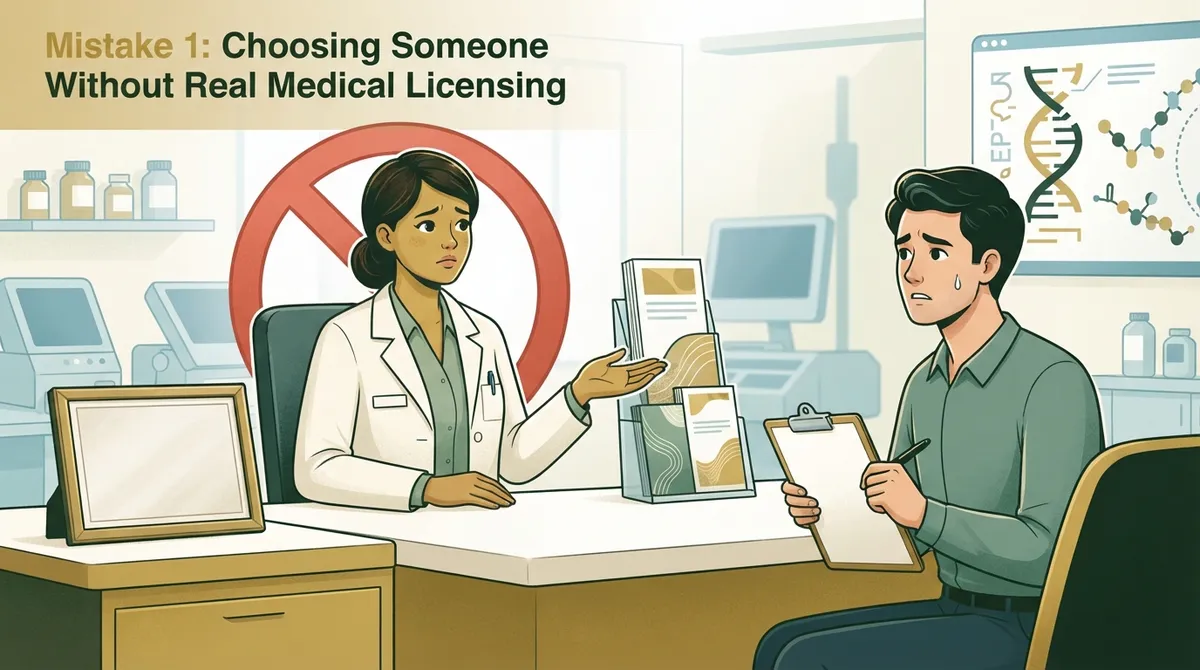
Mistake 1: Choosing Someone Without Real Medical Licensing
This is the biggest mistake people make. Some sellers call themselves “specialists” without any medical license at all. That’s a red flag you cannot ignore.
A true peptide therapy specialist should be a physician, nurse practitioner, or another licensed clinician with prescribing authority. In Australia, for example, therapeutic peptides must be prescribed by an AHPRA-registered practitioner. In the United States, similar licensing standards apply through state medical boards.
- Ask directly about their license type and state registration
- Check if they can legally prescribe medications in your state
- Look for board certifications relevant to their specialty
- Avoid anyone who skips a real medical evaluation
Mistake 2: Skipping the Blood Work Step
Peptide therapy isn’t one-size-fits-all. Your hormone levels, metabolic markers, and overall health picture should guide your treatment plan. If a provider skips lab testing entirely, that’s a serious problem.
At Allura Longevity, every client completes blood work through LabCorp before starting treatment. This step helps providers understand what your body actually needs, not just what sounds good in a sales pitch.
| Screening Step | Why It Matters |
|---|---|
| Comprehensive metabolic panel | Checks organ function and metabolic health |
| Hormone panel | Identifies imbalances affecting energy and mood |
| Lipid panel | Tracks cardiovascular risk factors |
| Thyroid function tests | Rules out thyroid-related symptoms |
Mistake 3: Ignoring Ongoing Monitoring
Starting peptide therapy is just step one. Your body changes over time, and your protocol should change with it. A good specialist doesn’t disappear after your first shipment arrives.
Reputable providers schedule regular check-ins, review your progress, and tweak dosing based on your results. This kind of ongoing support is exactly what you’ll find when you learn how to start peptide therapy safely and see real results.
Signs of Good Ongoing Care
- Scheduled follow-up appointments built into your plan
- Willingness to adjust dosing based on your feedback
- Clear communication channels for questions
- Repeat lab testing to track progress objectively
Mistake 4: Assuming All Peptides Work the Same Way
Not every peptide does the same job. Some support fat loss, others help with recovery, and some target hormone balance. A knowledgeable specialist matches the right peptide to your specific goal.
For example, if you’re focused on weight management, you’ll want someone familiar with which weight loss peptides actually work in 2026. If recovery from injury is your priority, understanding options like TB-500 peptide facts becomes essential.
- GLP-1 medications for weight management
- BPC-157 for injury recovery and gut healing
- Growth hormone peptides for muscle and recovery
- Peptides targeting energy and mental clarity
Mistake 5: Overlooking Telehealth Convenience
Some people assume they need to visit a physical clinic for quality care. That’s simply not true anymore. Telehealth has made personalized peptide therapy accessible without the drive, the waiting room, or the scheduling headaches.
If you’re comparing your options, our breakdown of local clinic vs. telehealth peptide therapy can help you decide what fits your lifestyle best. For busy professionals especially, at-home delivery and virtual check-ins save real time.
Mistake 6: Not Asking About Personalized Protocols
A cookie-cutter treatment plan rarely delivers the results you’re hoping for. Your body, goals, and lab results are unique, so your protocol should be too.
Good specialists design a plan around you, not a generic template. This is especially true for peptides for women and peptides for men, since hormone needs differ significantly by sex and life stage.
What Personalization Should Include
- A full review of your symptoms and health history
- Lab-based dosing recommendations
- Goal-specific peptide selection
- Regular adjustments based on your progress
Mistake 7: Forgetting to Ask About Side Effects
Every treatment carries some risk, and peptide therapy is no exception. A responsible specialist explains potential side effects upfront and tells you what to watch for.
This is especially important with GLP-1 medications, where digestive side effects are common early on. Learning what causes GLP-1 side effects and how to manage them ahead of time helps you feel prepared instead of caught off guard.
- Nausea or digestive changes with certain peptides
- Injection site reactions
- Temporary fatigue during dose adjustments
- Rare but possible allergic reactions
Research published by the National Library of Medicine emphasizes the importance of monitoring patients closely throughout peptide treatment to catch any adverse effects early.
Mistake 8: Choosing Based on Price Alone
We all love a good deal, but the cheapest option isn’t always the smartest choice. Extremely low prices sometimes mean skipped labs, no follow-up care, or unregulated products.
| Role | Typical Annual Salary Range |
|---|---|
| Nurse Practitioner (Peptide Specialty) | $110,000–$145,000 |
| Peptide Therapy Coordinator | $55,000–$75,000 |
| Clinic Operations Manager | $80,000–$115,000 |
These numbers show that quality clinical care requires real expertise and staffing. If you understand hormone therapy pricing too, check out 6 hormone therapy cost mistakes that drain your wallet before committing to any provider.
Mistake 9: Not Verifying Where They’re Licensed to Practice
Telehealth providers must be licensed in your specific state to legally treat you. This detail gets overlooked more often than you’d think.
Allura Longevity is licensed in Florida, Georgia, Texas, Connecticut, Indiana, Maryland, New York, and California. Before starting with any provider, always confirm they’re authorized to practice where you live.
- Ask which states the provider is licensed in
- Confirm your state is included before booking
- Verify licensing through your state medical board if unsure
- Avoid providers who are vague about this detail
How to Choose the Right Specialist for You
Now that you know what to avoid, here’s how to find a specialist who checks every box. Start by researching their credentials, then look at their process for labs, monitoring, and personalization.
At Allura Longevity, the process starts with a simple $50 virtual consultation. From there, clients complete blood work, receive a custom six-month plan, and get ongoing care led by Ashley, a board-certified Family Nurse Practitioner. Everything ships directly to your door, making it one of the most convenient ways to access prescription peptides safely.
Quick Checklist Before You Commit
- Confirm licensing in your state
- Ask about lab requirements before treatment
- Request details on ongoing monitoring
- Get clarity on pricing and what’s included
- Read about their personalization process
If you’re curious how results typically unfold, our article on when peptide therapy before and after results show sets realistic expectations for your journey.
Ready to Work With a Trusted Peptide Therapy Specialist?
Choosing the right specialist shouldn’t feel stressful or confusing. With proper licensing, real lab work, and ongoing support, peptide therapy can genuinely improve your energy, recovery, and quality of life. Spots fill up each month, so don’t wait too long to get started.
Ready to take the next step with confidence? Request a consultation today and let a licensed team build a plan made just for you. You can also call (813) 510-6277 to speak with someone directly about your goals.
FAQs
Q: What does a peptide therapy specialist do?
A: A peptide therapy specialist reviews your health history, orders lab work, and decides if peptide therapy fits your goals. They also prescribe treatment and monitor your progress over time, adjusting your plan as needed.
Q: Is a peptide therapy specialist a doctor, nurse practitioner, or coach?
A: It’s usually a licensed clinician like a physician or nurse practitioner, not a coach or salesperson. At Allura Longevity, care is led by Ashley, a board-certified Family Nurse Practitioner, so you’re always in good hands.
Q: What labs are used before starting peptide therapy?
A: Most reputable specialists order bloodwork through labs like LabCorp, checking things like hormone levels, metabolic markers, and thyroid function. This helps create a plan that’s actually tailored to your body, not a generic template.
Q: How do I verify whether a peptide therapy specialist is licensed?
A: Simply ask which state medical board they’re registered with, and confirm they’re licensed to treat patients in your state. You can also double check with your state’s medical board website if you want extra peace of mind.
Q: What should I expect at a first peptide therapy consultation?
A: Expect a friendly conversation about your health goals, symptoms, and medical history, often followed by lab work recommendations. It’s a collaborative first step, not a sales pitch, so come with your questions ready.





