
Key Takeaways
-
Clinical studies show peptides produce modest lean mass gains of 1-3 kg over 3-12 months through growth hormone support, not dramatic muscle building like steroids.
-
Peptides work best alongside proper training, nutrition, and sleep—they amplify your efforts but cannot replace consistent hard work and fundamentals.
-
CJC-1295 and ipamorelin are often paired together; CJC-1295 provides steady growth hormone release while ipamorelin creates cleaner pulses with fewer appetite and cortisol side effects.
-
Medical supervision with lab work and personalized protocols is critical because most online peptides are unregulated, mislabeled, or lack long-term safety data in healthy adults.
-
BPC-157 and TB-500 are primarily recovery peptides for injury support, not direct muscle builders; human evidence for muscle hypertrophy specifically is limited.
-
Possible side effects include water retention, blood sugar changes, injection site irritation, and potential disruption to natural hormone feedback loops requiring professional monitoring.
If you have spent any time scrolling fitness forums lately, you have probably seen people buzzing about peptides for muscle building. Maybe you are chasing better workout recovery, or maybe you just want your muscles to bounce back faster after leg day. Either way, you are in good company here. This article breaks down what these peptides actually do, what the science says, and how to explore them safely with real medical guidance.
We will keep things simple and honest. No hype, no magic promises. Just clear facts about how peptides work with your body, what research actually shows, and how a personalized, medically supervised plan can help you reach your goals safely.
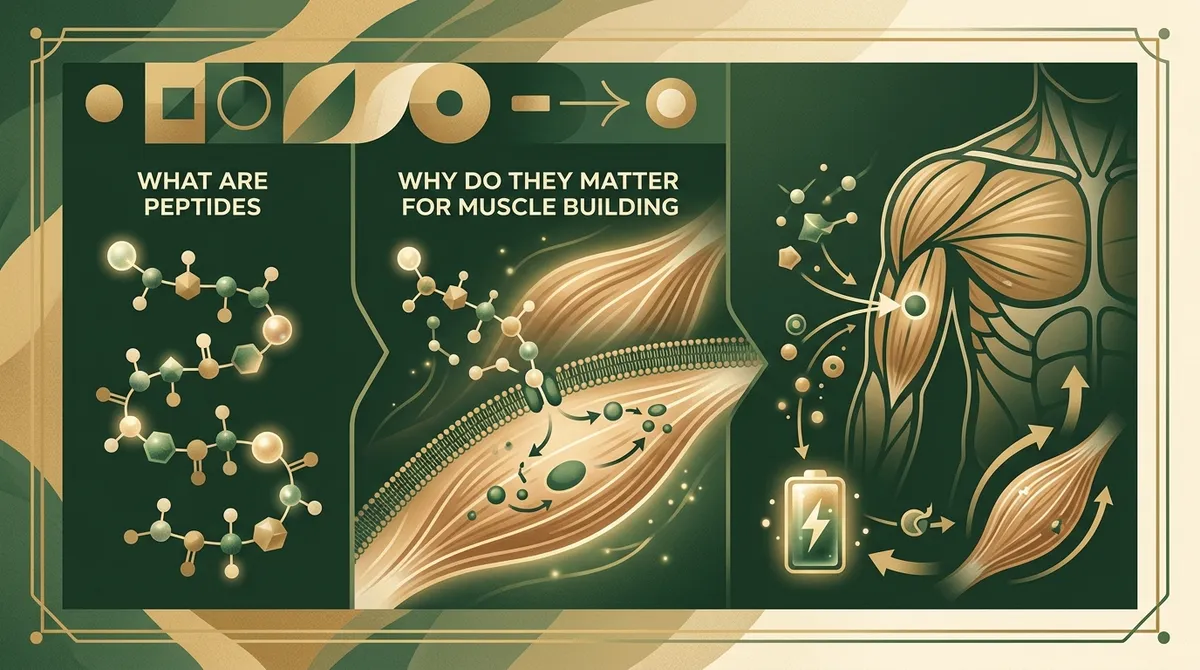
What Are Peptides, and Why Do They Matter for Muscle Building
Peptides are small chains of amino acids, the same building blocks that make up proteins. Think of them as tiny messengers that tell your cells what to do. Some peptides can signal your body to release more growth hormone, which may support recovery, lean mass, and energy. If you want a deeper explanation, this guide on what are peptides is a great starting point.
In the world of muscle building, most peptides people talk about are not steroids. They do not directly build muscle tissue the way anabolic hormones do. Instead, many of them are growth hormone secretagogues. That is a fancy way of saying they nudge your pituitary gland to release more of your own natural growth hormone.
This matters because more growth hormone can mean better recovery, improved sleep, and support for lean body mass over time. But it is not an overnight transformation. It works alongside your effort, not instead of it.
How These Peptides Actually Work in Your Body
Most muscle-focused peptides raise growth hormone and IGF-1 levels. Higher IGF-1 can support muscle repair and modest increases in lean mass. This is different from bulking agents that force rapid muscle growth.
Your body still needs the right fuel and stimulus to build muscle. That means peptides work best as a support tool, not a replacement for training and nutrition. If you want to understand more about how peptide therapy fits into a bigger picture, check out 8 Facts That Explain What Are Peptides in 2026.
Popular Peptides for Muscle Building and Recovery
Let’s walk through the peptides people ask about most. Some are backed by more research than others, so it helps to know the differences before making any decisions.
- CJC-1295: A growth hormone releasing hormone (GHRH) analog. It encourages a steady release of growth hormone over time.
- Ipamorelin: Often paired with CJC-1295. It stimulates growth hormone release with fewer effects on appetite and cortisol compared to older secretagogues.
- Sermorelin: Another GHRH analog. It has a shorter action time but works similarly by boosting natural growth hormone pulses.
- Tesamorelin: The only FDA-approved GHRH analog mentioned in current research, though it is approved for HIV-associated lipodystrophy, not general muscle building.
- MK-677 (Ibutamoren): Technically not a peptide, but often grouped with them. It is an oral growth hormone secretagogue with ongoing safety questions.
These are commonly discussed in wellness and longevity circles, but they are not interchangeable. Evidence, approval status, and safety profiles vary quite a bit between them.
CJC-1295 vs Ipamorelin: What Is the Difference
People often ask about this pairing because they are frequently used together. CJC-1295 provides a longer, steady increase in growth hormone. Ipamorelin gives a cleaner pulse with less impact on hunger and stress hormones.
Together, they may create a more balanced growth hormone response than either peptide alone. Still, results vary from person to person, which is why personalized guidance matters so much.
Recovery-Focused Peptides: BPC-157 and TB-500
These two peptides get a lot of attention, but they are often misunderstood. BPC-157 and TB-500 are marketed mainly for injury recovery, not direct muscle hypertrophy.
- They may support tissue repair after strain or injury
- They are popular among athletes dealing with tendon or joint issues
- Human evidence for muscle growth specifically is limited
- Most of their appeal comes from recovery support, not bulking effects
If you are curious about BPC-157 specifically, this deep dive on 13 Facts About TB-500 Peptide You Need in 2026 is worth a read.
What Does the Research Actually Show
Let’s talk numbers, because they help set realistic expectations. According to a summary from a peptide clinic source, clinical studies on GH-releasing peptides report lean body mass increases of about 1 to 3 kilograms over 3 to 12 months. That is a modest but meaningful shift, not an overnight transformation.
A meta-analysis on tesamorelin found an average lean mass increase of 1.42 kilograms, along with reductions in fat. That is encouraging, but remember tesamorelin is approved for a specific medical condition, not bodybuilding.
| Peptide | Main Use | FDA Approval Status | Muscle-Building Evidence |
|---|---|---|---|
| CJC-1295 | Growth hormone support | Not FDA-approved | Limited, indirect through GH increase |
| Ipamorelin | Growth hormone support | Not FDA-approved | Limited human data |
| Sermorelin | Growth hormone support | Not FDA-approved for bodybuilding | Modest, mostly recovery-related |
| Tesamorelin | Fat reduction in HIV lipodystrophy | FDA-approved for specific condition | +1.42 kg lean mass in meta-analysis |
| BPC-157 | Injury recovery | Not FDA-approved | Limited human evidence |
A review of bioactive peptides in sports nutrition noted potential benefits for body composition, muscular performance, and connective tissue adaptation. However, it did not provide one clear pooled result, which tells us the science is still developing.
Healthline also points out that evidence for bodybuilding benefits is limited and mixed, especially in people who are already well-trained. This lines up with what many longevity clinics see too: peptides tend to help more with recovery and body composition support than dramatic muscle gains.
Why Peptides Are Not a Shortcut
Here is the honest truth. Peptides will not replace the basics. You still need:
- Progressive resistance training that challenges your muscles
- Enough protein and calories to support muscle repair
- Consistent, quality sleep for hormone regulation
- Patience, since real changes take months, not days
Peptides can be a helpful addition to a solid foundation, not a substitute for it. Learn more about setting a strong, safe foundation in How to Start Peptide Therapy Safely and See Real Results.
Are Peptides Safer Than Anabolic Steroids
This is a common and fair question. Growth hormone secretagogues generally have a gentler effect on the body than anabolic steroids. They work with your natural hormone system instead of overriding it.
That said, safer does not mean risk-free. Professional sports organizations ban growth-hormone-releasing peptides as doping agents. Many products sold online are unregulated, mislabeled, or sold as research chemicals rather than medical treatments.
According to National Library of Medicine research, long-term safety data for many of these peptides in healthy adults remains limited. This is exactly why medical oversight matters so much.
Risks and Side Effects to Know About
Before trying any peptide, it helps to understand the possible downsides. Being informed helps you make smart, safe choices.
- Water retention or mild swelling in early use
- Changes in blood sugar regulation
- Injection site irritation or redness
- Potential impact on natural hormone feedback loops
- Unknown long-term effects with unregulated products
Harvard Health has noted that many injectable peptides sold online or through wellness clinics are not FDA-approved, and human safety evidence is often thin. This is not meant to scare you. It is meant to highlight why sourcing and medical supervision truly matter.
Why Medical Supervision Changes Everything
This is where things get personal. Peptide therapy is not one-size-fits-all. Your hormone levels, health history, and goals are unique to you.
At Allura Longevity, treatment starts with real lab work through LabCorp, not guesswork. Licensed providers, led by board-certified Family Nurse Practitioner Ashley, review your results and build a plan around your body, not a generic template.
This kind of personalized approach is especially valuable for busy professionals and health optimizers who want results without wasting time on trial and error. If you are also interested in broader muscle-focused options, this resource on 14 Peptides for Muscle Gain Worth Knowing (2026) pairs well with this guide.
What the Process Looks Like
Getting started is more straightforward than most people expect. Here is a simple breakdown of the journey.
- Book a $50 virtual consultation to discuss your goals
- Complete blood work through LabCorp to understand your baseline
- Receive a personalized six-month treatment plan
- Get your peptides delivered directly to your home
- Stay supported with ongoing monitoring and adjustments
This process removes the guesswork many people struggle with when trying to source peptides on their own. To learn more about doing this the right way, see How to Get Prescription Peptides Safely in 2026.
Comparing Telehealth Peptide Therapy to Other Options
Many people wonder if telehealth care can really compare to an in-person clinic. The short answer is yes, especially for peptide therapy, which relies heavily on lab work and ongoing check-ins rather than in-office procedures.
| Feature | Telehealth Peptide Therapy | Traditional In-Person Clinic |
|---|---|---|
| Convenience | High, care from home | Requires travel and appointments |
| Personalization | Based on lab work and goals | Varies by provider |
| Time Commitment | Fits busy schedules | Often requires more time off |
| Delivery | Peptides shipped to your home | Usually picked up in office |
If you want a deeper comparison, this article on Local Clinic vs. Telehealth: Best Peptide Therapy Near You? breaks it down further.
Who Tends to Benefit Most From These Peptides
Not everyone needs the same approach, and that is completely okay. Here are the types of people who often explore muscle-supportive peptide therapy.
- Health optimizers looking to improve recovery and energy
- Aging adults wanting to preserve lean muscle and vitality
- Biohackers who track labs and want data-driven protocols
- Busy professionals seeking convenient, at-home care
- Wellness seekers ready to add advanced support to their routine
Wherever you fall on this list, the goal is the same. Support your body’s natural processes safely, with real guidance instead of guesswork.
Final Thoughts on Peptides for Muscle Building
Peptides for muscle building are not a magic pill, and honestly, that is a good thing. The best results come from combining smart, medically guided peptide use with solid training, nutrition, and rest. Evidence supports modest benefits, especially around recovery and lean mass, but nothing replaces consistent effort.
If you are ready to explore a personalized plan built around your own blood work and goals, our team is here to help. You can request a consultation today and take the next step toward safer, smarter muscle support. Spots are limited each month, so now is a great time to reach out and start your journey with confidence.
FAQs
Q: What are the best peptides for muscle building?
A: The most commonly discussed options are CJC-1295, ipamorelin, sermorelin, and tesamorelin, since they support natural growth hormone release. That said, the right peptide really depends on your personal health goals and lab results, so it’s worth chatting with a licensed provider before choosing one.
Q: Do peptides actually help you build muscle?
A: They can offer modest support, mostly by boosting growth hormone and helping with recovery, but they are not a magic muscle switch. Think of them as a helpful teammate to your workouts and nutrition, not a replacement for hard work.
Q: What is the difference between CJC-1295 and ipamorelin?
A: CJC-1295 gives a longer, steady boost in growth hormone, while ipamorelin creates a cleaner, shorter pulse with less impact on appetite. Many people use them together for a more balanced effect, but your provider can help decide what fits you best.
Q: Is tesamorelin used for muscle gain or fat loss?
A: Tesamorelin is actually FDA-approved for reducing fat in people with HIV-associated lipodystrophy, not specifically for muscle gain. Some studies show a small lean mass increase too, but that’s a secondary benefit rather than its main purpose.
Q: Are BPC-157 and TB-500 muscle-building peptides or recovery peptides?
A: They’re mostly known as recovery-support peptides rather than true muscle builders. People often use them to support healing after strain or injury, and while that indirectly helps your training consistency, direct muscle growth evidence in humans is still limited.





