
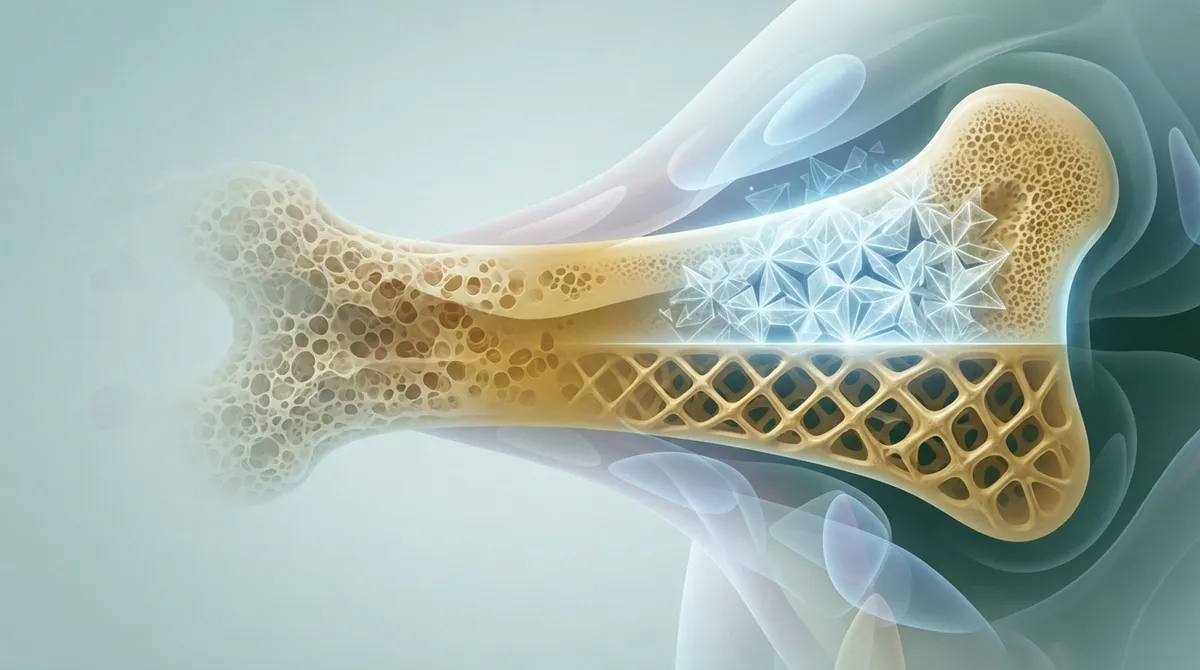
Key Takeaways
-
FDA-approved bone-building peptides (teriparatide, abaloparatide, romosozumab) actively stimulate new bone formation and have strict time limits (12-24 months); they differ fundamentally from estrogen therapy which only slows bone loss.
-
Complete diagnostic workup including DXA scans, kidney function, calcium/vitamin D levels, and fracture history is essential before treatment selection—skipping this means guessing at the right therapy for your situation.
-
After completing peptide therapy, follow-up antiresorptive treatment (bisphosphonate or denosumab) is required to maintain bone density gains; stopping treatment without this transition causes benefits to fade.
-
Wellness peptides sold online lack FDA approval and bone health evidence unlike clinical-grade options; real bone therapy requires licensed provider oversight, lab monitoring, and DXA scans every 1-3 years.
If you’ve started noticing bone density concerns on your latest lab report, you’re definitely not alone. Bone loss is quiet. It doesn’t hurt until a fracture happens. That’s why so many health optimizers, aging adults, and biohackers are asking about hormone therapy for bone density, hoping to catch problems early and treat them the right way. The good news? There are real, evidence-backed options, but there are also a lot of mistakes people make when trying to figure out which one fits their situation.
In this guide, we’ll walk through nine common missteps people make with hormone and peptide-based bone treatments. We’ll cover menopausal hormone therapy, bone-building peptides like teriparatide and abaloparatide, and how they compare to trendy “wellness” peptides that simply don’t have the research to back up bone claims. Think of this as your friendly, no-nonsense roadmap so you can make smart, safe choices with your provider.

Mistake 1: Confusing Menopausal Hormone Therapy With Bone-Building Peptides
This is probably the most common mix-up we see. Menopausal hormone therapy, meaning estrogen with or without a progestogen, is one type of “hormone therapy for bone density.” But it’s a totally different tool than peptide-based anabolic medicines like teriparatide and abaloparatide.
Estrogen therapy can help slow bone loss in certain postmenopausal women. But it’s generally recommended for women dealing with menopausal symptoms, or for osteoporosis prevention, not as the go-to treatment once osteoporosis is already established. The Endocrine Society suggests it’s best considered for women younger than 60, or within 10 years of menopause, who don’t have major heart, blood clot, or breast cancer risks.
Peptide-based anabolic therapies work differently. They actually stimulate new bone formation rather than just slowing bone loss. Understanding what are peptides and how they function in the body can help you see why these two approaches aren’t interchangeable.
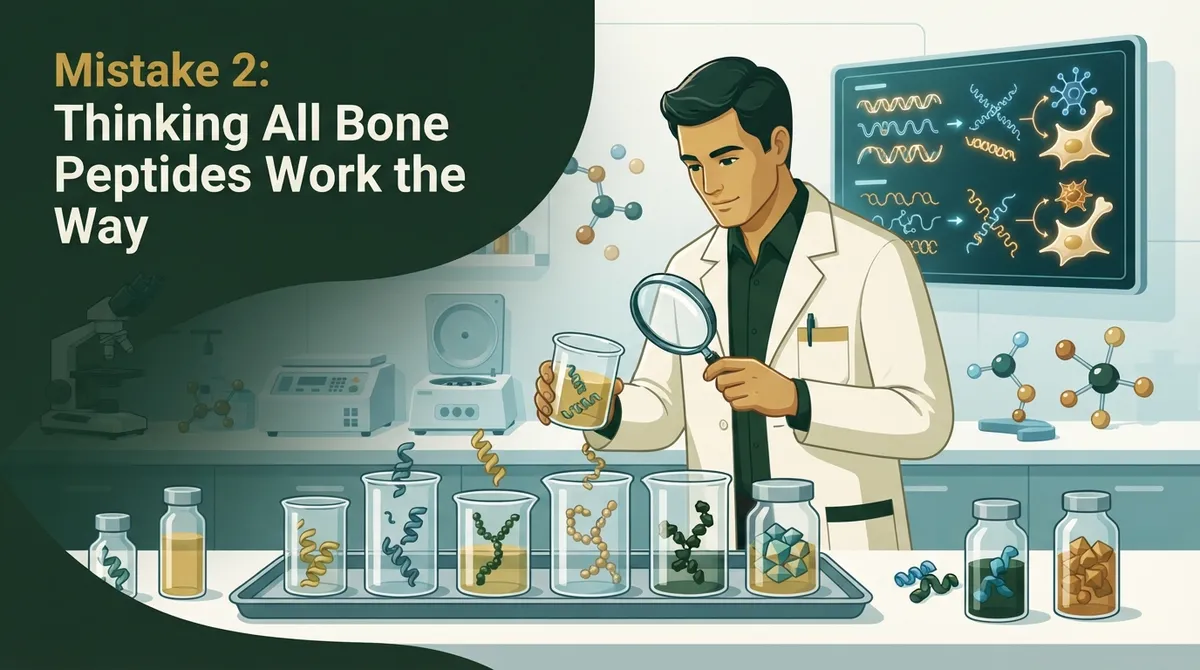
Mistake 2: Thinking All Bone Peptides Work the Same Way
Not every bone-building peptide operates the same way, and lumping them together is a mistake. Here’s a quick breakdown:
- Teriparatide is a recombinant parathyroid hormone analog that stimulates new bone growth when used intermittently.
- Abaloparatide is a parathyroid hormone-related protein analog with a similar bone-building effect.
- Romosozumab works differently. It blocks a protein called sclerostin, which helps build bone while also reducing bone breakdown.
Each of these has a different mechanism, different dosing schedule, and different safety profile. Treating them as interchangeable options is where a lot of confusion (and risk) creeps in.
Comparing the Three Main Bone-Building Options
| Therapy | Type | Max Duration | Administration |
|---|---|---|---|
| Teriparatide | PTH analog | Up to 24 months | Daily subcutaneous injection |
| Abaloparatide | PTHrP analog | Up to 18 months | Daily subcutaneous injection |
| Romosozumab | Sclerostin inhibitor | Up to 12 months | Monthly subcutaneous injection (210 mg) |
Mistake 3: Skipping the Diagnostic Workup
You can’t treat what you haven’t measured. A huge mistake is trying to jump straight to treatment without a full picture of your bone health first. That means DXA bone density scans, fracture history, kidney function, calcium and vitamin D levels, and a review of other medications.
According to the National Library of Medicine, treatment selection should always factor in age, fracture risk, and secondary causes of bone loss. This isn’t a one-size-fits-all situation, and skipping this step means you’re basically guessing.
At Allura Longevity, every plan starts with LabCorp blood work reviewed by a licensed provider, so recommendations are based on your actual numbers, not assumptions.
Mistake 4: Assuming Wellness Peptides Can Fix Bone Density
Here’s a big one for the biohacker crowd. Not every peptide sold online for “longevity” or “anti-aging” has evidence for improving bone density. Teriparatide, abaloparatide, and romosozumab are FDA-approved, guideline-supported medicines for osteoporosis. Compounded or experimental peptides marketed for general wellness simply don’t have the same research behind them for bone health specifically.
If a product promises stronger bones without any mention of DXA monitoring, lab work, or a prescribing provider, that’s a red flag. Real bone therapy requires real oversight.
Mistake 5: Using These Peptides Longer Than Recommended
More isn’t always better, especially with anabolic bone therapies. Guidelines are pretty clear on time limits:
- Teriparatide: generally used for up to 24 months
- Abaloparatide: generally used for up to 18 months
- Romosozumab: generally limited to 12 months
Going beyond these windows isn’t typically supported by current evidence, and it can increase unnecessary risk without added benefit. This is exactly why ongoing monitoring by a qualified provider matters so much throughout your treatment.
Mistake 6: Forgetting What Comes After Treatment
This mistake catches a lot of people off guard. Once you finish a course of teriparatide, abaloparatide, or romosozumab, you’re not done. Guidelines recommend following up with an antiresorptive medicine, like a bisphosphonate or denosumab, to help lock in the bone density gains you just worked hard to build.
Skipping this step is like renovating a house and then leaving the front door unlocked. The gains you made can fade if there’s no follow-up plan. This is part of why a structured, six-month treatment approach with built-in check-ins tends to work better than a one-off prescription.
Mistake 7: Ignoring Cardiovascular and Stroke Risk Factors
Romosozumab in particular comes with an important caveat. It’s generally not recommended for people at high risk of cardiovascular disease or stroke. This is a great example of why self-prescribing or ordering peptides without medical supervision is risky business.
A licensed provider will look at your full health history, not just your bone scan, before recommending any bone-building peptide. That kind of individualized approach is a cornerstone of safe, effective care, and it’s something busy professionals especially appreciate when they don’t have time to research every contraindication themselves.
Mistake 8: Not Monitoring Bone Density Often Enough
Starting treatment and then just hoping for the best is a recipe for disappointment. The Endocrine Society recommends monitoring DXA bone mineral density at the spine and hip every 1 to 3 years for high-risk patients on osteoporosis treatment.
Regular monitoring helps your provider know if the treatment is working, if it’s time to switch strategies, or if you’re ready to transition to a maintenance therapy. Wellness seekers who are used to tracking labs and biomarkers for other health goals will recognize this same principle applies here too.
Key Monitoring Checkpoints
- Baseline DXA scan before starting therapy
- Follow-up DXA scan every 1 to 3 years during treatment
- Calcium and vitamin D level checks
- Kidney function monitoring
- Review of fracture history at each visit
Mistake 9: Trying to Navigate This Alone Without Licensed Support
Bone density treatment isn’t something to piece together from internet forums. This is a medical decision that deserves a real conversation with a licensed provider who can look at your labs, your history, and your goals together. If you’ve been searching for reliable hormone therapy near me options, telehealth has made this easier than ever, especially for busy professionals who can’t easily fit in-office visits into their week.
Learning how to start peptide therapy safely is the foundation for getting real results, whether your focus is bone health, energy, or overall longevity. And if hormone balance in general is part of your bigger picture, it’s worth exploring how hormone therapy works with peptides as a combined strategy.
How Allura Longevity Approaches Bone and Hormone Health
Allura Longevity offers personalized, medically supervised peptide therapy through convenient telehealth visits, with medications shipped straight to your door. The process starts with an affordable $50 virtual consultation, followed by comprehensive LabCorp blood work so your provider, led by board-certified Family Nurse Practitioner Ashley, can build a treatment plan around your actual numbers.
From there, clients receive a customized six-month plan with ongoing monitoring and adjustments along the way. This isn’t a one-size-fits-all subscription box. It’s individualized care designed around your labs, your goals, and your risk factors, whether you’re focused on bone density, energy, weight management, or overall vitality. According to what are peptides resources, peptides are short chains of amino acids that can influence very specific processes in the body, which is exactly why individualized dosing and monitoring matter so much.
Quick Reference: Questions to Ask Your Provider
| Topic | Question to Ask |
|---|---|
| Diagnosis | What does my DXA scan and fracture risk actually show? |
| Treatment choice | Am I a candidate for anabolic peptide therapy or hormone therapy? |
| Duration | How long will I stay on this specific treatment? |
| Follow-up | What comes after this treatment ends? |
| Monitoring | How often will we recheck bone density and labs? |
Bringing It All Together
Hormone therapy for bone density isn’t a single treatment. It’s a category that includes menopausal estrogen therapy and targeted anabolic peptides like teriparatide, abaloparatide, and romosozumab. Each has its own purpose, timeline, and safety considerations. The biggest mistakes people make are skipping diagnostics, confusing wellness peptides with FDA-approved bone medicines, ignoring treatment duration limits, and forgetting about follow-up care.
The fix for all of this is simple: work with a licensed provider who treats your bone health as part of your whole-body picture. If you’re ready to get real answers based on your own labs and history, you can request a consultation with Allura Longevity today. Spots are limited each month, so it’s worth reaching out soon if bone health, energy, or overall vitality is on your radar for 2026.
FAQs
Q: Can peptide therapy improve bone density and reduce fracture risk?
A: Yes, certain FDA-approved peptide medicines like teriparatide and abaloparatide are specifically designed to stimulate new bone formation and lower fracture risk in high-risk patients. That said, general wellness peptides sold without a bone health indication don’t have the same evidence, so it’s important to know which category you’re actually dealing with.
Q: What is the difference between estrogen hormone therapy and peptide osteoporosis treatment?
A: Estrogen hormone therapy helps slow bone loss and is generally used for postmenopausal symptom relief or prevention, while peptide therapies like teriparatide actively build new bone. They work through different mechanisms and are typically recommended for different situations, so your provider will help determine which fits your needs.
Q: How long can someone use teriparatide or abaloparatide for bone density?
A: Guidelines generally recommend up to 24 months for teriparatide and up to 18 months for abaloparatide. After finishing either treatment, most people transition to an antiresorptive medicine to help maintain the bone density gains they’ve made.
Q: How often should bone density be measured during peptide therapy?
A: The Endocrine Society recommends checking DXA bone density at the spine and hip every 1 to 3 years for high-risk patients on treatment. Regular monitoring helps your provider confirm the therapy is working and decide when it’s time to adjust your plan.
Q: Is hormone replacement therapy appropriate for osteoporosis prevention after menopause?
A: It can be, but it’s generally best suited for certain women, usually younger than 60 or within 10 years of menopause, without major cardiovascular or breast cancer risk factors. It’s typically considered for prevention rather than as the first-line treatment once osteoporosis is already established.





