
Key Takeaways
-
HRT provides direct hormone replacement with decades of proven results for specific conditions like menopause and hypogonadism, while peptide therapy works indirectly by signaling your body to produce hormones naturally, making HRT more predictable but peptides potentially more individualized.
-
FDA-approved peptides like semaglutide show documented efficacy (14.9% weight loss) and tesamorelin reduced visceral fat by 15-20% for specific conditions, but many popular anti-aging peptide uses lack FDA approval and long-term comparative studies.
-
Treatment choice should be based on your specific condition and actual bloodwork through a licensed provider, not marketing claims—menopausal symptoms respond best to HRT, while metabolic health and recovery may benefit from peptides depending on individual response.
-
Both therapies carry distinct safety risks requiring ongoing monitoring: HRT may increase blood clots or cardiovascular effects, while peptides can cause injection reactions or unknown long-term effects, especially with compounded (non-FDA-approved) products.
Trying to figure out if hormone therapy or peptide therapy is right for you? You’re not alone. Every week, we talk to people who feel overwhelmed by all the claims out there. Some sound too good to be true. Others sound scary. The truth is somewhere in the middle, and it depends on real evidence, not marketing buzzwords.
This guide breaks down a fair, honest hormone therapy efficacy comparison. We’ll look at what science actually shows for hormone replacement therapy (HRT) versus peptide therapy. No hype. No scare tactics. Just clear facts to help you make a confident choice for your health, whether you’re chasing better sleep, more energy, or healthy aging. Let’s dig in together.
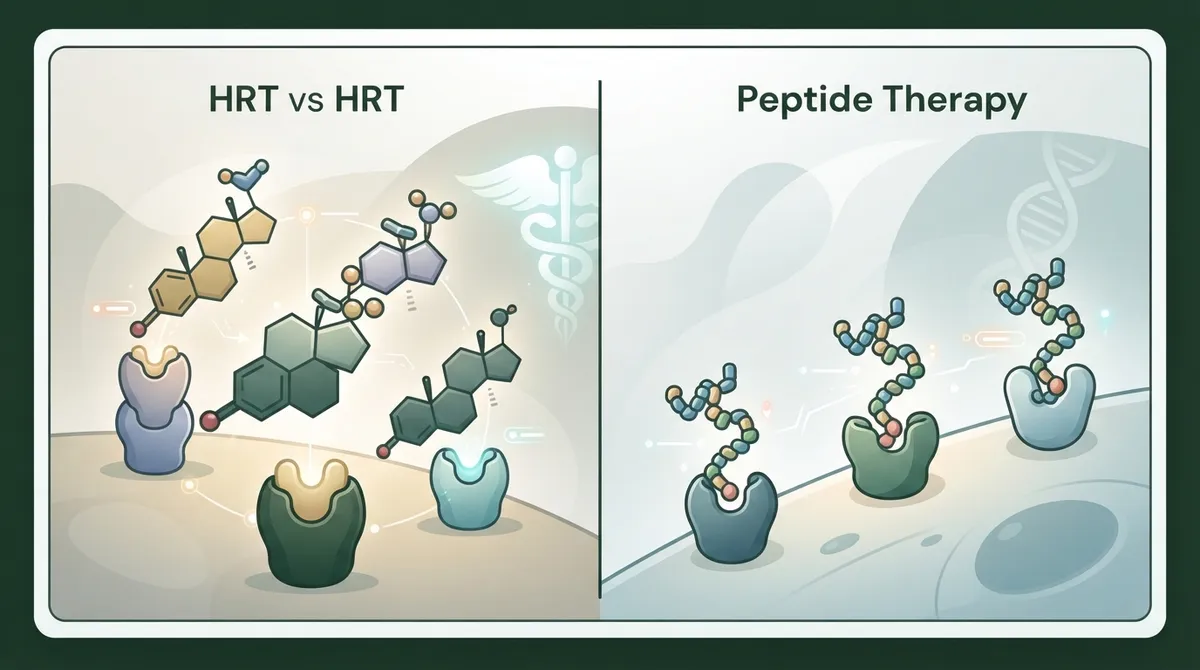
1. Know the Basic Difference Between HRT and Peptides
Hormone replacement therapy directly replaces hormones your body isn’t making enough of anymore. Think estrogen, progesterone, or testosterone. It’s a direct swap.
Peptide therapy works differently. Most peptides send signals to your body, asking it to do something on its own. For example, growth-hormone secretagogues tell your pituitary gland to release more growth hormone naturally, rather than adding growth hormone directly. If you want a deeper explanation, check out this guide on what peptides actually are and how they work in your body.
This distinction matters a lot when comparing efficacy. Direct replacement tends to have more predictable, well-studied effects. Signaling therapies can be more subtle and vary from person to person.

2. The Evidence Base Isn’t Equal (And That’s Okay)
Here’s something we believe in being upfront about: HRT has a much longer track record for specific, diagnosed conditions. Peptide therapy is newer territory in many respects, and the evidence varies wildly by which peptide you’re talking about.
There are no large, high-quality trials that directly pit common peptide protocols against estrogen, testosterone, or progesterone for the same outcome. That doesn’t mean peptides don’t work. It means we compare them differently, indication by indication, rather than assuming one approach beats the other across the board.
| Factor | Hormone Replacement Therapy | Peptide Therapy |
|---|---|---|
| Mechanism | Direct hormone replacement | Signals body to produce or regulate hormones |
| Evidence maturity | Decades of large trials | Molecule-specific, often smaller studies |
| FDA approval | Widely approved for many indications | Some approved (GLP-1s, tesamorelin); many used off-label |
| Best-studied use | Menopause, hypogonadism | Metabolic health, tissue repair, recovery |
3. FDA-Approved Peptides Have Real, Documented Results
Not all peptides are created equal, and that’s an important part of any honest hormone therapy efficacy comparison. Some peptides have gone through rigorous FDA review for specific uses.
Tesamorelin is a great example. In clinical trials among people with HIV-associated lipodystrophy, tesamorelin reduced visceral fat by about 15% to 20% over roughly 26 weeks. That’s a real, measurable result for a specific condition. But it doesn’t mean tesamorelin works the same way for general fat loss in healthy adults. Learn more in our breakdown of tesamorelin for weight loss.
GLP-1 medications like semaglutide and tirzepatide also have strong data. The STEP 1 trial showed semaglutide led to about 14.9% average weight loss at 68 weeks, compared to 2.4% with placebo. Tirzepatide performed even better in the SURMOUNT-1 trial, with 15% to 21% average weight loss at 72 weeks. If you want the full picture, our article on understanding GLP-1 peptide therapy walks through the science step by step.
4. Growth Hormone Secretagogues Need Realistic Expectations
Peptides like sermorelin, CJC-1295, and ipamorelin get a lot of buzz for sleep, recovery, and muscle gain. But here’s the honest truth: many of these uses aren’t FDA-approved, and long-term comparative studies are limited.
Higher growth hormone or IGF-1 levels on a lab report don’t automatically mean better health or a longer life. It’s a common misunderstanding we help clients work through. That said, many people do report meaningful benefits with the right dosing and monitoring. Our guide on using CJC-1295 safely covers what realistic expectations look like.
The key is working with a provider who reviews your personalized bloodwork and sets goals based on your actual biology, not just trends.
5. Compare by Condition, Not by Marketing Claims
A responsible hormone therapy efficacy comparison never relies on buzzwords like “natural” or “boosts your own hormones.” Instead, look at the actual condition being treated.
- Menopausal hot flashes and night sweats: Systemic hormone therapy remains the most effective option, cutting symptoms by roughly 75% in appropriate candidates.
- Low testosterone with confirmed symptoms: Testosterone therapy can improve sexual function, but it’s not a general energy or anti-aging fix. The Testosterone Trials found modest gains in sexual desire and bone density, but limited effects on overall vitality.
- Excess visceral fat in specific conditions: Tesamorelin has documented, indication-specific results.
- General wellness and recovery goals: Peptides like BPC-157 and sermorelin may help, but evidence is still developing and highly individual.
This is why we always recommend starting with a proper consultation before choosing any protocol. Every body responds differently, and a plan built around your labs works better than guessing.
6. Weigh the Safety Profiles Honestly
Every therapy carries some risk, and comparing safety is just as important as comparing results. HRT risks can include blood clots, cardiovascular effects, and changes in breast or endometrial tissue, depending on formulation and individual risk factors.
Peptide risks vary by molecule too. Some people experience mild issues like injection site reactions, headaches, or joint discomfort. Others may face more uncertain long-term effects since research is still catching up. According to the National Library of Medicine, immunogenicity and product quality remain areas providers should watch closely, especially with compounded peptides.
- Ask your provider about monitoring schedules for your specific therapy
- Request lab work before and during treatment
- Report any new symptoms right away
- Confirm your peptide source follows quality and sourcing standards
Understanding the difference between FDA-approved and compounded peptides helps you ask smarter questions before starting any plan.
7. Choose a Provider Who Personalizes Your Comparison
The best hormone therapy efficacy comparison isn’t something you do alone with internet articles (even good ones like this!). It’s something a licensed provider does with you, using your actual bloodwork and health history.
At Allura Longevity, every plan starts with a simple $50 virtual consultation and bloodwork through LabCorp. From there, our licensed providers, led by board-certified Family Nurse Practitioner Ashley, build a custom six-month plan just for you. Peptides ship right to your door, and you get ongoing support and adjustments along the way. We proudly serve clients across Florida, Georgia, Texas, Connecticut, Indiana, Maryland, New York, and California.
Whether you’re exploring peptide options for women or hormone support for men, having a real medical provider guide your decisions makes all the difference. Curious how the process works from start to finish? Read our guide on starting peptide therapy safely to see what a typical journey looks like.
Making Sense of It All
Comparing hormone therapy and peptide therapy doesn’t have to feel confusing or intimidating. The short version: HRT has decades of proven results for clearly diagnosed conditions like menopause and hypogonadism. Peptide therapy shines in specific, well-studied areas like metabolic health, and shows promise in many other areas that are still being researched. According to resources like WebMD’s overview of peptides, understanding the mechanism behind each treatment helps set realistic expectations.
The smartest move you can make is getting personalized guidance instead of guessing. Spots for new clients are limited each month, so if you’re ready to get real answers based on your own labs and goals, our team is here to help. You can request a consultation today and start building a plan that actually fits your body. You can also reach us directly at (813) 510-6277 with any questions. You deserve a plan built around real evidence, not guesswork, and we’re honored to walk that path with you.
FAQs
Q: Are peptide therapies more effective than hormone replacement therapy?
A: It really depends on what you’re treating. HRT has stronger evidence for things like menopause symptoms and confirmed low testosterone. Peptides shine in specific areas like metabolic health, but many popular anti-aging uses still need more research.
Q: What is the difference between peptide therapy and hormone replacement therapy?
A: HRT replaces hormones directly, like adding estrogen or testosterone back into your system. Peptide therapy usually sends signals asking your body to produce more of a hormone naturally, which is a gentler, more indirect approach.
Q: Is peptide therapy FDA-approved for anti-aging or muscle gain?
A: Not typically. Some peptides like tesamorelin and GLP-1 medications have FDA approval for specific conditions, but general anti-aging or muscle-building uses are usually off-label. We always recommend asking your provider about the approval status of any peptide you’re considering.
Q: How effective is tesamorelin compared with conventional hormone therapy for reducing visceral fat?
A: Tesamorelin showed solid results in clinical trials, reducing visceral fat by about 15% to 20% in people with HIV-associated lipodystrophy. It hasn’t been studied to the same standard for general fat loss in otherwise healthy adults, so results may vary.
Q: What are the risks of peptide therapy compared with estrogen or testosterone replacement?
A: Each therapy has its own risk profile. HRT can carry risks like blood clots or cardiovascular effects, while peptide risks vary by molecule and can include injection reactions or unknown long-term effects. Working with a licensed provider helps you monitor and manage these risks safely.