
Key Takeaways
-
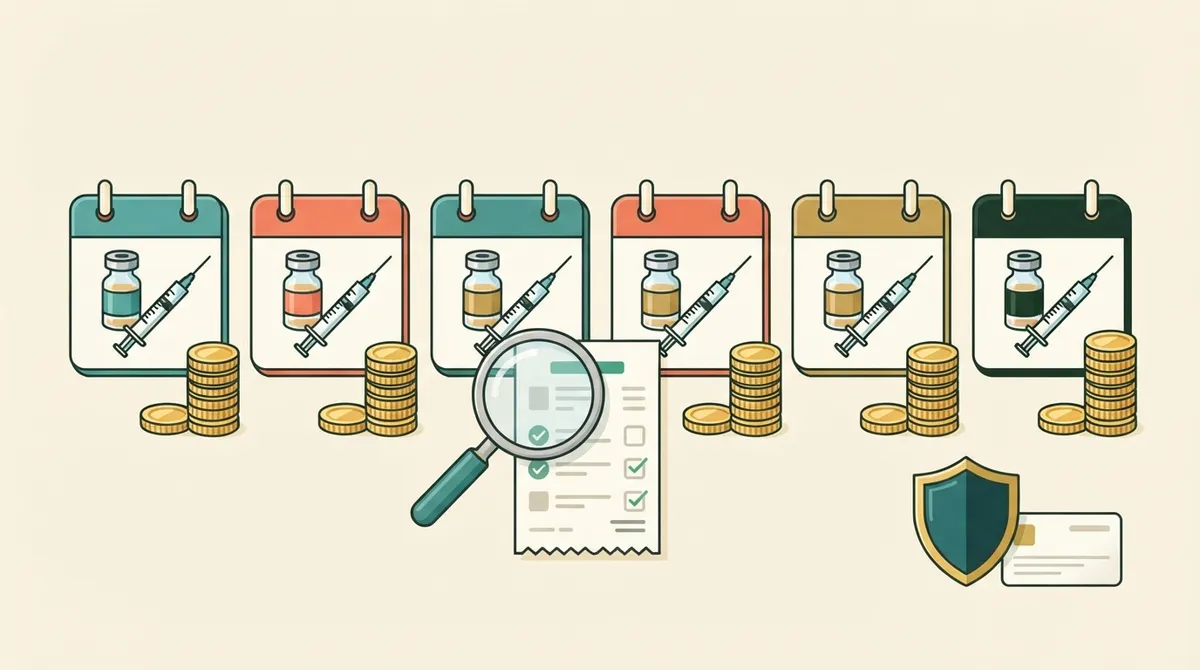
Six-month peptide plans in the U.S. typically run about $1,350 to $3,930 for ongoing programs, but there is no fixed price and costs vary by peptide, dose, clinic, and what the quote includes.
-
The first month often costs more, with one published estimate putting it at $425 to $1,305 versus $225 to $655 monthly afterward, so budget for first-month extras rather than multiplying the monthly price by six.
-
Compare total six-month costs, not headline monthly prices, and confirm whether consultations, labs, retesting, supplies, shipping, and provider messaging are included or billed separately.
-
Ask whether the peptide is FDA-approved or compounded, since the FDA states compounded drugs are not reviewed for safety, effectiveness, or quality before marketing.
-
Insurance rarely covers wellness peptides, so plan to self-pay and call your insurer to check coverage for any FDA-approved peptide medicine tied to a specific diagnosis.
-
Walk away from clinics that skip a real provider consultation or baseline blood work, or that pressure you into a large upfront package before answering basic questions.
You have heard about peptide therapy, you are curious, and now you want to know the number. Fair enough! If you have ever searched how much does a 6 month peptide plan cost, you probably found a lot of vague answers and a few wild price tags.
Here is the honest truth: there is no single fixed price. Costs swing based on the exact peptide, the dose, the clinic, and what the quote actually includes. But that does not mean you are stuck guessing. With a few simple facts, you can read any quote like a pro and spot a deal that looks cheap but is not.
In this guide, we break the total into five easy pieces. You will see real market ranges for 2026, learn why the first month costs more, and get a quick checklist to compare plans fairly. Whether you are a busy professional, a data-loving biohacker, or someone who simply wants to feel more like yourself, this is for you. If you are brand new to the topic, our guide 8 Facts That Explain What Are Peptides in 2026 is a friendly place to start.
The Quick Answer: What a 6 Month Plan Usually Costs
Let’s get the headline out of the way. Based on published clinic estimates, many ongoing peptide programs in the U.S. land around $225 to $655 per month. Over six months, that works out to roughly $1,350 to $3,930.
More complex or closely supervised programs can run higher. Some estimates reach $1,200 or more per month, which would total $7,200 over six months. Other cost guides report many protocols at $150 to $600 monthly. These are market estimates, not a standard fee schedule, so treat them as a rough budgeting guide.
| Program Level | Estimated Monthly Cost | Estimated 6 Month Total |
|---|---|---|
| Lower range protocols | $150 to $600 | $900 to $3,600 |
| Typical ongoing programs | $225 to $655 | $1,350 to $3,930 |
| Broad supervised programs | $300 to $1,200 | $1,800 to $7,200 |
Remember, these totals may not include extra charges like intake visits, labs, or shipping. That brings us to the first cost piece.

5 Costs That Shape Your 6 Month Peptide Plan Total
Think of your six-month total as five building blocks. Some clinics bundle them. Others bill them separately. Knowing each one helps you compare apples to apples.
- The consultation and clinical oversight
- Baseline and follow-up lab work
- The peptide medication itself
- Supplies and shipping
- Follow-up care and plan adjustments
1. The Consultation and Clinical Oversight
Every safe plan starts with a real conversation with a licensed provider. They review your history, your goals, and your health risks before anything is prescribed.
Some clinics charge a separate intake fee. Others fold it into a monthly price. At Allura Longevity, the starting point is a $50 virtual consultation, which keeps the first step simple and low-pressure.
Why does this piece matter so much? Because clinician oversight is what separates a thoughtful plan from a mail-order guess. A cheaper quote with no real provider access may cost you more in the long run.
2. Baseline and Follow-Up Lab Work
Good peptide care is personalized, and personalization starts with data. Blood work shows where your hormones, metabolism, and key markers sit today.
Labs may add to your total, especially in the first month. Retesting later in the plan helps your provider fine-tune your protocol. If you love tracking numbers, you will enjoy this part. Our post on 5 Blood Work Analysis Steps Before Peptides in 2026 walks through what to expect.
When you compare quotes, ask a simple question: are lab costs included, or billed on top?
3. The Peptide Medication Itself
This is usually the biggest line item, and it varies a lot. The price depends on which peptide you take, your dose, and whether it is an FDA-approved drug or a compounded preparation.
Peptide therapy is not one single product. Some peptide-based medicines are FDA-approved for specific uses. Many products sold by wellness clinics are compounded or investigational. The FDA states that compounded drugs are not FDA-approved and are not reviewed by the agency for safety, effectiveness, or quality before marketing.
That is why it pays to learn the difference. Read FDA-Approved vs. Compounded Peptides: What Wins? before you commit to any plan.
4. Supplies and Shipping
Most at-home peptide plans use small injections. That means you may need syringes, alcohol swabs, and bacteriostatic water. Shipping and cold-chain packaging can add a little more.
These costs are small month to month, but they add up over six months. A low advertised medication price may not include them at all.
Telehealth plans make this part easy because supplies arrive at your door. If you are new to self-injecting, our guide on How to Prepare for Safe, Effective Peptide Injections will help you feel confident.
5. Follow-Up Care and Plan Adjustments
Your body changes over six months, and your plan should too. Follow-up check-ins let your provider adjust doses, swap peptides, or pause if something does not feel right.
This is where a lot of cheap quotes fall short. If a plan charges extra for every message or visit, your real cost climbs fast. Ongoing monitoring is a feature worth paying for, not a bonus to skip.
Why the First Month Often Costs More
Have you noticed that clinic quotes sometimes seem to jump in month one? You are not imagining it. The first month often carries extra one-time costs.
One published estimate puts first-month totals at $425 to $1,305, compared with $225 to $655 for each month after. Actual charges vary by clinic.
| Cost Item | Month One | Months Two to Six |
|---|---|---|
| Consultation | Usually included | Usually not repeated |
| Baseline labs | Usually included | Possible retest later |
| Medication | Yes | Yes |
| Supplies and shipping | Yes | Yes |
| Follow-up care | Starts | Ongoing |
So when you budget, do not just multiply the monthly price by six. Add the first-month extras to be safe.
How to Compare Peptide Clinic Prices Fairly
Two quotes can look very different even when the care is similar. Or they can look the same while hiding big gaps. Here is a simple checklist to use before you say yes.
- Which exact peptide is quoted? A price means little without the name and dose.
- Is it FDA-approved or compounded? This affects both cost and risk.
- Are clinician visits included? Ask how many and how often.
- Are labs and retesting included? Or billed separately?
- What about supplies and shipping? Get it in writing.
- Can you message your provider? Find out if follow-up access has a fee.
If a clinic cannot answer these questions clearly, take that as a signal to slow down. For more ideas, 15 Peptide Consultation Questions to Ask in 2026 gives you a full list to bring along.
Will Insurance Cover Your Peptide Plan?
This is one of the most common questions, and the answer is usually: not much. Many peptides used for wellness and longevity are compounded or investigational, and insurance plans often do not cover them.
Some FDA-approved peptide-based medicines may be covered for specific medical conditions. Coverage depends on your plan, the exact drug, and your diagnosis. The best move is to call your insurer and ask directly. Our walkthrough on How to Find Out if Insurance Covers Peptide Therapy shows you exactly what to ask.
Most people budget for peptide therapy as a self-pay wellness expense. Planning that way keeps surprises off the table.
Budget Red Flags to Watch For
A great price is wonderful. A suspicious price is not. Here are signs a deal may cost you more than it saves.
- No licensed provider or no real consultation
- No blood work before starting
- Pressure to buy a big package up front
- No clear answer on where the peptides are made
- Vague promises about results
Safety matters more than savings. The FDA has raised concerns about certain bulk substances proposed for compounding, so it is smart to discuss risks with a licensed clinician before you start. If you are curious about the risk side, read Is Peptide Therapy Safe? What You Really Need to Know. Many costly mistakes are also covered in 6 Peptide Therapy Cost Mistakes That Cost You Money.
You can also learn the basics of how peptides work from a trusted source like what are peptides on WebMD, and explore the research side through the National Library of Medicine.
Why Six Months Is a Smart Timeframe
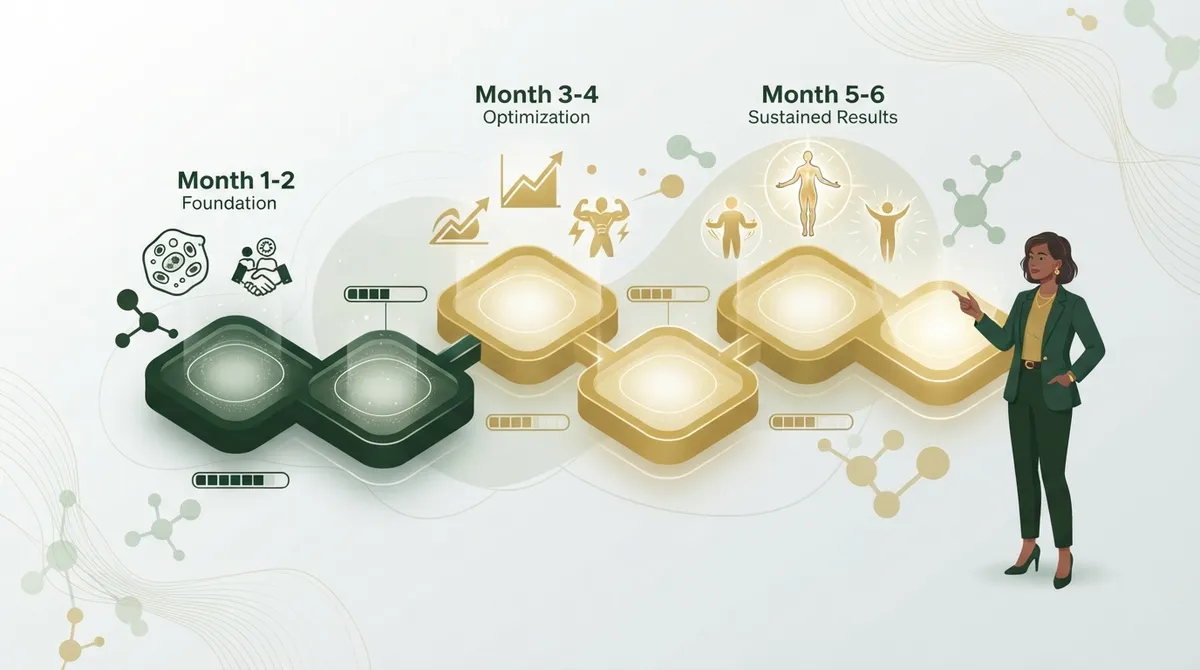
You might wonder why plans are built around six months. The reason is simple. Many people need time to notice changes in energy, sleep, recovery, or body composition. A few weeks is rarely enough to judge.
A six-month plan gives your provider room to check labs, tweak doses, and keep what works. If you want to understand realistic timing, How Long for Peptide Therapy Results? A Real Timeline breaks it down. And if you want to plan the whole stretch, How to Build a Smart 6 Month Peptide Treatment Plan is a handy companion.
How Telehealth Can Keep Costs Clear and Simple
One nice thing about telehealth is predictability. You skip the commute, the waiting room, and the surprise add-ons. Everything happens from your couch, which is a big win for busy professionals.
Allura Longevity keeps the process clean. You start with a $50 virtual consultation, complete blood work through LabCorp, and receive a customized six-month treatment plan delivered to your home. Licensed providers, led by Ashley, a board-certified Family Nurse Practitioner, monitor and adjust your plan along the way. Care is personalized for peptides for women and peptides for men, with services like GLP-1 weight loss support, BPC-157 injury recovery, and testosterone replacement.
Telehealth is available in Florida, Georgia, Texas, Connecticut, Indiana, Maryland, New York, and California. Curious how it compares to an in-person visit? Check out Local Clinic vs. Telehealth: Best Peptide Therapy Near You?
A Simple Way to Budget Your Six Months
Ready to put numbers on paper? Try this quick method.
- Write down the monthly price of your top two clinic quotes.
- Add first-month extras like labs, intake, and supplies.
- Multiply the ongoing monthly cost by five more months.
- Add a small cushion for retesting or dose changes.
- Compare the final totals, not the headline monthly prices.
That last step is the secret. A plan that looks cheaper per month can end up costing more once extras are counted. For more budgeting help, see How to Budget for Peptide Injections Cost in 2026 and 8 Real Numbers on How Much Peptide Therapy Costs.
Final Thoughts: Know the Number Before You Start
So, how much does a 6 month peptide plan cost? For many people, a realistic 2026 budget falls between about $1,350 and $3,930, with more complex programs running higher. The most important thing is knowing what your price includes: the provider, the labs, the medication, the supplies, and the follow-up.
When you understand those five pieces, you can shop with confidence and avoid surprise bills. You deserve clear pricing and real medical guidance, not guesswork.
Ready to see what a personalized plan could look like for you? Request a consultation with Allura Longevity today, or call (813) 510-6277. New client spots are limited each month, so reach out soon to claim yours.
FAQs
Q: How much does a 6 month peptide plan cost?
A: There is no fixed price, but many ongoing programs run about $225 to $655 per month, or roughly $1,350 to $3,930 over six months. More complex, closely supervised plans can cost more, and labs or intake fees may be extra.
Q: Why does the first month of peptide therapy cost more?
A: The first month often includes your consultation, baseline blood work, medication, supplies, and shipping all at once. One published estimate puts that first month at $425 to $1,305, though every clinic prices a little differently.
Q: Does insurance cover peptide therapy?
A: Usually not for wellness peptides, since many are compounded or investigational. Some FDA-approved peptide-based medicines may be covered for specific conditions, so call your insurer to check your exact plan.
Q: What should be included in a peptide plan quote?
A: Ask whether the price covers clinician visits, lab work and retesting, the medication, injection supplies, shipping, and follow-up access. A low medication price may not show your full six-month cost.
Q: Are compounded peptides FDA-approved?
A: No. The FDA says compounded drugs are not FDA-approved and are not reviewed for safety, effectiveness, or quality before marketing. Talk with a licensed clinician about risks before you start any plan.





