

Key Takeaways
-
The FDA has not approved hCG for weight loss; research shows weight loss comes from extreme calorie restriction (500 calories/day), not the hormone itself.
-
Very-low-calorie diets carry serious health risks including gallstones, electrolyte imbalances, heart arrhythmias, muscle loss, and nutritional deficiencies requiring medical supervision.
-
Over-the-counter hCG drops, sprays, and pellets are not FDA-approved and the FDA has issued warning letters to companies making unsubstantiated weight-loss claims about these products.
-
Safer alternatives like GLP-1 peptide therapy with personalized nutrition plans, blood work assessment, and licensed provider monitoring deliver better long-term results without extreme calorie restriction.
-
A trustworthy weight-loss program requires blood work before starting, uses licensed medical providers, explains risks honestly, and offers ongoing monitoring rather than one-size-fits-all kits.
-
People with gallbladder disease, heart issues, eating disorder history, or lack of medical supervision should avoid hCG diets and very-low-calorie approaches entirely.
If you’ve spent any time researching weight loss, you’ve probably heard whispers about the hcg diet program. Maybe a friend swears it melted pounds off fast. Maybe you saw drops or sprays online promising the same thing. We get it—when you’re ready to feel good in your body again, quick fixes sound tempting. But before you spend a dime, let’s have an honest, friendly chat about what this program really is, what the science actually says, and what safer options exist for people who want real, lasting results.
At Allura Longevity, we work with people every day who want to lose weight and feel amazing doing it. Our team believes you deserve facts, not hype. So grab a cup of tea, get comfy, and let’s walk through 13 important truths about the hcg diet program together.
1. What hCG Actually Is
Human chorionic gonadotropin, or hCG, is a peptide hormone your body makes naturally during pregnancy. It’s not some mystery lab chemical—it’s a real hormone with real medical uses. You can learn more about how hormones like this function by reading up on what are peptides and how they act as messengers throughout the body.
Doctors prescribe hCG for a few specific, approved reasons:
- Helping trigger ovulation in certain fertility treatments
- Treating a condition in men called hypogonadotropic hypogonadism
- Addressing certain cases of undescended testicles in young boys
Notice something missing from that list? Weight loss isn’t on it. That’s not an oversight—it’s the truth about how this hormone is actually approved to be used.
2. The FDA Has Not Approved hCG for Weight Loss
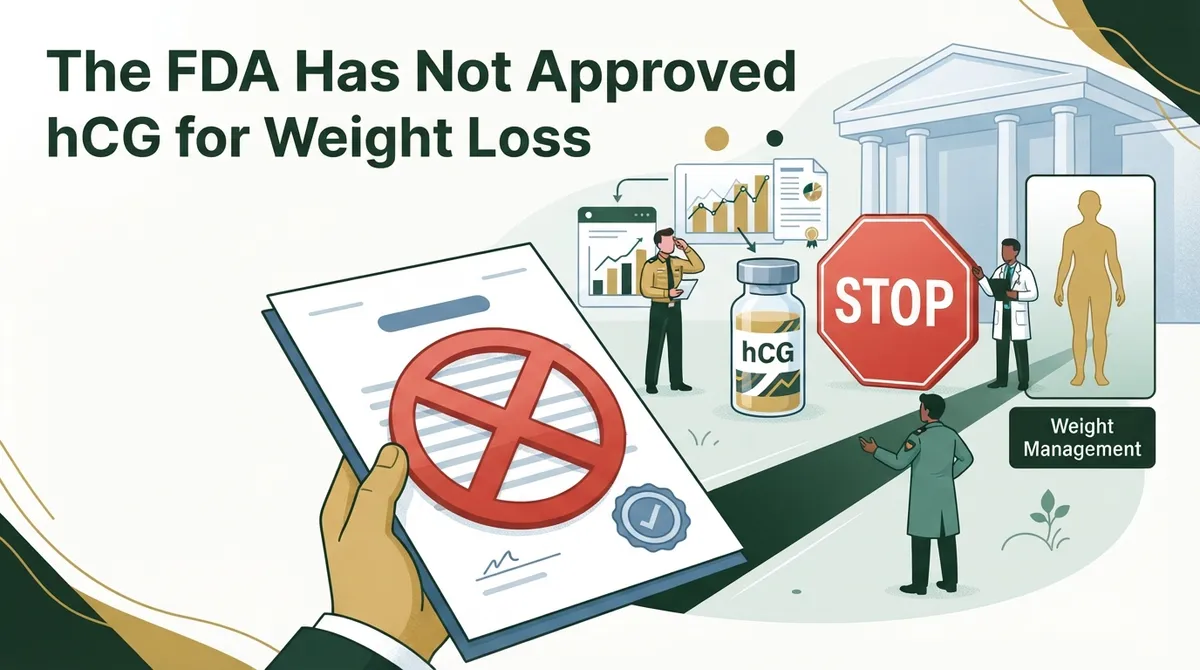
This is the big one, friends. The FDA has clearly stated that hCG has not been proven to help with weight loss. According to the FDA’s own consumer guidance, there’s no substantial evidence that hCG increases fat loss, changes where fat sits on your body, or reduces hunger any more than diet alone would.
That’s straight from the FDA-approved labeling itself. So when you see an hcg diet program advertised as a weight-loss miracle, it’s worth pausing and asking questions.
3. Where the “Diet” Part Really Comes From
Here’s the part that surprises most people. The traditional hcg diet program pairs hCG injections with an extremely low-calorie diet, often around just 500 calories a day. That’s roughly the calorie count of a small fast-food meal, spread across an entire day.
Researchers have looked closely at this. A well-known review published in the British Journal of Clinical Pharmacology examined 24 separate hCG studies. The conclusion? No good evidence that hCG itself does anything special. The weight loss people experience comes from the severe calorie cutting, not the hormone.
4. Why Extreme Calorie Restriction Is Risky
Losing weight fast might sound appealing, but starving your body of calories comes with real dangers. A very-low-calorie diet, the kind used in most hcg diet program plans, can cause serious health problems.
Here are some risks tied to extremely low-calorie eating:
- Gallstone formation
- Electrolyte imbalances that affect your heart
- Irregular heartbeat, or arrhythmias
- Loss of lean muscle instead of fat
- Ongoing fatigue and low energy
- Dehydration and nutrient deficiencies
The FDA specifically warns that very-low-calorie diets should only happen under real medical supervision, not through a mail-order kit or online drop shop.
5. Over-the-Counter hCG Products Aren’t What They Claim to Be
Walk into any wellness store or scroll social media, and you’ll find hCG drops, sprays, and pellets labeled “homeopathic.” Here’s the honest truth: these products are not FDA-approved weight-loss medicines.
In fact, back in 2011, the FDA and Federal Trade Commission jointly sent warning letters to companies selling these unapproved products. They were making claims the science simply doesn’t back up. If a product sounds too good to be true and doesn’t require a prescription, that’s usually a big red flag.
6. Possible Side Effects of Prescription hCG
Even when hCG is prescribed correctly for its approved uses, it’s still a regulated medication with real side effects. Depending on the person and the reason for use, side effects can include:
- Ovarian hyperstimulation or cysts in women
- Breast tenderness or enlargement in men (gynecomastia)
- Reduced sperm production
- Fluid retention and bloating
- Mood changes
- Higher risk of blood clots in certain people
This is exactly why any hormone or peptide treatment should come with proper medical oversight, not guesswork.
| Claim About hcg diet program | What the Evidence Actually Shows |
|---|---|
| Boosts fat loss beyond dieting | No substantial evidence, per FDA labeling |
| Redistributes body fat | Not supported by research |
| Suppresses appetite | Not demonstrated in clinical studies |
| Safe for long-term use without supervision | Risky; VLCDs require medical monitoring |
| FDA-approved for weight loss | False; approved only for fertility and hormonal conditions |
7. Why Peptide Therapy Clinics Should Be Honest About This
As a peptide therapy clinic, we think it’s important to separate real, evidence-based hormone therapy from marketing hype. Legitimate hCG use has a place in medicine. But marketing it as a fat-melting, appetite-crushing weight-loss secret isn’t backed by current research and can create real safety concerns for patients.
If you want to understand more about how peptides work in the body generally, check out this helpful piece on 8 Facts That Explain What Are Peptides in 2026.
8. What Mayo Clinic and Medical Experts Say
Mayo Clinic’s current guidance is refreshingly direct: the hCG diet is not safe, and it doesn’t create lasting weight loss. Their experts point out that any results people see are simply from eating very few calories, not from the hormone doing anything special.
Endocrine specialists have echoed this for years, calling the hcg diet program unproven and potentially harmful. When multiple respected medical sources agree, it’s worth listening.
9. Safer, Smarter Alternatives That Actually Work
Here’s the good news: you don’t need risky shortcuts to see real results. Modern peptide therapy offers evidence-informed options that support your goals without extreme calorie restriction.
Some approaches worth exploring instead include:
- GLP-1 peptide therapy, which supports appetite regulation and steady weight loss
- Personalized metabolic support plans based on your actual blood work
- Peptides that support lean muscle while you lose fat
- Coaching and monitoring from licensed providers who adjust your plan over time
If you’re curious how these compare to older methods, this guide on Which Weight Loss Peptides Actually Work in 2026? breaks it down clearly.
10. How a Real Medical Evaluation Should Look
Any responsible weight-management plan starts with a real conversation about your health, not a one-size-fits-all box shipped to your door. A thorough evaluation typically covers:
- Your full medical history and current medications
- Body composition and BMI
- Metabolic health markers from lab work
- Your nutrition habits and activity level
- Behavioral and lifestyle support needs
This kind of personalized approach is exactly what separates trustworthy peptide therapy from a generic hcg diet program kit. Learn more about getting started the right way in How to Start Peptide Therapy Safely and See Real Results.
11. Who Should Avoid Very-Low-Calorie Diets and hCG
Not everyone is a candidate for extreme dieting or hormone therapy, and that’s important to know upfront. People who should steer clear or seek extra caution include:
- Anyone with a history of gallbladder disease
- People with heart rhythm issues or electrolyte concerns
- Pregnant or breastfeeding individuals
- Those with a history of disordered eating
- Anyone without access to medical supervision during treatment
This is precisely why treatment plans should be personalized rather than copy-pasted from an online ad. According to the National Library of Medicine, hormone-based treatments require individualized assessment to be both effective and safe.
12. Comparing hCG Myths to Modern Peptide Options
| Factor | Traditional hcg diet program | Modern Peptide Therapy |
|---|---|---|
| FDA approval for weight loss | No | Certain peptides used off-label with provider guidance |
| Calorie intake | ~500 calories/day | Personalized, sustainable nutrition plan |
| Medical supervision | Often minimal or none | Ongoing monitoring by licensed providers |
| Muscle preservation | High risk of muscle loss | Designed to support lean mass |
| Long-term results | Weight often regained | Focused on sustainable habits and metabolic health |
13. How to Choose a Trustworthy Path Forward
So, where does that leave you? If you’re ready to lose weight and feel confident again, skip the mystery drops and extreme starvation plans. Instead, look for a program built around your actual body, your labs, and your goals.
Here’s a simple checklist for picking a trustworthy provider:
- They require blood work before starting any treatment
- They use licensed medical providers, not just sales reps
- They explain risks and benefits honestly
- They offer ongoing check-ins and plan adjustments
- They never promise guaranteed, effortless results
At Allura Longevity, this is exactly how we approach care. Clients start with an affordable virtual consultation, complete labs through LabCorp, and receive a six-month plan built just for them. Everything ships right to your door, and our team, led by board-certified Family Nurse Practitioner Ashley, monitors your progress along the way. We’re proud to serve clients across Florida, Georgia, Texas, Connecticut, Indiana, Maryland, New York, and California.
Curious how GLP-1 peptides stack up against outdated fads? Take a look at How to Understand GLP-1 Peptide Therapy in 2026 for a clear, no-nonsense breakdown.
Bringing It All Together
The hcg diet program has been around for decades, and its promises are tempting. But the science just doesn’t back up the big claims. What actually works is calorie management done safely, combined with treatments that are backed by real medical evidence and guided by licensed professionals.
You deserve a plan that respects your body, your time, and your long-term health. Not a shortcut that risks your gallbladder, your heart rhythm, or your hard-earned muscle. If you’re ready to explore weight loss support that’s personalized, medically supervised, and genuinely built around you, our team would love to help. Request a consultation with Allura Longevity today, and let’s build a plan that actually fits your life. Spots are limited each month, so don’t wait too long to reach out. You can also call us directly at (813) 510-6277 to ask any questions before you get started.
FAQs
Q: Does hCG actually help you lose weight, or is it the diet?
A: Honestly, it’s the diet doing the heavy lifting, not the hormone. Research consistently shows that the extreme calorie cutting in an hcg diet program is what causes weight loss, not the hCG itself.
Q: Is the hcg diet program approved by the FDA?
A: Nope, and that’s an important thing to know before you start. The FDA has clearly stated that hCG hasn’t been proven effective for weight loss, even though it’s approved for certain fertility and hormonal treatments.
Q: Are hCG drops and sprays sold online safe to use?
A: We’d love to tell you yes, but the truth is these products aren’t FDA-approved weight-loss treatments. Regulators have actually taken action against companies selling them with misleading claims, so it’s best to steer clear.
Q: What’s a safer alternative to the hcg diet program?
A: Great question! Personalized peptide therapy, like GLP-1 treatments, offers a more evidence-based path to weight loss with real medical supervision. Our team at Allura Longevity builds plans around your actual labs and goals, so you’re never guessing.
Q: Who shouldn’t try a very-low-calorie diet or hCG?
A: People with gallbladder issues, heart rhythm problems, or a history of disordered eating should be extra cautious or avoid these approaches entirely. Anyone considering major dietary changes should chat with a licensed provider first, just to be safe.





