
Key Takeaways
-
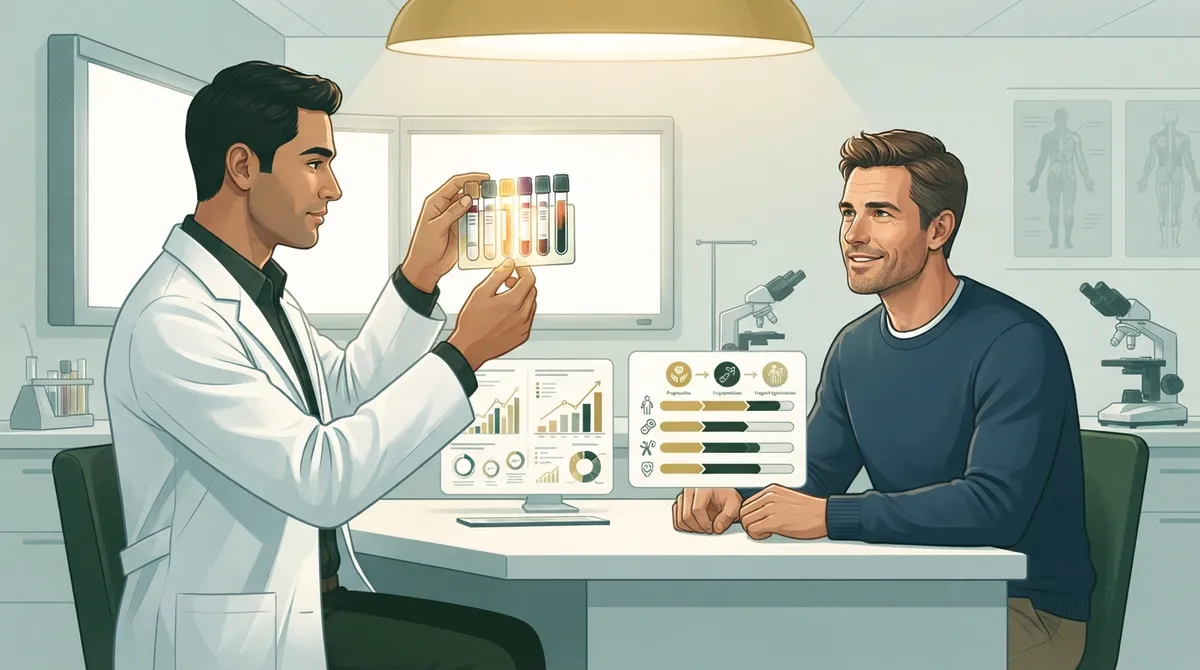
Get baseline blood work measuring total and free testosterone, LH, FSH, and estradiol before starting any protocol—this non-negotiable step determines whether you need peptides, TRT, or a combination approach.
-
Peptide therapy stimulates your body's natural hormone production via the HPG axis and is often fertility-friendly, making it ideal for men with mild-to-moderate decline who want to preserve family planning options.
-
Growth hormone peptide benefits typically appear within 4-12 weeks, so set realistic timelines and track sleep, energy, and recovery weekly to monitor actual results rather than expecting overnight changes.
-
Schedule a consultation with a licensed provider who understands hormone health rather than self-treating—they'll personalize your plan based on lab results, fertility goals, and lifestyle, with ongoing monitoring every few months to adjust as needed.
Feeling tired, foggy, or just not like yourself lately? You’re not alone. Thousands of men every year start asking the same question: how do I actually begin hormone therapy the right way? The good news is that starting doesn’t have to mean jumping straight into injections or guessing your way through supplements. With peptide therapy, men now have a smarter, more personalized path that works with your body instead of overriding it.
Whether you’re a busy professional running on fumes, an aging adult wanting your old energy back, or a biohacker who loves tracking every number, this guide breaks down exactly how to start hormone therapy men can trust. We’ll walk through the real steps, the labs you need, and how peptides fit into the picture alongside traditional testosterone replacement therapy (TRT). Let’s get you feeling like yourself again.
What Peptide Therapy Actually Means for Men’s Hormones
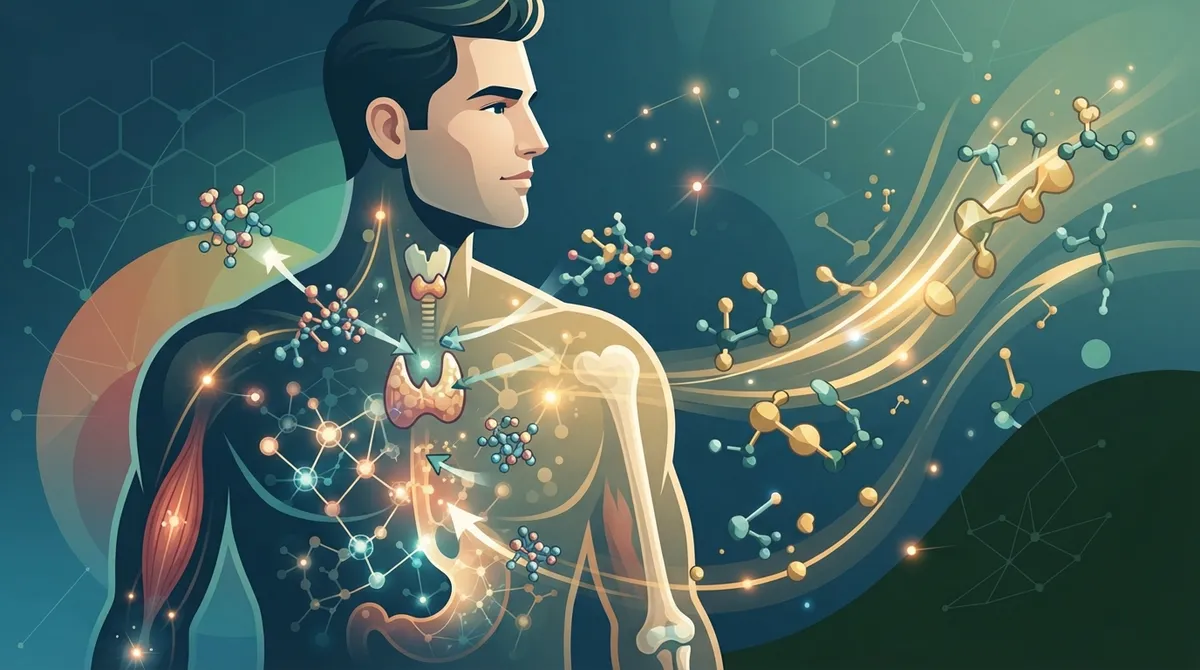
Peptides are short chains of amino acids that act like tiny messengers in your body. Instead of replacing your hormones directly, many peptides simply tell your body to make more of what it’s already capable of producing. Learn more about what are peptides and how they work at the cellular level before starting any protocol.
This matters because it changes the whole conversation around hormone therapy. Instead of only asking “how much testosterone do I need,” peptide therapy asks “how can I help my body regulate itself better?” That’s a big shift, and it opens up options for men who aren’t ready for full TRT or who want to protect their fertility.
Peptides vs Traditional TRT: The Core Difference
- TRT replaces testosterone directly, usually through injections, gels, or pellets
- Peptides often stimulate your hypothalamic-pituitary-gonadal (HPG) axis to boost natural production
- Peptides may support fertility, while some TRT protocols can suppress it
- Growth hormone peptides target recovery, sleep, and body composition rather than testosterone alone
- Many men use a combination approach guided by lab results and goals

10 Steps to Start Hormone Therapy Men Can Follow Safely
Ready to get started? Here’s a clear, step-by-step roadmap that takes the guesswork out of the process.
1. Get Honest About Your Symptoms
Before any labs or treatments, sit down and really think about what’s changed. Low energy, poor sleep, reduced muscle mass, brain fog, and low libido are common red flags worth tracking.
2. Schedule a Medical Consultation
You need a licensed provider to guide this journey, not internet forums. A virtual consultation lets you discuss symptoms, history, and goals with an expert who actually understands hormone health.
3. Complete Baseline Blood Work
This is the non-negotiable step. Comprehensive labs measure total and free testosterone, LH, FSH, estradiol, and other markers that tell the real story behind your symptoms.
4. Review Your Numbers With a Provider
Clinic data often shows men with testosterone under 250 ng/dL plus symptoms tend to need TRT, while those between 250 and 500 ng/dL with symptoms are often good candidates for a peptide-first approach. Your provider will explain exactly where you fall.
5. Discuss Fertility and Long-Term Goals
If you’re planning to have children, this conversation is critical. Peptides like gonadorelin and kisspeptin work on the HPG axis, which is tied to both testosterone production and fertility.
6. Choose the Right Peptide or Combination Protocol
Based on your labs and goals, your provider may recommend growth hormone secretagogues, gonadotropin-related peptides, or a blended plan. This is where personalized care really shines.
7. Understand Your Dosing Schedule
Consistency matters more than intensity. Most peptide protocols involve small subcutaneous injections a few times per week, timed around your daily routine.
8. Set Realistic Timelines
Growth hormone peptide benefits often take about 4 to 12 weeks to show up. Patience here pays off, so don’t judge results too early.
9. Track Recovery, Sleep, and Energy Weekly
Biohackers already know the power of tracking. Log your sleep quality, workout recovery, mood, and libido to see real trends over time.
10. Follow Up With Repeat Labs
Ongoing monitoring is what separates a safe protocol from a risky guessing game. Repeat blood work every few months helps your provider fine-tune your plan.
Peptides Commonly Used in Men’s Hormone Support
Not all peptides work the same way. Here’s a quick breakdown of some commonly discussed options in men’s hormone care.
| Peptide | Primary Purpose | How It Works |
|---|---|---|
| CJC-1295 | Recovery, sleep, body composition | Stimulates growth hormone release |
| Ipamorelin | Growth hormone support | Signals pituitary gland to release GH |
| Gonadorelin | Testosterone and fertility support | Acts on the HPG axis |
| Kisspeptin | Fertility preservation | Stimulates natural hormone signaling |
| hCG (paired with TRT) | Testicular function support | Mimics LH to maintain testicular activity |
For a deeper look at how these compare, check out this guide on TRT vs. peptides for men to see which fix fits your situation best.
Peptide Therapy vs TRT: A Side-by-Side Comparison
| Factor | Peptide Therapy | Traditional TRT |
|---|---|---|
| Mechanism | Signals body to produce its own hormones | Directly replaces testosterone |
| Fertility Impact | Often fertility-friendly | May suppress sperm production |
| Best For | Mild-to-moderate decline, optimization goals | Confirmed hypogonadism |
| Time to Results | 4 to 12 weeks typically | Can vary, often faster testosterone changes |
| Delivery | Subcutaneous injections | Injections, gels, patches, or pellets |
According to a peer-reviewed endocrinology guideline, testosterone replacement can be delivered through injections, patches, or topical gels in appropriate hypogonadal patients, but the right fit depends entirely on your labs and goals. Read more from the National Library of Medicine on how these therapies are studied and monitored.
Who Is a Good Candidate for Peptide-First Hormone Support?
Not every man needs full TRT right away. Here’s a quick list of signs you might be a better fit for peptide therapy first.
- Your testosterone is mildly low but not severely deficient
- You want to preserve fertility for future family planning
- You’re mainly dealing with fatigue, poor sleep, or slow recovery
- You prefer a gentler, more gradual approach to hormone support
- You’re generally healthy with no major underlying conditions
On the other hand, men with clearly confirmed hypogonadism, very low testosterone, and significant symptoms usually do better starting with TRT, sometimes paired with peptides like hCG to support testicular function. Clinical guidance often includes hCG doses of 250 to 500 IU given two to three times weekly.
Safety Considerations Before You Begin
Peptide therapy is generally well-tolerated, but that doesn’t mean you should skip the screening process. Here’s what matters most.
- Full medical history review with your provider
- Baseline and follow-up blood work through a trusted lab
- Clear understanding of contraindications for your specific health profile
- Realistic expectations, since evidence quality varies by peptide and use case
- A plan that includes sleep, nutrition, and exercise, not peptides alone
If you’re new to this whole world, this article on how to start peptide therapy safely and see real results is a great next read.
How Allura Longevity Makes Starting Simple
Here’s the thing: figuring out how to start hormone therapy men can trust shouldn’t feel complicated or scary. At Allura Longevity, the process starts with an affordable $50 virtual consultation, followed by comprehensive blood work through LabCorp. From there, licensed providers, led by board-certified Family Nurse Practitioner Ashley, build you a personalized six-month treatment plan.
Everything ships straight to your door, so there’s no waiting room and no awkward small talk. You get ongoing monitoring and adjustments along the way, which means your plan actually evolves as your body responds. Telehealth is available nationwide, with licensed care in Florida, Georgia, Texas, Connecticut, Indiana, Maryland, New York, and California.
Busy professionals especially love this model because everything happens on your schedule. No commuting to a clinic, no rearranging your calendar. Just a few minutes on a video call and your treatment plan comes to you.
Common Mistakes Men Make When Starting Hormone Therapy
Avoid these pitfalls to get better results faster.
- Skipping baseline labs and guessing based on symptoms alone
- Buying peptides from unverified online sources
- Expecting overnight results instead of the typical 4 to 12 week window
- Ignoring sleep, diet, and exercise while relying only on peptides
- Not discussing fertility goals before starting a protocol
For more on this, see 14 mistakes men make confusing hormone therapy and learn how to sidestep them entirely.
Building Your Personalized Plan
Every man’s hormone story is different. Your job history, stress levels, sleep habits, and even your workout routine all play a role in how your body responds to treatment. That’s why cookie-cutter programs rarely work as well as personalized ones.
A good provider will combine your lab results with your lifestyle goals to build something that actually fits you. This might mean starting with growth hormone peptides for recovery, adding gonadorelin for fertility support, or transitioning into TRT later if your numbers call for it. Curious about testosterone-specific options? This guide on understanding testosterone replacement therapy in 2026 breaks it down further.
Ready to Take the First Step?
Starting hormone therapy doesn’t have to feel overwhelming or confusing. With the right labs, the right provider, and a plan built just for you, you can start feeling more energized, focused, and like yourself again. If you’re ready to stop guessing and start a plan backed by real data, request a consultation with Allura Longevity today. Spots are limited each month, so don’t wait to feel your best.
FAQs
Q: How do you start hormone therapy for men safely?
A: The safest way to start is with a proper consultation and full blood work before anything else. A licensed provider reviews your symptoms and labs, then builds a personalized plan that might include peptides, TRT, or both together.
Q: What is the difference between peptide therapy and TRT?
A: Peptide therapy generally signals your body to produce its own hormones, while TRT directly replaces testosterone. Many men start with peptides to support natural production, then move to TRT if labs show it’s truly needed.
Q: Can peptide therapy help preserve fertility in men?
A: Yes, peptides like gonadorelin and kisspeptin work on the pathway connected to both testosterone and fertility. This makes them a popular choice for men who want hormone support without giving up their fertility goals.
Q: What labs should men get before starting hormone therapy?
A: You’ll typically want total and free testosterone, LH, FSH, and estradiol at minimum. These numbers help your provider figure out whether peptides, TRT, or a combined approach fits your situation best.
Q: How long does peptide therapy take to work in men?
A: Most growth hormone peptide benefits show up somewhere between 4 and 12 weeks. Staying consistent with dosing and tracking your sleep, energy, and recovery will help you notice changes as they happen.





