
Key Takeaways
-
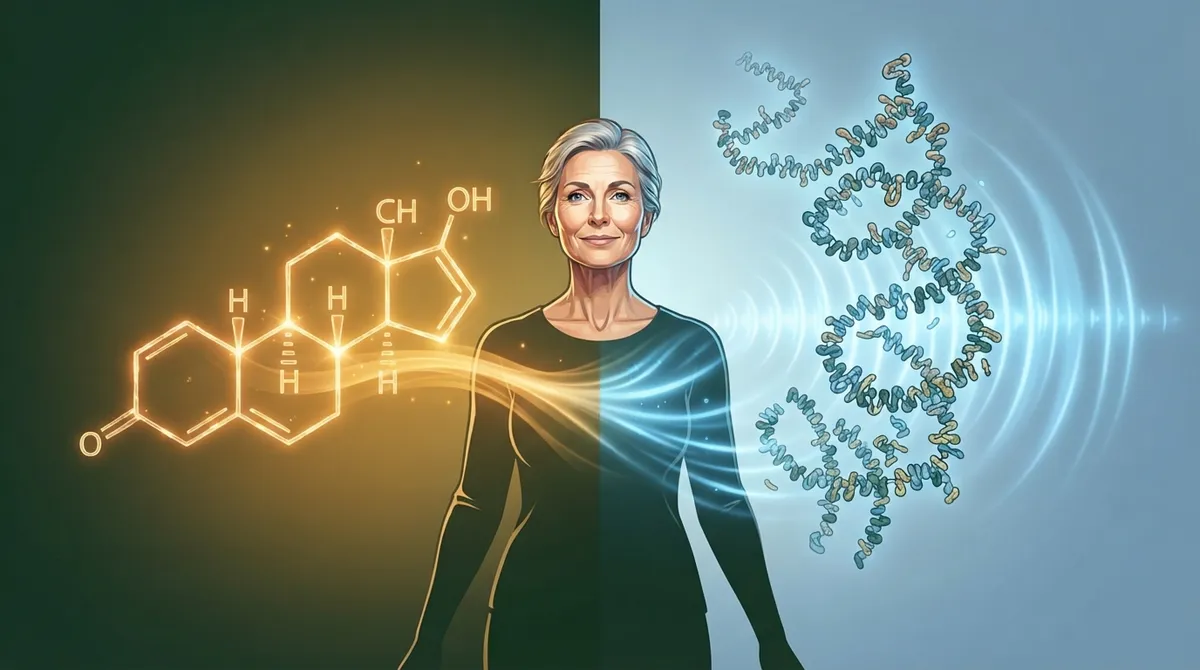
HRT directly replaces declining hormones (estrogen, testosterone, progesterone) while peptide therapy signals your body to produce more hormones itself; HRT works faster for menopause and diagnosed low testosterone, while peptides excel at optimizing energy, recovery, and metabolism.
-
Combined HRT and peptide therapy protocols can be used together under medical supervision when patients have both true hormone deficiency and age-related decline, requiring comprehensive blood work and monitoring every few months for optimal results.
-
Peptide therapy is an emerging treatment with growing but limited long-term research compared to HRT's decades of evidence; results typically appear in 4-8 weeks with full benefits in 3-6 months, requiring licensed providers to ensure proper sourcing and dosing.
-
Multiple peptides target specific aging concerns: CJC-1295 and ipamorelin support growth hormone production, BPC-157 promotes tissue repair, and GLP-1 peptides support metabolic function, with the right choice depending on personalized blood work rather than one-size-fits-all approaches.
Feeling more tired than you used to? Noticing your sleep isn’t as deep, your muscles bounce back slower, or your skin looks a little less bright? You’re not imagining it. As we age, our hormone levels naturally shift, and that shift affects almost everything about how we feel day to day. The good news? You have more options than ever to feel like yourself again, and understanding hormone replacement aging is the first step toward choosing the right path for your body.
This guide breaks down what hormone replacement aging really means, how it compares to peptide therapy, and how the two can sometimes work together. Whether you’re a busy professional trying to keep your energy up, a wellness seeker ready to try something more advanced, or simply someone who wants to age well, this article is for you. Let’s walk through it together, one friendly fact at a time.
1. Hormone Replacement Aging Explained Simply
Hormone replacement aging refers to how our bodies handle the natural decline of hormones like estrogen, testosterone, and progesterone as we get older. Hormone replacement therapy (HRT) directly replaces these hormones when your levels drop too low. Peptide therapy takes a different approach. It uses short chains of amino acids to send signals to your body, encouraging it to produce more of its own hormones or support related repair processes.
Think of HRT as topping off your gas tank. Peptide therapy is more like tuning up your engine so it runs more efficiently on its own. Both approaches matter, and knowing the difference helps you make a smarter choice for your health.

2. Why Hormones Decline With Age
Our hormone production naturally slows down as we get older. This happens to everyone, but the timeline and symptoms vary a lot from person to person. Here are some common reasons hormone levels drop:
- Ovaries and testes gradually produce less estrogen, progesterone, and testosterone over time
- The pituitary gland becomes less responsive, affecting growth hormone signals
- Chronic stress and poor sleep quality accelerate hormonal imbalance
- Body fat percentage changes, which affects hormone metabolism
- Underlying health conditions like thyroid issues can speed up hormonal shifts
Understanding these root causes helps explain why a personalized approach, based on real blood work, matters so much more than a one-size-fits-all plan.
3. HRT vs Peptide Therapy: The Core Difference
This is probably the biggest question people ask us. According to recent comparisons of these two approaches, peptide therapy and HRT work through very different mechanisms. HRT replaces hormones directly. Peptide therapy nudges your body’s own systems to work better.
| Feature | Hormone Replacement Therapy (HRT) | Peptide Therapy |
|---|---|---|
| How it works | Directly replaces deficient hormones | Signals the body to produce or regulate hormones |
| Best for | Menopause, low testosterone, hypogonadism | Energy, recovery, metabolism, sleep, skin support |
| Clinical evidence | Strong, well-established | Growing, considered an emerging area |
| Delivery methods | Pills, patches, injections, pellets | Mostly subcutaneous injections |
| Typical monthly cost | Varies by hormone and delivery method | Roughly $150 to $500, some protocols exceed $1,000 |
Peptides are tiny, ranging from about 2 to 50 amino acids in length. That small size is exactly what makes them act as messengers rather than full hormone replacements, as explained by this overview of what are peptides.
4. When HRT Has the Stronger Track Record
For certain conditions, hormone replacement therapy simply has more research behind it. If you’re dealing with menopause symptoms or diagnosed hypogonadism, HRT has a stronger clinical evidence base than peptide therapy. This doesn’t mean peptides aren’t useful. It just means each tool has its own strengths.
Here’s a quick list of situations where HRT is typically the frontline treatment:
- Moderate to severe menopause symptoms like hot flashes and night sweats
- Clinically diagnosed low testosterone (hypogonadism) confirmed by labs
- Significant bone density loss linked to estrogen decline
- Vaginal dryness and related discomfort tied to hormone loss
- Situations where rapid symptom relief is medically necessary
If you’re curious whether you fall into one of these categories, our article on how to know if you need hormone therapy in 2026 walks through the signs step by step.
5. Where Peptide Therapy Shines
Peptide therapy has carved out its own space, especially for people who aren’t necessarily hormone deficient but want to optimize how their body functions. In aesthetic and longevity settings, peptides are often used for skin aging, muscle support, sleep, recovery, and metabolic function.
Some of the most talked-about peptides for aging support include:
- CJC-1295 and ipamorelin, which support the growth hormone axis
- BPC-157, known for tissue repair and recovery support
- Thymosin alpha-1, associated with immune health
- GLP-1 peptides, used for metabolic and weight management support
A 2024 gerontology review identified nine peptides spanning aging-related applications, including metabolic restoration, tissue repair, neuroprotection, growth hormone modulation, and sexual function, according to recent research on therapeutic peptides in gerontology. If you want a deeper dive, check out our guide on how to pick the best peptides for aging in 2026.
6. Can Peptide Therapy and HRT Work Together?
Yes, and many clinicians already do this. Combined protocols using HRT plus peptide therapy are often used when patients have both a true hormone deficiency and broader age-related physical decline. This approach should always be medically supervised, since dosing and timing matter a lot.
Here’s how a combined approach might look in practice:
- Start with comprehensive blood work to identify true hormone deficiencies
- Begin HRT if labs confirm low estrogen, testosterone, or progesterone
- Add targeted peptides to support recovery, sleep, or metabolism
- Monitor labs every few months and adjust dosing as needed
- Reassess goals every six months to fine-tune the plan
This is exactly the kind of personalized care peptides for women and peptides for men programs are built around at Allura Longevity, where every plan starts with real lab data instead of guesswork.
7. What the Research Actually Shows
It’s worth being honest about the evidence here. Peptide therapy is described as an emerging frontier in gerontology literature, covering things like metabolic dysfunction, tissue repair impairment, telomere biology, and hormonal decline. That word “emerging” matters. It means the science is promising but still developing compared to decades of HRT research.
One standout example is tirzepatide, an FDA-approved peptide drug that demonstrates real clinical potential for metabolic disease in aging populations. This shows peptides aren’t just trendy wellness supplements. Some are becoming legitimate, well-studied medications. For more on this specific category, see our article on how to understand GLP-1 peptide therapy in 2026.
8. Timeline: What to Expect From Each Approach
Patience matters with both HRT and peptide therapy. Neither works overnight, but knowing what to expect helps you stay motivated.
| Treatment Type | Typical Timeline for Initial Changes | Full Benefits Timeline |
|---|---|---|
| HRT | 2 to 4 weeks for symptom relief | 3 to 6 months for full stabilization |
| Peptide therapy | 4 to 8 weeks for early benefits | 3 to 6 months for optimal results |
| Combined protocol | 2 to 6 weeks, varies by individual | 6 months with ongoing adjustments |
These numbers come from practice-based sources rather than large-scale trials, so individual results vary. To learn more about realistic expectations, take a look at when peptide therapy before and after results show.
9. Risks and Safety Considerations
No treatment is completely risk-free, and hormone replacement aging strategies are no exception. Here’s what to keep in mind before starting either path:
- HRT carries known risks depending on dosage, delivery method, and personal health history
- Peptide therapy safety data is still growing, especially for long-term use
- Sourcing matters enormously; only use peptides from licensed, regulated providers
- Self-dosing without medical supervision increases risk significantly
- Ongoing lab monitoring helps catch issues before they become serious
This is why working with a licensed provider matters so much. Our team recommends reading is peptide therapy safe, what you really need to know before starting any new protocol.
10. How to Choose the Right Path for You
So how do you decide between HRT, peptide therapy, or a combined plan? It really comes down to your labs, your symptoms, and your goals. Here’s a simple decision process to guide you:
- Get comprehensive blood work done to see your actual hormone levels
- Talk with a licensed provider about your specific symptoms and goals
- Review whether your case fits stronger-evidence HRT criteria or peptide-friendly goals
- Consider a combined approach if you have both deficiency and lifestyle-related decline
- Commit to a monitoring schedule so your plan can be adjusted over time
At Allura Longevity, this process starts with a simple $50 virtual consultation, followed by lab work through LabCorp. From there, our board-certified Family Nurse Practitioner, Ashley, builds a customized six-month plan just for you, delivered right to your door. It’s personalized care without the hassle of in-person visits, and it’s available across Florida, Georgia, Texas, Connecticut, Indiana, Maryland, New York, and California.
Bringing It All Together
Hormone replacement aging doesn’t have to feel overwhelming or confusing. Whether your body needs direct hormone replacement, gentle peptide signaling, or a thoughtful combination of both, the right plan starts with knowing your numbers and working with people who genuinely care about your results. You deserve a plan built around your actual body, not a generic template.
If you’re ready to feel more like yourself again, our team is here to help you figure out the smartest next step. You can explore more about getting started safely in how to start peptide therapy safely and see real results, or reach out directly. Spots are limited each month, so if you’ve been thinking about it, now’s a great time to request a consultation and start your personalized journey toward better energy, recovery, and vitality.
FAQs
Q: What is the difference between peptide therapy and HRT for aging?
A: HRT directly replaces hormones like estrogen, testosterone, or progesterone once your levels drop too low. Peptide therapy works differently by sending signals that encourage your body to produce more of its own hormones or support repair processes. Think of HRT as refilling the tank and peptide therapy as tuning the engine.
Q: Can peptide therapy replace hormone replacement therapy?
A: Not usually, especially for conditions like menopause or diagnosed low testosterone, where HRT has much stronger clinical evidence. Peptide therapy is better suited for supporting energy, recovery, metabolism, and overall wellness alongside your body’s natural hormone production. Many people actually use both together under medical supervision for the best results.
Q: Which peptides are commonly used for age-related hormone decline?
A: CJC-1295 and ipamorelin are popular choices because they support the growth hormone axis, which naturally slows with age. Other peptides like BPC-157 focus on tissue repair, while GLP-1 peptides support metabolic health. The right choice really depends on your blood work and personal goals.
Q: Is peptide therapy effective for menopause symptoms?
A: Peptide therapy isn’t typically the first choice for menopause symptoms since HRT has a much stronger evidence base for things like hot flashes and bone density loss. That said, peptides can be a helpful addition for energy, sleep, and skin support during this transition. A personalized consultation can help you figure out what combination makes sense for you.
Q: Can peptide therapy and HRT be used together safely?
A: Yes, many providers use combined protocols when patients have both a true hormone deficiency and broader age-related decline. This approach works best when it’s medically supervised with regular lab monitoring. It’s not a do-it-yourself situation, but with the right guidance, combining the two can offer well-rounded support.





