
Key Takeaways
-
Teriparatide and abaloparatide are FDA-approved bone-building peptides reserved only for people with established osteoporosis and high fracture risk, not for healthy adults with normal bone density.
-
These peptide treatments are limited to approximately 2 years of cumulative lifetime use; following them with antiresorptive medications like bisphosphonates helps preserve bone gains made during treatment.
-
Healthy adults should focus on standard prevention methods: adequate calcium and vitamin D, resistance training 2-3 times weekly, fall prevention, smoking cessation, and regular bone density screening.
-
Approximately 21.2% of women and 6.4% of men will experience a fracture from weak bones in their lifetime, making early understanding of treatment options and personal risk assessment critical.
-
Compounded or unapproved bone peptides lack rigorous clinical testing; always verify FDA approval, human clinical trials, proper manufacturing standards, and licensed medical supervision before use.
-
Proper diagnosis requires bone density scans, comprehensive blood work, family history assessment, and personalized evaluation by a licensed provider to determine if peptide therapy is appropriate.
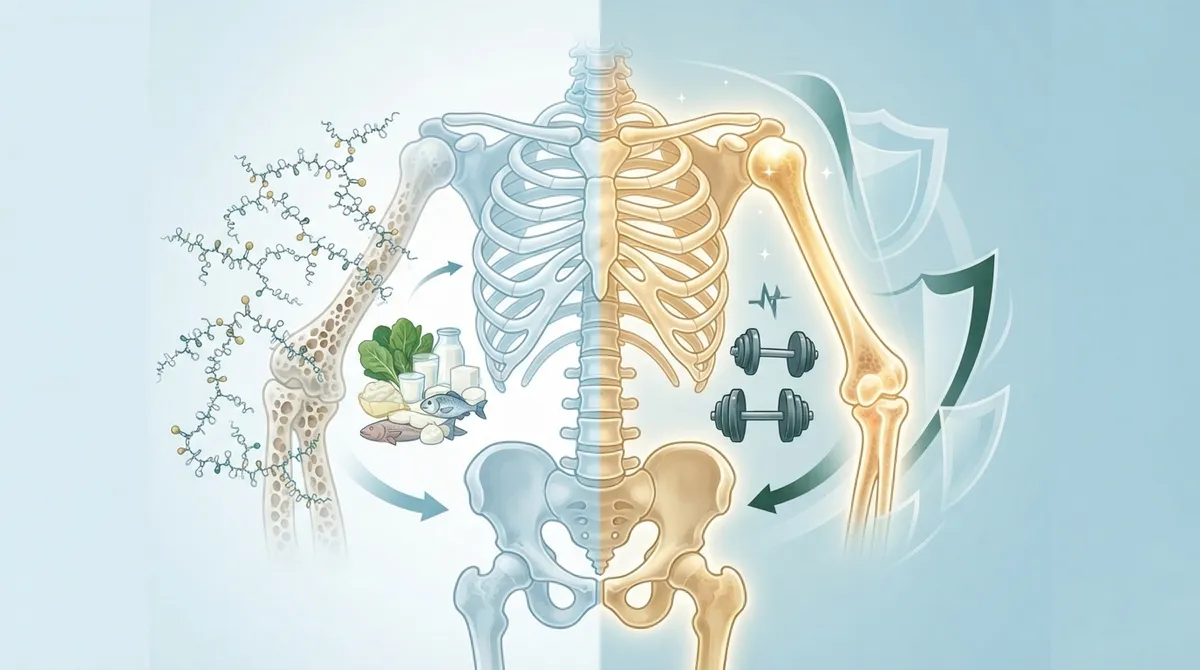
Strong bones don’t get much attention until something goes wrong. Then, suddenly, they’re all you think about. If you’ve been researching osteoporosis prevention, you may have come across peptide-based treatments like teriparatide and abaloparatide. These are not your average wellness supplements. They’re powerful, FDA-approved medicines that actually build new bone. Let’s break down what they do, who they’re for, and how they fit into the bigger picture of keeping your skeleton strong for the long haul.
Osteoporosis is more common than most people realize. The International Osteoporosis Foundation estimates it affects about 500 million people worldwide. Even more surprising, roughly 21.2% of women and 6.4% of men will experience a fracture caused by weak bones at some point in their lives. That’s not a small risk. It’s a reason to understand your options early, whether you’re a busy professional juggling deadlines or someone who’s already deep into optimizing your health.
What Osteoporosis Prevention Really Means in Peptide Therapy
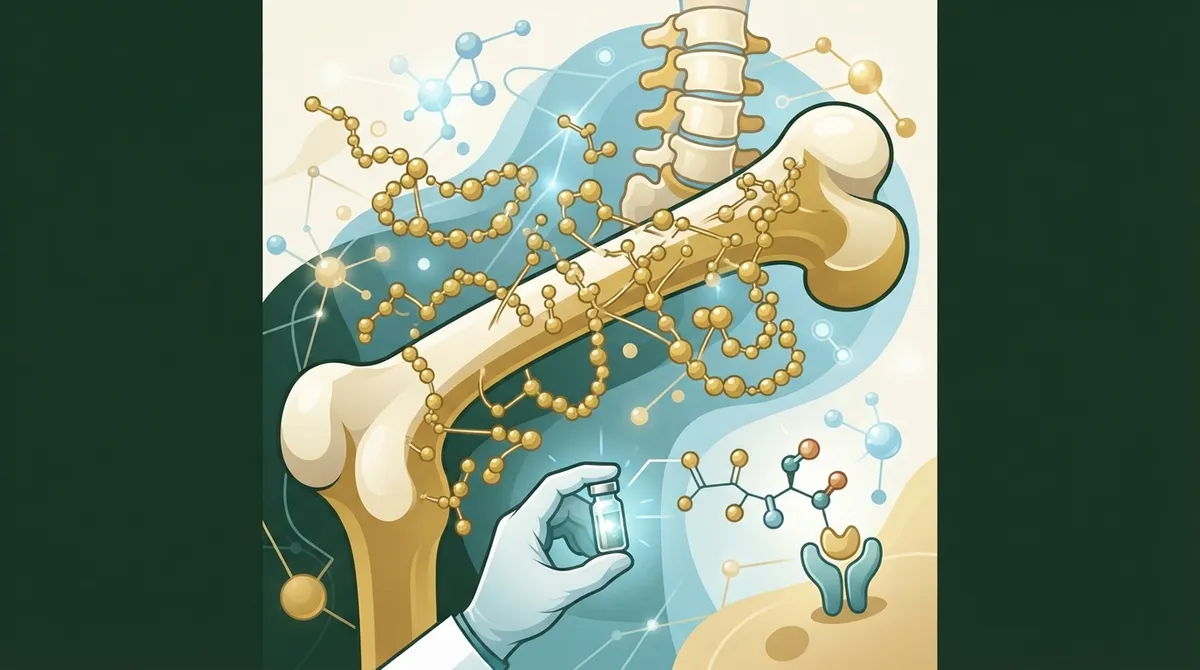
When people hear “peptide therapy,” they often think of treatments for weight loss, muscle recovery, or energy. But in the bone health world, peptide science plays a very specific and serious role. The most well-studied options are teriparatide and abaloparatide, both of which mimic natural hormones that tell your bone cells to get to work.
These medicines are not meant to be routine prevention shots for healthy adults with normal bone density. They’re reserved for people who already have osteoporosis and face a high risk of fracture. Think of them as a targeted rescue mission for bones that need serious rebuilding, not a general wellness boost like you’d get from other peptides discussed in 8 Facts That Explain What Are Peptides in 2026.
How Teriparatide and Abaloparatide Work
Both of these treatments copy the action of parathyroid hormone, or a related protein called PTHrP. Sounds complicated, but the idea is simple. Your body has natural signals that tell bone-building cells, called osteoblasts, to get busy. These peptide medicines amplify that signal.
- Teriparatide is a lab-made version of PTH(1-34), a piece of your natural parathyroid hormone.
- Abaloparatide is a synthetic version of PTHrP(1-34), a related but slightly different protein.
- Both attach to the same receptor on bone cells, called the PTH1 receptor.
- This action increases bone mineral density over time, unlike drugs that only slow bone loss.
- Neither is meant to replace calcium, vitamin D, or exercise. They work alongside good habits.
If you want to learn more about how peptides interact with your body’s natural systems, the what are peptides resource offers a helpful overview for anyone new to this world of medicine.

Who Actually Qualifies for This Type of Therapy
This is where things get important. These bone-building peptides are not for everyone. FDA labeling is clear that they’re meant for people with established osteoporosis who face high or very high fracture risk. That includes folks who’ve already broken a bone from a minor fall, or those who haven’t responded well to other treatments.
- People diagnosed with osteoporosis through a bone density scan showing significant bone loss.
- Postmenopausal women with a history of fragility fractures, especially in the spine.
- Men with osteoporosis, since abaloparatide is approved for both men and women.
- Patients who couldn’t tolerate or didn’t improve on other osteoporosis medications.
- Individuals with very low bone density combined with other major risk factors, like long-term steroid use.
If you’re unsure where you fall on this spectrum, the smartest first step is proper testing. Comprehensive labs and a review of your health history can clarify your actual risk, similar to the approach outlined in How to Start Peptide Therapy Safely and See Real Results.
Why Healthy Adults Shouldn’t Self-Prescribe Bone Peptides
It’s tempting to think, “If it builds bone, why not use it before there’s a problem?” But that’s not how these medicines are designed to work. For people with normal bone density, standard prevention methods are safer and just as effective.
- Getting enough calcium and vitamin D through food or supplements.
- Doing regular resistance training and weight-bearing exercise.
- Reducing fall risks at home, like loose rugs or poor lighting.
- Quitting smoking and limiting alcohol intake.
- Getting screened at the right age or when risk factors appear.
How Long Can You Safely Use These Peptides
Here’s something that surprises a lot of people: these treatments are not forever. FDA labeling for abaloparatide recommends no more than two years of total lifetime use. That’s because long-term safety and effectiveness beyond that window haven’t been established.
Teriparatide follows a similar pattern, with most patients also capped around two years of cumulative use. This time limit matters because it shapes how your provider builds your overall treatment plan, including what comes next.
What Happens After the Anabolic Phase Ends
Once the bone-building phase wraps up, the gains you made can start to fade if nothing follows it up. Research backs this up clearly. Clinical reviews show that following anabolic therapy with an antiresorptive medicine, like a bisphosphonate, helps lock in those hard-earned improvements.
This is actually one of the more encouraging findings in bone health science. A 2022 peer-reviewed review found that starting with anabolic treatment first, then switching to an antiresorptive medicine, produces better outcomes than doing it the other way around for people at very high fracture risk.
| Treatment Phase | Purpose | Typical Duration |
|---|---|---|
| Anabolic (Teriparatide/Abaloparatide) | Builds new bone tissue | Up to 2 years lifetime |
| Antiresorptive Follow-Up | Preserves bone gains | Ongoing, as directed |
| Lifestyle Support | Reduces fracture risk long-term | Continuous |
Understanding the Risks and Side Effects
No medicine is without tradeoffs, and these bone peptides are no exception. Because they’re powerful, they come with a list of things your provider will watch closely.
- Hypercalcemia, or too much calcium in the blood.
- Increased calcium in the urine, sometimes leading to kidney stones.
- Dizziness or a drop in blood pressure when standing up too fast.
- Nausea, headache, or heart palpitations in some patients.
- Elevated uric acid levels in certain cases.
There’s also a well-known warning about a rare bone cancer called osteosarcoma. This warning comes mostly from high-dose animal studies. According to the National Library of Medicine, human data from teriparatide use hasn’t shown a clear increase in this cancer, but the background rate is already very low, around 1 in 250,000 people. Still, doctors avoid this therapy in anyone with a personal history of bone cancer, Paget disease, or prior radiation to the skeleton.
Comparing Teriparatide, Abaloparatide, and Romosozumab
You might also hear about romosozumab when researching bone-building treatments. It’s worth knowing this one isn’t actually a peptide. It’s a monoclonal antibody that works differently, targeting a protein called sclerostin. It carries its own set of warnings, especially related to cardiovascular risk, so it’s evaluated separately from peptide-based options.
| Medicine | Type | Approved For | Typical Duration Limit |
|---|---|---|---|
| Teriparatide | PTH(1-34) analog peptide | High-risk osteoporosis patients | ~2 years lifetime |
| Abaloparatide | PTHrP(1-34) analog peptide | Postmenopausal women, men with osteoporosis | 2 years lifetime |
| Romosozumab | Monoclonal antibody | High-risk postmenopausal women | 12 months |
Why Compounded or Unapproved Bone Peptides Deserve Caution
The peptide world has grown fast, and not everything marketed as a “bone peptide” has real clinical backing. Compounded or research-grade products often lack the rigorous testing that teriparatide and abaloparatide went through before FDA approval.
- Ask whether the peptide has gone through formal clinical trials in humans.
- Check if it carries FDA approval or is only available as a compounded product.
- Confirm the source follows proper manufacturing and quality standards.
- Make sure a licensed provider is supervising your treatment plan.
- Avoid products that promise bone-building results without solid evidence.
This is exactly why working with a trusted, licensed telehealth provider matters so much. At Allura Longevity, treatment plans are built around real blood work and a full picture of your health, not guesswork or trendy claims. It’s a similar philosophy you’ll find across our library, including guides like FDA-Approved vs. Compounded Peptides: What Wins?
Building a Well-Rounded Bone Health Plan
Even if you’re not a candidate for anabolic peptide therapy, there’s a lot you can do right now to protect your bones. Think of this as your foundation, whether you’re a wellness seeker adding to an already solid routine or someone just starting to pay attention to bone health.
- Prioritize protein and calcium-rich foods at most meals.
- Add resistance training two to three times a week.
- Get sunlight or supplement with vitamin D as needed.
- Schedule a bone density scan if you’re postmenopausal or over 65.
- Talk to a provider about your personal fracture risk factors.
How Blood Work Guides Your Personalized Plan
Every good treatment plan starts with data, not assumptions. At Allura Longevity, clients begin with a simple virtual consultation and complete lab work through LabCorp. This gives your provider a clear picture of your hormone levels, calcium status, and overall health before recommending anything.
From there, licensed providers, led by board-certified Family Nurse Practitioner Ashley, design a personalized six-month plan tailored to your actual results. This same evidence-based approach applies whether you’re exploring options for peptides for women or peptides for men, ensuring every recommendation fits your unique biology.
Steps to Take If You’re Concerned About Bone Health
Feeling a little overwhelmed by all this information is completely normal. Bone health touches so many parts of your body and lifestyle. Here’s a simple path forward if you want clarity.
- Start with a conversation about your family history and any past fractures.
- Get a bone density scan if you’re in a higher-risk category.
- Complete comprehensive blood work to rule out other causes of bone loss.
- Review your results with a licensed provider who understands peptide therapy.
- Build a plan that combines medical treatment, if needed, with lifestyle changes.
This process doesn’t need to feel intimidating. Many of our clients are busy professionals who appreciate that everything can happen through telehealth, from the consultation to home delivery of any prescribed treatments. It fits into real life, not the other way around.
Bringing It All Together
Osteoporosis prevention in the peptide therapy world isn’t about chasing trends. It’s about matching the right treatment to the right person at the right time. For those with established osteoporosis and high fracture risk, teriparatide and abaloparatide offer real, evidence-backed bone-building power. For everyone else, a strong foundation of nutrition, movement, and smart screening does the heavy lifting.
Your bones carry you through every part of life, from morning workouts to evening walks with family. They deserve real attention backed by real science, not guesswork. If you’re ready to understand your own bone health picture and explore whether personalized peptide therapy makes sense for you, our team at Allura Longevity is here to help you find clarity. Request a consultation today and take the first step toward a stronger, more confident future.
FAQs
Q: Can peptide therapy prevent osteoporosis before bone loss or fractures occur?
A: Not really, and that’s actually good news for your safety. Medicines like teriparatide and abaloparatide are reserved for people who already have osteoporosis and face high fracture risk, not for general prevention in healthy adults. If your bones are currently strong, the best prevention plan focuses on calcium, vitamin D, exercise, and regular screening.
Q: Who qualifies for peptide therapy for osteoporosis?
A: Generally, this treatment is for people already diagnosed with osteoporosis who have a high or very high risk of fracture, including those with a prior fragility fracture. Your provider will look at your bone density results, medical history, and any past fractures before recommending this path. It’s a personalized decision, never a one-size-fits-all approach.
Q: How long can someone safely use teriparatide or abaloparatide?
A: Current FDA guidance limits cumulative lifetime use to about two years for both medicines. After that, most patients transition to an antiresorptive treatment to help preserve the bone density gains they’ve made. Your provider will map out this timeline as part of your overall plan.
Q: Are compounded peptides effective for osteoporosis prevention?
A: This is where we’d encourage some healthy skepticism. Compounded or research-grade peptides marketed for bone health often lack the clinical trials and regulatory review that teriparatide and abaloparatide went through. Sticking with FDA-approved options under licensed medical supervision gives you much stronger evidence and safety assurance.
Q: What lifestyle measures should be combined with peptide therapy to reduce fracture risk?
A: Even with medical treatment, lifestyle habits matter a lot. Weight-bearing exercise, adequate calcium and vitamin D, fall-proofing your home, and avoiding smoking all support stronger bones over time. Think of these habits as the steady groundwork that makes any medical treatment work even better.





