
Key Takeaways
-
"Peptide levels" is not one measurement: effects depend on which peptide is low, how low it is, and why, so there is no universal symptom list.
-
Fatigue, belly fat, and lower strength are nonspecific symptoms with many common causes like poor sleep, stress, thyroid issues, and aging, so they do not prove a peptide problem.
-
A single random blood test usually cannot diagnose low growth hormone because GH is released in pulses; clinicians combine symptoms, history, age-adjusted IGF-1, and sometimes stimulation testing.
-
True adult growth hormone deficiency is much less common than social media suggests, with confirmed cases estimated at about 0.2 per 100,000 in a 2025 US study.
-
Check whether a peptide product is FDA-approved, compounded, or unapproved before starting, since unapproved products may have limited human evidence and quality or dosing risks.
-
Treatment should target a diagnosed condition under a licensed clinician's supervision, not a presumed low level or vague symptoms, and claims to "restore peptide levels" are not proof of deficiency or benefit.
Ever feel like your get-up-and-go got up and left? You are not alone. Many of us hit a point where energy dips, recovery slows, and the mirror shows a few surprises. Naturally, people start to wonder what happens when peptide levels drop, and whether a missing peptide could be the culprit.
Here is the friendly truth: it is not that simple. Peptides are tiny chains of amino acids that act as messengers in your body. Some are hormones, and some are signaling molecules. Each one has a different job. So when someone says “low peptides,” the real answer depends on which peptide, how low, and why.
In this guide, we will walk through what peptides do, what can happen when certain ones decline, how doctors actually check, and what a smart next step looks like. Think of it as a chat with a knowledgeable friend, minus the medical jargon. Let’s dig in!

First, What Are Peptides Anyway?
Peptides are short chains of amino acids, the same building blocks that make up proteins. They are smaller than proteins and work like text messages between your cells. If you want a deeper primer, check out 8 Facts That Explain What Are Peptides in 2026 or this overview of what are peptides.
Your body makes many peptides on its own. Insulin is a peptide hormone. Oxytocin is one too. Growth hormone releasing signals, appetite signals, and tissue repair signals are all peptide-based. That is a big and varied family.
Why “Peptide Levels” Is Not One Single Number
Here is where people get tripped up. There is no single blood test called “peptide level.” Peptides include many different hormones and signaling molecules, and each plays its own role. Because of that, what happens when peptide levels drop depends on which one is low.
A drop in one peptide might affect blood sugar. A drop in another might affect muscle or bone. There is no universal symptom list and no one-size-fits-all fix.
What Happens When Peptide Levels Drop? The Short Answer
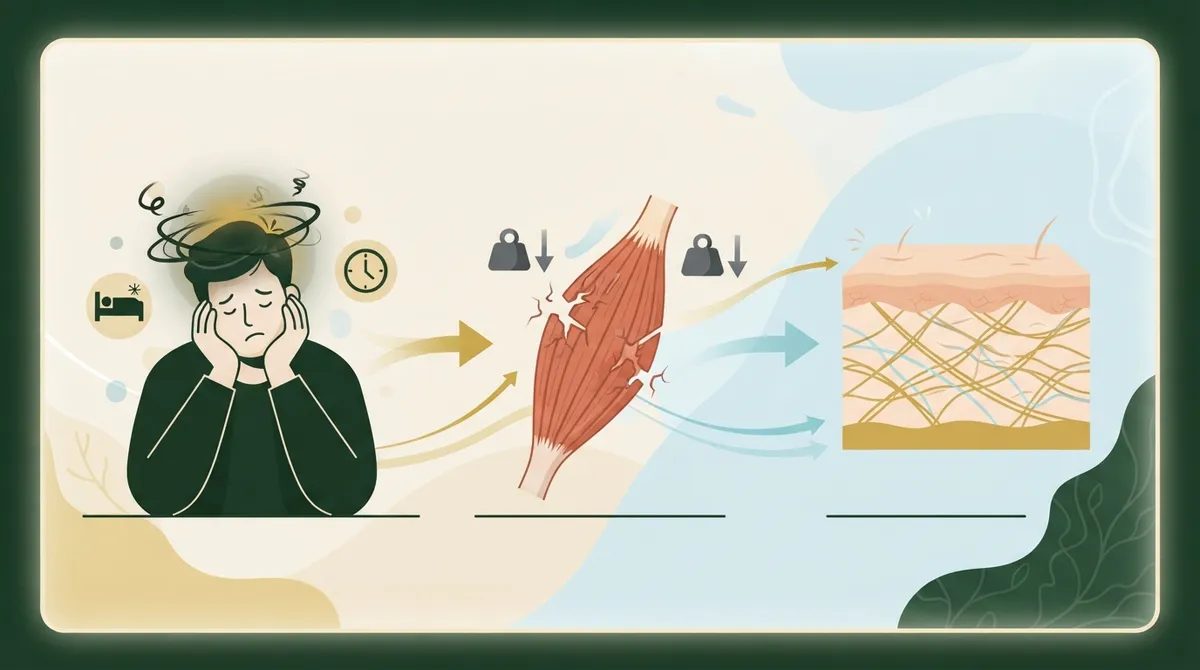
The effects follow the system that the peptide helps run. If a peptide hormone declines, you may notice changes in the area it regulates. But many of these changes are vague and can have lots of other causes.
That is the key point. Feeling tired or noticing belly fat does not prove a peptide problem. Stress, poor sleep, thyroid issues, medications, and normal aging can all do the same thing.
| Possible Change | Could Be Linked To a Peptide Hormone? | Other Common Causes |
|---|---|---|
| Fatigue | Sometimes | Poor sleep, stress, thyroid issues, low iron |
| More belly fat | Sometimes | Diet, inactivity, insulin resistance, aging |
| Less muscle and strength | Sometimes | Lack of resistance training, low protein, aging |
| Slower recovery | Sometimes | Overtraining, sleep loss, inflammation |
| Lower exercise capacity | Sometimes | Deconditioning, heart or lung issues, anemia |
A Closer Look: Growth Hormone as an Example
Growth hormone (GH) is one of the best-studied examples in peptide conversations. It is a peptide hormone made by the pituitary gland. When adults have confirmed growth hormone deficiency, it can involve:
- Increased abdominal fat
- Reduced lean muscle and strength
- Lower exercise capacity
- Fatigue
- Changes in bone, cholesterol, or glucose metabolism
Notice that these symptoms are broad. They overlap with plenty of everyday issues. That is why a careful medical workup matters so much.
How Common Is True Deficiency?
True adult growth hormone deficiency is much less common than social media might suggest. A 2025 US study estimated prevalence at about 0.2 per 100,000 for confirmed cases. When confirmed and at-risk groups were combined, estimates rose to as high as 37.0 per 100,000. The number depends heavily on how the condition is defined.
So if you suspect low levels, curiosity is great, but diagnosis needs real data.
Why a Single Blood Test Often Is Not Enough
You might think one quick blood draw would give a clear answer. For many peptide hormones, it does not. Growth hormone, for example, is released in pulses throughout the day. A random measurement can catch a high or low moment that tells you very little.
A 2023 review notes that random serum GH is generally not recommended to screen for deficiency. Instead, clinicians weigh your symptoms and history alongside age-adjusted IGF-1, and sometimes use supervised stimulation testing when it is indicated.
| Test Type | What It Tells Us | Limitations |
|---|---|---|
| Random GH blood test | A snapshot of one moment | GH comes in pulses, so it can mislead |
| IGF-1 (age-adjusted) | A broader signal of GH activity | Can be affected by liver health, nutrition, and more |
| Stimulation testing | Checks how the pituitary responds | Cutoffs vary by test and by factors like BMI |
A clinical review also points out that diagnostic cutoffs differ by test and patient factors. No single number fits everyone. This is why interpretation belongs with a trained clinician.
What Can Cause Peptide Hormone Levels to Drop?
Levels can change for many reasons. Some are natural, and some are medical. Common contributors include:
- Aging: Many signaling hormones gradually shift as we get older.
- Pituitary or hypothalamic disease: These areas control many hormone signals.
- Surgery or radiation near the pituitary region: Treatment in this area can affect hormone output.
- Other pituitary hormone deficiencies: When several hormones are low, clinicians look closer.
- Lifestyle factors: Poor sleep, chronic stress, and nutrition gaps can influence how your body feels and functions.
Evaluation is most relevant when there is a plausible medical cause. In those cases, a clinician may order imaging or more hormone tests to find the root issue.
Can Fatigue or Weight Gain Mean Your Peptide Levels Are Low?
Maybe, but usually it is more complicated. Fatigue and weight changes are what doctors call nonspecific symptoms. They show up in dozens of conditions.
Before assuming a peptide issue, it helps to rule out the basics. Here is a simple starting checklist many people find useful:
- Track your sleep for two weeks, including how rested you feel.
- Review your stress load, diet, and activity honestly.
- Note any new medications or supplements.
- Write down your symptoms, when they began, and what makes them better or worse.
- Book a visit with a licensed provider and ask about appropriate lab work.
This gives your provider real information to work with, not guesswork. If you are curious about how labs fit into the picture, 5 Blood Work Analysis Steps Before Peptides in 2026 is a helpful read.
Where Peptide Therapy Fits In
Now to the big question: what does peptide therapy do about all this? Peptide therapy is a broad term. It covers FDA-approved peptide medicines, and it also covers products promoted for wellness, recovery, or anti-aging. Evidence and regulatory status vary a lot from product to product.
That means claims about “restoring your peptide levels” should be taken with a healthy pinch of salt. A promise to restore levels is not proof of a deficiency, and it is not proof of benefit. Good care starts with a real evaluation, then a plan that matches your goals and your data.
Treat the Condition, Not a Guess
Treatment should target a diagnosed condition, not a presumed low level or vague symptoms. For adult growth hormone deficiency, guidelines emphasize confirmatory testing and individualized medical supervision. Dosing and monitoring belong with a qualified clinician.
For general wellness goals, such as better recovery, skin health, or metabolic support, a licensed provider can discuss what options may fit based on your labs and history. If you want to see how this works in practice, read How to Start Peptide Therapy Safely and See Real Results.
Safety First: Approved vs. Unapproved Peptides
Not all peptide products are created equal. FDA-approved peptide medicines are different from unapproved products sold online and from compounded preparations. The FDA has raised concerns about some unapproved or compounded peptides, including limited human evidence and potential quality, dosing, and immune-reaction risks.
Here is a quick way to think about it:
| Category | What It Means | What To Ask |
|---|---|---|
| FDA-approved peptide medicines | Reviewed for specific uses, with known safety data | Is it approved for my situation? |
| Compounded peptides | Prepared by a pharmacy for an individual patient | Who prepares it, and how is quality checked? |
| Unapproved online products | Little to no oversight | Is there any human evidence? Is the source verified? |
To go deeper, take a look at FDA-Approved vs. Compounded Peptides: What Wins? and Is Peptide Therapy Safe? What You Really Need to Know. You can also browse research on the topic through the National Library of Medicine.
Should You Try Peptide Therapy If You Have Symptoms but No Confirmed Deficiency?
This is a fair and common question. The honest answer is: it depends, and it should be a shared decision with a licensed provider. Having symptoms without a confirmed deficiency does not automatically mean treatment is wrong, but it does mean the plan should be careful, data-informed, and monitored.
A good provider will talk through benefits, limits, and risks. They will not promise miracles. They will also check in over time and adjust. That kind of supervision is what separates thoughtful care from a risky shortcut.
What a Smart Process Looks Like
- Start with a conversation. Share your goals, symptoms, and history.
- Get appropriate labs. Real numbers beat guesses every time.
- Review results with a licensed clinician. Context matters.
- Build a personalized plan. Your plan should match your data and goals.
- Monitor and adjust. Follow-up care keeps things safe and on track.
If you like to see how others prepare, 15 Peptide Consultation Questions to Ask in 2026 gives you a ready-made list.
How Telehealth Makes This Easier
If you are a busy professional or just short on time, you will love this part. Telehealth lets you meet with a licensed provider from your couch, get lab work done locally, and have treatment delivered to your door. No waiting rooms, no commute.
Allura Longevity offers exactly this kind of personalized, medically supervised peptide therapy. Care begins with a $50 virtual consultation, followed by blood work through LabCorp. From there, your licensed provider designs a customized six-month plan based on your results and goals. Ashley, a board-certified Family Nurse Practitioner, leads the care team, and ongoing monitoring helps keep your plan on track. Telehealth is available in Florida, Georgia, Texas, Connecticut, Indiana, Maryland, New York, and California.
Curious how it compares with visiting a clinic? Check out Local Clinic vs. Telehealth: Best Peptide Therapy Near You? for a clear look at both options. You can also explore options tailored to peptides for women or peptides for men.
Quick Takeaways to Remember
- “Peptide levels” is not one measurement. Effects depend on which peptide is low.
- Symptoms like fatigue, belly fat, and lower strength are nonspecific and have many causes.
- A single random blood test usually cannot diagnose a deficiency like low growth hormone.
- Evaluation makes the most sense when there is a plausible medical cause.
- Treatment should target a diagnosed condition, with a clinician guiding decisions.
- Always verify a product’s approval status before starting anything.
Wrapping Up: Your Next Step
So, what happens when peptide levels drop? The answer is, it depends on the peptide, the cause, and you. Sometimes a decline shows up as fatigue, changes in body composition, or slower recovery. Other times, those same signs point somewhere else entirely. That is why the smartest move is to skip the self-diagnosis and get a proper, data-driven look.
You deserve clear answers and a plan built around you. If you are ready to take a thoughtful, medically supervised approach, we would love to help. Request a consultation with Allura Longevity and see how personalized peptide therapy could fit your goals. Call (813) 510-6277 with any questions. Spots for new clients are limited each month, so reach out while there is room.
FAQs
Q: What are peptide levels, and which peptides are measured in blood tests?
A: “Peptide levels” is not a single test. Peptides include many hormones and signaling molecules, like insulin or growth hormone, and each is measured differently. Your provider picks tests based on your symptoms, history, and goals.
Q: What symptoms can low growth hormone cause in adults?
A: Confirmed adult growth hormone deficiency may involve more belly fat, less lean muscle and strength, lower exercise capacity, and fatigue. It can also affect bone, cholesterol, and glucose metabolism. These signs are nonspecific, so a clinician needs to sort out the real cause.
Q: Can a random blood test diagnose low growth hormone?
A: Usually not. Growth hormone is released in pulses, so a random reading can be misleading. Clinicians weigh your symptoms and history alongside age-adjusted IGF-1 and, when needed, supervised stimulation testing.
Q: Are peptide therapy products FDA-approved and safe?
A: It varies by product. Some peptide medicines are FDA-approved, while others are unapproved or compounded and may have limited human evidence and quality or dosing concerns. Always verify approval status and work with a licensed clinician.
Q: Should I take peptide therapy if I have symptoms but no confirmed deficiency?
A: That is a decision to make with a licensed provider after a proper evaluation and lab work. Symptoms alone do not prove a deficiency, so a careful, monitored plan is key. A good provider will explain the benefits, limits, and risks clearly.





