

Key Takeaways
-
Hormone therapy costs range from $150-$800 monthly depending on peptide type, but first month costs $400-$1,200 due to consultations and labs, with realistic first-year budgets between $2,000-$7,500.
-
Most insurance excludes wellness-focused peptide therapy as elective; explore HSA/FSA coverage, multi-month discounts, and bundled pricing to offset out-of-pocket costs instead of comparing monthly rates alone.
-
Always verify what’s included in quoted prices (consultation, labs, medication, follow-ups, supplies) and confirm your provider is licensed and board-certified before committing, as some clinics quote only vial costs.
-
Blood work is essential—personalized dosing based on lab results improves safety and outcomes, and cheaper compounded peptides may carry quality control risks compared to FDA-approved options.
So you’re curious about hormone therapy cost, but every website seems to give you a different number. One site says $99, another says $800, and you’re left wondering who’s telling the truth. You’re not alone in feeling this way. Whether you’re chasing better sleep, more energy, or a leaner body, understanding real pricing helps you plan with confidence instead of guessing in the dark.
In the world of peptide therapy, hormone therapy cost usually means treatments that support your body’s natural hormone pathways. Think testosterone therapy, growth-hormone peptides like sermorelin, or metabolic peptides that help with weight and energy. This guide breaks down what you’ll actually pay, what should be included, and how to spot a fair price versus a sneaky upsell. Let’s get you the clarity you deserve.

What Hormone Therapy Cost Actually Means in Peptide Care
When people search for hormone therapy cost, they’re often picturing one flat number. But peptide-based hormone support isn’t one-size-fits-all. It covers several types of treatment, each with its own pricing structure.
This can include testosterone replacement, sermorelin or CJC-1295/ipamorelin for growth hormone support, and tesamorelin for metabolic health. Learning about what peptides actually are helps you understand why pricing varies so much between treatment types.
Common Types of Hormone-Related Peptide Treatments
- Testosterone therapy for low energy, muscle loss, or low libido
- Sermorelin for natural growth hormone support and better sleep
- CJC-1295/ipamorelin combos for recovery and lean muscle
- Tesamorelin for metabolic and body composition goals
- GLP-1 peptides that influence metabolic hormones tied to weight
Each of these serves a different purpose. That’s why comparing prices without knowing the peptide type is like comparing apples to bicycles. For a deeper look, check out how growth hormone peptides actually work in your body.
Typical Hormone Therapy Cost Ranges You Should Know
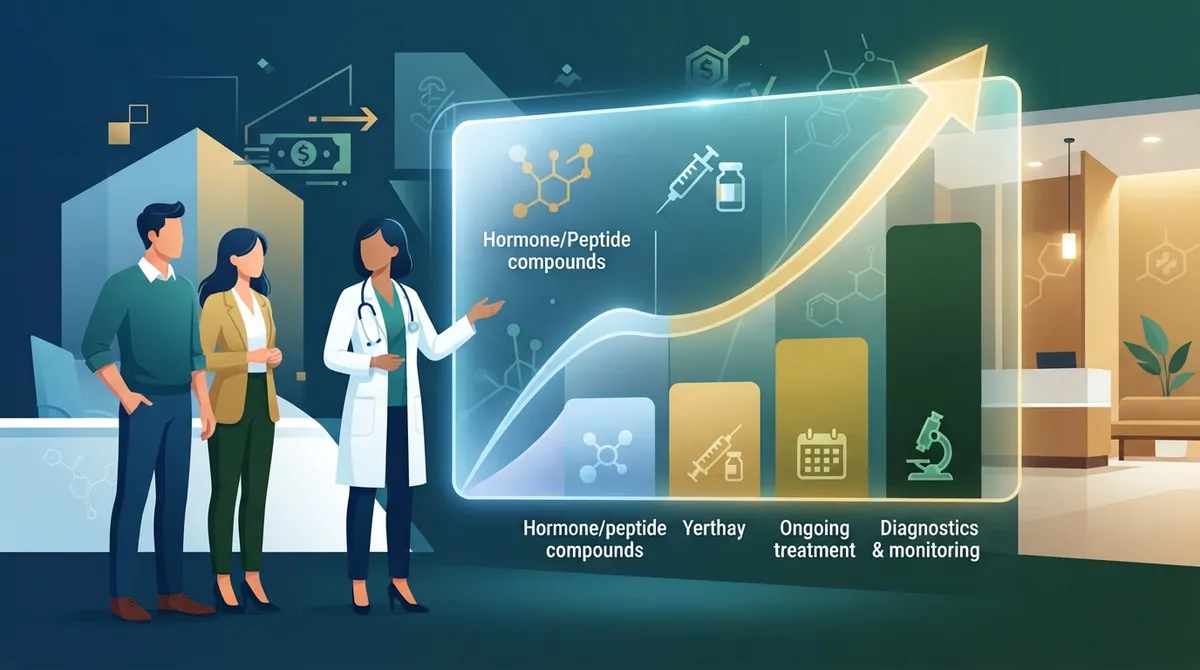
Let’s talk numbers, because that’s why you’re here. According to 2025–2026 pricing guides, most people pay between $150 and $800 per month for hormone-related peptide therapy. Where you land in that range depends on the peptide, dose, and whether medical supervision is bundled in.
| Peptide or Treatment | Typical Monthly Cost | Common Use |
|---|---|---|
| Sermorelin | $150–$500 | Sleep, recovery, natural GH support |
| CJC-1295/Ipamorelin | $200–$450 (up to $600) | Muscle recovery, anti-aging |
| Tesamorelin | $400–$800 (can exceed $1,000) | Metabolic and body composition support |
| Testosterone Therapy | Often starting around $129+ | Low T symptoms, energy, libido |
Keep in mind these are common ranges, not guarantees. Some promotional plans list lower entry prices, like $199 monthly for sermorelin. Always ask what’s included before comparing numbers side by side.
What’s Actually Included in the Price
Here’s where a lot of people get surprised. The peptide itself is just one piece of the puzzle. A realistic hormone therapy cost should also include your consultation, lab work, follow-ups, and supplies.
The Full Picture of Your Investment
- Initial consultation: typically $100–$400 for telehealth visits
- Baseline lab testing: usually $100–$400 per panel
- The peptide medication itself: your monthly cost
- Follow-up visits: commonly $75–$250 each
- Injection supplies and shipping: often bundled or added separately
This is why your first month almost always costs more than later months. Expect an extra $200–$500 upfront for consultations and labs. After that, your monthly bill tends to level out. If you want a walkthrough of the process, read how to start peptide therapy safely and see real results.
Why Lab Work Matters More Than You Think
You can’t guess your way to the right hormone therapy plan. Blood work tells your provider what’s actually happening inside your body. It’s the difference between a targeted plan and a shot in the dark.
Providers typically test hormone levels, metabolic markers, and safety indicators before starting treatment. This isn’t just a formality. It protects you and helps your provider fine-tune your dose. According to the National Library of Medicine, personalized dosing based on lab results improves both safety and outcomes in hormone-related therapies.
Comparing First-Year Costs vs Monthly Numbers
Monthly pricing only tells half the story. Since many hormone-related programs run six months or longer, it helps to think in terms of total investment rather than a single monthly figure.
| Cost Category | Estimated Range |
|---|---|
| First month (consult + labs + medication) | $400–$1,200 |
| Ongoing monthly cost | $150–$800 |
| Comprehensive first-year estimate | $2,000–$7,500 |
Looking at the full-year picture helps you budget realistically instead of being caught off guard by recurring lab fees or dose adjustments. If you’re weighing your options, this budgeting guide for peptide injections can help you plan ahead.
Does Insurance Cover Hormone Therapy Cost?
Short answer: usually not, at least not for wellness or anti-aging programs. Insurance companies typically classify these treatments as elective or investigational, which means they’re excluded from coverage.
There are exceptions. If you have an FDA-approved medication prescribed for a diagnosed medical condition, and you meet your insurer’s specific requirements, coverage might be possible. But for most sermorelin, CJC-1295, ipamorelin, or wellness-focused testosterone plans, you’ll be paying out of pocket. Learn more in how to navigate hormone therapy insurance coverage.
Ways to Offset the Cost
- Check if your HSA or FSA covers medically supervised treatment
- Ask providers about multi-month subscription discounts
- Bundle labs and consultations instead of paying separately each time
- Compare all-inclusive pricing versus a la carte add-ons
Compounded vs Branded: How It Affects Price
Compounded peptides are often less expensive than branded, FDA-approved medications. But cheaper doesn’t automatically mean better, or even equal. The FDA has flagged certain bulk substances used in compounding as carrying potential safety risks, so quality control matters just as much as price.
Always confirm that a licensed provider evaluates you first and that your medication comes from a properly regulated pharmacy. To understand this distinction better, see FDA-approved vs compounded peptides: what wins. Learning about what are peptides from a trusted medical source can also help you ask smarter questions during your consultation.
How to Compare Clinics Without Getting Fooled
Not all advertised prices mean the same thing. Some clinics quote just the vial. Others bundle everything into one number. Here’s how to compare apples to apples.
- Ask exactly what’s included: consultation, labs, medication, and follow-ups
- Confirm whether pricing is monthly or for a longer supply
- Check if dose adjustments come with extra fees
- Ask about shipping costs and how supplies are delivered
- Verify the provider is licensed and board-certified
This is exactly why Allura Longevity keeps things simple. Clients start with a $50 virtual consultation, complete labs through LabCorp, and receive a custom six-month plan shipped straight to their door. Ongoing monitoring is included, led by Ashley, a board-certified Family Nurse Practitioner. No guessing games, no hidden fees.
Why Telehealth Can Save You Money and Time
Busy professionals and health optimizers often don’t have hours to spend in waiting rooms. Telehealth cuts out the overhead of in-person visits while still giving you licensed medical oversight.
Allura Longevity serves clients nationwide and is licensed in Florida, Georgia, Texas, Connecticut, Indiana, Maryland, New York, and California. If you’re torn between options, this comparison of local clinic vs telehealth for peptide therapy breaks down the pros and cons clearly.
Smart Ways to Budget for Hormone Therapy
You don’t need a finance degree to plan for this. A few simple habits can keep your spending predictable and stress-free.
- Ask for a written breakdown of every cost before you commit
- Choose bundled plans over pay-as-you-go pricing when possible
- Set aside extra funds for your first month’s higher costs
- Track your results so you know the investment is paying off
- Revisit your plan every few months with your provider
For men specifically weighing testosterone options, these testosterone therapy cost facts offer a deeper breakdown of what to expect.
Ready to Get a Personalized Price?
Understanding hormone therapy cost shouldn’t feel like decoding a secret language. With the right provider, pricing is transparent, personalized, and tied to real lab data instead of guesswork. Allura Longevity combines licensed medical oversight with convenient at-home delivery, so you get expert care without disrupting your schedule.
Spots fill up each month, so if you’re ready to see what a customized plan actually costs for your body and goals, now’s the time to act. You can request a consultation today or call (813) 510-6277 to speak with the team directly. Your energy, vitality, and confidence are worth the conversation.
FAQs
Q: How much does peptide hormone therapy cost per month?
A: Most people pay between $150 and $800 per month, depending on the peptide and provider. Sermorelin tends to run $150–$500, while tesamorelin can climb to $800 or more. Your first month usually costs extra because of consultation and lab fees.
Q: What is typically included in the price of peptide therapy?
A: A fair price should cover your consultation, baseline labs, the medication itself, and follow-up visits. Some providers also bundle in injection supplies and shipping. Always ask for a full breakdown so you know exactly what you’re paying for.
Q: Does insurance cover peptide-based hormone therapy?
A: Most insurance plans exclude wellness or anti-aging peptide therapy since it’s considered elective. There are rare exceptions for FDA-approved medications prescribed for a diagnosed condition. It’s worth checking if your HSA or FSA can help offset costs instead.
Q: Is compounded peptide therapy cheaper and just as safe as branded options?
A: Compounded peptides are often less expensive, but a lower price doesn’t guarantee the same quality or safety as FDA-approved medication. It’s important to work with a licensed provider and a properly regulated pharmacy. Never choose based on price alone.
Q: How can I compare peptide therapy clinics without getting confused by pricing?
A: Ask exactly what’s bundled into the price, including labs, consultations, and follow-ups. Some clinics only quote the vial cost, which can make prices look cheaper than they really are. A little bit of asking upfront saves you from surprise fees later.





