
Key Takeaways
-
Only FDA-approved use for a peptide in sexual health is bremelanotide (Vyleesi), limited to acquired, generalized HSDD in premenopausal women whose distress isn't explained by another cause.
-
Vyleesi is not approved for men, postmenopausal women, or performance enhancement, so any provider offering it for those uses is operating outside its label.
-
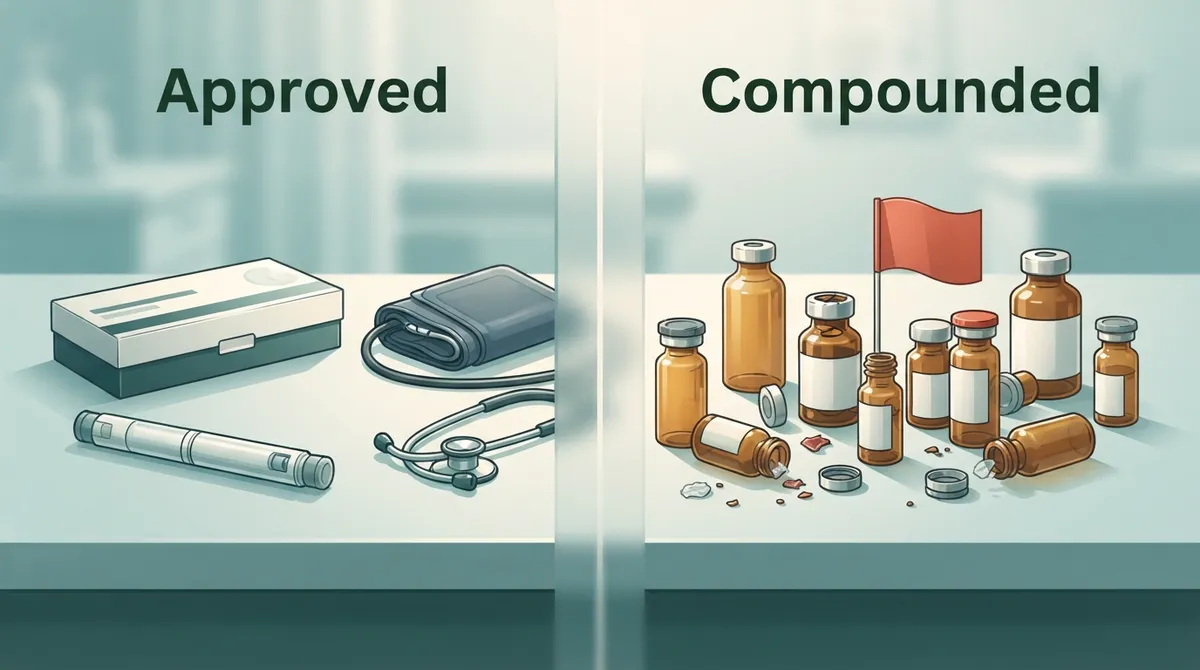
Compounded and online sexual wellness peptides may lack FDA approval for that use, and their quality, safety, and effectiveness may not be established; treat 'risk-free' or 'works for everyone' claims as red flags.
-
The labeled Vyleesi dose is 1.75 mg injected subcutaneously at least 45 minutes before sexual activity, no more than one dose per 24 hours or eight per month, and stop after eight weeks if no improvement.
-
Vyleesi can temporarily raise blood pressure and lower heart rate, and it is not allowed for people with uncontrolled hypertension or known cardiovascular disease.
-
Low desire is a symptom, not a diagnosis; a thorough review of medications, mood, sleep, stress, relationships, and labs should come before any peptide, since non-drug fixes may help.
Let’s talk about something a lot of us think about but few of us bring up at the dinner table: sexual wellness. If you have noticed a dip in desire, you are far from alone. Many busy professionals, midlife adults, and wellness-minded folks quietly wonder if peptides could help.
Here is the honest, friendly truth. “Tasteful sexual wellness peptide care” is not a formal medical term. Think of it as a way of describing care that is discreet, respectful, and based on evidence. It means a licensed provider listens first, checks your health picture, and talks about peptide options without hype or promises.
One big question sits at the center of this topic. Should you look at an FDA-approved peptide, or a compounded or online product marketed for sexual wellness? They are not the same thing. In this guide, we will compare them side by side, so you can feel informed and confident. For a broader look at the topic, see these 8 facts that explain what are peptides in 2026.

What Does Tasteful Sexual Wellness Peptide Care Really Mean?
In plain terms, tasteful sexual wellness peptide care is care that treats you like a whole person. It is private, kind, and honest. It does not push a quick fix or promise a boost in performance.
Good care of this kind usually includes:
- A real conversation: Your provider asks about your symptoms, how long they have lasted, and how much they bother you.
- A full health review: Medications, medical conditions, mood, stress, and relationship context all matter.
- Clear limits: You hear what a treatment can and cannot do.
- Safe follow-up: Your provider checks in and adjusts the plan over time.
Low desire rarely has just one cause. Sleep, stress, hormones, mood, medicines, and relationships can all play a part. That is why a peptide should never be the first and only step. If you want a deeper look, check out 8 peptide facts that redefine sexual wellness in 2026.
The Two Paths: Approved vs. Compounded Peptides
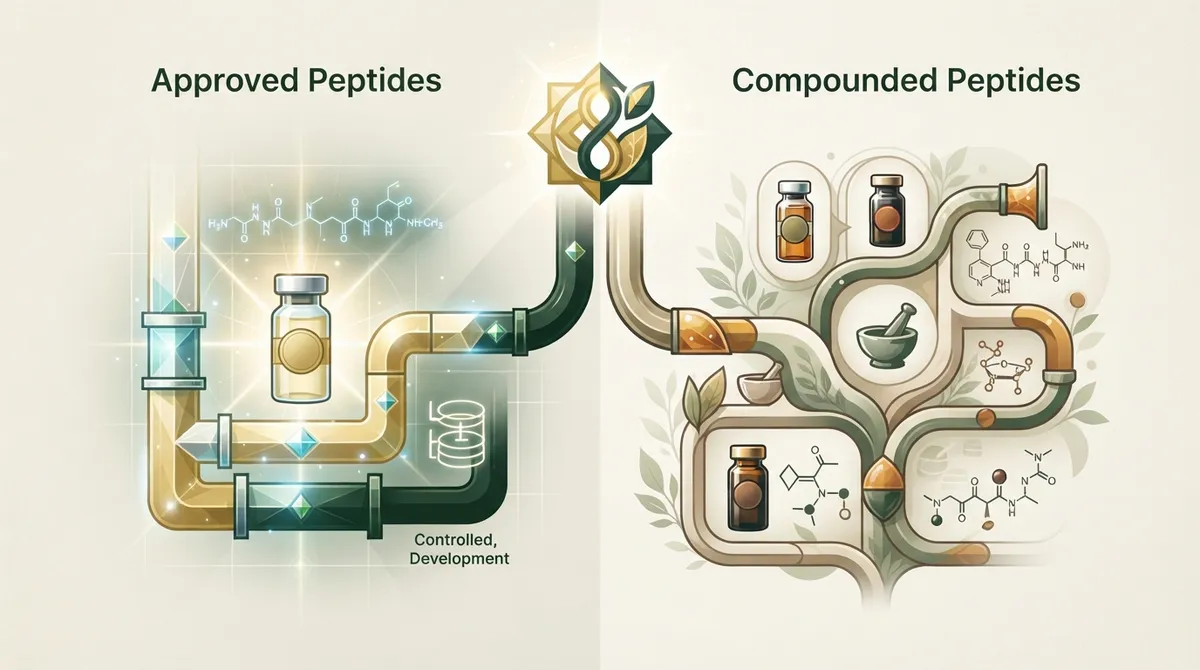
When people search for sexual wellness peptides, they often land on two very different types of products. Knowing the difference is the single most useful thing you can learn here.
Path One: FDA-Approved Bremelanotide (Vyleesi)
Bremelanotide is sold under the brand name Vyleesi. You may also see it called PT-141. It is the main peptide with an FDA-approved sexual health use in the United States.
But the approval is narrow. Vyleesi is approved for acquired, generalized hypoactive sexual desire disorder (HSDD) in premenopausal women. The low desire must cause real distress. It also must not be mainly explained by another medical or psychiatric condition, relationship problems, or a medication or drug.
Just as important, Vyleesi is not approved for men, for postmenopausal women, or to improve sexual performance. It is a prescription medicine, not a general libido booster.
Path Two: Compounded or Online Peptide Products
The other path includes compounded peptides and products sold online for sexual wellness. These may be marketed with big promises. But they may not have FDA approval for that use. Their quality, safety, and effectiveness may not be established.
That does not mean every provider who offers a compounded product is acting in bad faith. It does mean you deserve clear, honest talk about what is known and what is not. To dig into this topic, read FDA-approved vs. compounded peptides: what wins?
Side-by-Side Comparison Table
| Feature | FDA-Approved Bremelanotide (Vyleesi) | Compounded or Online Sexual Wellness Peptides |
|---|---|---|
| FDA approval for sexual health | Yes, for a narrow HSDD use | Not for that use unless verified |
| Who it is approved for | Premenopausal women with acquired, generalized HSDD | No approved patient group for this use |
| Dosing guidance | Set by the official label | Varies by product and provider |
| Safety data | Reviewed by the FDA | May be limited or not established |
| Quality oversight | Manufactured to approved standards | Can vary widely |
| Best message to expect | Clear limits and honest risks | Beware of “risk-free” or “works for everyone” claims |
How Vyleesi Is Dosed and Used
If your provider decides Vyleesi is a fit, here is how the label describes use. These facts come from the FDA prescribing information on DailyMed.
- Dose: The labeled dose is 1.75 mg.
- How it is given: It is injected under the skin of the abdomen or thigh.
- Timing: Use it at least 45 minutes before anticipated sexual activity.
- Daily limit: Do not use more than one dose in 24 hours.
- Monthly limit: More than eight doses per month is not recommended.
- Check your progress: Stop after eight weeks if your symptoms have not improved.
Notice what is missing here. There is no promise of a guaranteed result. The label itself tells you to stop if it is not helping. That is honest, tasteful care in action.
Risks and Side Effects to Know About
Every medicine has trade-offs, and bremelanotide is no exception. The FDA label lists these common side effects, each reported in more than 4% of people:
- Nausea
- Flushing
- Injection-site reactions
- Headache
- Vomiting
There is also a heart-related caution. Bremelanotide can temporarily raise blood pressure and lower heart rate. It is not allowed for people with uncontrolled high blood pressure or known cardiovascular disease. It is also not recommended for people at high cardiovascular risk.
This is exactly why a real medical review matters. If you are curious about the wider safety picture, take a look at is peptide therapy safe? What you really need to know.
What a Good Clinical Assessment Looks Like
Before any peptide enters the picture, a thoughtful provider should dig into the whole story. Low desire is a symptom, not a diagnosis. Something else may be going on that is very treatable.
A solid assessment often covers:
- What your symptoms are like and how long they have lasted
- How much distress they cause you
- Your current medications and supplements
- Your medical conditions, including heart health and blood pressure
- Your mood, stress, and sleep
- Your relationship context and personal goals
- Hormone levels and other lab work when it makes sense
Sometimes the best first steps are not drugs at all. Better sleep, stress care, counseling, or adjusting a medicine can make a real difference. Peptides are not a substitute for finding and treating the cause. For more on why labs matter, see 5 blood work analysis steps before peptides in 2026.
Who Is a Good Fit, and Who Is Not?
Let’s make this simple. Here is a quick guide to how approved bremelanotide lines up with different people.
| Group | Is Vyleesi Approved? | What to Know |
|---|---|---|
| Premenopausal women with acquired, generalized HSDD | Yes | Needs distress and no other main cause |
| Postmenopausal women | No | Talk with a provider about other options |
| Men | No | Other evaluations and options may apply |
| People with uncontrolled high blood pressure or heart disease | Not allowed | Needs a different plan |
If you are a man exploring your options, you may find 12 facts on sexual wellness for men in 2026 helpful. Women can also explore 6 real treatments for low libido in women (2026) for a wider view of what is out there.
Why This Matters for Health Optimizers and Busy Professionals
If you are a data-driven person who tracks sleep, labs, and recovery, you will appreciate a measured approach here. Sexual wellness is part of overall vitality. It connects with energy, mood, hormones, and stress.
For busy professionals, telehealth is a handy way to get discreet care. You can talk with a licensed provider from home, skip the waiting room, and keep things private. That fits the “tasteful” part of the phrase very well.
For aging adults and wellness seekers, the best plan often looks at the whole picture. Hormone health, sleep, and metabolism can all connect with desire. A good provider helps you sort out what is a peptide question and what is not. You can also read about PT-141 vs. Viagra to see how different options compare.
How to Spot Red Flags in Online Sexual Wellness Peptides
The internet is full of bold claims. Here are warning signs that should make you pause:
- Claims that a peptide is “risk-free” or works for everyone
- No health review or medical history before you can buy
- Promises of boosted “performance” or guaranteed results
- No clear explanation of whether a product is FDA-approved for that use
- Vague details about where or how the product is made
A trustworthy provider will welcome your questions. They will explain what is approved, what is not, and why. For help finding safe sources, see how to get prescription peptides safely in 2026. You can also learn more from the National Library of Medicine and this overview of what are peptides.
How Allura Longevity Approaches Peptide Care
At Allura Longevity, care starts with listening. This telehealth clinic offers personalized, medically supervised peptide therapy. A $50 virtual consultation kicks things off. Next comes blood work through LabCorp. Then you get a customized six-month plan, with peptides delivered to your home when appropriate.
Your care is led by licensed providers, including Ashley, a board-certified Family Nurse Practitioner. Allura offers telehealth care in Florida, Georgia, Texas, Connecticut, Indiana, Maryland, New York, and California. Ongoing monitoring means your plan can change as your needs change. Whether you are exploring peptides for women or peptides for men, the goal is honest, personal care.
Spots for new clients are limited each month, so it helps to reach out early. You can also call (813) 510-6277.
Final Thoughts: Choose Care That Respects You
So, which is the better path, approved or compounded? The most honest answer is this: start with the facts. Approved bremelanotide has a clear, narrow use, a defined dose, and known risks. Compounded and online products may lack that clarity. Either way, the best results start with a real conversation and a full health review.
Tasteful sexual wellness peptide care is about dignity, honesty, and good science. You deserve a provider who tells you what peptides can do, what they cannot, and what else may help. Ready to talk it through in a private, judgment-free setting? Request a consultation with Allura Longevity and take the first step toward care that fits you.
FAQs
Q: What is peptide therapy for sexual wellness?
A: It is care where a licensed provider reviews your symptoms and health history, then discusses whether a peptide makes sense. The only peptide with an FDA-approved sexual health use is bremelanotide, and only for a narrow group. Good care never promises guaranteed results.
Q: Is PT-141 the same as bremelanotide or Vyleesi?
A: PT-141 is another name for bremelanotide, and Vyleesi is the FDA-approved brand name. Be careful, though, because products sold online as PT-141 may not be the approved medicine. Always ask a provider whether a product is FDA-approved for the use being discussed.
Q: Who can use FDA-approved bremelanotide, and what are the risks?
A: Vyleesi is approved for premenopausal women with acquired, generalized HSDD that causes real distress. It is not approved for men, postmenopausal women, or performance enhancement. Common side effects include nausea, flushing, injection-site reactions, headache, and vomiting, and it can temporarily raise blood pressure.
Q: How is Vyleesi dosed?
A: The labeled dose is 1.75 mg injected under the skin of the abdomen or thigh at least 45 minutes before anticipated sexual activity. Do not use more than one dose in 24 hours, and more than eight doses per month is not recommended. Stop after eight weeks if you see no improvement.
Q: Are compounded or online sexual wellness peptides safe?
A: They may not have FDA approval for sexual wellness, and their quality, safety, and effectiveness may not be established. Be wary of any product called risk-free or effective for everyone. A licensed provider can explain the differences and help you choose carefully.





