

Key Takeaways
-
GLP-1 receptor agonists like semaglutide and tirzepatide work by mimicking natural gut hormones to signal fullness, slow digestion, and stabilize blood sugar, addressing the hormonal causes of weight gain rather than relying on willpower alone.
-
Tirzepatide (Zepbound) typically produces greater weight loss (15-20.9% of body weight) than semaglutide (14.9%) because it targets two hormone pathways (GIP and GLP-1) instead of one, though individual results vary significantly.
-
You qualify for peptide therapy if you have a BMI of 30+, or BMI of 27+ with weight-related conditions like high blood pressure or type 2 diabetes, and should start with medical supervision including blood work to ensure safety.
-
Weight regain is likely if treatment stops without a plan; STEP 4 trial data shows people who switched to placebo regained significant weight within 48 weeks, making peptide therapy a long-term strategy paired with sustainable habits.
-
Common side effects like nausea, diarrhea, and reduced appetite are usually mild and fade as your body adjusts, but serious risks including gallbladder issues and pancreatitis require ongoing medical monitoring and careful patient selection.
-
Avoid compounded or 'research-use-only' peptides sold online as they lack FDA approval, quality control, and dosing accuracy; always verify your prescriber is licensed and your medication comes from verified pharmacy sources.
If you’ve tried every diet, every workout plan, and every “miracle” supplement, you already know the frustrating truth: weight loss isn’t just about willpower. Your hormones play a huge role in hunger, cravings, and how your body stores fat. That’s exactly why peptide therapy for weight loss has become such a hot topic. It works with your biology instead of against it.
At Allura Longevity, we see this every day. Busy professionals, midlife adults, and wellness-minded people who feel stuck despite their best efforts. The good news? Prescription peptide therapies, especially GLP-1 medicines like semaglutide and tirzepatide, have changed what’s possible. Let’s break down how these treatments actually work, what results you can expect, and how to start safely with expert medical support.

What Is Peptide Therapy for Weight Loss?
In the world of peptide therapy, “weight loss peptides” mostly refers to a class of medicines called incretin-based therapies. These include GLP-1 receptor agonists like semaglutide and liraglutide, plus the newer dual-action tirzepatide, which targets both GIP and GLP-1 receptors. You can learn more about the science behind these treatments in our guide on how GLP-1 peptide therapy works.
These peptides are modeled after hormones your gut naturally makes after eating. They send signals to your brain that say, “I’m full.” They also slow digestion and help balance blood sugar. According to what are peptides, these small protein chains act as messengers in the body, and that’s exactly what makes them so effective for appetite control.
How These Peptides Actually Work in Your Body
Think of your appetite as a dimmer switch, not an on-off button. These medications turn the dimmer down. Here’s what happens step by step:
- You take a weekly injection, starting at a low dose.
- The peptide binds to receptors that regulate hunger signals in your brain.
- Your stomach empties food more slowly, so you feel full longer.
- Your blood sugar becomes more stable, reducing cravings and energy crashes.
- Over weeks, your dose increases gradually under medical supervision.
This isn’t a quick fix. It’s a medical tool that works best alongside healthy habits. For a deeper look at building sustainable habits alongside treatment, check out how to lose weight with peptide therapy.
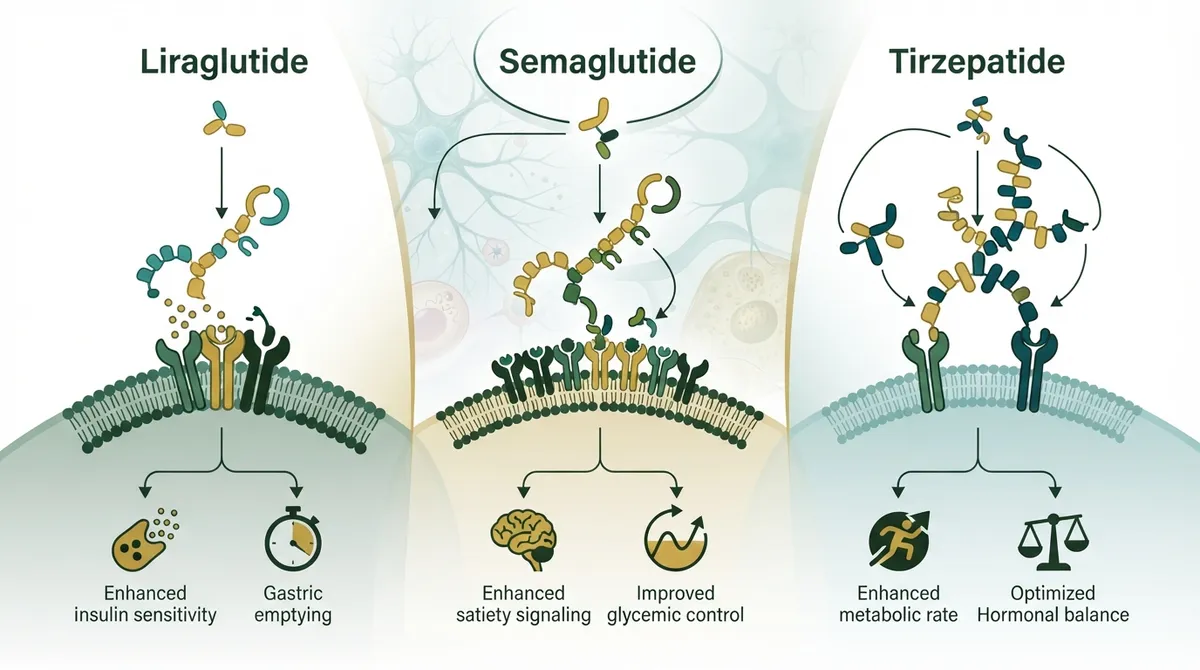
Semaglutide vs. Tirzepatide vs. Liraglutide: What’s the Difference?
Not all weight-loss peptides are created equal. Each one works a little differently, and the results can vary quite a bit. Here’s a simple breakdown.
| Peptide | Brand Name (Weight Loss) | How It Works | Average Weight Loss |
|---|---|---|---|
| Semaglutide | Wegovy | GLP-1 receptor agonist | ~14.9% of body weight over 68 weeks |
| Tirzepatide | Zepbound | Dual GIP/GLP-1 receptor agonist | ~15% to 20.9% of body weight over 72 weeks |
| Liraglutide | Saxenda | GLP-1 receptor agonist (daily dose) | Generally more modest than semaglutide or tirzepatide |
These numbers come from major clinical trials. In the STEP 1 trial, people taking semaglutide lost nearly 15% of their starting body weight, compared to just 2.4% with a placebo. The SURMOUNT-1 trial showed even bigger results with tirzepatide, especially at higher doses. If you want to compare these two head-to-head, our article on semaglutide vs. tirzepatide breaks it down further.
Why Tirzepatide Often Shows Bigger Results
Tirzepatide works on two hormone pathways instead of one. That dual action seems to boost fat loss even more than semaglutide alone. But everyone responds differently. Your results depend on your dose, your consistency, your diet, and your overall health picture.
Who Actually Qualifies for Peptide Weight-Loss Therapy?
Prescription weight-loss peptides aren’t for everyone, and that’s actually a good thing. They’re designed for people who meet specific health criteria. Generally, you may qualify if you have:
- A body mass index (BMI) of 30 or higher
- A BMI of 27 or higher, plus a weight-related health condition like high blood pressure, type 2 diabetes, high cholesterol, or sleep apnea
- A history of struggling with weight despite diet and exercise efforts
- No personal or family history of certain thyroid cancers
This is why blood work matters so much. At Allura Longevity, every client starts with a $50 virtual consultation and complete lab testing through LabCorp. This helps our licensed providers, led by board-certified Family Nurse Practitioner Ashley, build a plan that’s actually right for your body. Curious what that process looks like? Read how to start peptide therapy safely for a full walkthrough.
What Results Can You Realistically Expect?
Let’s talk numbers, because they matter. Clinical trial data gives us a solid picture of what’s possible, though your own results will depend on your body and your commitment to the process.
| Trial | Medicine | Duration | Average Weight Loss |
|---|---|---|---|
| STEP 1 | Semaglutide 2.4 mg | 68 weeks | 14.9% (vs. 2.4% placebo) |
| SURMOUNT-1 | Tirzepatide 15 mg | 72 weeks | 20.9% (vs. 3.1% placebo) |
| SELECT | Semaglutide 2.4 mg | Multi-year | 20% reduction in major cardiovascular events |
That last one is worth pausing on. The SELECT trial found that semaglutide reduced serious heart-related events by roughly 20% in adults with obesity and existing heart disease, even without diabetes. That’s a big deal for anyone thinking about weight loss as part of a bigger longevity strategy. For more numbers like this, see our 15 semaglutide weight-loss facts.
Weight Loss Takes Time (And That’s Okay)
You won’t wake up 20 pounds lighter after your first injection. Most people see gradual, steady progress over months, not days. Doses start low and increase slowly, which helps your body adjust and reduces side effects. Patience really is part of the process here.
Side Effects and Safety: What You Need to Know
No medicine is without risk, and it’s important to go in with realistic expectations. The most common side effects during dose increases include:
- Nausea
- Diarrhea or constipation
- Vomiting
- Stomach discomfort
- Reduced appetite (which is often the point, but can feel intense at first)
These symptoms are usually mild and tend to fade as your body adjusts. For tips on managing them, check out what causes GLP-1 side effects and how to manage them.
There are also more serious risks to be aware of, including gallbladder issues, pancreatitis, and dehydration-related kidney problems. These medicines carry an FDA boxed warning about thyroid tumors seen in animal studies, so they’re generally avoided in people with a personal or family history of certain thyroid cancers. This is exactly why medical supervision matters so much. According to research published by the National Library of Medicine, incretin-based therapies require careful patient selection and ongoing monitoring to manage these risks responsibly.
Why Compounded or “Research” Peptides Are Risky
You’ve probably seen ads for cheap semaglutide or tirzepatide online, sometimes labeled “research use only.” Please don’t take the bait. These products often lack proper testing, quality control, and dosing accuracy. The FDA has issued specific warnings about unapproved GLP-1 products sold outside legitimate medical channels. Always verify your prescriber, pharmacy, and ingredient source. Our article on FDA-approved vs. compounded peptides explains this in more detail.
Will the Weight Come Back After Stopping Treatment?
This is one of the most common (and important) questions we hear. Honestly, the answer is: it can, if you stop suddenly without a plan. In the STEP 4 trial, people who continued semaglutide kept losing weight or maintained their results. Those switched to a placebo regained a significant amount within 48 weeks.
This doesn’t mean you’re stuck on medication forever. It means weight loss peptide therapy works best as part of a long-term strategy, not a quick 3-month fix. Building sustainable habits, like better nutrition and regular movement, alongside your treatment gives you the best shot at keeping results. Our guide on GLP-1 weight-loss maintenance tips that last offers practical strategies for the long run.
How Peptide Therapy Fits Into a Bigger Wellness Picture
Weight loss peptides don’t work in isolation. The best outcomes happen when treatment is combined with:
- Personalized blood work to understand your unique hormone and metabolic profile
- Nutrition adjustments that support your treatment, not fight against it
- Regular movement, even simple daily walks
- Ongoing check-ins with your provider to adjust your dose as needed
- Realistic goal-setting based on your health history, not someone else’s before-and-after photos
This is where a personalized approach really shines. Generic weight-loss programs often use one-size-fits-all dosing. At Allura Longevity, every plan is built around your actual labs and goals, whether you’re focused on peptides for women navigating hormonal shifts or peptides for men looking to boost metabolism and energy.
Telehealth Makes It Easier Than Ever
Gone are the days of taking time off work for a doctor’s visit just to talk about weight loss options. Telehealth means you can complete your consultation, get your labs done locally through LabCorp, and receive your medication delivered right to your door. For busy professionals and parents alike, this convenience is a game changer. Learn more about how this compares to traditional care in local clinic vs. telehealth peptide therapy.
Cost Considerations for Peptide Weight-Loss Therapy
Cost is often top of mind, and rightfully so. Prices vary based on the specific medicine, your dose, and whether insurance covers any portion of treatment. Many people find that self-pay telehealth options offer more transparency and predictability than navigating insurance approval processes. Our detailed breakdown in how much GLP-1 weight loss costs without insurance can help you plan your budget with confidence.
Is Peptide Therapy Right for You?
If you’ve been struggling with stubborn weight, low energy, or frustrating plateaus, peptide therapy might be worth exploring. It’s not magic, but it is a powerful medical tool backed by strong clinical evidence. The key is working with licensed providers who actually look at your full health picture, not just your weight on a scale.
Allura Longevity was built for exactly this. Personalized plans, real lab work, and licensed medical providers guiding you every step of the way. We’re proud to serve clients across Florida, Georgia, Texas, Connecticut, Indiana, Maryland, New York, and California, all through convenient, judgment-free telehealth care.
Ready to Take the Next Step?
You deserve a weight-loss plan built around your body, not a generic template. With personalized blood work, licensed medical oversight, and peptides delivered straight to your home, Allura Longevity makes starting simple and safe. Spots are limited each month, so if you’re ready to feel like yourself again, request a consultation today and let’s build your plan together. You can also call us directly at (813) 510-6277 to speak with our team.
FAQs
Q: How do peptide therapies like semaglutide and tirzepatide help with weight loss?
A: These peptides mimic natural gut hormones that tell your brain you’re full. They slow digestion, curb cravings, and help stabilize blood sugar, which makes sticking to a healthier diet so much easier. It’s like finally getting your appetite on your side instead of fighting it every single day.
Q: What’s the real difference between semaglutide, tirzepatide, and liraglutide?
A: Semaglutide and liraglutide target one hormone pathway (GLP-1), while tirzepatide targets two (GIP and GLP-1), which often leads to greater weight loss. Liraglutide requires daily dosing, while the other two are weekly injections. Your provider can help determine which fits your goals and health history best.
Q: Who actually qualifies for prescription peptide weight-loss therapy?
A: Generally, you’ll qualify with a BMI of 30 or higher, or a BMI of 27 plus a weight-related condition like high blood pressure or type 2 diabetes. That said, everyone’s situation is unique, which is why a full consultation and blood work matter so much before starting treatment.
Q: Will I gain the weight back if I stop taking these peptides?
A: It’s possible, since appetite and metabolic signals can return closer to baseline after stopping. That’s why we encourage thinking of this as a long-term wellness strategy rather than a short quick-fix course. Building sustainable habits alongside treatment gives you the best chance of lasting success.
Q: Are compounded or ‘research’ peptides safe to use for weight loss?
A: Honestly, we’d steer you away from these. Products labeled ‘research use only’ aren’t meant for human treatment and often lack proper quality testing. Always work with a licensed provider who prescribes verified, pharmacy-sourced medication so you know exactly what you’re putting in your body.





