

Key Takeaways
-
CBT-I (cognitive behavioral therapy for insomnia) has strong, modern randomized trial evidence and is the gold-standard first-line treatment recommended by sleep specialists, while sleep peptides like DSIP lack large, modern human trials confirming effectiveness.
-
Most positive claims for sleep peptides come from small older studies, animal research, or mechanistic theories rather than solid clinical outcomes; no large randomized trials confirm DSIP, CJC-1295, ipamorelin, Selank, or Epitalon as effective insomnia treatments.
-
Before considering peptide therapy, rule out underlying sleep disorders like sleep apnea, restless legs syndrome, circadian rhythm disorders, depression, and medication side effects, as treating root causes almost always beats chasing trendy peptides.
-
Peptides from unregulated sources carry real risks including purity issues, injection reactions, immune responses, and drug interactions; work with licensed medical providers who order lab work and monitor progress rather than self-ordering online.
Tossing and turning at 2 a.m. while scrolling through peptide forums? You’re not alone. More people are asking about peptides for sleep quality as a way to finally get real rest instead of counting sheep. But before you order anything online, let’s talk honestly about what the science actually shows.
This guide breaks down the most talked-about sleep peptides, compares them to proven treatments like CBT-I, and helps you figure out what steps actually make sense for your body. We’ll keep things simple, friendly, and grounded in real research, not hype.
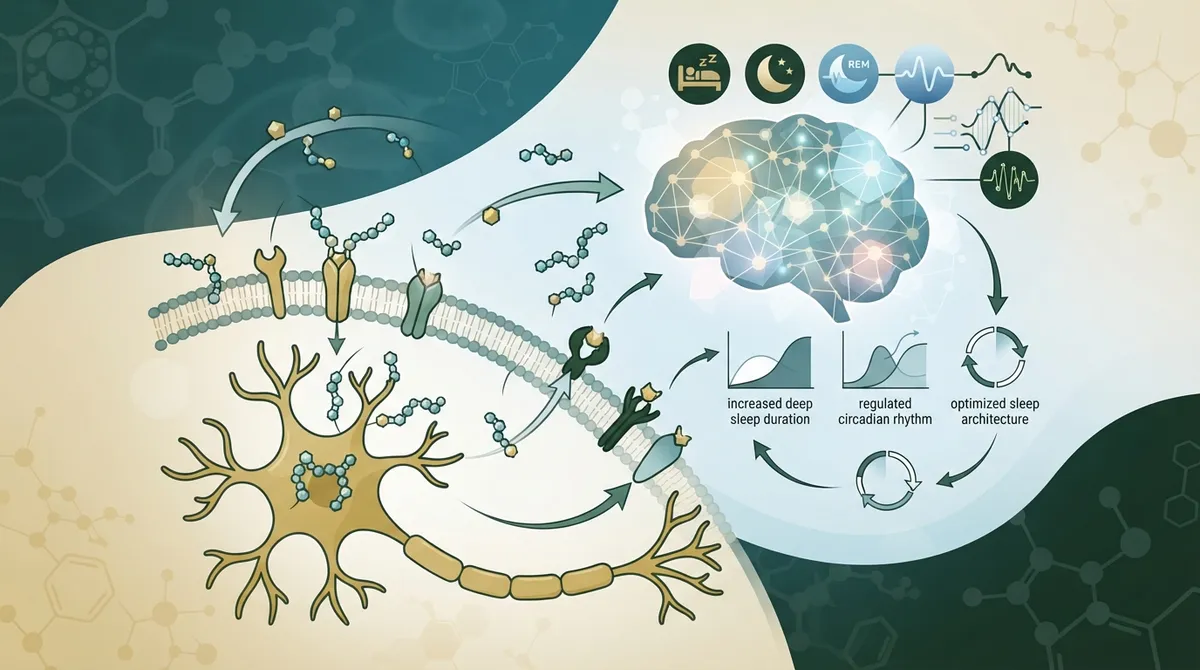
What Are Peptides, and Why Are They Linked to Sleep?
Peptides are small chains of amino acids that act like messengers in your body. They tell cells what to do, whether that’s building muscle, healing tissue, or (in theory) regulating sleep. If you want a deeper primer, check out this breakdown of what peptides actually are and how they work at a cellular level. For a broader medical explanation, WebMD has a helpful overview of what are peptides and how they function in the body.
Some peptides are FDA-approved for specific medical conditions. Others, especially ones marketed for sleep, are still considered investigational. That means the research is early, and we don’t yet have strong proof they work well in humans.
The Most Talked-About Peptides for Sleep Quality
Let’s go through the peptides you’ll see mentioned most often in sleep-related peptide therapy discussions.
Delta Sleep-Inducing Peptide (DSIP)
DSIP has the longest history of any sleep-related peptide. Researchers discovered it decades ago and hoped it might trigger deep, restorative sleep. A 1992 double-blind study looked at 16 patients with chronic insomnia. It found modest changes in sleep efficiency and sleep latency, but the researchers concluded the benefit was unlikely to be major (Bes et al., 1992, PubMed PMID 1299794).
More recently, a 2024 preclinical study published in Frontiers in Pharmacology tested a DSIP fusion peptide in mice with insomnia. It found changes in serotonin, dopamine, glutamate, and melatonin activity. That sounds promising, but it’s important to remember: mice are not people. Animal data cannot prove that DSIP improves human sleep in a meaningful way.
CJC-1295 and Ipamorelin
These two peptides are growth hormone secretagogues, meaning they help stimulate your body’s natural growth hormone release. Growth hormone happens to spike during early-night slow-wave sleep, which is why some people link these peptides to better sleep.
But here’s the catch: this connection is indirect. There are no strong, direct clinical trials showing that CJC-1295 or ipamorelin fix insomnia or improve sleep architecture. If you’re curious about how these peptides work overall, our guide on using CJC-1295 safely covers the full picture beyond sleep claims.
Selank and Epitalon
Selank is sometimes promoted for stress and anxiety reduction, which could indirectly support sleep. Epitalon is often discussed in longevity and circadian rhythm circles. Both are interesting from a research standpoint, but neither has robust, randomized human trials measuring insomnia severity or polysomnography results.
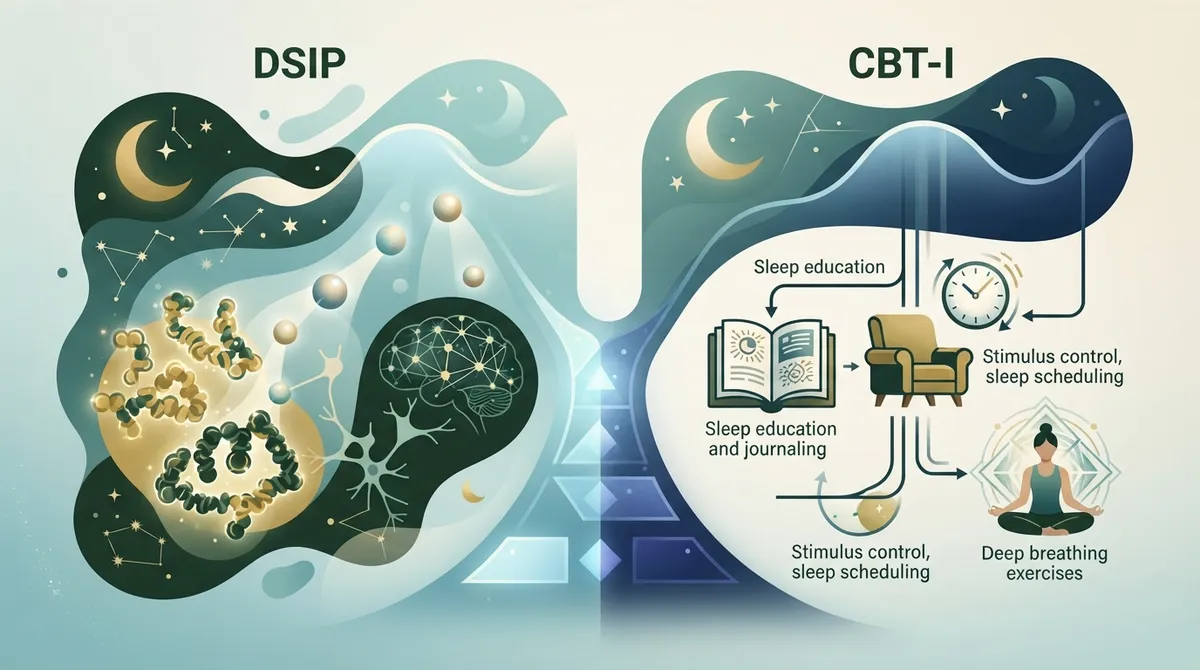
DSIP vs. CBT-I: A Side-by-Side Comparison
Cognitive behavioral therapy for insomnia (CBT-I) is the gold-standard, first-line treatment recommended by sleep specialists. So how does it stack up against DSIP, the peptide with the most (though still limited) human data?
| Factor | DSIP (Peptide) | CBT-I (Behavioral Therapy) |
|---|---|---|
| Evidence Quality | Small, old studies (1990s); limited and inconsistent | Large, modern randomized trials; strong support |
| FDA Approval Status | Not approved for insomnia | Recommended by major sleep medicine organizations |
| Delivery Method | Injection (research-use product) | Sessions with therapist or app-based program |
| Long-Term Data | Not established | Well-documented durable benefits |
| Risk Profile | Product purity, injection site reactions, unclear long-term safety | Minimal physical risk |
This doesn’t mean peptides have zero place in a wellness plan. It just means they shouldn’t replace proven treatments, especially not without medical guidance.
What the Research Really Says (No Sugarcoating)
We want you to feel informed, not oversold. Here’s an honest rundown of where the science currently stands:
- No large, modern randomized trials confirm DSIP, CJC-1295, ipamorelin, Selank, or Epitalon as effective insomnia treatments.
- Most positive claims come from small older studies, animal research, or mechanistic theories rather than solid clinical outcomes.
- Subjective “I feel like I slept better” reports differ from objective measures like sleep latency, total sleep time, and slow-wave sleep percentage.
- Compounded or research-grade peptides can vary in purity, dosing accuracy, and labeling, which adds real risk.
According to a review published by the National Library of Medicine, peptide-based interventions require much more rigorous, well-powered human trials before they can be considered reliable treatments for conditions like insomnia.
Before You Try Peptides: Rule Out These Sleep Disruptors First
Poor sleep often has a root cause that peptides won’t fix. A responsible provider should screen for these before recommending anything:
- Sleep apnea – interrupted breathing that fragments sleep, often missed without a sleep study.
- Restless legs syndrome – an uncomfortable urge to move the legs that disrupts falling asleep.
- Circadian rhythm disorders – misaligned internal clocks from shift work or travel.
- Depression or anxiety – mental health conditions that frequently show up as insomnia.
- Medication side effects – certain prescriptions can quietly wreck your sleep cycle.
If any of these apply to you, treating the root cause almost always beats chasing a trendy peptide. This is exactly why a thorough intake process matters so much, and why working with a knowledgeable provider changes everything. Our article on starting peptide therapy safely walks through the proper screening steps.
Risks and Safety Considerations You Shouldn’t Skip
Peptides bought from unregulated sources carry real risks. Here’s what to watch for:
- Purity issues: Research-use peptides may contain contaminants or inaccurate dosing.
- Injection reactions: Redness, swelling, or infection at injection sites are possible.
- Immune responses: Some peptides can trigger unwanted immune reactions over time.
- Drug interactions: Combining peptides with melatonin, prescription sleep aids, or other supplements needs medical oversight.
- Regulatory gaps: Just because something is sold online doesn’t mean it’s approved or verified for sleep treatment.
This is why we always recommend working with licensed medical providers who order proper lab work and monitor your progress. To learn more about safe sourcing, read our guide on getting prescription peptides safely.
How Allura Longevity Approaches Sleep and Wellness
At Allura Longevity, we believe good sleep support starts with good data, not guesswork. Our process begins with a $50 virtual consultation, followed by comprehensive blood work through LabCorp. From there, our licensed providers, led by board-certified Family Nurse Practitioner Ashley, build a personalized six-month plan tailored to your actual health picture.
We don’t chase trends. We look at your hormones, metabolic markers, and lifestyle factors to figure out what’s really driving your sleep struggles, low energy, or brain fog. If a peptide protocol makes sense for your case, it’s part of a broader plan, not a standalone fix. You can explore more about our approach to peptide therapy for women or peptide therapy for men depending on your needs.
Objective vs. Subjective Sleep Measures: Why It Matters
Here’s something most peptide marketing conveniently skips: feeling like you slept better isn’t the same as actually sleeping better. Real sleep improvement should show up in measurable ways.
| Measure Type | Examples | How It’s Tracked |
|---|---|---|
| Subjective | Perceived restfulness, mood upon waking | Self-reported journals, Pittsburgh Sleep Quality Index |
| Objective | Sleep latency, total sleep time, awakenings, slow-wave sleep | Polysomnography, validated wearable devices |
Before starting any sleep-focused peptide protocol, ask your provider how progress will actually be measured. A good clinic will track real data, not just how you feel on any given morning.
Steps to Take Before Considering Peptide Therapy for Sleep
- Get a full medical evaluation to rule out sleep apnea, RLS, or circadian issues.
- Try CBT-I first, since it has the strongest evidence base available.
- Complete comprehensive blood work to check hormones, thyroid function, and metabolic health.
- Discuss your current medications and supplements to avoid dangerous interactions.
- Work with a licensed provider who can monitor your response over time.
Skipping these steps and jumping straight to injectable peptides is a common mistake. Our article on mistakes that ruin how peptide therapy works covers this in more detail.
Frequently Overlooked Factors That Affect Sleep Quality
Sleep isn’t just about one magic compound. Several everyday habits often matter more than any peptide could:
- Consistent sleep and wake times, even on weekends
- Limiting screen exposure and blue light before bed
- Managing caffeine intake, especially after early afternoon
- Reducing alcohol close to bedtime
- Addressing chronic stress through therapy or mindfulness practices
Peptide therapy, when appropriate, works best as one piece of a larger puzzle that includes these lifestyle foundations.
Ready to get real answers about your sleep and overall wellness? Our team can review your health history and lab results to build a plan that’s actually right for you. Request a consultation today and take the guesswork out of your sleep journey. Spots are limited each month, so don’t wait too long to reach out.
FAQs
Q: Do peptides actually improve sleep quality or deep sleep?
A: The honest answer is: we don’t know yet, at least not with strong proof. DSIP has some old, small studies showing modest changes, but nothing that confirms a major benefit for deep sleep. Other peptides like CJC-1295 and ipamorelin are studied for growth hormone effects, not sleep itself, so any sleep benefit is more theory than proven fact.
Q: What is DSIP, and is it clinically proven for insomnia?
A: DSIP, or delta sleep-inducing peptide, is one of the most studied sleep-related peptides, but ‘studied’ doesn’t mean ‘proven.’ A 1992 study found modest improvements in chronic insomnia patients, yet researchers concluded the benefit likely wasn’t major. It’s simply not established as a clinically proven insomnia treatment.
Q: Are CJC-1295 and ipamorelin approved sleep treatments?
A: Nope, not for sleep specifically. These peptides are mainly researched for their effects on growth hormone release, and any sleep connection is indirect. If you’re hoping they’ll fix your insomnia, it’s best to set realistic expectations and talk to a provider about better-supported options.
Q: What are the risks and side effects of peptide injections for sleep?
A: Risks can include injection site reactions, unclear long-term effects, and product purity issues if you’re not sourcing from a trusted provider. That’s why working with licensed professionals who order proper lab work matters so much, it helps you avoid unnecessary risks while pursuing your wellness goals.
Q: How do peptide therapies compare with CBT-I and FDA-approved insomnia treatments?
A: CBT-I has decades of strong, modern research behind it and is considered the first-line treatment for insomnia by sleep specialists. Peptides for sleep quality, on the other hand, remain investigational with limited or inconsistent human data. If you’re struggling with sleep, CBT-I and a proper medical evaluation should come first.





