

Key Takeaways
-
Peptide therapy and hormone replacement therapy are fundamentally different: HRT directly replaces estrogen/progesterone to treat menopause symptoms, while peptides work on signaling pathways and don't replace hormones outright.
-
Many popular peptides like CJC-1295, ipamorelin, and sermorelin are not FDA-approved for anti-aging or menopause, and tesamorelin is only approved for HIV-related abdominal fat, not weight loss or hormone optimization.
-
Before starting any hormone or peptide protocol, demand baseline blood work through a trusted lab and ensure your provider explains the FDA status, realistic risks/benefits, and has a plan for ongoing monitoring and dose adjustments.
-
If you have a uterus and use systemic estrogen, you must also take a progestogen to prevent endometrial hyperplasia and cancer; this requirement should never be skipped regardless of marketing claims.
Let’s be honest: hormone replacement therapy sounds simple until you actually try to sort out your options. One friend swears by estrogen patches. Another is buzzing about peptides. A wellness influencer online says peptides can “replace” your hormones completely. So which is true? Grab a cup of tea, because we’re going to walk through this together, in plain language, without the confusing medical jargon.
At Allura Longevity, we talk to people every week who are excited about feeling younger, sleeping better, and having more energy. That excitement is wonderful. But mixing up hormone replacement therapy with peptide therapy can lead to real mistakes, wasted money, and even health risks. This guide breaks down the 10 most common mix-ups so you can make smart, informed choices for your body.

Mistake 1: Thinking Peptide Therapy and HRT Are the Same Thing
This is the biggest mix-up we see. Hormone replacement therapy, often called menopausal hormone therapy (MHT), replaces estrogen with or without a progestogen. It treats hot flashes, night sweats, and vaginal dryness. It also helps prevent bone loss in certain patients.
Peptide therapy works differently. Most peptides act on signaling pathways in your body, like the growth-hormone axis or melanocortin receptors. They do not directly replace estrogen, progesterone, or testosterone. Learning what peptides actually are helps clear up a lot of confusion right from the start.
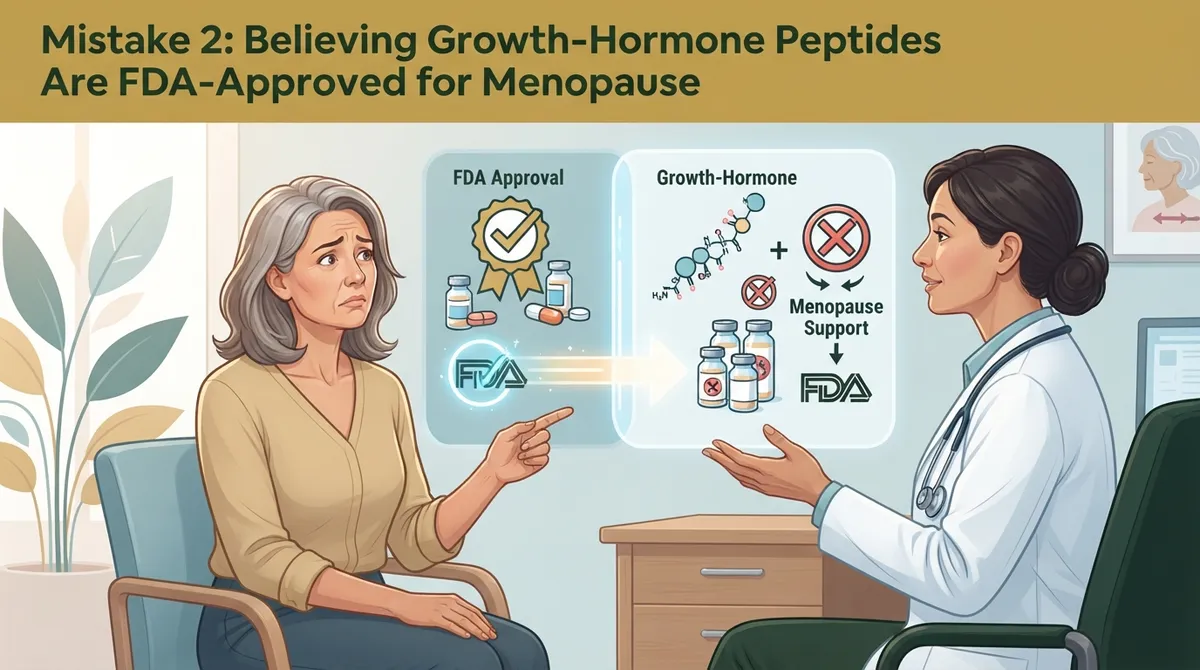
Mistake 2: Believing Growth-Hormone Peptides Are FDA-Approved for Menopause
Sermorelin, CJC-1295, and ipamorelin get mentioned a lot in hormone-optimization circles. Here’s the truth: CJC-1295 and ipamorelin are not FDA-approved therapies at all. Sermorelin is not approved as an anti-aging or hormone-replacement treatment either.
That doesn’t mean these peptides have zero value. It means their use falls under off-label or investigational categories. A responsible provider will explain this clearly before you start any protocol. If you’re curious how these compounds actually work, this guide on how GHRP peptides work in your body is a helpful next read.
Quick Comparison: Conventional HRT vs. Peptide Therapy
| Feature | Conventional HRT | Peptide Therapy |
|---|---|---|
| What it replaces | Estrogen, progesterone, testosterone | Signals hormone-related pathways |
| FDA status | Multiple approved products | Varies; many off-label or compounded |
| Primary use | Vasomotor symptoms, bone loss prevention | Energy, recovery, metabolism support |
| Delivery | Pills, patches, gels, pellets | Injections, often at home |
Mistake 3: Assuming Tesamorelin Treats Weight Loss or Menopause
Tesamorelin is FDA-approved, but only for one specific reason: reducing excess abdominal fat in adults with HIV-associated lipodystrophy. That approval does not stretch to general weight loss, menopause support, or anti-aging goals.
If your provider is recommending tesamorelin for a different purpose, ask them to explain the reasoning and the evidence. Curious about which peptides actually help with fat loss? Check out 13 peptides for fat loss that really work in 2026 for a clearer picture.
Mistake 4: Confusing PT-141 with Estrogen Replacement
Bremelanotide, sold as Vyleesi and often called PT-141, received FDA approval in 2019. But it’s approved for one narrow use: acquired, generalized hypoactive sexual desire disorder in premenopausal women.
It is not approved as estrogen replacement, and it is not approved for postmenopausal women. Using it outside its approved indication is considered off-label. If sexual wellness is your goal, our article on intimate wellness facts about PT-141 lays out the full picture.
Mistake 5: Skipping Blood Work Before Starting Any Protocol
Numbers matter. You can’t fix what you can’t measure. A responsible peptide or hormone plan always starts with lab testing, usually through a trusted lab like LabCorp.
Here’s a simple three-step process we follow with new clients:
- Complete a virtual consultation to discuss your goals and health history.
- Get blood work done to check hormone levels, metabolic markers, and overall health.
- Receive a customized plan based on your actual results, not guesswork.
This approach removes the guesswork and keeps your safety front and center. Our guide on blood work analysis steps before peptides walks through this in more detail.
Mistake 6: Ignoring the Progestogen Requirement
If you have a uterus and you’re using systemic estrogen, you generally need a progestogen too. This isn’t optional advice. Skipping it raises the risk of endometrial hyperplasia and cancer.
This is one reason self-directed hormone plans can be risky. A licensed provider knows how to balance these pieces safely. Curious how hormone therapy actually works alongside peptides? See how hormone therapy works with peptides.
Mistake 7: Waiting Too Long to Start Treatment
Timing matters more than most people realize. Clinical guidance generally points to starting menopausal hormone therapy before age 60, or within 10 years of menopause, for symptomatic patients without contraindications.
According to The Menopause Society’s 2024 analysis, the mean age of women continuing hormone therapy past 65 was around 71 years old, and nearly 8% were 80 or older. About 55% continued therapy mainly to control hot flashes, while 29% cited quality-of-life improvements. This tells us hormone therapy can remain valuable well into later life, but starting the conversation early is usually wisest.
Common Reasons Women Continue Hormone Therapy After 65
- Control of ongoing hot flashes and night sweats (about 55%)
- General quality-of-life improvement (about 29%)
- Reduced chronic pain or arthritis symptoms (about 7%)
- Bone density support and fracture prevention
- Personal comfort with a therapy that’s working well
Mistake 8: Overlooking Compounded Product Risks
Many peptide products sold through wellness clinics are compounded or investigational. Compounded products are not FDA-approved. Quality can vary from batch to batch and pharmacy to pharmacy.
That’s not a reason to panic, but it is a reason to ask questions. Learn the difference in FDA-approved vs. compounded peptides: what wins before committing to any protocol.
Mistake 9: Not Understanding the Side Effect Profile
Growth-hormone-axis peptides aren’t risk-free. Possible side effects include:
- Swelling or fluid retention (edema)
- Joint or muscle pain
- Carpal-tunnel-like symptoms
- Headaches
- Glucose intolerance or increased insulin resistance
- Abnormal IGF-1 levels on lab testing
People with active cancer, certain intracranial conditions, or uncontrolled diabetes need careful specialist evaluation before starting these therapies. This is exactly why ongoing monitoring matters so much, not just an initial prescription.
Mistake 10: Choosing a Clinic Without Licensed Medical Oversight
This might be the most important mistake to avoid. Peptide therapy and hormone therapy both require real medical supervision, not a one-size-fits-all mail order kit.
Here’s what a trustworthy clinic should offer:
- A licensed provider who reviews your full health history.
- Lab testing before any prescription is written.
- A clear explanation of FDA status for every medication discussed.
- Ongoing check-ins and dose adjustments based on your results.
- Transparent pricing with no hidden surprises.
At Allura Longevity, care starts with a simple $50 virtual consultation, followed by blood work through LabCorp. From there, our licensed team designs a customized six-month plan, led by Ashley, our board-certified Family Nurse Practitioner. Everything ships right to your door, and we monitor your progress the whole way through. If you want to compare your options more broadly, our piece on local clinic vs. telehealth peptide therapy is a great place to start.
How to Talk to Your Provider About Hormone Options
You don’t need to become a medical expert overnight. But a few smart questions can save you time, money, and worry. Try asking:
- Is this treatment FDA-approved for my specific situation?
- What does the research actually show for people like me?
- What are the realistic risks and benefits?
- How will we track progress and adjust my plan?
Resources like the Endocrine Society’s clinical practice guidelines offer solid, evidence-based background if you want to dig deeper on your own. Understanding what are peptides and how they differ from hormones is also a great foundation before any consultation.
Bringing It All Together
Hormone replacement therapy and peptide therapy both have real value. But they’re not interchangeable, and treating them like they are can lead to disappointment or even harm. The good news? You don’t have to figure this out alone.
Research published through the National Library of Medicine continues to explore how peptides interact with hormonal pathways, and the science is evolving every year. Staying informed, asking good questions, and working with licensed providers is the smartest path forward.
Your Next Step Toward Feeling Like Yourself Again
You deserve a plan built around your actual body, your actual labs, and your actual goals. Not guesswork. Not one-size-fits-all promises. At Allura Longevity, we combine careful lab-based evaluation with personalized peptide protocols, always with honest conversations about what’s FDA-approved, what’s off-label, and what the evidence really shows.
Spots fill up each month, so if you’re ready to feel more energized, balanced, and vibrant, now’s a great time to reach out. Request a consultation today and let’s build a plan that actually fits you. You can also call us directly at (813) 510-6277 to ask questions before you commit to anything.
FAQs
Q: Can peptide therapy replace estrogen or progesterone hormone replacement therapy?
A: No, not really. Peptide therapy works on different pathways in your body and doesn’t directly replace estrogen or progesterone. Conventional hormone therapy remains the evidence-based first-line option for menopause symptoms, and peptides serve different wellness goals.
Q: What is the difference between peptide therapy and conventional menopausal hormone therapy?
A: Conventional hormone therapy replaces estrogen, sometimes with a progestogen, to treat symptoms like hot flashes directly. Peptide therapy instead influences signaling systems like the growth-hormone axis, so it supports things like energy and recovery rather than replacing hormones outright.
Q: Are sermorelin, CJC-1295, or ipamorelin FDA-approved for menopause or anti-aging?
A: Nope, none of these are FDA-approved for menopause or anti-aging use. Sermorelin has a different original approval history, while CJC-1295 and ipamorelin aren’t FDA-approved therapies at all. Any use for these purposes is considered off-label or investigational.
Q: Is tesamorelin approved for weight loss or hormone optimization?
A: Tesamorelin is only FDA-approved for reducing excess abdominal fat in adults with HIV-associated lipodystrophy. It’s not approved for general weight loss, menopause, or hormone optimization, so any other use falls outside its approved label.
Q: How should patients evaluate a peptide-therapy clinic and compounded peptide products?
A: Look for licensed providers, required lab testing, and honest conversations about FDA status. A trustworthy clinic, like Allura Longevity, will explain exactly what’s approved, what’s off-label, and what’s compounded so you can make a confident, informed choice.





