
Key Takeaways
-
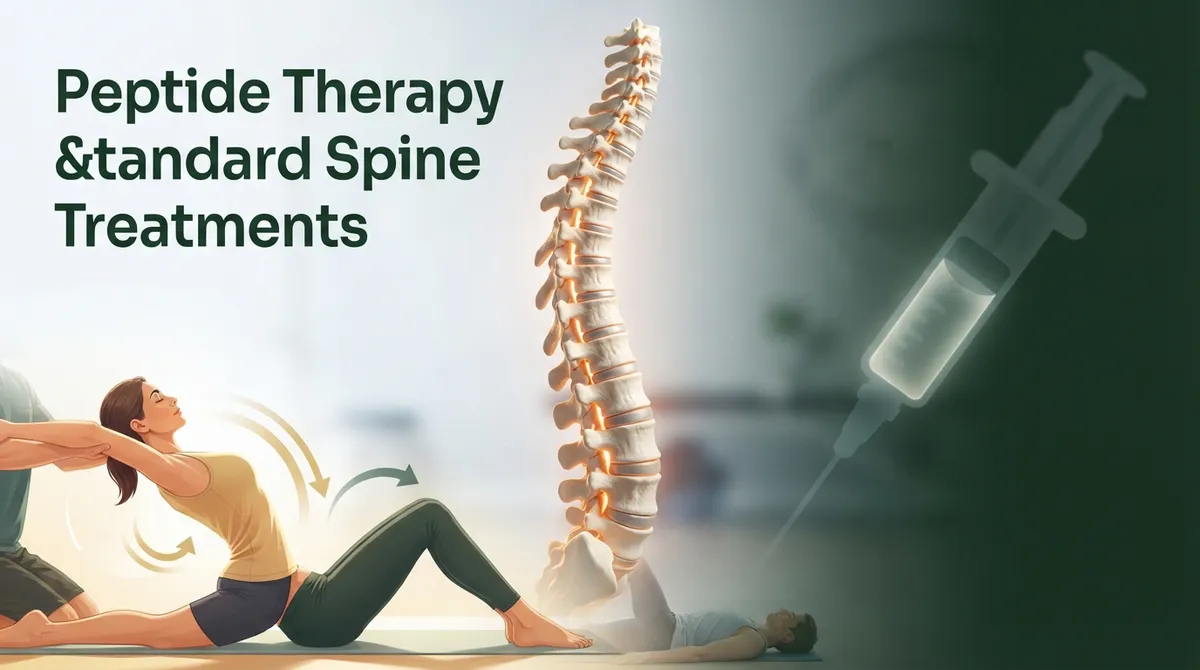
Standard spine pain treatment with proven evidence—physical therapy, targeted exercise, appropriate medication, and procedures when medically justified—remains the most effective approach, while peptide therapy for spine pain lacks human clinical evidence with only animal studies available.
-
Peptide therapy for spine conditions like herniated discs and sciatica is investigational with zero FDA approval; a 2025 systematic review found only 1 human study among 36 total studies, and it tested knee pain in just 12 people, not spine-specific issues.
-
Unregulated online peptide sources carry significant safety risks including contamination, incorrect dosing, mislabeling, and unknown drug interactions; always obtain peptides from licensed, monitored providers if considering them as part of broader wellness plans alongside proven treatments.
-
Before trying any peptide protocol, confirm your pain source is diagnosed, you're already doing physical therapy, the peptide source is licensed and monitored, and you've ruled out red-flag symptoms requiring immediate medical attention like progressive leg weakness or saddle numbness.
If your back has been talking to you a little too loudly lately, you are definitely not alone. Millions of people search for spine pain treatment every year, and lately, a lot of that searching leads to peptides like BPC-157 and TB-500. Maybe a friend at the gym mentioned it, or you stumbled across a wellness forum promising disc repair in a vial. We get the curiosity! At Allura Longevity, we love helping people feel better, move better, and age well. But we also believe you deserve the full, honest picture before you make decisions about your spine.
This article compares what peptide therapy can realistically offer today versus what proven, standard spine pain treatments already do well. We will walk through the research, the risks, and the reasonable next steps. Think of this as a friendly, no-judgment guide to help you make a smart, informed choice for your back and your long-term health.
What Do We Mean by Spine Pain Treatment?
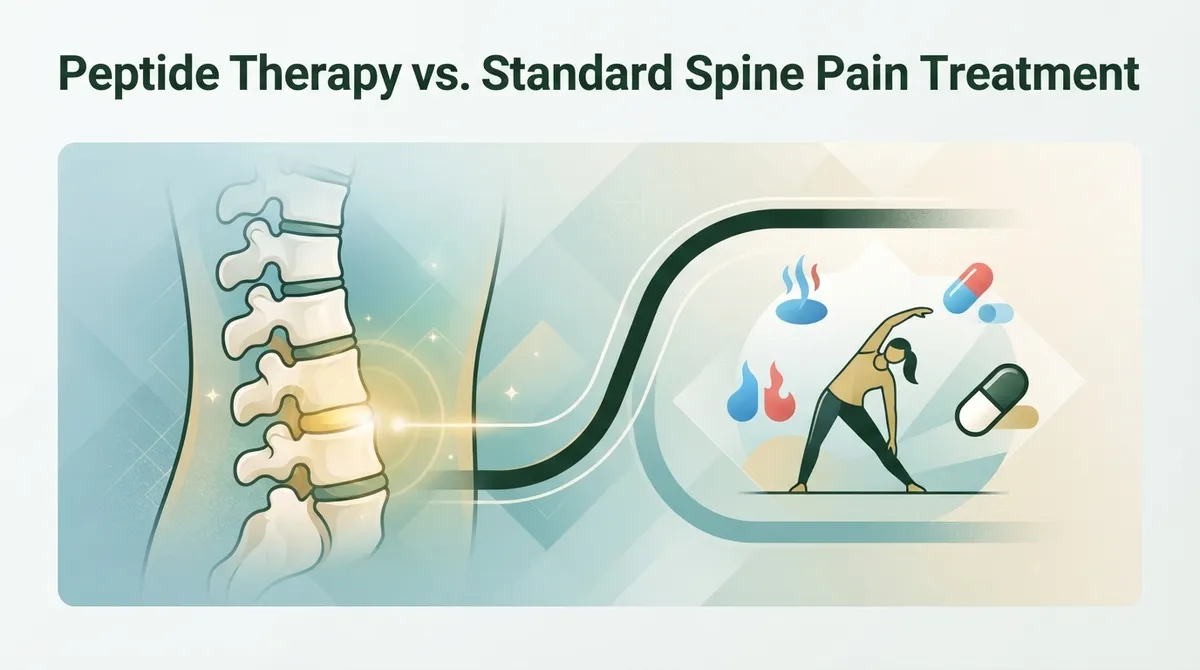
Spine pain treatment covers care for conditions like low back pain, herniated discs, sciatica, spinal stenosis, and degenerative disc disease. These issues are incredibly common, especially as we age or push our bodies hard in sports and daily life. Standard care usually includes physical therapy, targeted exercise, medication, and sometimes injections or surgery for specific diagnoses.
Peptide therapy is a newer conversation in this space. Compounds like BPC-157, TB-500, and GHK-Cu are being discussed for tissue repair and inflammation. Before we compare, it helps to understand exactly what peptides are and how they behave in the body. If you want a solid foundation, this guide on what peptides actually are is a great starting point.
Peptide Therapy for Spine Pain: What the Research Actually Shows
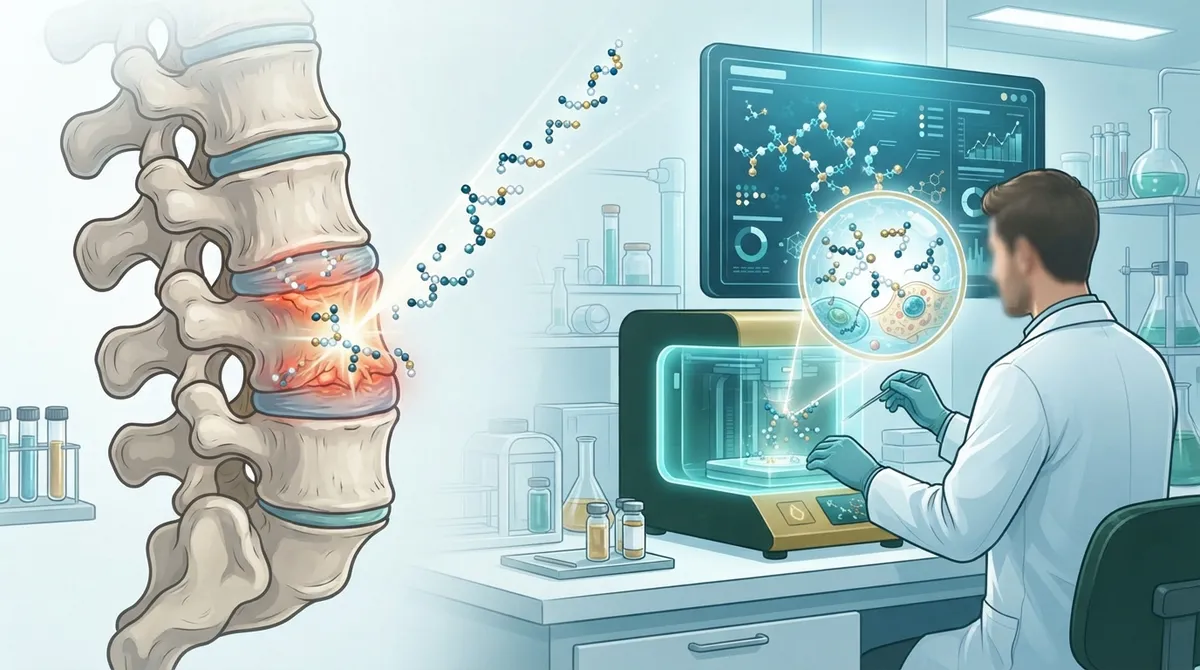
Here is the honest truth, friend to friend: peptide therapy for spine pain is still investigational. That means scientists are studying it, but we don’t yet have strong proof it works for backs and discs in humans.
The Current Evidence Snapshot
A 2025 systematic review looked at therapeutic peptides in orthopaedics. It found 36 total studies. Thirty-five were done in animals. Only one was a human study, and it looked at knee pain in just 12 people. That is not spine-specific evidence at all.
A separate 2025 review focused only on BPC-157. It found just three published human studies. These covered knee pain, interstitial cystitis, and safety testing. None of them tested spine pain, herniated discs, or sciatica.
| Peptide | Proposed Benefit | Human Spine Pain Evidence |
|---|---|---|
| BPC-157 | Anti-inflammatory, tissue repair, nerve healing (animal studies) | None specific to spine; one uncontrolled knee report |
| TB-500 / Thymosin Beta-4 | Marketed for tissue recovery | No robust human trials for back or spine pain |
| GHK-Cu | Collagen remodeling, wound healing | No evidence for disc repair or nerve compression |
| Growth Hormone Secretagogues | Tissue repair, recovery support | Not studied for spinal conditions specifically |
So while the lab findings are interesting, they simply have not been proven in people with real spine pain. It’s important we say that clearly, because your spine deserves care based on solid evidence, not just hopeful theories.
Why Animal Studies Don’t Equal Human Proof
Animal research is a helpful first step in science. But bodies are complicated, and what happens in a rat’s tissue doesn’t always translate to a human spine. Discs, nerves, and inflammation patterns are different across species. That’s why the medical community keeps calling for randomized, placebo-controlled human trials before making big claims.
According to the National Library of Medicine, the current peptide literature in orthopedics is still dominated by small studies and animal models. Translating that into confident spine pain treatment claims is simply premature.
Standard Spine Pain Treatment: What Actually Works Today
Let’s flip to the other side of this comparison. Standard spine pain treatment has decades of research behind it. It’s not flashy, but it works for most people with nonspecific low back pain.
The Typical Care Pathway
- Get an accurate diagnosis. A provider reviews your history, does a physical exam, and orders imaging only when red flags are present.
- Stay active and move gently. Bed rest is outdated advice. Movement often helps recovery.
- Try physical therapy or targeted exercise. Strengthening supportive muscles is one of the most effective long-term strategies.
- Use appropriate medication if needed. This might include anti-inflammatories or short-term pain relief, guided by your provider.
- Consider procedures or surgery only for specific diagnoses. This step is reserved for cases where imaging and symptoms clearly justify it.
This stepwise approach protects you from jumping straight to invasive treatment when simpler options often help just as much, or more.
Red Flags That Need Immediate Medical Attention
- Progressive weakness in your legs
- Numbness in the saddle area
- Loss of bladder or bowel control
- Fever combined with back pain
- Unexplained weight loss
- Major trauma or a history of cancer
If you notice any of these, please don’t wait around researching peptides. See a medical provider right away. Your safety always comes first.
Side-by-Side Comparison: Peptides vs. Standard Spine Care
| Factor | Peptide Therapy | Standard Spine Care |
|---|---|---|
| FDA Approval for Spine Pain | None currently approved | Many components (PT, certain meds, some procedures) are established |
| Human Clinical Evidence | Very limited, mostly animal studies | Decades of clinical research |
| Regulatory Oversight | Varies; unregulated sourcing is a real risk | Regulated medications and licensed procedures |
| Best Current Role | Investigational, general wellness support under medical supervision | First-line and proven treatment for most back pain |
| Safety Data | Uncertain long-term data | Well-documented risk profiles |
This table isn’t meant to scare you away from peptides altogether. It’s meant to set realistic expectations. Peptides may have a place in your broader wellness journey, but they are not currently a proven substitute for evidence-based spine pain treatment.
Important Safety Considerations Before Trying Peptides
We care about you actually feeling better, not just trying something trendy. Here are honest risks worth knowing:
- Contamination and purity issues are common with peptides bought from unregulated online sources.
- Incorrect labeling or dosing can lead to unpredictable effects.
- Injection-site complications including infection are possible with any injectable product.
- Unknown drug interactions may occur, especially if you take other medications.
- Theoretical concerns exist for people with cancer, active infections, or upcoming surgery, since some peptides have pro-growth properties that are not fully understood in humans.
According to what are peptides resources from trusted health sites, peptides are simply short chains of amino acids. Their effects depend heavily on the specific type, dose, and purity, which is exactly why sourcing matters so much.
Where Peptide-Enhanced Surgical Products Fit In
You may also read about peptide-based bone grafts used in spinal fusion surgery. These are a completely different category from at-home wellness injections. Surgical-grade, regulated products used inside an operating room are not evidence that unregulated wellness peptides work for everyday back pain.
So, Where Does Peptide Therapy Actually Make Sense?
Peptide therapy is not a wasted conversation. Many people use it thoughtfully, under medical guidance, as part of a broader wellness and recovery plan rather than a spine pain cure. For example, some clients explore BPC-157 peptide facts to better understand its role in general tissue recovery support, separate from disc-specific claims.
If you’re generally healthy, already working with a physical therapist, and curious about supporting recovery alongside standard care, a conversation with a licensed provider is the right move. This is very different from replacing physical therapy, medication, or a surgical consult with peptides alone.
Questions to Ask Before Starting Any Peptide Protocol
- Has my pain source actually been diagnosed?
- Am I currently doing proven treatments like physical therapy?
- Is this peptide sourced from a licensed, monitored provider?
- What does my recent blood work show?
- Are there any red-flag symptoms I should rule out first?
Getting these answers first protects your spine and your wallet. Learn more about building a smart plan in our guide on how to start peptide therapy safely.
How Allura Longevity Approaches Peptide Therapy Responsibly
At Allura Longevity, we believe in honesty over hype. We’re a telehealth clinic that offers personalized, medically supervised peptide therapy for energy, recovery, metabolism, and overall vitality. Our process starts with a simple $50 virtual consultation and real LabCorp blood work, not guesswork.
Led by Ashley, a board-certified Family Nurse Practitioner, our team builds custom six-month plans based on your actual health data. We ship your peptides straight to your door for easy at-home use, and we keep monitoring your progress along the way. We proudly serve clients in Florida, Georgia, Texas, Connecticut, Indiana, Maryland, New York, and California.
We will never tell you peptides cure spinal conditions, because that claim isn’t supported yet. But we will help you explore safe, personalized options as part of a bigger picture wellness strategy, always alongside your standard medical care. Spots fill up each month, so if you’re curious, it helps to reach out early.
Final Thoughts: Making the Right Choice for Your Back
Your spine carries you through life, literally. It deserves treatment decisions based on real evidence, not just exciting marketing claims. Standard spine pain treatment remains the proven path for most back issues today. Peptide therapy is a promising area of research, but it is not yet a substitute for diagnosis, physical therapy, or necessary procedures.
The good news? You don’t have to choose blindly. A licensed provider can help you understand your options clearly and safely. If you’re ready for a personalized, medically guided conversation about your wellness goals, you can request a consultation with our team today. We’re here to support your health journey with honesty, care, and a genuine smile.
FAQs
Q: Do BPC-157 injections help herniated discs or sciatica?
A: Right now, there just isn’t solid human proof of that. BPC-157 has shown promise in animal studies for tissue repair, but no quality human trials confirm it helps herniated discs or sciatica. We’d love to see more research, but until then, it’s best treated as investigational, not a proven fix.
Q: Is BPC-157 FDA approved for back pain or spinal injuries?
A: Nope, not at all. BPC-157 is not FDA-approved for any spine pain condition, and approval for something else wouldn’t count either. If a product claims otherwise, that’s a big red flag worth questioning.
Q: Can peptide therapy regenerate a damaged spinal disc?
A: We wish we could say yes, but the evidence just isn’t there yet. Current research is mostly animal-based, and no human studies show peptides regenerating a spinal disc. Standard care like physical therapy remains your proven option.
Q: What are the risks of buying injectable peptides online?
A: Unregulated sources can mean contamination, wrong dosing, or mislabeled products. That’s genuinely risky for your health. Working with a licensed telehealth provider helps you avoid these guessing games and stay safer overall.
Q: Should peptide therapy be used before physical therapy, injections, or spine surgery?
A: We’d gently say no. Proven treatments like physical therapy should come first for most back pain. Peptide therapy may be worth exploring later, alongside standard care, but always under a licensed provider’s guidance.





