
Key Takeaways
-
Personalized hormone therapy requires comprehensive blood work, medical history review, and symptom assessment—not generic online protocols—to build a safe, effective treatment plan tailored to your body's specific needs.
-
FDA-approved peptides like GLP-1 agonists (diabetes/weight management) and tesamorelin (abdominal fat reduction) have large clinical trials with thousands of participants, while popular wellness peptides like BPC-157 lack substantial human evidence.
-
Compounded peptides vary in purity and sterility with documented FDA safety concerns; always work with licensed medical providers who use FDA-approved options when available and monitor for contraindications and drug interactions.
-
Growth hormone-raising peptides (sermorelin, CJC-1295) require careful monitoring for side effects like swelling, joint pain, and blood sugar changes; longer half-life doesn't prove health benefits or longevity improvement.
-
Results from personalized peptide therapy vary by treatment type and individual factors; weight management peptides may show changes in weeks while metabolic improvements typically take 1-2 months with regular monitoring and plan adjustments.
-
One-size-fits-all hormone plans fail because hormones respond differently based on age, sex, stress, sleep, and testing timing; a licensed provider must interpret labs in context of your specific health picture, not generic wellness advice.
Ever felt exhausted, foggy, or just “off,” and wondered if your hormones were to blame? You’re not alone. So many people search online for quick fixes, only to find confusing information and products that promise the world but deliver little proof. That’s where personalized hormone therapy comes in, especially within the growing world of peptide therapy. It’s not about guessing. It’s about testing, tailoring, and tracking your unique body’s needs.
At its core, personalized hormone therapy means your treatment plan is built around you: your blood work, your symptoms, your goals, and your risk factors. In the peptide space, this often includes FDA-approved options like GLP-1 medications, along with careful use of other peptides that support metabolism, recovery, and vitality. This article will walk you through what real personalization looks like, what the science actually supports, and how to protect yourself from products that sound good but lack proof.

What Personalized Hormone Therapy Really Means in Peptide Care
Personalized hormone therapy isn’t a one-size-fits-all prescription pad. It’s a thoughtful process that starts with understanding your body’s specific hormonal and metabolic picture. In the peptide therapy world, this can mean using medicines that directly replace a hormone, or peptides that send signals to your body to produce more of something it needs.
For example, GLP-1 and dual GIP/GLP-1 receptor agonists are approved for diabetes and weight management. Tesamorelin is approved specifically for reducing excess abdominal fat in adults with HIV-associated lipodystrophy. Bremelanotide is approved for a defined type of low sexual desire in certain premenopausal women. These are real, studied, and FDA-approved uses. This is very different from many general “wellness” peptides marketed for anti-aging, which often lack strong human trial data.
Understanding this distinction matters. If you want to learn more about the basics, this helpful guide on what peptides actually are is a great place to start.
Why One-Size-Fits-All Hormone Plans Fall Short
Hormones don’t work the same way in every body. Your age, sex, stress levels, sleep, and even the time of day you get tested can change your results. A plan that worked for your neighbor or your gym buddy might not be right for you at all.
This is why cookie-cutter protocols found online, often labeled “for research use only,” are risky. They skip the personalization step entirely. True personalized hormone therapy requires a licensed provider who reviews your labs, listens to your symptoms, and adjusts your plan as your body responds.
The Evaluation Process: Where Personalization Begins
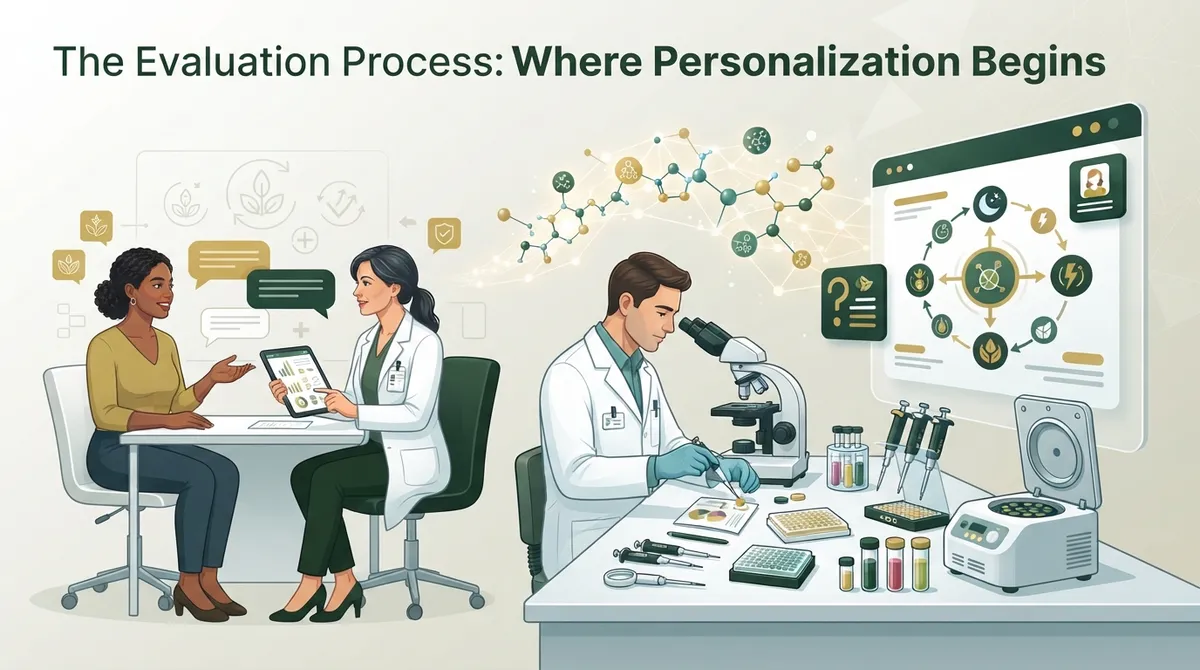
Before starting any peptide or hormone-related treatment, a proper evaluation should happen. This isn’t just a formality. It’s the foundation that makes your treatment safe and effective.
- Medical history review: Your provider looks at past conditions, medications, and family history.
- Physical exam and symptom check: This helps connect how you feel to what your labs might show.
- Targeted lab testing: Depending on your goals, this may include glucose or A1C, lipid panels, liver and kidney function, thyroid markers, sex hormones, and IGF-1.
- Result interpretation in context: Numbers alone don’t tell the full story. Your provider considers your age, sex, and overall health picture.
- Custom plan creation: Only after this process should a treatment plan be built around your specific needs.
Allura Longevity follows this exact model, starting clients with an affordable virtual consultation and comprehensive blood work through LabCorp. This ensures every treatment plan is grounded in real data, not guesswork. Learn more about blood work analysis steps before starting peptides to see why this step is so important.
Common Lab Markers Used in Personalized Plans
| Lab Marker | Why It Matters |
|---|---|
| A1C / Glucose | Shows blood sugar control, important for GLP-1 therapy decisions |
| Lipid Panel | Tracks cholesterol and cardiovascular risk factors |
| Thyroid Markers | Rules out thyroid issues that mimic hormone imbalance symptoms |
| Sex Hormones | Testosterone, estrogen, and related markers guide replacement therapy |
| IGF-1 | Relevant for growth-hormone-related peptide discussions |
| Liver & Kidney Function | Confirms your body can safely process treatment |
Approved Peptides vs. Unapproved Wellness Trends
One of the biggest points of confusion in this space is the difference between FDA-approved peptide medicines and popular but unproven compounds. Peptides like CJC-1295, ipamorelin, BPC-157, TB-500, MOTS-c, and epitalon are often marketed by wellness clinics. But most lack large, controlled human trials or long-term safety data.
According to recent research summaries, BPC-157 has been studied in fewer than 30 human subjects across published trials as of March 2026, with the longest human follow-up being about 12 months. That’s a small amount of evidence compared to approved medicines. In contrast, clinical programs for tirzepatide, a GLP-1-related medicine, have included more than 7,700 participants, with gastrointestinal effects like nausea and diarrhea being the most common side effects reported.
This doesn’t mean every unapproved peptide is useless. It means you deserve honest information so you can make an informed choice with your provider. For a deeper dive, check out this comparison of FDA-approved versus compounded peptides.
Growth Hormone Peptides Deserve Extra Caution
Peptides that raise growth hormone or IGF-1 levels, such as sermorelin or CJC-1295, need careful monitoring. Possible side effects include swelling, joint pain, headaches, and blood sugar changes. Sermorelin has a very short half-life of about 4 minutes and stimulates your body’s own growth hormone release, but it does not have FDA approval for anti-aging or body composition goals.
CJC-1295 with drug affinity complex has a longer half-life, around 5.8 to 8 days, according to pharmacokinetic studies. But a longer half-life is just pharmacology information. It’s not proof that the peptide improves longevity or overall health. If you’re curious about safe use, this guide on using CJC-1295 peptide safely breaks down what real evidence supports.
Why Compounded Peptides Require Extra Care
Compounded peptide products are not the same as FDA-approved medicines. They can vary in strength, purity, and sterility. The FDA has specifically flagged safety concerns for some compounded peptides, including immunogenicity and impurity issues linked to GHRP-2, with reports of serious adverse events in certain studies. Causality wasn’t proven in every case, but the warning is worth taking seriously.
This is why working with a licensed medical provider matters so much. A trustworthy peptide therapy provider will:
- Use FDA-approved products whenever an appropriate one exists
- Document your specific health goals and medical reasons for treatment
- Check for contraindications and drug interactions before prescribing
- Start at safe, evidence-based doses
- Monitor your progress and adjust or stop treatment if it’s not helping
You can read more about this responsible approach in this article on whether compounded peptide therapy is safe, and in the FDA’s own guidance on bulk drug substances used in compounding.
How Personalized Peptide Plans Work at Allura Longevity
Personalized hormone therapy should feel supportive, not confusing. At Allura Longevity, the process is designed to be simple and thorough at the same time. Clients start with a $50 virtual consultation, then complete blood work through LabCorp. From there, licensed providers, led by Ashley, a board-certified Family Nurse Practitioner, design a custom six-month treatment plan.
Here’s what that journey typically looks like:
- Book your virtual consultation to discuss your goals and health history.
- Complete blood work through LabCorp, done locally near your home.
- Receive your personalized plan, built around your specific lab results and symptoms.
- Get peptides delivered directly to your door for easy at-home administration.
- Stay connected with ongoing monitoring, so your plan can be adjusted as your body responds.
This model removes the guesswork many people face with generic online protocols. Whether you’re focused on weight loss peptides that actually work, muscle recovery, or overall vitality, having a licensed provider guide you makes all the difference. Allura Longevity is currently licensed in Florida, Georgia, Texas, Connecticut, Indiana, Maryland, New York, and California, with telehealth care available nationwide within those states.
Comparing Approved Peptide Uses
| Peptide/Medicine | Approved Use | Evidence Level |
|---|---|---|
| GLP-1 / Dual Agonists | Diabetes, weight management | Large randomized trials, thousands of participants |
| Tesamorelin | Reducing abdominal fat in HIV-associated lipodystrophy | FDA approved with clinical trial support |
| Bremelanotide | Hypoactive sexual desire disorder in certain women | FDA approved with clinical trial support |
| BPC-157, TB-500, Epitalon | Not FDA approved for general use | Limited, small-scale human data |
Who Should Think Twice Before Starting
Personalized hormone therapy isn’t right for everyone, and that’s okay. People who are pregnant or breastfeeding, those with certain cancers, or individuals with uncontrolled thyroid or pituitary conditions often need extra caution or should avoid certain peptides altogether. This is exactly why a full medical history review matters before any treatment starts.
If you have questions about whether your health history fits with peptide therapy, it’s worth learning more about whether peptide therapy is safe for your situation. A licensed provider can walk you through your specific risks in a way that generic online information simply can’t.
Setting Realistic Expectations for Results
One of the most common questions people ask is how long personalized hormone therapy takes to show results. The honest answer is that it depends on the treatment, your starting point, and your consistency. Weight management peptides may show early changes within a few weeks, while metabolic or energy improvements can take a couple of months to fully appear.
Your provider should set clear, measurable goals from the start and track your progress at regular intervals. This might include energy levels, sleep quality, body composition, or lab marker improvements. For a realistic timeline breakdown, this guide on how long peptide therapy results really take can help set the right expectations.
According to a review published through the National Library of Medicine, approved peptide medicines consistently show stronger evidence than investigational options, largely because of their large randomized trials and established prescribing guidelines. This kind of research-backed foundation is exactly what a responsible personalized program should be built on.
Bringing It All Together
Personalized hormone therapy, when done right, isn’t about chasing trends or trying whatever peptide is popular online. It’s about working with a licensed provider who looks at your actual labs, listens to your goals, and builds a plan that adjusts as you do. Understanding what peptides are and how they interact with your hormones helps you ask better questions and make safer choices.
You deserve a treatment plan that’s actually built for you, not a generic protocol copied from the internet. If you’re ready to feel more like yourself again, with energy, clarity, and confidence, request a consultation with Allura Longevity today. Spots are limited each month, and our licensed providers are ready to build a plan around your unique blood work and goals. You can also call us directly at (813) 510-6277 to get started.
FAQs
Q: What is personalized hormone therapy in peptide therapy?
A: It’s a treatment approach that starts with your own blood work, symptoms, and goals, not a generic protocol. In peptide therapy, this often means using approved medicines like GLP-1 agonists alongside careful monitoring by a licensed provider. Think of it as a plan built just for you, not a one-size-fits-all fix.
Q: Which peptide therapies are FDA approved?
A: GLP-1 and dual GIP/GLP-1 agonists are approved for diabetes and weight management, tesamorelin is approved for reducing abdominal fat in HIV-associated lipodystrophy, and bremelanotide is approved for certain sexual desire disorders. Many other popular peptides, like BPC-157 or CJC-1295, are not currently FDA approved for general use. It’s always worth asking your provider which category your treatment falls into.
Q: Are compounded peptides safe and legal?
A: Compounded peptides can vary in quality, and the FDA has flagged safety concerns for some, including purity and contamination risks. They’re not automatically unsafe, but they do require extra caution and should only come from a licensed, reputable source. Working with a trusted telehealth provider helps reduce these risks significantly.
Q: What blood tests are needed before starting personalized peptide therapy?
A: It depends on your goals, but common tests include glucose or A1C, lipid panels, liver and kidney function, thyroid markers, and sex hormones. These results help your provider understand your starting point and build a safe, effective plan. At Allura Longevity, this testing happens conveniently through LabCorp before any treatment begins.
Q: How long does personalized peptide therapy take to work?
A: Some people notice early changes within a few weeks, while other benefits, like improved energy or body composition, can take a couple of months to fully show up. Everyone’s timeline looks a little different based on their starting health and consistency. Your provider should track your progress regularly and adjust your plan as needed.





