
Key Takeaways
-
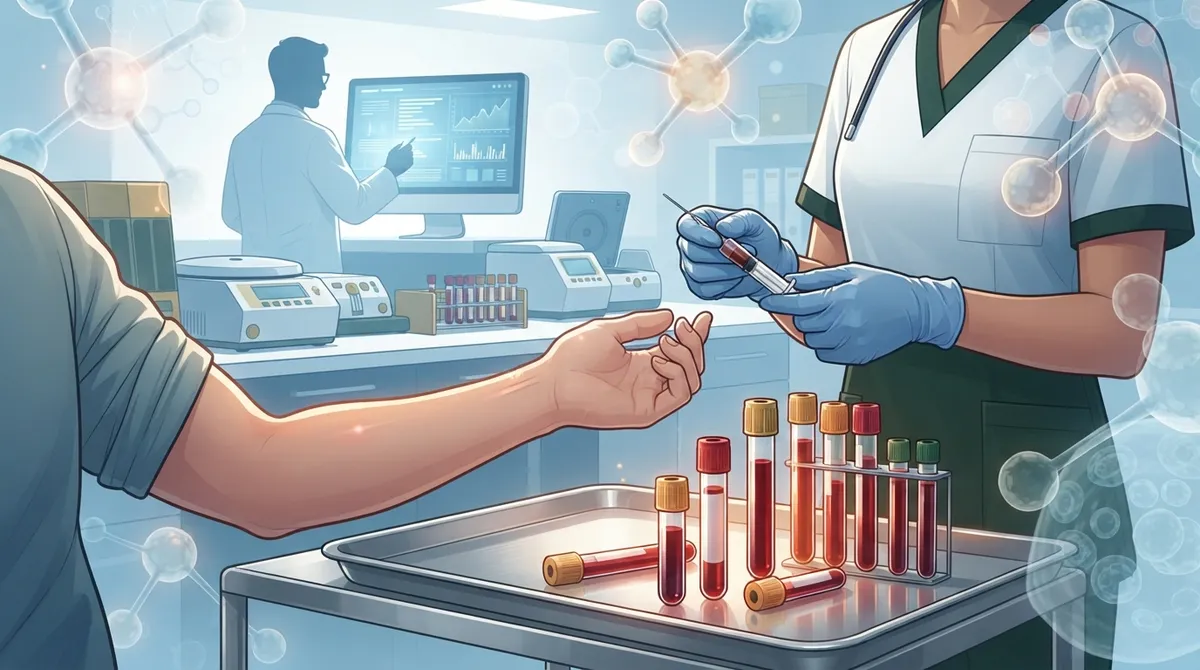
Blood work is mandatory before TRT because symptoms like fatigue and low libido can stem from dozens of causes (sleep issues, stress, thyroid problems); diagnosis requires both symptoms and consistently low lab numbers confirmed on two separate early-morning tests.
-
Skipping blood work risks missing underlying health issues, prescribing incorrect doses, overlooking complications, and wasting money on ineffective treatment; it's dangerous guesswork without visibility into hormone levels, red blood cell count, and prostate health.
-
Hematocrit monitoring is critical—levels at 54% or higher require immediate provider action such as dose adjustment or treatment pause; never self-manage with blood donation or dose changes, as this creates new problems.
-
Follow-up testing continues after starting TRT with rechecks at 3-6 months, then annually; timing of blood draws matters significantly since different formulations (injections, gels, patches) release testosterone differently and affect test accuracy.
-
Recent 2023 TRAVERSE trial data shows TRT gel had 7.0% cardiovascular events versus 7.3% on placebo with no meaningful difference; however, some formulations caused modest blood pressure increases, making ongoing monitoring valuable rather than optional.
-
Before committing to any TRT program, ask providers if they require two morning testosterone tests, baseline hematocrit/PSA screening, have a documented follow-up schedule, and employ licensed prescribers; clinics that rush prescriptions without solid lab work should not be trusted.
You feel tired all the time. Your motivation is gone, your workouts feel harder, and even a good night’s sleep doesn’t seem to help. So you start researching testosterone replacement therapy, and you wonder if you can just skip the lab work and get started. It’s a fair question, and one we hear a lot at Allura Longevity. The short answer is yes, you need blood work for TRT, and understanding why can help you feel confident about starting treatment the right way.
Blood work isn’t a hoop to jump through. It’s the foundation of safe, effective testosterone therapy. Whether you’re a busy professional trying to reclaim your energy, a biohacker who loves data, or someone simply looking to feel like yourself again, this guide will walk you through exactly what testing looks like and why it matters so much.

Why Blood Work Comes Before Any Prescription
Testosterone replacement therapy is a serious medical treatment. It’s not something a clinic should hand out based on symptoms alone. Low energy, low libido, and brain fog can come from dozens of causes, including sleep issues, stress, thyroid problems, or nutrient deficiencies.
To actually diagnose low testosterone, your provider needs to see it in your blood, not just hear about it in your symptoms. According to Endocrine Society guidelines, a proper diagnosis requires both symptoms that fit low testosterone and consistently low lab numbers. One borderline test on a bad day isn’t enough to make that call.
This is also where TRT and peptide therapy intersect. Some clinics, including ours, offer both treatments because they can complement each other. But even when peptides are part of your plan, testosterone therapy still requires its own careful testing and prescription oversight. You can learn more about how these treatments compare in our guide on TRT vs. peptides for men.
What Happens Without Proper Testing
Skipping blood work isn’t just risky, it can be dangerous. Without a clear picture of your hormone levels, red blood cell count, and prostate health, a provider is essentially guessing. That guesswork can lead to:
- Treating a problem that isn’t actually low testosterone
- Missing an underlying health issue that TRT could make worse
- Prescribing a dose that’s too high or too low for your body
- Overlooking early warning signs of complications
- Wasting money on treatment that won’t work for your situation
That’s why any legitimate telehealth clinic, including Allura Longevity, requires lab testing before writing a single prescription. It protects you, and it makes sure your treatment actually works.
What Blood Tests Are Needed Before Starting TRT
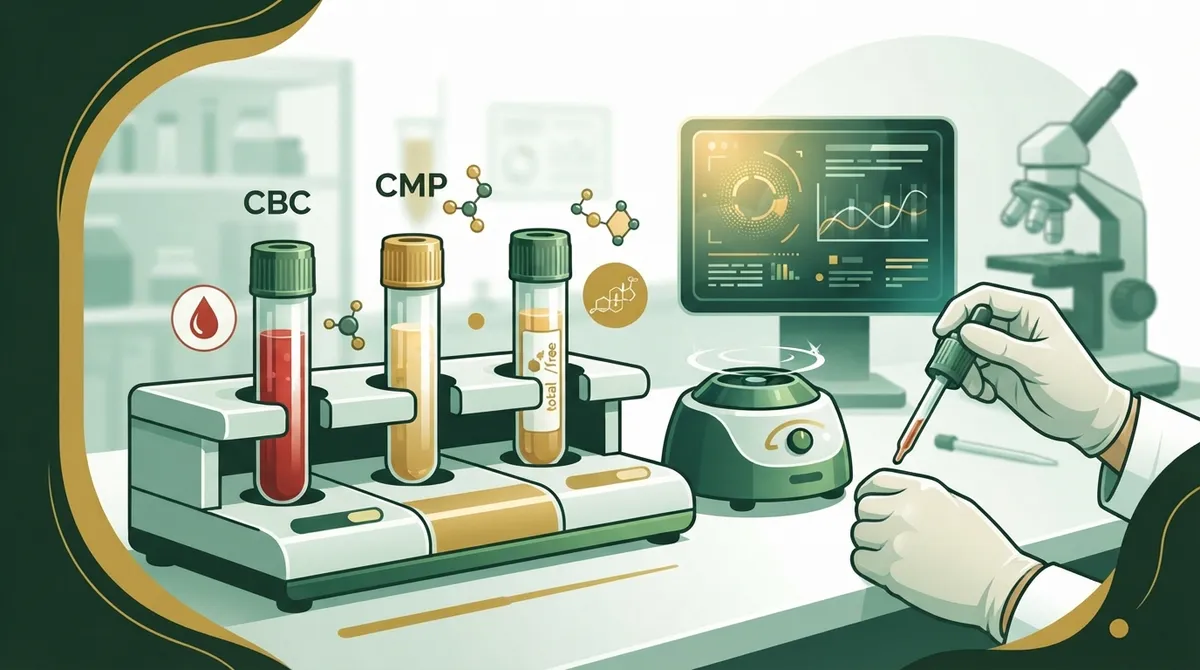
Here’s the good news: the testing process is straightforward, and most of it can be done through a simple blood draw at a local lab. Let’s break down what your provider will typically look for.
1. Two Early-Morning Testosterone Tests
Testosterone naturally peaks in the morning and drops throughout the day. That’s why providers usually order two separate early-morning total testosterone tests on different days. This helps rule out a one-time dip that doesn’t reflect your true baseline.
2. Additional Hormone Panels When Needed
If your results are unclear or borderline, your provider may dig deeper with additional tests, including:
- Free testosterone
- Sex hormone-binding globulin (SHBG)
- Luteinizing hormone (LH)
- Follicle-stimulating hormone (FSH)
- Prolactin
These extra markers help pinpoint whether the issue starts in the testes, the pituitary gland, or somewhere else entirely. This matters because the cause can change your treatment plan.
3. Complete Blood Count (CBC)
Your hemoglobin and hematocrit levels tell your provider how thick your blood is. Testosterone therapy can increase red blood cell production, a condition called erythrocytosis. If your hematocrit is already elevated before you start, that needs to be addressed first.
4. PSA Testing for Men Over 40
The American Urological Association recommends checking prostate-specific antigen (PSA) levels before starting TRT in men over 40. This baseline helps your provider monitor prostate health throughout treatment, not just at the start.
| Test | Purpose | When It’s Done |
|---|---|---|
| Total Testosterone (x2) | Confirm low levels on separate days | Before starting treatment |
| Free Testosterone, SHBG, LH, FSH, Prolactin | Identify the root cause | If initial results are unclear |
| Hemoglobin/Hematocrit | Check blood thickness risk | Baseline, then 3-6 months, then yearly |
| PSA | Monitor prostate health | Baseline for men over 40 |
How Low Does Testosterone Have to Be to Qualify?
This is one of the most common questions we get. There isn’t one universal cutoff number that applies to every lab or every person. Your provider will compare your results to your specific lab’s reference range and look at your symptoms together.
Generally, providers look for testosterone levels below the normal range, confirmed on two separate mornings, along with symptoms like fatigue, low libido, mood changes, or reduced muscle mass. This combination approach protects you from being treated for a number alone, which is exactly what responsible medicine should do.
What Happens After You Start TRT
Once you begin treatment, the testing doesn’t stop. Follow-up monitoring is just as important as the initial workup, and it’s where a lot of DIY or unsupervised TRT programs fall short.
Typical Monitoring Schedule
- Baseline testing before treatment begins
- Testosterone and hematocrit rechecked at 3 to 6 months
- Additional testing after any dose change
- Annual monitoring once your levels stabilize
- PSA and other targeted tests based on your age and risk factors
The Endocrine Society specifically recommends checking hematocrit at baseline, then again at 3 to 6 months, then yearly after that. They also recommend rechecking testosterone at the 3 to 6 month mark, aiming for levels in the mid-normal range rather than the extreme high end.
Why Timing Matters So Much
When your provider draws blood matters just as much as what they test. Injectable testosterone, gels, patches, and pellets all release the hormone differently. Testing too soon after an injection can show an artificially high number, while testing right before your next dose might show an artificially low one.
This is why you should always follow your provider’s specific instructions rather than relying on generic online advice or a random “starter panel.” Your treatment plan should be built around your formulation and your body, not a one-size-fits-all template.
Understanding the Hematocrit Safety Threshold
One of the most important numbers to watch during TRT is hematocrit, which measures the percentage of red blood cells in your blood. According to the American Urological Association, a hematocrit of 54% or higher during treatment requires action.
If your hematocrit climbs too high, your provider may:
- Adjust your testosterone dose
- Pause treatment temporarily
- Screen you for sleep apnea or low oxygen levels
- Switch you to a different formulation
This is not something to manage on your own. Self-directed blood donation or changing your dose without medical guidance can create new problems. This is exactly why ongoing monitoring through a licensed provider matters so much, and it’s a core part of how we structure care at Allura Longevity.
Recent Safety Findings Worth Knowing
If you’ve read headlines about testosterone and heart risk, here’s some reassuring context. The TRAVERSE trial, a major randomized study published in 2023, found that major cardiovascular events occurred in 7.0% of men using testosterone gel compared to 7.3% on placebo. The FDA’s 2025 review confirmed there was no meaningful difference in serious cardiovascular events between the groups.
That said, the FDA did note in its 2025 review that some testosterone products were linked to modest blood pressure increases, roughly 4 mm Hg systolic and 1 to 1.5 mm Hg diastolic for certain formulations. This is exactly the kind of detail that makes ongoing monitoring valuable rather than optional.
Who Should Be Cautious With TRT
Blood work also helps identify situations where TRT may not be the right choice, at least not yet. Your provider will screen for factors like:
- Plans for near-term fertility, since testosterone can suppress sperm production
- Untreated severe sleep apnea
- Significantly elevated hematocrit at baseline
- Certain prostate or breast cancer histories
- Uncontrolled heart failure or a recent cardiovascular event
These aren’t automatic disqualifiers forever, but they do require a conversation with your provider and sometimes a different approach altogether.
TRT and Peptide Therapy: How They Work Together
It’s worth clarifying something important: testosterone is a steroid hormone, while peptides are short chains of amino acids that signal your body to do things like build tissue, regulate hormones, or reduce inflammation. You can read more about the basics in our article on what peptides actually are.
Some clients benefit from combining TRT with peptides that support recovery, metabolism, or energy. But combining these treatments never removes the need for real lab work, informed consent, and a licensed provider guiding your care. If you’re curious how peptides might complement hormone therapy, our guide on how hormone therapy works with peptides is a great next read.
What Makes Telehealth TRT Different
A lot of people assume telehealth means less oversight. At Allura Longevity, it actually means more convenience without cutting corners on safety. Here’s how the process typically works:
- Start with a virtual consultation to discuss your symptoms and goals
- Complete blood work through LabCorp, a trusted national lab network
- Receive a personalized treatment plan based on your specific results
- Get your medication delivered directly to your home
- Follow up with ongoing monitoring and dose adjustments as needed
This structure gives busy professionals and health optimizers the flexibility they need, without skipping the medical rigor that makes treatment safe. If you want to see how this compares to visiting a physical clinic, check out our breakdown of local clinic vs. telehealth peptide therapy.
Questions to Ask Before Starting TRT Anywhere
Not every provider approaches testing the same way, and that’s worth paying attention to. Before committing to any TRT program, ask:
- Do they require two separate morning testosterone tests?
- Do they check hematocrit and PSA before treatment starts?
- What’s their follow-up testing schedule?
- Who reviews your labs, and are they licensed to prescribe?
- How do they handle abnormal results like high hematocrit?
A clinic that skips these steps or rushes you toward a prescription without solid lab work is not one you should trust with your hormone health. According to research published through the National Library of Medicine, proper diagnostic criteria and monitoring are essential parts of responsible testosterone therapy, not optional extras.
Bringing It All Together
So, do you need blood work for TRT? Absolutely, and honestly, that’s a good thing. It means your treatment plan is built around your actual body, not guesswork. From that first early-morning testosterone test to your ongoing hematocrit checks, every step is designed to keep you safe while helping you feel like yourself again.
At Allura Longevity, our team, led by board-certified Family Nurse Practitioner Ashley, builds every treatment plan around your individual lab results and health goals. It starts with a simple $50 virtual consultation and blood work through LabCorp, followed by a personalized six-month plan delivered right to your door. We currently serve clients in Florida, Georgia, Texas, Connecticut, Indiana, Maryland, New York, and California, with ongoing monitoring every step of the way.
Spots for new clients are limited each month, so if you’re ready to find out what’s really going on with your hormones, don’t wait. Request your consultation today and take the first confident step toward feeling like yourself again, or give our team a call at (813) 510-6277 with any questions.
FAQs
Q: Do I need blood work before starting TRT?
A: Yes, you absolutely do. A safe TRT program requires at least two early-morning testosterone tests, plus baseline hematocrit and PSA screening, before any prescription is written. This ensures your treatment is based on real data, not just symptoms.
Q: What blood tests are needed before testosterone replacement therapy?
A: You’ll typically need two morning total testosterone tests, a complete blood count for hematocrit, and a PSA test if you’re over 40. If your results are unclear, your provider may add free testosterone, SHBG, LH, FSH, or prolactin testing to find the root cause.
Q: How often should I get blood work while on TRT?
A: Most providers recheck testosterone and hematocrit around 3 to 6 months after starting treatment or changing your dose. After that, annual testing is common once your levels are stable, though your provider will personalize this schedule to your needs.
Q: What does a high hematocrit mean during TRT?
A: A hematocrit of 54% or higher means your blood has become too thick, which raises clotting risk. Your provider may adjust your dose, pause treatment, or check for sleep apnea, so it’s important never to manage this on your own.
Q: Can a peptide therapy clinic prescribe TRT without blood work?
A: No, and you shouldn’t trust one that tries. Even at clinics that specialize in peptide therapy, testosterone is a controlled medication that requires proper lab testing, informed consent, and licensed medical oversight before and during treatment.





