

Key Takeaways
-
Stem cell therapy shows only small improvements in knee pain (1.2 points on 0-10 scale) with low-certainty evidence; it is not FDA-approved and has not reliably regrown cartilage or stopped osteoarthritis progression.
-
Current research found a 12.3% rate of transient adverse events including joint swelling and injection-site pain, with stem cell treatment causing 2-3x higher swelling and pain risk than control treatments.
-
Stem cell products vary significantly by source (bone marrow, fat tissue, cord blood) and processing method, making results inconsistent across clinics and preventing reliable comparisons of treatment effectiveness.
-
BPC-157 and TB-500 peptides lack robust human evidence for arthritis treatment and should not be marketed as arthritis cures or stem-cell therapy boosters despite promising animal study results.
-
Before exploring stem cell or peptide therapy, exhaust conservative options: physical therapy, weight management, conventional medications, and corticosteroid injections with your licensed provider.
-
Red flags indicating untrustworthy clinics include guaranteed cure claims, no mention of FDA status, vague cell source details, upfront multi-session payment pressure, and absence of licensed medical oversight.
If your knees creak louder than your office chair, you’ve probably searched for answers about stem cell therapy for arthritis. Maybe a friend mentioned it. Maybe you saw an ad promising “regrown cartilage” and “pain-free knees in weeks.” We get it. Joint pain can shrink your world, making stairs, workouts, and even morning walks feel like a chore. But before you book an expensive injection, let’s talk honestly about what the science actually shows, and where peptide therapy fits into the bigger picture of joint health and recovery.
At Allura Longevity, we believe in giving you real answers, not hype. This guide breaks down what stem cell therapy for arthritis can and cannot do, what current research says, and how investigational peptides like BPC-157 and TB-500 relate (and don’t relate) to stem-cell science. Whether you’re a busy professional trying to stay active, a biohacker who loves data, or someone simply tired of aching joints, this article will help you make smarter, safer decisions.
What Is Stem Cell Therapy for Arthritis?
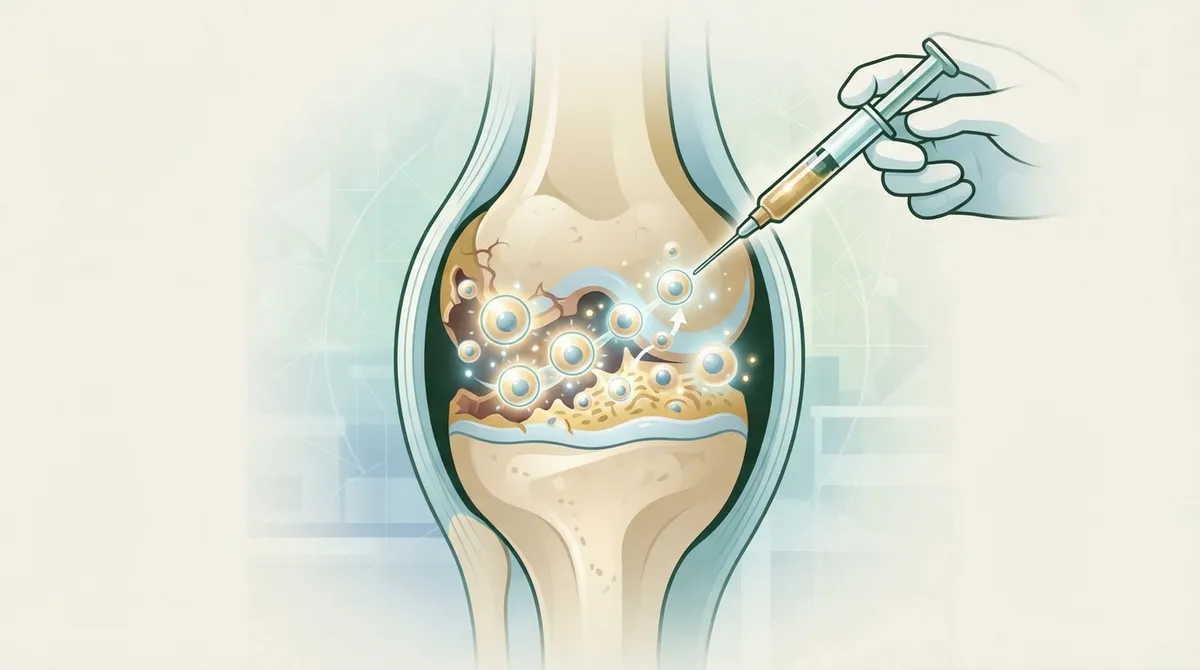
Stem cell therapy for arthritis usually means injecting mesenchymal stromal or stem cells (MSCs) into a painful joint, most often the knee. The goal is to calm inflammation, ease pain, and possibly support tissue repair. These cells can come from several sources, and they are not all the same.
- Bone marrow-derived stem cells, often taken from the hip
- Adipose (fat) tissue-derived stem cells
- Umbilical cord or placental tissue-derived cells
- Culture-expanded cell products grown in a lab
Each source has different processing methods, cell concentrations, and potency. That means results from one clinic’s product may not match another’s, which is a big reason research findings vary so much. According to the National Library of Medicine, this variability makes it hard to compare studies directly or recommend one “best” protocol.

What Does the Research Actually Say?
Here’s where we slow down and look at the numbers. Research on stem cell therapy for arthritis is growing, but it’s still far from settled.
Cochrane Review Findings (2025)
A 2025 Cochrane review looked at 25 studies with 1,341 total participants, including 8 placebo-controlled trials with 459 people. The results showed a small improvement in knee pain, about 1.2 points on a 0-10 scale, at six months. Function improved by about 14.2 points on a 0-100 scale. But the certainty of this evidence was rated low, and researchers weren’t sure if the improvement was big enough to matter in daily life.
Other Meta-Analyses
A 2024 meta-analysis reviewing 18 randomized controlled trials found better pain relief and function at 12 months compared to placebo or standard non-surgical care. A 2025 meta-analysis focused specifically on intra-articular MSC injections also found improvements in pain, function, and quality of life. However, both reviews flagged major differences in cell source, dosing, and injection technique as limiting factors.
| Study | Year | Key Finding | Evidence Quality |
|---|---|---|---|
| Cochrane Review | 2025 | Small pain and function improvement at 6 months | Low certainty |
| Frontiers in Endocrinology Meta-Analysis | 2024 | Better pain/function at 12 months vs. placebo | Moderate, high heterogeneity |
| Stem Cell Research & Therapy Meta-Analysis | 2025 | Improved pain, dysfunction, quality of life | Variable, protocol-dependent |
| Complications Review | 2024 | 12.3% transient adverse event rate | 48 studies, 1,924 patients |
Can Stem Cells Regrow Cartilage?
This is the question everyone wants answered, and honestly, the answer right now is no, not reliably. Current evidence does not show that stem cell injections regrow cartilage or stop osteoarthritis from getting worse. A recent review of randomized trials found symptom and function improvements, but no consistent MRI-based proof of structural repair.
In simple terms: stem cell therapy may help you feel better, but it hasn’t been proven to fix the underlying joint damage. That distinction matters a lot when you’re deciding if a treatment is worth the cost and risk.
Is Stem Cell Therapy for Arthritis FDA Approved?
No. The FDA has been clear on this point. Regenerative medicine products, including stem cell and exosome treatments, have not been approved for treating orthopedic conditions like osteoarthritis, knee pain, hip pain, tendonitis, or disc disease. If a clinic promises guaranteed cartilage regrowth or claims FDA approval for joint injections, that’s a red flag.
Questions to Ask Before Trying Any Regenerative Treatment
- Is this treatment part of a properly registered clinical trial?
- What is the exact source and processing method of the cells?
- Has the clinic disclosed FDA regulatory status honestly?
- What sterility and safety testing does the product undergo?
- Will I sign a detailed informed consent form explaining risks?
- What outcomes, realistically, can I expect based on published data?
Side Effects and Safety Considerations
Stem cell injections are generally considered low-risk for short-term reactions, but they aren’t risk-free. A 2024 systematic review of 48 studies involving 1,924 patients found a 12.3% overall rate of transient adverse events. The most common issues were swelling and injection-site pain.
- Temporary joint swelling
- Injection-site pain or bruising
- Short-term stiffness
- Rare inflammatory flare-ups
One analysis of 28 randomized trials found injection-site pain and swelling occurred more often with stem cell treatment than with control treatments, with risk ratios of 2.04 and 3.39 respectively. Long-term safety data is still limited, so ongoing monitoring by a knowledgeable provider matters.
Where Peptide Therapy Fits Into the Conversation
This is important: stem cells and peptides are not the same thing, and they shouldn’t be marketed as interchangeable. Peptides are short chains of amino acids that signal your body to perform specific functions, like reducing inflammation or supporting tissue repair. You can learn more about how these molecules work in our guide on what peptides actually are.
Two peptides often mentioned alongside joint recovery are BPC-157 and TB-500 (sometimes called TB-4). Here’s the honest picture:
BPC-157
BPC-157 has shown promising tissue-repair effects in animal and lab studies. A small human case series looking at knee outcomes existed, but it had major limitations, including no reliable control group. That means we can’t say BPC-157 treats arthritis based on solid human evidence yet. If you’re curious about this peptide, our detailed breakdown of BPC-157 facts before you start is a great next read.
TB-500 / TB-4
TB-4 derivatives have preclinical evidence tied to blood vessel formation and tissue repair. However, robust human orthopedic studies are still lacking. Our article covering 13 facts about TB-500 peptide goes deeper into what’s known and what’s still being studied.
Neither peptide should be marketed as a proven arthritis cure or a way to boost stem-cell outcomes. According to what are peptides, most peptide research related to joint and tissue support is still early-stage, which is why working with licensed, transparent providers matters so much.
Comparing Stem Cell Therapy and Peptide Therapy
| Feature | Stem Cell Therapy | Peptide Therapy |
|---|---|---|
| FDA Approval for Arthritis | Not approved | Not approved for arthritis specifically |
| Human Evidence | Growing, mixed quality | Mostly preclinical/animal studies |
| Delivery Method | In-office joint injection | Can be self-administered at home under guidance |
| Typical Cost | Often several thousand dollars per joint | Varies by peptide and protocol |
| Regulatory Oversight | Varies widely by clinic | Requires licensed provider oversight |
Practical Steps for Managing Arthritis Symptoms
Before jumping into experimental therapies, it helps to build a solid foundation. Here’s a sequence many providers recommend:
- Start with a full evaluation, including bloodwork and imaging if needed
- Try physical therapy and targeted strengthening exercises
- Address weight management if it’s contributing to joint stress
- Discuss conventional medications or corticosteroid injections with your doctor
- Explore evidence-based supportive therapies, including peptide options, with a licensed provider
- Consider joint replacement referral only after conservative options are exhausted
This step-by-step approach protects your joints and your wallet from treatments that overpromise.
How Allura Longevity Approaches Joint and Tissue Support
At Allura Longevity, we don’t claim peptides cure arthritis or replace stem cell science. What we do offer is personalized, medically supervised peptide therapy designed around your actual bloodwork and health goals. Clients start with a simple $50 virtual consultation, complete labs through LabCorp, and receive a custom six-month plan shipped straight to their door.
Ashley, our board-certified Family Nurse Practitioner, leads ongoing monitoring and adjusts your protocol as your body responds. This isn’t guesswork. It’s structured, data-informed care delivered through convenient telehealth, available in Florida, Georgia, Texas, Connecticut, Indiana, Maryland, New York, and California. If you’re weighing options like whether peptide therapy can ease chronic pain, our team can walk you through realistic expectations.
Why Busy Professionals and Biohackers Choose Telehealth Peptide Care
- No waiting rooms or repeated in-person visits
- Treatment plans built from your actual lab data
- Peptides delivered directly to your home
- Ongoing provider check-ins to track progress
- Transparent conversations about what’s proven and what’s still experimental
If you’re comparing convenience options, our comparison of local clinic versus telehealth peptide therapy can help you decide what fits your schedule.
Red Flags to Watch For in Regenerative Clinics
Not every clinic offering stem cell or peptide treatments operates with the same integrity. Watch for these warning signs:
- Claims of guaranteed cartilage regrowth or a “cure” for arthritis
- No mention of FDA regulatory status
- Pressure to pay upfront for multiple sessions before any evaluation
- Vague answers about cell source or processing methods
- No licensed medical provider involved in your care plan
A trustworthy provider will always be upfront about limitations, costs, and realistic outcomes.
Final Thoughts on Stem Cell Therapy for Arthritis
Stem cell therapy for arthritis shows promise for symptom relief, but it’s not a proven cure, and it’s not FDA approved for this use. Peptides like BPC-157 and TB-500 are exciting areas of research, but human evidence remains limited, so they should never be marketed as guaranteed joint-repair solutions. The smartest path forward combines honest information, proper medical guidance, and realistic expectations.
If you’re ready to explore personalized, medically supervised peptide therapy designed around your unique bloodwork and goals, our team at Allura Longevity is here to help. Spots are limited each month, so if you’re curious about what a customized plan could look like for you, request a consultation today, or call us at (813) 510-6277 to speak with our team directly.
FAQs
Q: Does stem cell therapy work for knee arthritis?
A: Research shows it may offer small improvements in pain and function for some people, but the evidence is still low-certainty. It’s promising, but not a guaranteed fix, so it’s worth discussing realistic outcomes with a qualified provider before committing.
Q: Can stem cell injections regrow cartilage or reverse osteoarthritis?
A: Not based on current evidence. Studies show symptom relief for some patients, but no consistent proof that cartilage actually regrows or that disease progression stops. Think of it as symptom support, not a structural cure, at least with today’s research.
Q: Are stem cell treatments for arthritis FDA approved?
A: No, the FDA has not approved stem cell or exosome products for treating arthritis, knee pain, or similar joint conditions. If a clinic claims otherwise, that’s a big red flag worth questioning before you move forward.
Q: What is the difference between stem cell therapy and peptide therapy for arthritis?
A: Stem cell therapy involves injecting cells directly into a joint, usually in-office, while peptide therapy uses signaling molecules that may support recovery and can often be administered at home under medical guidance. Neither is a proven arthritis cure yet, so honest expectations matter for both.
Q: Can BPC-157 or TB-500 treat arthritis or improve stem-cell therapy?
A: Right now, there isn’t strong human evidence to support that claim. Both peptides show interesting results in lab and animal studies, but robust human orthopedic research is still limited, so they shouldn’t be marketed as proven arthritis treatments.





