

Key Takeaways
-
Physician-supervised weight loss with semaglutide or tirzepatide produces clinically significant results: 14.9% body weight loss with semaglutide and 15-21% with tirzepatide, vastly outperforming DIY approaches and placebo at 2.4%.
-
Licensed providers screen for serious contraindications before treatment begins, including medullary thyroid carcinoma history, pancreatitis risk, and gallbladder disease—risks that DIY approaches completely miss.
-
FDA-approved medications from licensed pharmacies are safer than compounded versions; the FDA has reported dosing errors and quality concerns with some compounded products, and regulations are tightening as of early 2025.
-
Medical supervision enables personalized dose management with gradual increases based on individual tolerance and response, reducing nausea and gastrointestinal side effects that occur when dosing is not monitored.
-
Telehealth models eliminate scheduling barriers while maintaining safety through local bloodwork, remote consultations, and home medication delivery—making consistent follow-up accessible for busy professionals and those in underserved areas.
-
Treatment requires a structured three-phase approach (starting, titration, maintenance) and should never stop abruptly; weight regain commonly occurs without planned dose adjustments and lifestyle support from your provider.
Trying to lose weight on your own can feel like a part-time job with no paycheck. You count calories, track steps, maybe try a supplement or two, and still the scale barely budges. If that sounds familiar, you are not alone. Millions of people struggle with the same frustrating cycle every year.
Physician supervised weight loss offers a different path. Instead of guessing, you get a licensed provider who reviews your labs, checks your health history, and builds a plan around your body. When it comes to peptide therapy, this usually means access to GLP-1 and GIP/GLP-1 medications like semaglutide and tirzepatide, paired with real medical monitoring. In this article, we will compare physician supervised weight loss with the DIY approach so you can see exactly why medical guidance tends to win. We will also cover safety, side effects, and what to expect, so you feel confident about whichever path you choose.

What Is Physician Supervised Weight Loss?
Physician supervised weight loss is a structured medical program. A licensed clinician evaluates you, decides if prescription treatment makes sense, and then prescribes medication if it is a good fit. From there, they monitor your progress, watch for side effects, and adjust your plan as needed.
This is very different from buying a product online and hoping for the best. With medical supervision, someone is actually paying attention to your blood pressure, your glucose levels, and how your body responds over time. If you want to understand the bigger picture of these medications, this guide on how to understand GLP-1 peptide therapy is a great place to start.
The Core Medications Involved
In peptide therapy, two medications lead the pack for weight management:
- Semaglutide, a GLP-1 receptor agonist that slows digestion and reduces appetite
- Tirzepatide, which activates both GIP and GLP-1 receptors for a dual effect
- Both are given as weekly injections, not daily pills
- Both require gradual dose increases to reduce stomach upset
- Neither is meant to work alone, without diet and activity changes
Curious how these two stack up against each other? This breakdown of GLP-1 vs. dual-agonist peptides digs deeper into the differences.
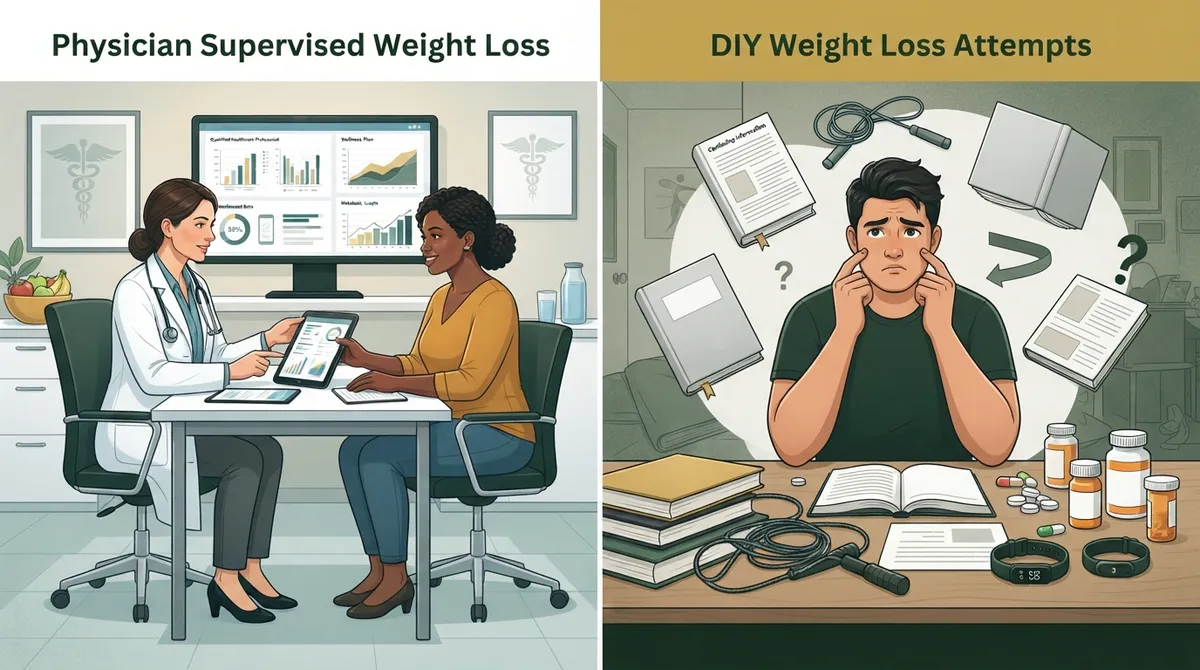
Physician Supervised Weight Loss vs. DIY Attempts
Let’s put these two approaches side by side. The differences are bigger than most people expect, especially once medication enters the picture.
| Factor | Physician Supervised Weight Loss | DIY Weight Loss |
|---|---|---|
| Medical evaluation | Full health history, labs, and screening before treatment | None, usually based on guesswork |
| Medication access | Prescription semaglutide or tirzepatide from licensed pharmacy | Often unregulated products or none at all |
| Dose management | Gradual increases based on response and tolerance | No professional guidance on dosing |
| Side effect monitoring | Regular check-ins and lab reviews | Self-reported, often ignored until serious |
| Long-term plan | Structured maintenance and follow-up | Frequently stops and starts with no plan |
The pattern is clear. Physician supervised care adds a layer of safety and structure that DIY methods simply cannot match. If you are ready to explore a personalized plan, you can request a consultation to see what options fit your goals.
Who Actually Qualifies for This Treatment?
Not everyone needs or qualifies for prescription weight-loss medication, and that is okay. The FDA-approved guidelines for chronic weight management generally include:
- Adults with a body mass index (BMI) of 30 or higher
- Adults with a BMI of 27 or higher who also have a weight-related condition
- Conditions may include high blood pressure, high cholesterol, or type 2 diabetes
- Medication is meant to work alongside diet and exercise, not replace them
- A licensed provider confirms eligibility after reviewing your full health picture
Interestingly, the research backs this up in a big way. In the STEP 1 clinical trial, adults using once-weekly semaglutide alongside lifestyle changes lost about 14.9% of their body weight after 68 weeks, compared to just 2.4% with a placebo (Wilding et al., New England Journal of Medicine, 2021). The SURMOUNT-1 trial showed even bigger numbers for tirzepatide, with weight loss ranging from 15% to nearly 21% depending on dose (Jastreboff et al., New England Journal of Medicine, 2022). These are not small differences. They show why medical guidance and the right medication combination matter so much.
What Happens During a Medical Weight-Loss Consultation
If you have never done a telehealth weight-loss visit before, here is what a typical process looks like from start to finish.
- You complete an intake form covering your health history, current medications, and goals
- Bloodwork is ordered to check things like glucose, kidney function, and lipids
- A licensed provider reviews your results and discusses whether treatment is appropriate
- If approved, you receive a personalized treatment plan and prescription
- Medication is shipped directly to your home for at-home administration
- Follow-up visits track your progress, side effects, and any dose adjustments
This is exactly how Allura Longevity approaches care. Clients start with a $50 virtual consultation, complete labs through LabCorp, and receive a customized six-month plan. Everything is overseen by licensed providers, led by Ashley, a board-certified Family Nurse Practitioner. If you want a deeper walkthrough, check out this guide on how to lose weight with peptide therapy.
Understanding Side Effects and Safety Precautions
No medication is without risk, and it is important to go in with realistic expectations. According to the what are peptides overview, these compounds interact directly with your body’s natural signaling systems, which is powerful but also requires careful use.
Common side effects of GLP-1 and GIP/GLP-1 medications include:
- Nausea, especially when starting or increasing dose
- Diarrhea or constipation
- Vomiting or stomach discomfort
- Fatigue
- Injection-site reactions
There are also more serious precautions to be aware of, including a personal or family history of medullary thyroid carcinoma, pancreatitis risk, gallbladder disease, and dehydration-related kidney issues. This is exactly why physician supervision matters so much. A trained provider knows how to screen for these risks before you ever start treatment. For more on managing common reactions, this article on what causes GLP-1 side effects offers practical tips.
FDA-Approved vs. Compounded Medications
Here is something every patient should understand clearly: FDA-approved products and compounded products are not the same thing. The FDA does not review compounded medications for safety or effectiveness before they hit the market.
The agency has reported real problems with some compounded semaglutide products, including dosing errors and quality concerns. After the FDA determined that semaglutide and tirzepatide shortages had ended in early 2025, the temporary rules allowing mass compounding of these drugs began winding down. Requirements can shift, so it always pays to verify current guidelines with your provider or pharmacy. For a full breakdown, this comparison of FDA-approved vs. compounded peptides is worth a read.
Why Sourcing Matters So Much
Getting your medication from a licensed pharmacy through a valid prescription is not just a formality. It is your best protection against unsafe products. Watch out for these red flags:
- Guaranteed weight-loss claims
- Promises of effortless or instant results
- No medical evaluation before purchase
- Vague or missing information about the pharmacy source
- Pressure to buy without a consultation
According to the National Library of Medicine, incretin-based therapies require careful individualized dosing, which is not something a generic online purchase can offer safely.
How Long Should Treatment Last?
This is one of the most common questions we hear, and the honest answer is: it depends on your goals and your body’s response. Most physician supervised programs are structured in phases.
| Phase | Typical Duration | Focus |
|---|---|---|
| Starting phase | 4 to 8 weeks | Low dose introduction, tolerance building |
| Titration phase | 2 to 4 months | Gradual dose increases toward target |
| Maintenance phase | Ongoing | Sustaining results, lifestyle reinforcement |
Weight regain can happen after stopping treatment, so any changes should be planned with your prescriber. Never stop abruptly without a follow-up conversation. If you are wondering what results actually look like over time, this article on timelines that show when peptide therapy works breaks it down clearly.
Why Telehealth Makes This Easier
Busy schedules should not stand between you and better health. Telehealth removes the need for waiting rooms and long drives to a clinic. You get labs done locally, then handle consultations and follow-ups from your phone or laptop.
This matters especially for:
- Busy professionals who cannot take time off for appointments
- People in areas without easy access to specialized clinics
- Anyone who prefers privacy while managing their health
- Those who want consistent follow-up without the hassle
Allura Longevity offers this exact model, with peptides shipped straight to your door after your plan is approved. Licensed across Florida, Georgia, Texas, Connecticut, Indiana, Maryland, New York, and California, the clinic makes it simple to get started no matter where you live in these states. To compare this approach with in-person care, take a look at local clinic vs. telehealth options.
Combining Weight Loss With Other Wellness Goals
Many clients come in focused purely on weight loss, then realize peptide therapy can support other goals too. It is worth thinking bigger picture.
- Improved energy levels alongside fat loss
- Better sleep quality as weight decreases
- Support for muscle recovery during activity increases
- Metabolic health improvements beyond the scale
- Long-term vitality and healthy aging support
If you are a woman exploring your options, this resource on peptides for women covers additional angles. Men looking for a broader approach can check out peptides for men for more context on combining treatments.
Final Thoughts: Making the Safer Choice
When you weigh physician supervised weight loss against going it alone, the winner is pretty clear. Medical guidance brings safety, structure, and real accountability to a process that can otherwise feel overwhelming and confusing. You get personalized dosing, ongoing monitoring, and a plan built specifically around your labs and your goals.
Weight loss is not about quick fixes or guesswork. It is about steady, sustainable progress with someone in your corner who actually knows what they are doing. Allura Longevity brings exactly that kind of care, with licensed providers, personalized six-month plans, and medication delivered right to your home. Spots are limited each month, so if you are ready to take the next step, request a consultation today and start your journey with a team that genuinely cares about your results. You can also call (813) 510-6277 to speak with someone directly about your options.
FAQs
Q: What is physician supervised weight loss with peptide therapy?
A: It’s a medically guided program where a licensed provider evaluates you, checks your labs, and prescribes medication like semaglutide or tirzepatide if it’s a good fit. They also monitor your progress and adjust your plan over time, so you are never guessing on your own.
Q: Who qualifies for semaglutide or tirzepatide for medical weight management?
A: Generally, adults with a BMI of 30 or higher, or a BMI of 27 or higher with a weight-related condition like high blood pressure, may qualify. A provider will review your full health history and labs before confirming if treatment is right for you.
Q: What is the difference between semaglutide and tirzepatide?
A: Semaglutide activates the GLP-1 receptor alone, while tirzepatide activates both GIP and GLP-1 receptors. Clinical trials suggest tirzepatide may lead to slightly greater average weight loss, but the best choice depends on your individual health profile.
Q: Are compounded semaglutide and tirzepatide safe and legal?
A: Compounded versions are not FDA-reviewed for safety or effectiveness the way approved medications are, and rules around them have been changing. It’s always safest to get your prescription through a licensed provider and pharmacy you trust.
Q: How long do patients need to stay on peptide weight-loss medication?
A: It really varies by person, but most programs include a starting phase, a dose titration phase, and then ongoing maintenance. Stopping should always be planned with your provider, since weight regain can happen if treatment ends abruptly.





