

Key Takeaways
-
A legitimate online TRT clinic requires two separate early-morning blood tests confirming consistently low testosterone levels plus matching symptoms—one test isn't sufficient due to natural daily fluctuations.
-
Testosterone is a Schedule III controlled substance requiring a licensed clinician's prescription for legitimate medical reasons; responsible clinics follow this requirement rather than treating it like an over-the-counter supplement.
-
Ongoing monitoring after starting TRT is essential, including checks at 3-6 months and annually for testosterone, hematocrit, PSA, and blood pressure—maintaining mid-normal testosterone ranges prevents excess side effects.
-
Red flags for sketchy clinics include no required lab testing, automated questionnaires without clinician interaction, vague pharmacy information, guaranteed outcome promises, and pricing that seems too good to be true.
-
TRT and peptide therapy are different approaches: TRT restores low testosterone to normal using FDA-approved products, while peptides use amino acid chains for recovery and metabolic support with varying regulatory status.
-
Inform your provider about fertility goals before starting TRT, as testosterone therapy can suppress natural sperm production and conventional TRT may not be appropriate if starting a family is planned soon.
Feeling tired, foggy, or just not like yourself lately? You’re not alone. More men are turning to an online TRT clinic to figure out what’s going on with their hormones, without taking time off work or sitting in a waiting room. But here’s the thing: not every online option is created equal, and picking the wrong one can cost you money, time, and even your health.
This guide walks you through exactly what a trustworthy online TRT clinic should offer, how testosterone replacement therapy actually works, and where peptide therapy fits into the bigger picture. Whether you’re a busy professional squeezing in a lunchtime lab draw or a biohacker who wants to see your numbers before and after treatment, you deserve care that’s thorough, transparent, and built around you. Let’s break it all down together.

What Is an Online TRT Clinic, Really?
An online TRT clinic lets you connect with a licensed medical provider through video calls, messaging, and lab work, all without stepping into a physical office. You get evaluated, diagnosed, and (if appropriate) prescribed testosterone replacement therapy remotely, with medication shipped to your door.
Here’s something important to know: testosterone is a Schedule III controlled substance in the United States. That means only a licensed clinician can prescribe it, and only for a legitimate medical reason. A responsible online clinic follows this rule closely, rather than treating testosterone like an over-the-counter supplement.
Why People Are Choosing Telehealth for TRT
Life is busy. Between work, family, and everything else, finding time for multiple doctor visits can feel impossible. Telehealth removes that barrier.
- No waiting rooms or scheduling conflicts around a 9-to-5 job
- Lab work done locally, often at a LabCorp near your home or office
- Video visits that fit into a lunch break or early morning routine
- Medication delivered directly to your doorstep
- Ongoing check-ins without repeated in-person trips
For busy professionals and aging adults who want convenience without cutting corners on quality, this model genuinely makes sense.
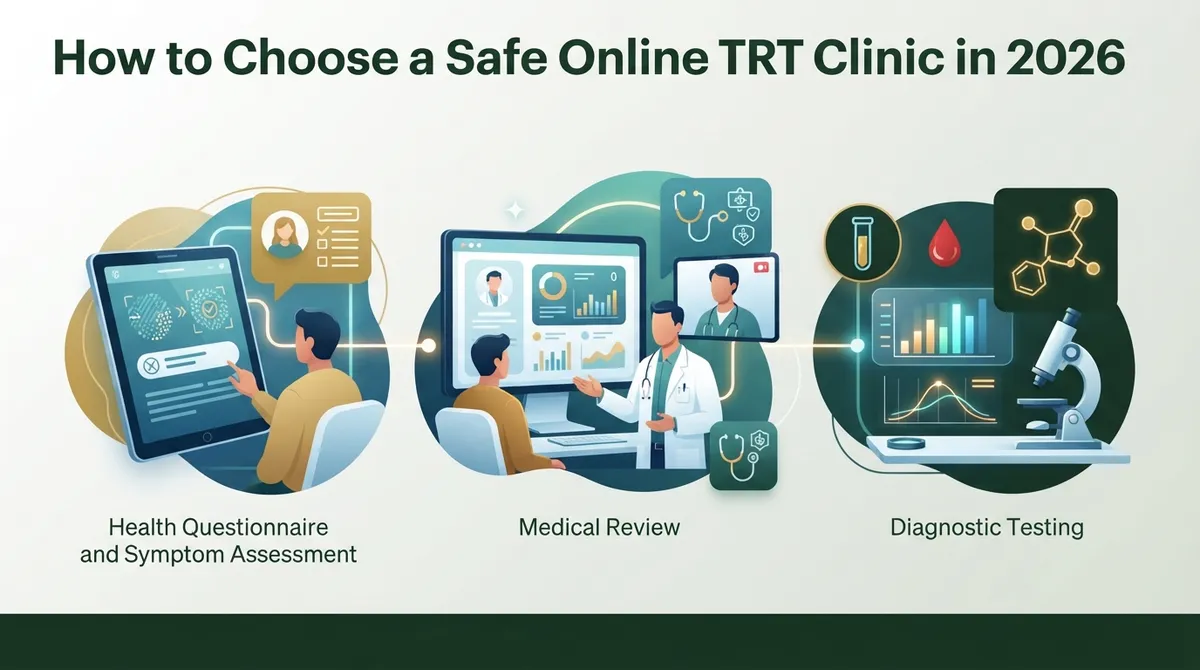
How a Legitimate Online TRT Clinic Diagnoses Low Testosterone
Here’s where a lot of shortcuts get taken by less careful providers. A proper diagnosis isn’t just a quick questionnaire and a prescription. It takes real evidence.
According to Endocrine Society guidelines, a solid diagnosis generally requires two things: symptoms that match low testosterone, plus two separate early-morning blood tests confirming consistently low levels. One test isn’t enough. Testosterone naturally dips and rises throughout the day, so timing and repetition matter.
Common Symptoms Worth Discussing With a Provider
- Persistent fatigue that doesn’t improve with more sleep
- Reduced muscle mass or strength despite regular training
- Low sex drive or difficulty with erections
- Mood changes, irritability, or brain fog
- Increased body fat, especially around the midsection
- Poor sleep quality or new-onset sleep apnea symptoms
If several of these sound familiar, it’s worth getting real answers instead of guessing. Many clinics also explore how to tell when men need hormone therapy before jumping straight to a prescription.
The Lab Work That Should Happen Before You Start TRT
Telehealth doesn’t mean skipping the science. In fact, good remote care depends even more on solid lab data since your provider can’t examine you in person the same way.
| Test | Purpose | When It’s Checked |
|---|---|---|
| Total and free testosterone | Confirms low levels with two morning draws | Before starting, then 3-6 months in |
| Hematocrit | Checks for thickened blood, a known TRT risk | Baseline, 3-6 months, then yearly |
| PSA (if appropriate) | Monitors prostate health | Baseline, then 3-12 months |
| Blood pressure | Testosterone can raise blood pressure | Every visit |
| Estradiol, LH, FSH | Gives a full hormone picture | Baseline and as needed |
A hematocrit above 54% is a common red flag that requires pausing treatment and investigating causes like sleep apnea. This is exactly why ongoing monitoring matters so much, not just the initial prescription.
What Happens After You Start Testosterone Therapy
Starting TRT isn’t a “set it and forget it” situation. Your provider should be checking in regularly to make sure things are working the way they should.
A Typical Monitoring Schedule
- Baseline labs and symptom review before any medication starts
- First follow-up around 3-6 months to check testosterone and hematocrit levels
- Dose adjustments based on how you’re feeling and what your labs show
- PSA and prostate evaluation around 3-12 months if appropriate for your age and risk
- Annual hematocrit checks for as long as you stay on therapy
The goal is to land in the mid-normal testosterone range, not sky-high levels. More isn’t better here. Overshooting can actually increase side effects without adding extra benefit.
Fertility Considerations Nobody Should Skip
This one catches a lot of guys off guard. Testosterone therapy can suppress your body’s natural sperm production. If you’re hoping to have children soon, conventional TRT might not be the right first step.
A responsible provider will ask about your fertility goals upfront and discuss alternatives if starting a family is on your radar. This conversation should happen before treatment starts, not after you’ve already noticed changes.
TRT vs. Peptide Therapy: Understanding the Difference
This is where things get interesting for anyone exploring options beyond traditional testosterone replacement. TRT and peptide therapy are not the same thing, and mixing them up can lead to confusion or unrealistic expectations.
| Feature | TRT | Peptide Therapy |
|---|---|---|
| What it is | FDA-approved testosterone product | Short chains of amino acids targeting specific functions |
| Regulatory status | FDA-approved when prescribed appropriately | Often compounded; not all uses are FDA-approved |
| Common goals | Restore low testosterone to normal range | Support recovery, sleep, energy, metabolism, and more |
| Controlled substance? | Yes, Schedule III | Varies by peptide |
Learning 8 facts that explain what are peptides in 2026 can help clear up a lot of the confusion floating around online. If you want a deeper dive into how the two therapies compare directly, this breakdown of TRT vs. peptides for men is a great next read.
Why Some Clinics Blend the Two
Some providers pair testosterone therapy with specific peptides to support related goals, like recovery or metabolic health. This isn’t a replacement for TRT itself, but rather a complementary approach. You can learn more about why testosterone injection therapy gets paired with peptides if this combination interests you.
Red Flags: How to Spot a Sketchy Online TRT Clinic
Not every website offering “easy TRT” has your best interests in mind. Knowing what to watch for can save you from a bad experience.
- No real lab testing required before prescribing
- Automated questionnaires with no live clinician interaction
- Vague or missing information about the dispensing pharmacy
- Promises of guaranteed muscle gains or anti-aging miracles
- No mention of ongoing monitoring after your first prescription
- Pricing that seems too good to be true, with hidden fees later
A trustworthy clinic will be upfront about whether a product is FDA-approved or compounded, and it will never promise outcomes that sound too dramatic to be real.
What to Look for in a Quality Online TRT Clinic
So what does good care actually look like? Here’s a simple checklist to keep in your back pocket.
- Real conversations with a licensed provider, not just a form to fill out
- Required lab work through an accredited lab like LabCorp
- Clear explanation of risks, benefits, and alternatives before you commit
- A defined monitoring schedule for testosterone, hematocrit, and PSA
- Transparent pricing with no surprise charges
- A named, licensed pharmacy handling your medication
- Easy access to your provider if you have questions or side effects
According to the National Library of Medicine, individualized dosing and consistent follow-up are key factors in safe, effective hormone therapy outcomes. This isn’t something to shortcut, no matter how convenient telehealth makes the process.
Recent Changes You Should Know About in 2026
The rules around telehealth prescribing have shifted quite a bit over the past few years, and staying informed matters.
- Federal telehealth flexibilities allowing certain controlled-substance prescriptions without a prior in-person visit have been extended through December 31, 2026
- The FDA removed the boxed warning about major cardiovascular events from testosterone labeling in February 2025, following a review of outcomes data
- A new warning about possible blood pressure increases was added, meaning cardiovascular risk assessment still matters
- State-specific rules can be stricter than federal guidelines, so licensing matters a lot
This is exactly why choosing a clinic licensed in your state is so important. Rules can vary, and a clinic that isn’t properly licensed where you live simply can’t legally treat you.
Where Allura Longevity Fits Into the Picture
At Allura Longevity, care starts with a simple $50 virtual consultation and complete blood work through LabCorp. From there, licensed providers, led by board-certified Family Nurse Practitioner Ashley, build a personalized six-month treatment plan based on your actual results, not guesswork.
Whether you’re exploring testosterone replacement, weight loss support with GLP-1 medications, injury recovery peptides like BPC-157, or a combination tailored to your goals, everything ships straight to your home with ongoing monitoring built in. Allura Longevity is currently licensed in Florida, Georgia, Texas, Connecticut, Indiana, Maryland, New York, and California, with limited spots available for new clients each month.
Getting Started the Right Way
If you’re ready to stop guessing and start understanding what your body actually needs, the process is simple. You can also explore how to start peptide therapy safely and see real results if you’re curious about combining approaches for a fuller picture of your health.
Understanding What Peptides Are Approved For
It’s worth repeating: not every peptide marketed online has FDA approval for the claims being made. Understanding what are peptides and how they’re regulated helps you ask smarter questions before starting any protocol.
- Some peptides are FDA-approved for specific, narrow uses
- Many popular peptides are compounded, meaning they’re prepared by a pharmacy rather than mass-manufactured
- Compounded doesn’t automatically mean unsafe, but it does mean less standardized oversight
- A trustworthy clinic will always disclose sourcing and regulatory status upfront
If muscle building or recovery is your goal, this guide on 14 peptides for muscle gain worth knowing in 2026 breaks down what’s actually backed by evidence.
Making Your Decision With Confidence
Choosing an online TRT clinic doesn’t have to feel overwhelming. Focus on providers who require real lab work, explain their monitoring plan clearly, and treat you like a person, not a transaction. Ask questions. Compare your options. And never be afraid to walk away from a clinic that feels rushed or vague about the details.
Ready to get real answers about your hormones and build a plan around your actual lab results? Request a consultation with Allura Longevity today and take the first step toward feeling like yourself again.
FAQs
Q: Can I legally get testosterone prescribed by an online TRT clinic?
A: Yes, as long as the clinic uses licensed providers and follows proper diagnostic steps. Testosterone is a controlled substance, so a real evaluation and confirmed lab results are required before any prescription is written.
Q: What lab tests are required before starting online testosterone replacement therapy?
A: You’ll typically need two separate morning testosterone tests, plus baseline hematocrit and sometimes PSA levels. These labs confirm you actually have low testosterone and help your provider create a safe starting plan.
Q: Is online TRT safe, and how are side effects monitored remotely?
A: It can be very safe when the clinic requires regular labs and check-ins. Your provider tracks things like hematocrit and blood pressure over time, adjusting your plan as needed, just like they would in person.
Q: Does testosterone replacement therapy affect fertility?
A: Yes, it can suppress natural sperm production for some men. If you’re hoping to conceive soon, it’s worth having an honest conversation with your provider about alternatives before starting treatment.
Q: What is the difference between TRT and peptide therapy?
A: TRT replaces testosterone directly using an FDA-approved product, while peptide therapy uses amino acid chains to support specific goals like recovery or metabolism. They’re related but not interchangeable, and many peptides aren’t FDA-approved for the exact claims you’ll see online.





