
Key Takeaways
-
Personalized hormone programs based on comprehensive bloodwork and individual goals are more effective than generic protocols, requiring full lab panels including testosterone, LH, FSH, and metabolic markers before starting treatment.
-
Peptide therapy and testosterone replacement therapy (TRT) work differently: peptides signal your body to produce its own hormones naturally, while TRT replaces testosterone directly—making peptides better for mild decline and fertility preservation.
-
CJC-1295 and ipamorelin peptides show sleep improvements within 2-4 weeks and body composition changes within 2-4 months, making them popular for men prioritizing recovery and lean muscle without suppressing natural sperm production.
-
Gonadorelin and kisspeptin peptides support natural testosterone production while preserving fertility, unlike TRT which can suppress sperm production—critical for men wanting hormone support without compromising future family planning.
-
Regular monitoring every 3-6 months with lab retesting is essential; hormone therapy requires ongoing adjustments based on how your body responds, not a 'set it and forget it' approach to ensure safety and effectiveness.
-
Common mistakes include skipping bloodwork, assuming low testosterone without confirmation, expecting overnight results (realistic timeline is 2-6 months), and ignoring lifestyle factors like sleep and stress that naturally suppress hormones.
Feeling tired all the time, even after a full night’s sleep? You’re not alone. Thousands of men in their 30s, 40s, and beyond are searching for answers to low energy, stubborn belly fat, and a libido that just isn’t what it used to be. The good news is that the best hormone therapy program for men in 2026 isn’t a one-size-fits-all pill. It’s a personalized plan built around your actual bloodwork, your goals, and your body’s unique signals.
This article walks you through what a smart, modern hormone program looks like for men. We’ll cover peptide therapy, how it differs from traditional testosterone replacement, and how to figure out which path fits you best. Grab a coffee and let’s dig in together, because feeling like yourself again is closer than you think.
What Does a Hormone Therapy Program for Men Actually Involve?
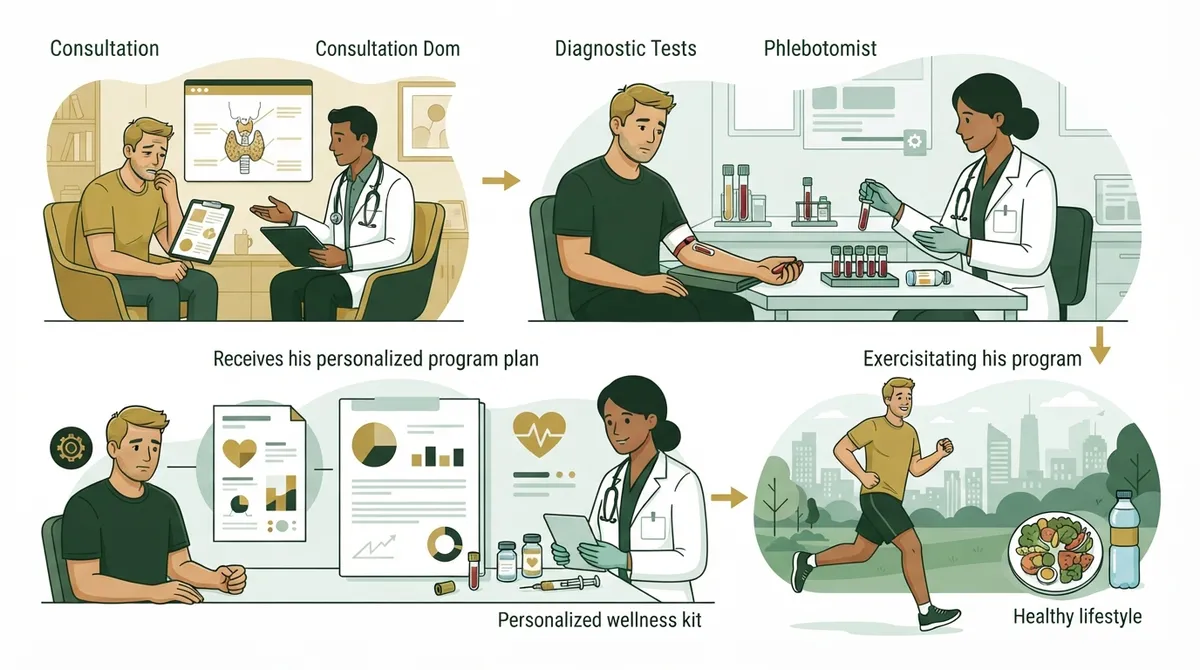
A good hormone therapy program starts long before any medication touches your skin. It begins with understanding what’s actually happening inside your body. Licensed providers look at your labs, your symptoms, and your lifestyle before recommending anything.
Many men assume low testosterone is the only culprit behind fatigue, weight gain, or low mood. But that’s not always true. Sometimes the real issue is growth hormone decline, poor sleep, or a body under chronic stress. That’s why the 8 Facts That Explain What Are Peptides in 2026 guide is such a helpful starting point for understanding your options.
The Core Building Blocks of a Strong Program
Here’s what separates a thoughtful hormone program from a guessing game:
- Full lab panel including testosterone, LH, FSH, and metabolic markers
- A real conversation about your symptoms and daily habits
- Screening for hidden issues like sleep apnea or high stress
- A customized plan, not a generic prescription
- Regular follow-up labs to track your progress
- Ongoing adjustments based on how your body responds
This kind of monitoring matters because hormone therapy isn’t a “set it and forget it” deal. Your body changes, and your plan should change with it.
Peptide Therapy vs Testosterone Replacement: What’s the Difference?
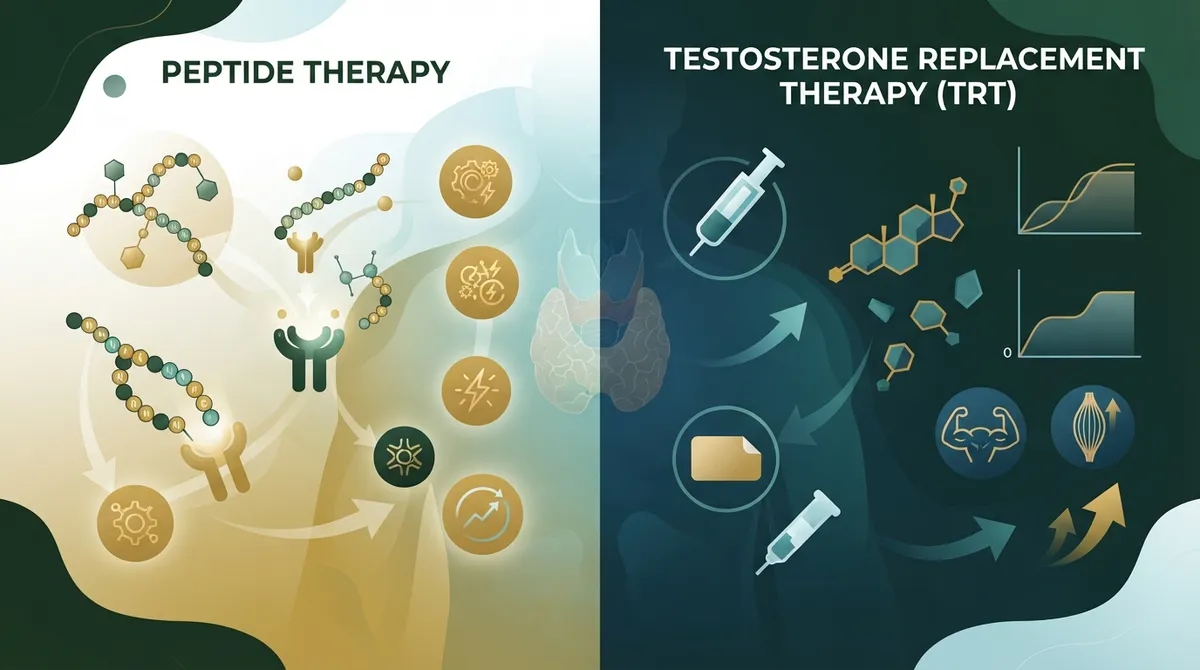
This is one of the biggest points of confusion for men starting their research. Peptide therapy and testosterone replacement therapy (TRT) are not the same thing, even though people often lump them together.
TRT gives your body testosterone directly. It’s a straightforward replacement, often used for men with clearly diagnosed low testosterone and more severe symptoms. Peptide therapy works differently. Most peptides used for men don’t replace testosterone. Instead, they signal your pituitary gland to produce more of your own hormones naturally.
| Feature | Peptide Therapy | TRT |
|---|---|---|
| How it works | Signals the body to produce its own hormones | Directly replaces testosterone |
| Best for | Mild to moderate decline, fertility goals | Confirmed low testosterone, severe symptoms |
| Fertility impact | Can support natural fertility | May suppress natural sperm production |
| Monitoring needed | Ongoing labs every 3-6 months | Ongoing labs and dose adjustments |
| Common goals | Recovery, sleep, body composition | Symptom relief from diagnosed hypogonadism |
For a deeper breakdown, check out this comparison on TRT vs. Peptides: Which Hormone Fix Wins for Men? It walks through real scenarios so you can see which path might suit your situation.
Which Peptides Are Best for Male Hormone Support?
There’s no single “best” peptide that works for every man. The right choice depends entirely on your goal. Some men want more energy and better sleep. Others want to preserve fertility while supporting testosterone. Let’s break down the most common options.
1. CJC-1295 and Ipamorelin for Recovery and Sleep
These two peptides are often paired together and are among the most requested starting points in 2026 clinic guidance. They work as growth hormone secretagogues, meaning they encourage your pituitary gland to release more natural growth hormone.
- Sleep improvements often show up within 2 to 4 weeks
- Body composition and IGF-1 changes typically take 2 to 4 months
- Popular among men focused on recovery and lean muscle
If muscle gain is your priority, the guide on 14 Peptides for Muscle Gain Worth Knowing (2026) covers this territory in more detail.
2. Gonadorelin for Natural Testosterone Support
Gonadorelin stimulates the pituitary to release LH and FSH, two hormones that tell your testes to produce testosterone. This peptide is often chosen by men who want to support natural production without shutting down their own system.
3. Kisspeptin for Testosterone-Specific Signaling
Kisspeptin acts even further upstream than gonadorelin, working directly on the reproductive hormone axis before LH is even released. Some providers consider it more targeted for testosterone-specific goals.
According to the National Library of Medicine, kisspeptin plays a key regulatory role in the hypothalamic-pituitary-gonadal axis, which is exactly why it’s gaining attention in men’s hormone research.
Steps to Building the Best Hormone Therapy Program for You
Ready to actually start? Here’s a simple roadmap that mirrors what a quality telehealth provider will walk you through.
- Get comprehensive labs done. This should include total and free testosterone, LH, FSH, and thyroid markers at minimum.
- Have an honest symptom conversation. Fatigue, low libido, poor sleep, and mood changes all matter.
- Rule out lifestyle suppressors. Obesity, sleep apnea, chronic stress, and alcohol use can all tank your hormones.
- Choose your approach. Peptides for mild decline and fertility goals, or TRT for confirmed severe deficiency.
- Start your customized plan. Dosing should be tailored to your labs, not a generic protocol.
- Recheck labs at 3 to 6 months. This is when testosterone-related changes are typically assessed.
- Adjust as needed. Your provider should tweak your plan based on how you respond.
If you want to learn how to approach this process safely from day one, the guide on How to Start Peptide Therapy Safely and See Real Results is a great companion read.
What About Libido, Sexual Health, and Fertility?
Let’s be honest, this is often the real reason men start looking into hormone therapy in the first place. Low libido and performance issues can quietly chip away at confidence and relationships.
Peptides that work on the reproductive hormone axis, like gonadorelin and kisspeptin, can support both libido and fertility at the same time. This is a big deal for men who aren’t ready to start a family yet but don’t want TRT to interfere with future fertility. TRT, on the other hand, can suppress natural sperm production because it signals the body that it has enough testosterone already.
If sexual wellness is a top priority for you, take a look at 8 Peptide Facts That Redefine Sexual Wellness in 2026 for a more focused breakdown.
Common Mistakes Men Make When Choosing a Program
Even smart, motivated guys can trip up here. Let’s cover the biggest pitfalls so you can skip them entirely.
- Skipping labs and jumping straight to a protocol they saw online
- Assuming testosterone is always the problem, even without confirmed low levels
- Expecting overnight results instead of the realistic 2 to 6 month timeline
- Ignoring lifestyle factors like sleep, alcohol, and stress that suppress hormones
- Choosing a provider who doesn’t offer ongoing monitoring
For a more complete list, see 14 Mistakes Men Make Confusing Hormone Therapy. It’s a quick read that could save you time and money.
How Telehealth Makes This Easier for Busy Men
Let’s face it, most men don’t have time to sit in a waiting room for two hours just to get a blood draw. That’s where telehealth changes the game entirely. You can complete labs locally, talk to a licensed provider from your phone, and get your peptides shipped straight to your door.
This is exactly the model peptides for men programs like Allura Longevity have built their reputation on. Clients start with an affordable virtual consultation, complete labs through LabCorp, and receive a customized six-month plan designed around their actual results. Care is led by Ashley, a board-certified Family Nurse Practitioner, with ongoing monitoring built into every plan.
Curious how telehealth stacks up against a traditional clinic visit? The comparison in Local Clinic vs. Telehealth: Best Peptide Therapy Near You? breaks it down clearly.
Is Long-Term Peptide Therapy Safe for Hormone Optimization?
Safety is always the right question to ask, and it’s one we respect deeply. Peptides used for hormone support are generally well tolerated when they’re prescribed and monitored by a licensed provider. The key word here is monitored.
Unlike a short-course medication, most 2026 clinic guidance frames peptide therapy as a cyclical, long-term program. That means regular labs, honest symptom tracking, and dose adjustments over time. This approach reduces risk and helps your provider catch anything unusual early.
For more general background on how these compounds work in the body, WebMD offers a solid overview of what are peptides and how they differ from traditional hormones and medications.
Choosing the Right Path for Your Goals
Here’s a quick reference to help you match your main goal with the therapy approach that tends to fit best.
| Your Main Goal | Likely Best Fit |
|---|---|
| Better sleep and recovery | CJC-1295 and Ipamorelin |
| Natural testosterone support with fertility preservation | Gonadorelin or Kisspeptin |
| Confirmed severe low testosterone | Traditional TRT |
| Fat loss alongside hormone support | GLP-1 medications paired with a hormone plan |
| Overall vitality and long-term optimization | Customized multi-peptide program |
Weight and hormones are often connected too. If fat loss is part of your goal, the article on Which Weight Loss Peptides Actually Work in 2026? is worth a look.
Ready to Build Your Personalized Plan?
You deserve a hormone program that actually looks at your body, your labs, and your goals, not a generic protocol pulled off the internet. Whether you’re dealing with low energy, stubborn weight, or a libido that’s lost its spark, the right combination of peptides or TRT can make a real difference when it’s guided by a licensed provider.
Allura Longevity has built its telehealth program around exactly this kind of personalized care, with licensed providers, LabCorp bloodwork, and six-month plans delivered right to your door. Spots for new clients are limited each month, so if you’re ready to feel like yourself again, now’s a good time to act. You can request a consultation today and take the first step toward a hormone plan built just for you. Questions first? Call (813) 510-6277 and talk it through with a real person who wants to help.
FAQs
Q: What is the best hormone therapy program for men using peptides?
A: There isn’t one universal best program because it depends on your goals and labs. A strong program usually combines full bloodwork, symptom review, and a mix of peptides like CJC-1295, ipamorelin, or gonadorelin tailored to what your body actually needs.
Q: Which peptides are best for low testosterone in men?
A: Gonadorelin and kisspeptin are commonly used because they signal the pituitary and reproductive axis to boost natural testosterone production. That said, peptides work best for mild to moderate decline, while confirmed severe low testosterone often needs TRT instead.
Q: Can peptide therapy increase testosterone naturally?
A: Yes, peptides like gonadorelin and kisspeptin work upstream to stimulate your body’s own hormone production rather than replacing testosterone directly. Results usually show up on repeat labs around the 3 to 6 month mark, so patience really does pay off here.
Q: What is the difference between TRT and peptide therapy for men?
A: TRT replaces testosterone directly and is typically used for confirmed, severe hypogonadism. Peptide therapy encourages your body to produce more of its own hormones and is often chosen by men with milder symptoms or fertility goals.
Q: Are peptides safe for long-term hormone optimization in men?
A: When prescribed and monitored by a licensed provider, peptides are generally well tolerated for long-term use. The key is regular lab checks and honest symptom tracking, since dosing and safety depend heavily on ongoing follow-up.





