
Key Takeaways
-
HRT directly replaces hormones like estrogen and progesterone and reduces hot flashes by 75% with strong trial evidence, while no peptide currently has comparable clinical data for classic menopause symptoms.
-
Get comprehensive blood work before choosing any treatment to identify your actual hormone levels; guessing wastes money and time on a plan that won't match your body's needs.
-
PT-141 (bremelanotide) is FDA-approved and backed by robust trials specifically for low sexual desire, not menopause overall, so use peptides as targeted supplements for specific gaps HRT doesn't cover.
-
Work only with licensed medical providers for ongoing monitoring and adjustments, as self-treating with online peptides without proper labs and oversight is one of the riskiest and most wasteful mistakes possible.
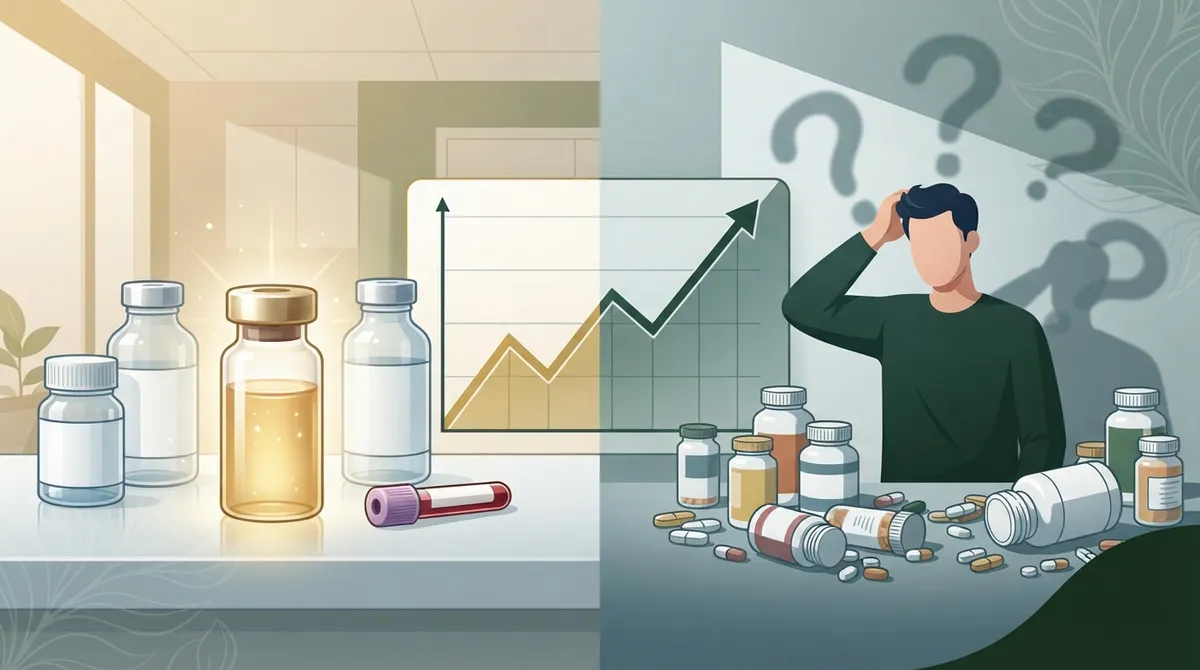
Hunting for the best HRT options can feel like a full-time job, especially when peptide therapy keeps popping up in the conversation too. Maybe you’re dealing with hot flashes that hit at the worst moments, or you’ve noticed your energy just isn’t what it used to be. You start researching, and suddenly you’re drowning in conflicting advice about hormones, peptides, and which one you actually need.
Here’s the good news: you don’t have to figure this out alone, and you definitely don’t have to waste money on the wrong approach. Many people make the same costly mistakes when comparing hormone replacement therapy with peptide therapy, and those mistakes can delay real relief for months. This guide walks you through the most common missteps so you can skip them entirely. Whether you’re a busy professional squeezing in research between meetings or a wellness seeker ready to level up your routine, this is for you.
We’ll cover what the research actually says, where peptides fit in, and how to avoid throwing money at treatments that won’t deliver. Let’s get into it.
Mistake 1: Assuming Peptides Can Fully Replace HRT
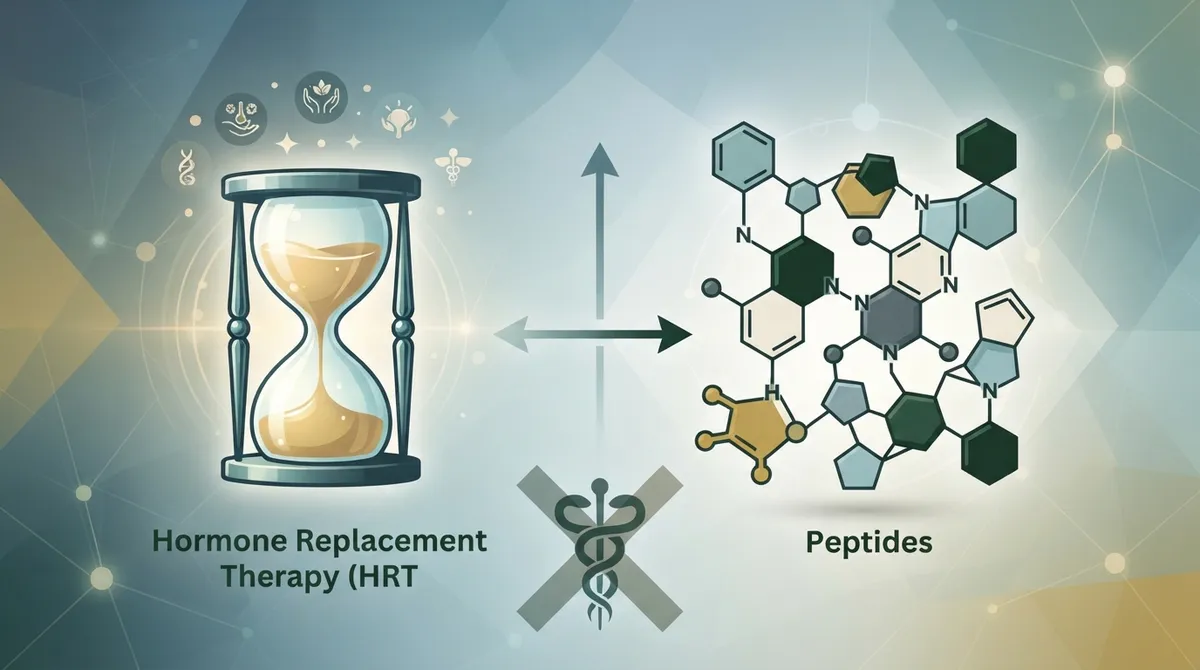
This is probably the biggest and most expensive mistake people make. Peptide therapy uses signaling molecules that nudge your body to do things on its own, like release more growth hormone or improve blood flow. HRT, on the other hand, directly replaces hormones like estrogen and progesterone that your body has stopped making.
These are simply not the same tool. If your main symptoms are hot flashes, night sweats, or vaginal dryness caused by estrogen decline, HRT remains the most evidence-backed treatment available. No peptide currently has comparable trial data for classic menopause symptoms. Learn more about the basics by reading 8 Facts That Explain What Are Peptides in 2026.

Mistake 2: Ignoring the Evidence Gap Between the Two Treatments
It’s tempting to believe every peptide marketed for menopause is a proven miracle. Unfortunately, evidence quality for many of these peptides is still low or very low. A 2026 review of peptides for perimenopause found that no peptide is FDA-approved for managing menopause symptoms, and no completed human trial has studied any peptide specifically as an HRT add-on in menopausal women.
That doesn’t mean peptides are useless. It means you need realistic expectations before you spend your money.
What the Research Actually Shows
- HRT can reduce hot flashes by about 75% at standard dosing, based on peptide-focused comparisons.
- No peptide has matching randomized trial evidence for hot flash relief.
- PT-141 (bremelanotide) has real Phase 3 data, but only for premenopausal low libido, not menopause overall.
- Many peptides promoted for menopause are described as theoretical or exploratory by peptide-focused sources themselves.
Mistake 3: Skipping Blood Work Before Choosing a Treatment
You can’t pick the right protocol if you don’t know your actual hormone levels. Guessing wastes money and time. A proper evaluation, like the LabCorp panels used at Allura Longevity, tells your provider exactly where your estrogen, progesterone, and other markers stand.
This step is non-negotiable if you want a plan that actually works for your body instead of a generic template.
Mistake 4: Overlooking PT-141 for Libido Concerns
If low sexual desire is your main complaint, don’t assume HRT is your only option. PT-141 (bremelanotide) has the strongest sexual-function evidence of any peptide used in women’s health. It’s FDA-approved for premenopausal hypoactive sexual desire disorder, backed by the RECONNECT trials involving about 1,247 women.
Just remember, it’s not a menopause treatment substitute. It targets desire specifically, not vasomotor symptoms like hot flashes.
Mistake 5: Believing One Protocol Fits Everyone
Every body responds differently to hormones and peptides. What works beautifully for your friend might do nothing for you, or worse, cause side effects. This is why personalized plans built from your own labs matter so much.
Explore how personalized peptide therapy works for women by visiting peptides for women or checking out options tailored to peptides for men.
Mistake 6: Choosing Based on Price Alone
Cost matters, but the cheapest option isn’t always the smartest one. Here’s a general cost comparison to help set expectations.
| Treatment | Estimated Monthly Cost | Insurance Coverage |
|---|---|---|
| Menopause HRT | $30 – $150 | Often covered |
| Sermorelin | $150 – $300 | Usually out of pocket |
| CJC-1295/Ipamorelin | $200 – $400 | Usually out of pocket |
| Combined HRT + Peptide Protocol | $350 – $800+ | Partial coverage possible |
Notice that combined protocols cost more but may address a wider range of goals, from energy to body composition. Weigh this against your actual priorities before committing.
Mistake 7: Forgetting That Peptides Are Usually Adjuncts, Not Substitutes
The most commonly recommended role for peptides in this space is supportive, not primary. If HRT handles your hot flashes but you’re still struggling with sluggish energy, stubborn body fat, or skin that’s lost its bounce, peptides may fill those remaining gaps.
This adjunctive approach is discussed in more detail in How to Choose Between Bioidentical Hormones and Peptides.
Mistake 8: Not Considering Combination Protocols When Appropriate
Some clinics do combine HRT with peptides for a broader wellness plan. This can work well, but only when it’s based on your symptoms, labs, and goals rather than a one-size-fits-all package. Combining treatments without proper oversight can waste money or cause unwanted interactions.
Questions to Ask Before Combining Treatments
- What specific symptom is each treatment supposed to address?
- Has my provider reviewed my complete hormone panel?
- Are there any known interactions between my HRT and the proposed peptide?
- How will progress be measured over time?
- What’s the realistic timeline for seeing results?
Mistake 9: Choosing Unlicensed or Unmonitored Providers
This mistake can cost you more than money. Hormone and peptide therapy both require ongoing monitoring by licensed medical professionals. Skipping check-ins or working with unregulated sources puts your health at risk.
Allura Longevity’s care is led by Ashley, a board-certified Family Nurse Practitioner, ensuring every plan includes proper oversight and adjustments as needed.
Mistake 10: Expecting Instant Results
Both HRT and peptide therapy take time to show full effects. Hot flash relief from HRT can happen relatively fast, but peptides for energy, recovery, or skin often take weeks to months of consistent use. Rushing to switch treatments too soon wastes both time and money.
For a realistic view of timing, see When Do Peptide Therapy Before and After Results Show?.
Mistake 11: Ignoring Perimenopause-Specific Needs
Perimenopause symptoms can be trickier than full menopause because hormone levels fluctuate unpredictably. Some sources discuss peptides as a supportive option here, but this doesn’t mean they replace HRT when estrogen decline is the clear driver of your symptoms.
A more focused breakdown is available in How to Navigate Early Menopause Hormone Therapy Safely.
Mistake 12: Overlooking the Role of Testosterone
HRT conversations often focus only on estrogen and progesterone, but testosterone plays a role in energy, muscle, and libido for both men and women. Comparing your options thoroughly means looking at the full hormone picture, not just one piece.
Check out Testosterone vs. Peptides for Women: Which Wins? for a deeper comparison.
Mistake 13: Not Comparing Delivery Methods
HRT and peptides come in different forms, including patches, pellets, injections, and creams. Each has pros and cons for convenience, absorption, and cost. Failing to compare these can leave you stuck with a method that doesn’t fit your lifestyle.
| Delivery Method | Best For | Convenience Level |
|---|---|---|
| Patches | Steady estrogen delivery | High |
| Pellets | Long-term hormone release | Moderate (requires procedure) |
| Injections | Peptides and some hormones | High (at-home options available) |
| Oral tablets | Simplicity | High |
Mistake 14: Skipping Ongoing Monitoring and Adjustments
Your hormone needs change over time. A plan that worked great six months ago might need tweaking now. Regular check-ins and repeat labs help catch these shifts early, preventing wasted months on a plan that’s no longer serving you.
According to the National Library of Medicine, ongoing clinical evaluation remains essential for safe, effective hormone-related treatment over time.
Mistake 15: Trying to DIY Without Professional Guidance
Self-treating with peptides purchased online, without proper labs or medical oversight, is one of the riskiest and most wasteful mistakes on this list. You could be using the wrong dose, the wrong peptide, or an unregulated product altogether.
Understanding what are peptides is a great starting point, but pairing that knowledge with a licensed provider is what actually protects your health and your wallet.
How to Choose Wisely Between HRT and Peptide Therapy
Here’s a simple checklist to help you make a smart, informed decision:
- Get comprehensive blood work before choosing any treatment.
- Identify your top one or two symptoms to prioritize.
- Ask whether HRT alone can address those symptoms first.
- Consider peptides as support for goals HRT doesn’t fully cover.
- Work only with licensed, experienced providers.
- Review your plan every few months and adjust as needed.
Avoiding these fifteen mistakes puts you in a much stronger position to find real relief without wasting money on trial and error.
Bringing It All Together
Choosing between HRT, peptide therapy, or a thoughtful combination of both doesn’t have to be overwhelming. With the right labs, the right provider, and realistic expectations, you can build a plan that actually fits your body and your goals. If you’re ready to stop guessing and start with a personalized, medically supervised approach, Allura Longevity makes the process simple with virtual consultations, LabCorp testing, and treatment delivered right to your door.
Ready to find your best path forward? Request a consultation today and let a licensed provider build a plan around your actual needs, not guesswork.
FAQs
Q: What are the best HRT options if I’m also considering peptide therapy?
A: The best HRT options usually start with estrogen and progesterone therapy tailored to your labs and symptoms, since this remains the most evidence-backed choice for menopause relief. Peptide therapy can then be layered in afterward to support energy, recovery, or skin health once your hormone foundation is solid. A personalized plan based on your blood work is really the best way to figure out what combination makes sense for you.
Q: Can peptides replace HRT for menopause symptoms?
A: Not really, at least not based on current evidence. HRT remains the most studied and effective treatment for classic menopause symptoms like hot flashes and night sweats. Peptides can be a helpful addition, but they haven’t been shown to replace what HRT does for estrogen-related symptoms.
Q: Which peptides are most commonly combined with HRT?
A: Peptides like sermorelin, CJC-1295, and Ipamorelin are often discussed alongside HRT for energy, recovery, and body composition goals. PT-141 is another popular pairing when low libido is a concern. That said, these combinations should always be guided by a licensed provider who reviews your full health picture first.
Q: How much does HRT plus peptide therapy cost per month?
A: Menopause HRT alone typically runs about $30 to $150 a month and is often covered by insurance. Adding peptides can bring a combined protocol up to roughly $350 to $800 or more per month, depending on which peptides are included. It’s a good idea to discuss your budget and goals upfront so your provider can build a plan that makes sense for you.
Q: Is HRT or peptide therapy better for perimenopause?
A: For most people, HRT is still the better-supported choice when perimenopause symptoms are driven mainly by hormone fluctuations. Peptides may offer supportive benefits for things like sleep or energy, but they’re generally seen as a complement rather than a stand-in for hormone therapy. Your bloodwork and symptom pattern will help determine the right starting point.





