

Key Takeaways
-
Get comprehensive blood work before starting peptide therapy to establish baseline hormone, thyroid, and metabolic markers—this personalized data is essential for avoiding ineffective guesswork protocols.
-
Peptides don't directly replace estrogen or progesterone; instead, they work indirectly on growth hormone, metabolism, and gut pathways, so many clinics combine them with actual HRT for better results.
-
Women often need lower starting doses than men and individualized adjustments based on menstrual cycle phase or menopausal status—dosing should never be one-size-fits-all.
-
Always work with a licensed medical provider for supervision, monitoring, and dose adjustments; DIY sourcing and self-dosing without labs and oversight poses significant safety risks.
If you’re a woman in your 30s, 40s, or 50s feeling tired, foggy, or just “off,” you’re not imagining it. Hormone shifts are real, and they can wreck your energy, sleep, mood, and metabolism. Peptide therapy has become a popular way to support hormone optimization for women, but there’s a lot of confusing and downright wrong information out there.
Here’s the good news: you don’t have to figure this out alone. Whether you’re a busy professional squeezing self-care between meetings, a wellness seeker ready for something more advanced, or someone navigating perimenopause and wondering what actually works, this guide has you covered. We’re breaking down the seven most common mistakes women make with hormone optimization women protocols, so you can skip the guesswork and get real results.
Let’s dig into what peptide therapy can (and can’t) do for your hormones, and how to approach it the smart way.
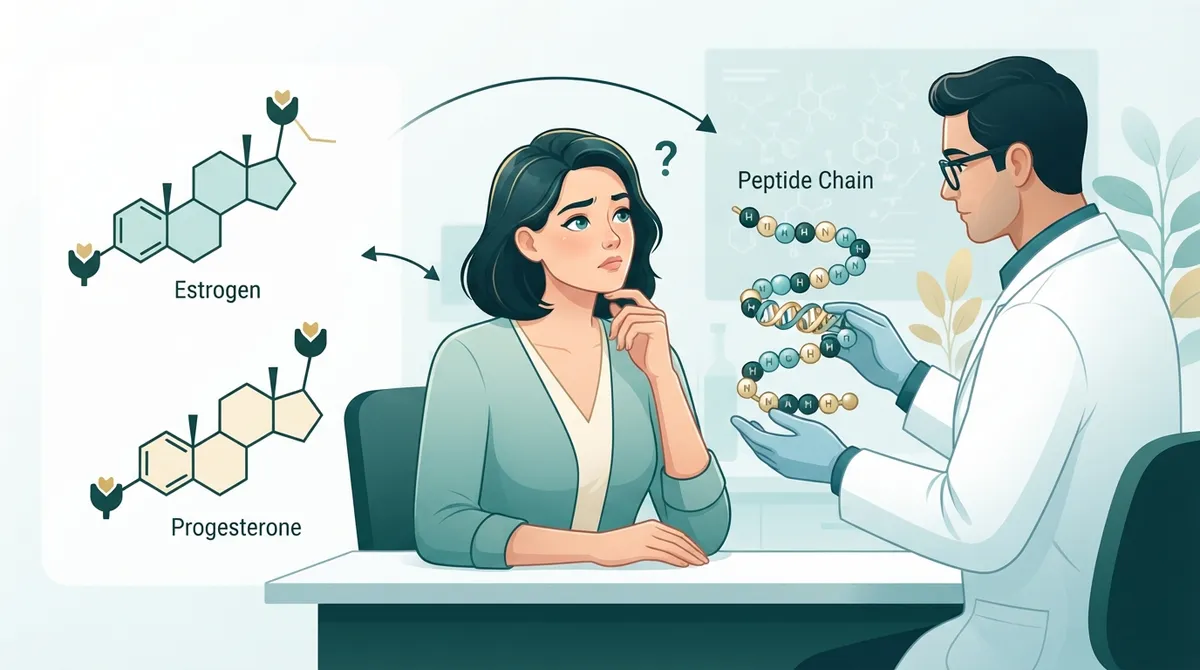
Mistake 1: Thinking Peptides Directly Replace Estrogen or Progesterone
This is probably the biggest misunderstanding out there. Most peptides used for hormone optimization women protocols don’t act like estrogen or progesterone pills or patches. Instead, they work behind the scenes on growth hormone signaling, metabolism, gut hormones, and reproductive pathways.
Think of it this way: peptides are more like messengers that nudge your body’s own systems, rather than direct hormone replacements. If you’re looking to understand the building blocks of these treatments, this guide on what peptides actually are is a great place to start. According to what are peptides, these short chains of amino acids act as signaling molecules, not full hormone substitutes.
- Peptides often support growth hormone release, not estrogen levels
- They may improve sleep, recovery, and body composition indirectly
- Some clinics pair peptides with actual hormone replacement therapy (HRT) for a fuller approach
- Expecting peptides alone to fix hot flashes or mood swings can lead to disappointment

Mistake 2: Skipping Blood Work Before Starting
Jumping into any protocol without knowing your baseline numbers is like driving somewhere new without a map. You need data. Comprehensive blood work tells your provider what’s actually happening with your hormones, thyroid, metabolic markers, and more.
At Allura Longevity, this step is non-negotiable. Clients start with an affordable virtual consultation, then complete labs through LabCorp before any peptides are prescribed. This isn’t just a formality, it’s what makes a plan actually personalized instead of a guess.
What Blood Work Typically Reveals
- Baseline estrogen, progesterone, and testosterone levels
- Thyroid function markers
- Growth hormone and IGF-1 levels
- Metabolic and inflammatory markers
- Vitamin and mineral deficiencies affecting energy
Mistake 3: Using a One-Size-Fits-All Dosing Approach
Here’s something a lot of women don’t realize: dosing for hormone optimization women plans often differs from men’s protocols. Women frequently need lower starting doses of growth-hormone-related peptides, and timing may matter based on menstrual cycle phase or menopausal status.
Clinic guides commonly reference doses like CJC-1295/Ipamorelin at 100 to 150 mcg nightly for recovery and body composition support, with slightly higher ranges used in later-life protocols. But these numbers are starting points, not universal rules. Your provider should adjust based on your labs, symptoms, and goals.
| Peptide | Common Use in Women | Typical Clinic Dosing Range |
|---|---|---|
| Sermorelin | Energy, sleep, recovery | Nightly injection, provider-guided |
| CJC-1295/Ipamorelin | Body composition, recovery | 100–200 mcg pre-sleep |
| Kisspeptin-10 | Reproductive hormone support | Research-based, clinic-supervised |
| PT-141 | Libido and sexual wellness | As-needed, provider-directed |
| GHK-Cu | Skin health, tissue repair | Topical or injectable, varies |
Mistake 4: Ignoring Menopause and Perimenopause Nuances
Perimenopause and menopause bring a whole new set of challenges: weight gain, poor sleep, low libido, brain fog, and fatigue. Many women assume peptides alone will smooth this transition, but the reality is more nuanced.
Some practices combine peptide therapy with HRT rather than treating peptides as a replacement. The idea is that peptides support cellular repair and metabolic function, while HRT addresses the hormone decline directly. If you’re weighing your options, this comparison of testosterone versus peptides for women breaks down which approach might fit your goals.
- Weight gain during menopause often responds well to combined metabolic support
- Sleep disruption may improve with growth-hormone-supporting peptides
- Libido concerns are frequently addressed with PT-141 alongside hormone therapy
- Skin changes can benefit from collagen-stimulating peptides like GHK-Cu
Exploring Safe Menopause Support Options
If you’re navigating this stage, it helps to understand your full menu of choices. This resource on safest hormone therapy options for women walks through what’s considered evidence-based and low-risk.
Mistake 5: Overlooking the Kisspeptin Evidence Gap
Among all the peptides discussed for hormone optimization women protocols, kisspeptin actually has the strongest human evidence, particularly in fertility-related research. That doesn’t mean every peptide has this level of backing.
Many other peptides used in women’s wellness clinics are prescribed off-label, based on mechanistic reasoning rather than large clinical trials. That’s not necessarily a dealbreaker, but you deserve to know the difference between well-studied and experimental approaches.
- Kisspeptin has documented trial data in reproductive and fertility contexts
- Sermorelin and CJC-1295 have longer track records in growth hormone research
- BPC-157 and TB-500 are popular for recovery but have limited large-scale human trials
- GHK-Cu has decent dermatological research support for skin applications
- Always ask your provider what evidence exists for your specific protocol
For a deeper dive into the research landscape, the National Library of Medicine offers peer-reviewed insights into peptide mechanisms and clinical applications.
Mistake 6: Assuming Peptides Are Risk-Free During Pregnancy or Breastfeeding
This one’s important: most peptide protocols have limited safety data during conception, pregnancy, and breastfeeding. Reputable providers will pause or avoid peptide therapy during these periods out of caution, not because they don’t work, but because the research simply isn’t robust enough yet.
If you’re trying to conceive or are currently pregnant or nursing, always disclose this to your provider before starting or continuing any peptide protocol. This is exactly the kind of nuance that starting peptide therapy safely should always account for.
Mistake 7: Going It Alone Without Medical Supervision
DIY peptide sourcing and self-dosing without labs, monitoring, or licensed oversight is risky business. Hormone optimization women protocols work best when a qualified provider is tracking your progress, adjusting doses, and watching for side effects.
This is where telehealth clinics like Allura Longevity really shine. Led by Ashley, a board-certified Family Nurse Practitioner, the process starts with a $50 virtual consultation and LabCorp blood work, followed by a custom six-month treatment plan delivered right to your door. Ongoing monitoring means your plan evolves as your body does.
Why Medical Supervision Matters
- Providers can catch early warning signs before they become problems
- Dosing adjustments happen based on real data, not guesswork
- Licensed oversight ensures compounded medications are sourced safely
- You get accountability and support throughout your entire journey
Curious how the process works from start to finish? This guide to getting prescription peptides safely lays out what to expect at every step.
Comparing Peptide Therapy and Traditional HRT
It helps to see these two approaches side by side, especially since many women wonder if they should choose one or combine both.
| Factor | Peptide Therapy | Traditional HRT |
|---|---|---|
| Mechanism | Indirect support via growth hormone, metabolic, gut pathways | Direct hormone replacement (estrogen, progesterone) |
| Best For | Energy, recovery, skin, libido, sleep support | Hot flashes, vaginal dryness, bone density |
| Evidence Level | Varies; kisspeptin strongest, others mostly off-label | Well-established clinical guidelines |
| Typical Cost | $150–$250/month for sermorelin-based protocols | Varies by formulation and insurance coverage |
| Combination Potential | Often paired with HRT for fuller support | Can be paired with peptides for added benefits |
Getting Started the Right Way
If you’re ready to explore hormone optimization women options without the guesswork, here’s a simple roadmap to follow.
- Schedule a consultation and complete comprehensive blood work
- Discuss your specific goals: energy, weight, libido, sleep, or skin health
- Review evidence levels for any peptides recommended to you
- Start with conservative dosing and monitor how you feel
- Reassess after 12 to 16 weeks and adjust your plan accordingly
Most protocols run for three to six months before a full reassessment, giving your body time to respond while your provider tracks progress along the way. Women managing weight concerns alongside hormone shifts might also want to explore which weight loss peptides actually work for additional support.
Final Thoughts on Hormone Optimization for Women
Hormone optimization women protocols using peptide therapy aren’t magic, but they can be a genuinely helpful piece of your wellness puzzle when done thoughtfully. The key is avoiding these seven common mistakes: skipping labs, ignoring evidence levels, using generic dosing, forgetting about pregnancy precautions, and going without medical supervision.
You deserve a plan built around your actual body, your actual labs, and your actual goals, not a cookie-cutter protocol pulled from the internet. Allura Longevity makes this personalized approach accessible through telehealth, with licensed providers guiding you every step of the way and peptides delivered straight to your home.
Spots for new clients open up monthly, and they tend to fill quickly. If you’re ready to feel like yourself again, request a consultation today and take the first step toward a hormone optimization plan built just for you.
FAQs
Q: What peptides are commonly used for hormone optimization in women?
A: Clinics often mention sermorelin, CJC-1295, and ipamorelin for energy and body composition, along with kisspeptin for reproductive hormone support and PT-141 for libido. GHK-Cu and BPC-157 are also popular for skin health and recovery, but they work indirectly rather than replacing hormones directly.
Q: Do peptides balance estrogen and progesterone in women?
A: Not really, most peptides don’t act like estrogen or progesterone pills. Instead, they support growth hormone, metabolic, and gut pathways, which can indirectly improve energy and sleep, but they’re not a direct substitute for hormone replacement therapy.
Q: Is peptide therapy safe for women in perimenopause or menopause?
A: When medically supervised with proper blood work, peptide therapy can be a safe addition to a menopause wellness plan. Many providers combine peptides with HRT rather than using them alone, so it’s worth discussing your full options with a licensed provider.
Q: Can peptides be used during pregnancy or while breastfeeding?
A: This is an area where caution matters most, since most peptide protocols have limited safety data for pregnancy and breastfeeding. Always tell your provider if you’re pregnant, nursing, or trying to conceive so they can adjust or pause your plan accordingly.
Q: What hormone tests should women get before starting peptide therapy?
A: A solid baseline usually includes estrogen, progesterone, testosterone, thyroid markers, and growth hormone or IGF-1 levels. This is exactly why comprehensive LabCorp blood work is such an important first step before any peptide protocol begins.





