
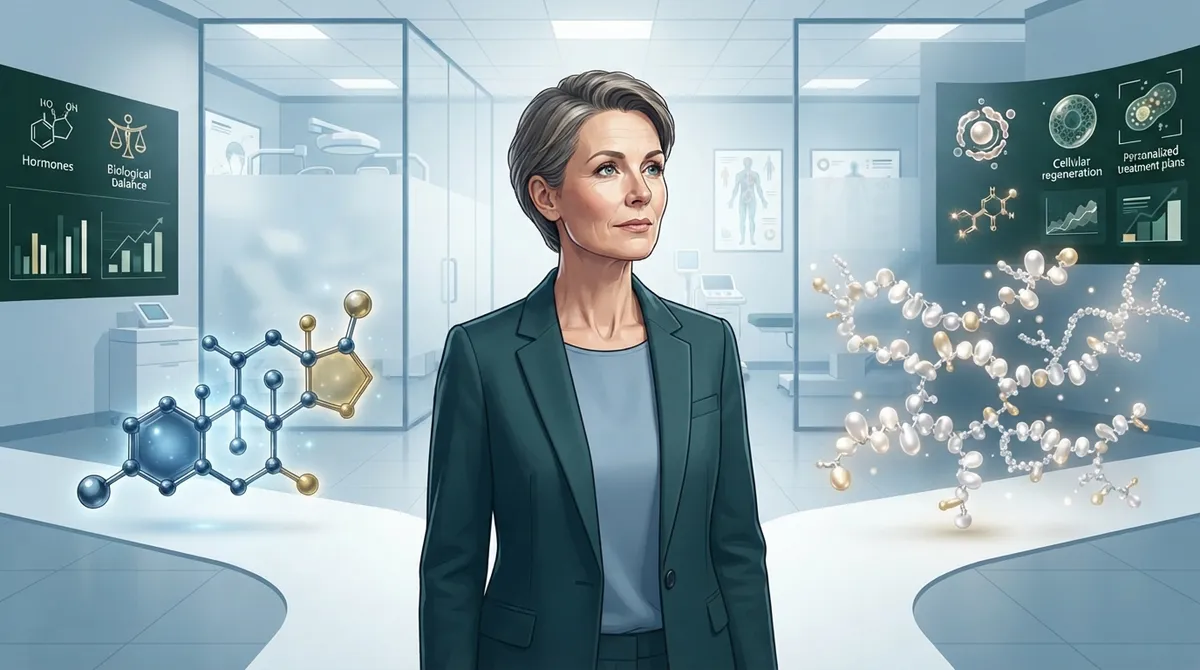
Key Takeaways
-
Testosterone therapy for women has FDA approval only for postmenopausal HSDD (low sexual desire), not for fatigue, energy, mood, weight loss, or cognitive issues despite common marketing claims.
-
No FDA-approved testosterone product exists specifically for women in the US; providers use male formulations at much smaller, carefully monitored doses as off-label treatment.
-
Proper dosing requires baseline bloodwork and regular monitoring every 3-6 months to keep testosterone levels within normal premenopausal female range, avoiding androgenic side effects like acne, voice changes, or abnormal bleeding.
-
Testosterone therapy and peptide therapy address different goals and can be used together—testosterone for sexual desire, peptides for energy, recovery, weight management, and sleep.
-
Candidates for testosterone therapy must have persistent, distressing low sexual desire after menopause and have ruled out other causes like depression, medication side effects, or relationship stress before starting treatment.
-
Telehealth platforms enable accessible monitoring with virtual consultations, local lab work through LabCorp, and home delivery of treatment, making ongoing provider supervision more practical for busy patients.
If you’ve been feeling like your spark just isn’t there anymore, you’re not alone. So many women tell us the same thing: low energy, low mood, and a libido that seems to have packed its bags and left. Naturally, you start Googling, and two options keep popping up: testosterone therapy women and peptide therapy. But which one actually fits your goals? Let’s break it down together, friend to friend, so you can walk into your next doctor’s visit feeling confident and informed.
This isn’t about scary jargon or one-size-fits-all advice. It’s about understanding what testosterone therapy for women really does, what it doesn’t do, and how it stacks up against the personalized peptide protocols that clinics like peptides for women programs offer. We’ll walk through the real evidence, the honest risks, and how to know which path (or combination) makes sense for your body. Grab a coffee, get comfy, and let’s dig in.
What Is Testosterone Therapy for Women, Really?
Testosterone therapy for women is the use of low-dose testosterone, usually as a cream, gel, or patch, to treat a very specific condition. That condition is called postmenopausal hypoactive sexual desire disorder, or HSDD for short. It’s a mouthful, but the concept is simple: persistent, distressing low sexual desire after menopause.
Here’s something a lot of people don’t realize. There is currently no FDA-approved testosterone product made specifically for women in the United States. Providers use male formulations, but at much smaller, female-appropriate doses. This is called “off-label” use, and it’s common, legal, and can be done safely under proper medical supervision.
According to a major 2019 Global Consensus review, testosterone therapy is really only backed by strong evidence for one thing: treating HSDD in postmenopausal women. That review pulled from a huge body of research, including a meta-analysis of 36 randomized controlled trials involving 8,480 women. That’s a lot of data pointing to one clear conclusion.
Who Actually Qualifies for Testosterone Therapy?
Not every woman with low energy or a dip in her sex drive is a candidate. Good clinical practice involves a full biopsychosocial assessment first. This means your provider looks at your hormones, your relationship, your stress levels, and your mental health, not just a single lab number.
- Postmenopausal women with persistent, distressing low sexual desire
- Women who have already ruled out other causes like depression, medication side effects, or relationship stress
- Women whose blood work supports safe, monitored testosterone dosing
- Women committed to regular follow-up labs and provider check-ins
- Women who understand this is an off-label treatment with limited long-term data
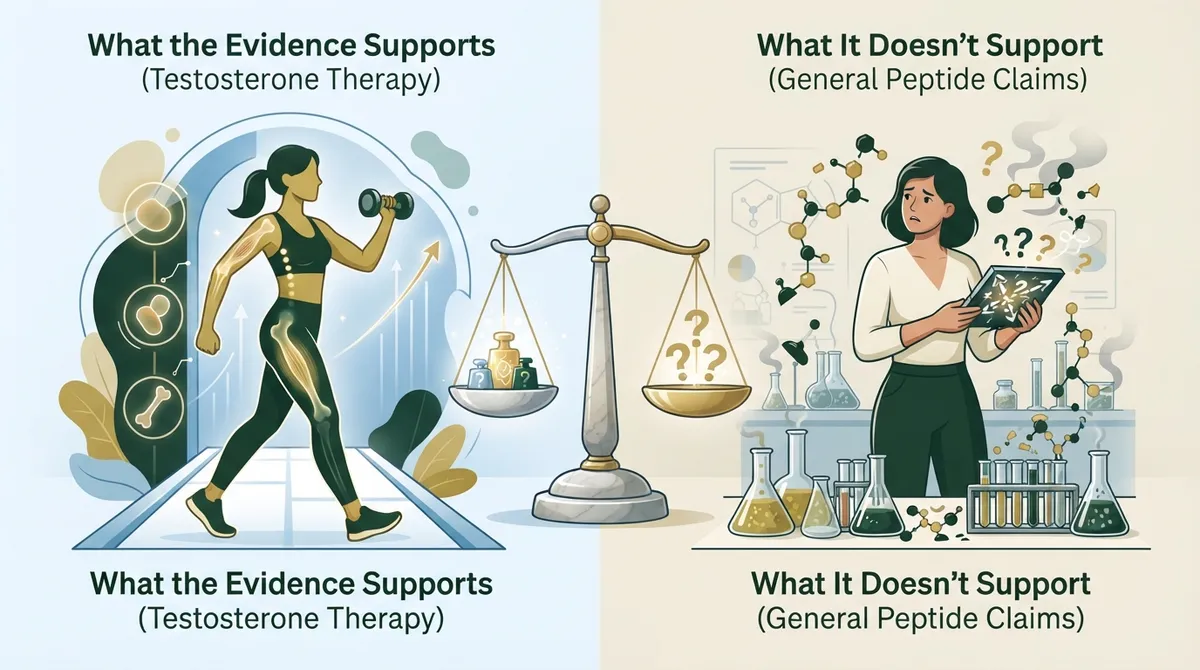
What the Evidence Actually Supports (and What It Doesn’t)
This is the part that surprises people the most. Testosterone therapy for women has a narrow, well-defined lane. It’s not a magic bullet for everything hormone-related.
Research reviewed in a clinical summary published by the National Library of Medicine shows the evidence is strongest for improvements in sexual desire, arousal, satisfaction, and orgasm in the right candidates. That’s it. That’s the well-supported win.
Here’s what the current research does NOT support, despite what you might read on social media:
- Testosterone therapy for general fatigue or low energy
- Testosterone as a cognitive booster or “brain fog” fix
- Testosterone for mood stabilization or anxiety relief
- Testosterone for bone density improvement outside of HSDD studies
- Testosterone for cardio-metabolic health or disease prevention
- Testosterone as a weight loss or body composition tool on its own
So if a clinic promises testosterone will fix your sleep, your energy, and your waistline all at once, that’s a big claim without a big evidence base behind it. That’s actually where thoughtfully designed peptide protocols often step in to fill the gaps testosterone alone can’t cover.
Dosing and Monitoring: Why It Matters So Much
Clinical guidance is very clear here: doses should keep blood testosterone levels within the normal premenopausal female range. Not male range. Not “more is better.” Just enough to restore what’s naturally been lost.
| Dosing Approach | Typical Use | Monitoring Needed |
|---|---|---|
| Low-dose transdermal cream | Off-label HSDD treatment | Baseline labs, follow-up at 3-6 months |
| Low-dose gel or solution | Off-label HSDD treatment | Regular blood level checks |
| Male-dosed formulations (not recommended) | Inappropriate for female patients | High risk of side effects |
Skipping the monitoring step is where things go sideways. Providers need to track your levels closely to avoid pushing you into a range that causes unwanted side effects.
Testosterone Therapy vs. Peptide Therapy: Side by Side
So how does testosterone therapy for women actually compare to peptide therapy? They’re not really competing treatments. Think of them as tools with very different jobs.
| Feature | Testosterone Therapy | Peptide Therapy |
|---|---|---|
| FDA Status | No FDA-approved product for women (off-label use) | Varies by peptide; many used under medical supervision |
| Primary Evidence-Based Use | Postmenopausal HSDD (low sexual desire) | Weight loss, recovery, sleep, skin, energy support |
| Delivery Method | Topical cream, gel, or patch | Injectable, delivered at home with training |
| Monitoring Needs | Regular blood testosterone levels | LabCorp bloodwork and periodic provider check-ins |
| Best Suited For | Women with distressing low libido after menopause | Broader wellness, recovery, and metabolic goals |
Curious what those peptides actually are and how they work? Our article on 8 Facts That Explain What Are Peptides in 2026 breaks it down in plain, simple language.
Where the Two Can Work Together
Here’s the honest truth: testosterone and peptides aren’t rivals. Some women benefit from a combination approach, using testosterone for HSDD symptoms while using targeted peptides for energy, recovery, or weight management.
For example, someone dealing with both low libido and stubborn weight gain might explore testosterone for the sexual symptoms while working with their provider on a separate, evidence-based plan like the ones outlined in 13 Peptides for Fat Loss That Really Work in 2026. Two different problems, two different tools, one coordinated plan.
Side Effects and Safety Concerns You Should Know
No treatment is without risk, and testosterone therapy for women is no exception. Being informed helps you make the right call for your body.
- Androgenic effects like acne, oily skin, or unwanted hair growth
- Voice changes in rare cases with improper dosing
- Abnormal bleeding patterns
- Uncertainty around long-term breast and cardiovascular safety
- Lack of long-term safety data overall, according to major medical sources
This is exactly why working with a licensed provider matters so much. Self-dosing or using unmonitored products bought online is genuinely risky. Regular labs catch problems early, before they become bigger issues.
How Monitoring Should Work
A responsible provider doesn’t just hand you a prescription and wish you luck. Good care looks like an ongoing partnership.
- Start with a full consultation and symptom review
- Complete baseline blood work to check hormone levels
- Begin a conservative, low starting dose
- Recheck labs at three to six months
- Adjust dosing based on symptoms and lab results together
- Continue periodic monitoring for as long as therapy continues
This is the same philosophy behind personalized peptide plans too. If you want to understand what that process looks like in practice, check out How to Start Peptide Therapy Safely and See Real Results.
Why Telehealth Makes This So Much Easier
Let’s be real: nobody has time to sit in a waiting room for two hours just to talk about hormones. That’s where telehealth changes the game, especially for busy professionals juggling work, family, and everything in between.
With a telehealth model, you can complete your consultation from your couch, get your labs done locally through LabCorp, and have your treatment plan shipped straight to your door. No commute, no waiting room small talk, just care that fits your actual life.
Allura Longevity offers exactly this kind of experience. Clients start with an affordable $50 virtual consultation, complete labs through LabCorp, and receive a personalized six-month plan built around their own bloodwork and goals. Ongoing monitoring is led by Ashley, a board-certified Family Nurse Practitioner, so you’re never guessing alone. Curious how telehealth stacks up against in-person clinics? Take a look at Local Clinic vs. Telehealth: Best Peptide Therapy Near You?
Is This the Same as Peptide Therapy?
Not quite, and that’s an important distinction. Testosterone therapy and peptide therapy work through different mechanisms and address different concerns. Testosterone is a hormone, while what are peptides are short chains of amino acids that signal your body to do specific things, like boost growth hormone release or support tissue repair.
That’s why clinics that offer both should always evaluate them separately, with separate evidence bases and separate monitoring plans. If you’re curious how peptides support other goals like muscle recovery, our guide on 14 Peptides for Muscle Gain Worth Knowing (2026) is a great next read.
Making the Right Choice for Your Body
Here’s a simple way to think about it. If your main concern is a lasting, distressing drop in sexual desire after menopause, testosterone therapy might genuinely be worth discussing with your provider. If your goals are broader, like better sleep, more energy, faster recovery, or support with weight management, a personalized peptide plan may be the better starting point.
- Distressing low libido after menopause: consider testosterone therapy
- Low energy and poor sleep: consider peptide options built for energy support
- Slow recovery from workouts or injury: consider recovery-focused peptides
- Weight management goals: consider GLP-1 based peptide protocols
- Combination of concerns: consider a coordinated plan with your provider
Whatever you decide, the most important step is getting real labs and real guidance, not guessing based on an influencer’s Instagram story.
Final Thoughts: You Deserve Answers, Not Guesswork
Feeling like yourself again isn’t too much to ask for. Whether that means exploring testosterone therapy for women, personalized peptide protocols, or a thoughtful mix of both, the goal is the same: getting your body real support based on real data. You’ve spent enough time feeling dismissed or told “it’s just aging.” You deserve a plan built specifically around your labs, your goals, and your life.
If you’re ready to stop guessing and start understanding what your body actually needs, our team at Allura Longevity would love to help you take that next step. Spots for new clients open up each month, and they fill quickly, so don’t wait too long to reach out. Request a consultation today and let’s build a plan that finally makes sense for you.
FAQs
Q: What is testosterone therapy for women?
A: It’s a low-dose, off-label treatment using testosterone creams or gels to help postmenopausal women with distressing low sexual desire, also known as HSDD. It’s not a general energy or anti-aging treatment, even though it’s sometimes marketed that way.
Q: Is testosterone therapy FDA-approved for women?
A: Nope, there’s currently no testosterone product approved by the FDA specifically for women in the United States. Providers use male formulations at much smaller, carefully monitored doses instead.
Q: What are the real benefits of testosterone therapy for women?
A: The strongest, best-supported benefits are improved sexual desire, arousal, satisfaction, and orgasm in postmenopausal women with HSDD. Claims about energy, mood, or weight loss just aren’t backed by solid research yet.
Q: Is testosterone therapy the same as peptide therapy?
A: Not at all, friend! Testosterone is a hormone, while peptides are small protein signals that tell your body to do specific things like support recovery or metabolism. They work differently and often serve different goals.
Q: How is testosterone dosed and monitored in women?
A: Good care starts with baseline labs, then a low starting dose, followed by follow-up bloodwork every few months. The goal is keeping your levels within the normal premenopausal female range, not pushing them higher than that.





