
Key Takeaways
-
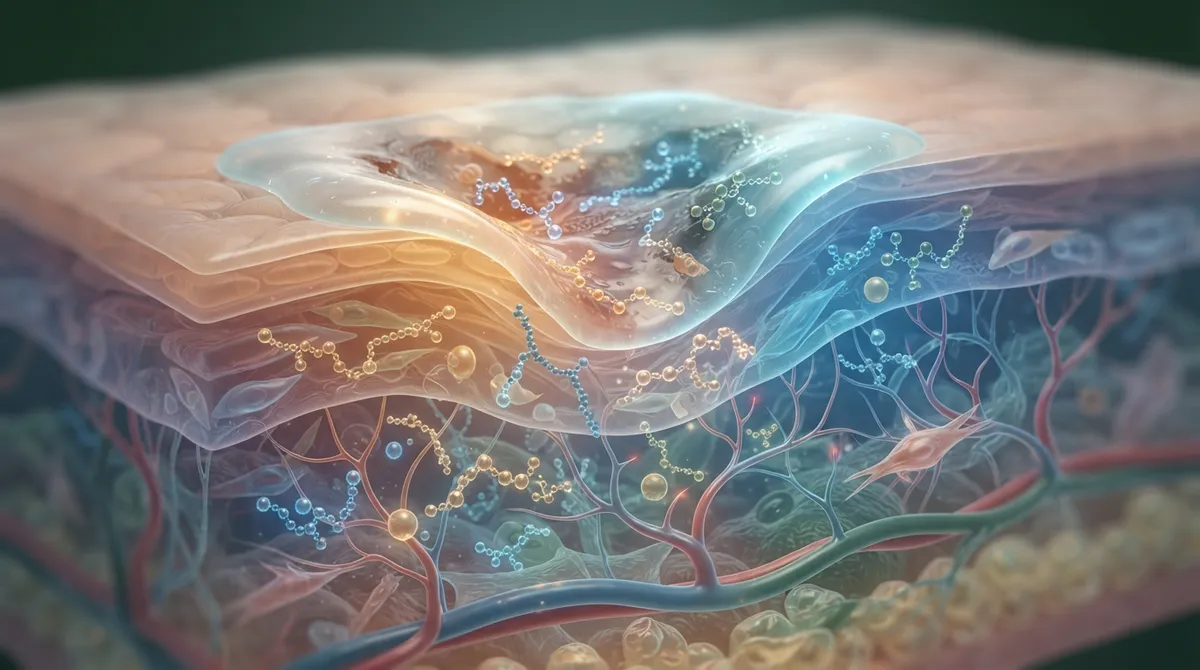
Peptides support multiple wound-healing stages simultaneously by reducing inflammation, fighting bacteria, boosting blood vessel formation, and increasing collagen production, making them valuable for chronic or slow-healing wounds.
-
Thymosin beta-4 and antimicrobial peptides have the strongest research backing, with AMPs offering dual action by fighting infection while promoting cell migration and tissue rebuilding in infected wounds.
-
Collagen peptides improve wound-healing efficiency by 10-30% depending on wound type, providing meaningful recovery acceleration for post-surgery, injury, or skin damage.
-
Delivery method significantly impacts peptide effectiveness; hydrogels, specialized dressings, and nanoparticle carriers prolong peptide release at the wound site, while cyclic peptides maintain better stability than linear peptides.
-
Most strong evidence remains preclinical; while newer peptides like Healitide-GP1 and OA-GL12 show promising lab results, fewer have completed full human clinical trials, requiring realistic expectations and licensed medical supervision.
-
Personalized peptide therapy requires comprehensive blood work, licensed provider consultation, and ongoing monitoring rather than self-diagnosis, as body chemistry and health status determine which peptide treatment actually works for individual healing goals.
If you’ve ever waited weeks for a stubborn scrape or post-workout injury to heal, you know how frustrating slow recovery can feel. Your body is amazing at repairing itself, but sometimes it needs a little extra support. That’s where peptides for wound healing come into the picture, and honestly, the science here is pretty exciting.
Peptides are tiny chains of amino acids that act like messengers in your body. They tell your cells what to do, when to grow, and how to repair damage. Some peptides specifically target the wound-healing process by fighting infection, boosting blood flow, or encouraging collagen production. Whether you’re an athlete nursing a nagging injury, someone focused on skin health, or just curious about longevity science, this guide breaks down six of the most talked-about peptides in wound repair. We’ll keep things simple, friendly, and packed with real information you can actually use.
Why Peptides Matter for Wound Repair
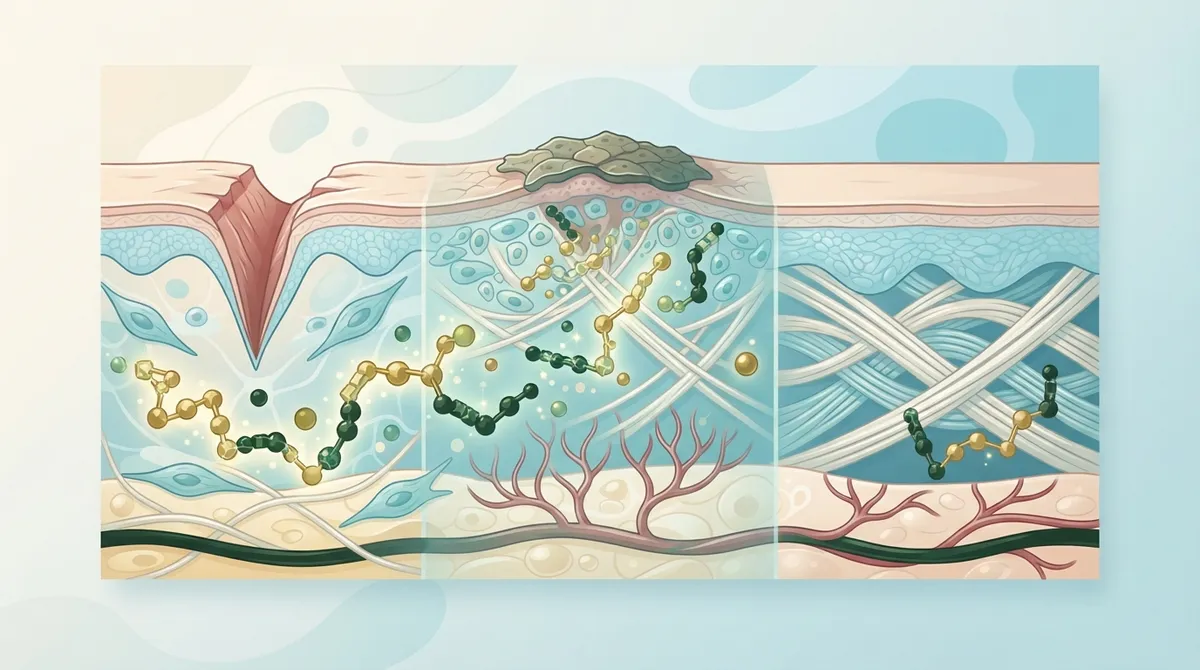
Wound healing isn’t a single event. It’s a multi-step process that includes stopping bleeding, fighting off germs, building new tissue, and remodeling skin so it looks and functions like it should. Peptides are considered multifunctional wound-healing agents because they can support several of these steps at the same time, including inflammation control, cell growth, new blood vessel formation, and tissue remodeling.
This is a big deal for anyone dealing with chronic wounds, slow-healing injuries, or skin that just doesn’t bounce back like it used to. According to the what are peptides overview from WebMD, these compounds are already being used in many areas of medicine, and wound care is one of the most promising applications.
The Multiple Stages Peptides Can Support
- Reducing excess inflammation so healing doesn’t stall
- Fighting bacteria that can slow down or infect a wound
- Encouraging new blood vessels to form (angiogenesis)
- Boosting collagen production for stronger, healthier skin
- Helping skin cells migrate and close the wound faster
- Supporting tissue remodeling so scars are less noticeable
1. Thymosin Beta-4: The Regeneration Specialist
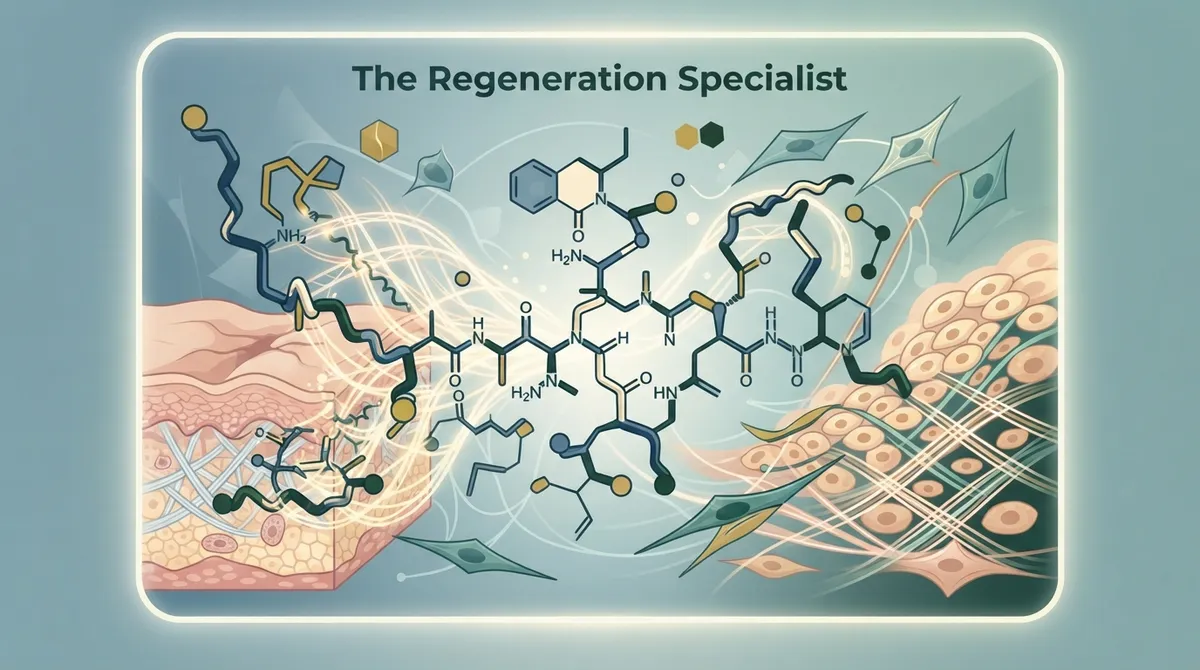
Thymosin beta-4 is one of the most studied peptides in this space, and for good reason. Research suggests it can reduce inflammation and enhance angiogenesis, which basically means it helps your body build new blood vessels faster. More blood flow to an injury site often means quicker healing.
This peptide has become popular among people interested in recovery and longevity because it works on multiple fronts at once. If you’re curious how peptides like this fit into a bigger picture of vitality and repair, our article on what peptides actually are is a great place to start.
2. Antimicrobial Peptides: Nature’s Infection Fighters
Chronic and infected wounds are especially tricky because bacteria can slow healing to a crawl. Antimicrobial peptides, often called AMPs, are getting a lot of attention because they can inhibit a wide range of microbes while also promoting keratinocyte migration, collagen synthesis, and angiogenesis at the same time.
In simple terms, these peptides fight the bad guys and help rebuild the good stuff simultaneously. That dual action makes them especially valuable for anyone dealing with wounds that just won’t close. A detailed look at this research is available through the antimicrobial peptides for skin wound healing review published on the National Institutes of Health’s research database.
Why Infection Control Matters So Much
- Bacteria can trigger ongoing inflammation that never resolves
- Infected wounds often stall in the early healing stages
- Antimicrobial resistance is a growing concern with traditional treatments
- Peptides offer a different mechanism that bacteria haven’t adapted to yet
3. Collagen Peptides: Building the Foundation
Collagen is the structural protein that gives skin its strength and elasticity. Collagen peptides are being studied for wound repair because they may support collagen synthesis, help skin cells cover the wound (re-epithelialization), and assist with signaling pathways that control tissue remodeling.
The numbers here are genuinely encouraging. Some review literature reports that collagen peptides have improved wound-healing efficiency by roughly 10% to 30%, depending on the wound type and how the peptide is formulated. That’s a meaningful boost for anyone trying to heal faster, whether from surgery, injury, or skin damage.
4. Healitide-GP1: The Fast-Acting Newcomer
This one is turning heads in laboratory research. In vitro studies found that Healitide-GP1 achieved 48% to 52% wound closure within just 24 hours, outperforming several comparator peptides in the same testing model.
While this research is still in early stages, it points to a future where peptide-based wound treatments could work faster than many current options. It’s a great example of how quickly this field is evolving.
5. OA-GL12: A Potent Player in Skin Repair
OA-GL12 has been described as one of the more potent wound-healing peptides in full-thickness skin wound models. Researchers observed that it accelerated keratinocyte scratch healing in a way that was both time-dependent and concentration-dependent, meaning more peptide and more time led to better results.
This kind of dose-responsive behavior is exactly what researchers look for when evaluating whether a peptide could eventually become part of standard wound care.
6. AH90: The Amphibian-Derived Option
Nature has a way of surprising us, and AH90 is a perfect example. This amphibian-derived peptide was shown to accelerate re-epithelialization and granulation tissue contraction in mice. That said, current clinical-trial evidence in humans remains limited, so this one is still mostly in the research phase.
It’s a great reminder that while lab results are exciting, we should stay realistic about what’s proven versus what’s promising.
How These Six Peptides Compare
| Peptide | Main Action | Research Stage | Best Known For |
|---|---|---|---|
| Thymosin Beta-4 | Reduces inflammation, boosts blood vessel growth | Well-studied, some clinical use | Overall tissue regeneration |
| Antimicrobial Peptides | Fights bacteria, supports cell migration | Strong preclinical and clinical interest | Infected or chronic wounds |
| Collagen Peptides | Supports collagen synthesis and remodeling | Multiple supporting studies | Skin strength and structure |
| Healitide-GP1 | Rapid wound closure | Early in vitro research | Speed of early closure |
| OA-GL12 | Keratinocyte migration acceleration | Animal model research | Full-thickness wound repair |
| AH90 | Re-epithelialization support | Early animal studies | Novel, amphibian-derived compound |
How Peptides Are Actually Delivered
One thing that surprises a lot of people is that peptides aren’t just injected and forgotten. Delivery matters a lot for how well they work. Peptides can be incorporated into hydrogels, dressings, or nanoparticle-based formulations, which helps prolong their release and improve activity right at the wound site.
Common Delivery Methods
- Hydrogel formulations that keep the wound moist and peptide-rich
- Specialized wound dressings infused with active peptides
- Nanoparticle carriers that slowly release peptides over time
- Injectable formulations for systemic or targeted support
- Cyclic peptide structures designed for better stability
Speaking of stability, cyclic peptides are attractive in wound-healing research because their ring-shaped structure can improve stability and pharmacokinetics compared with straight-chain (linear) peptides. This means they may stay active longer in the body, which is a real advantage.
The Honest Truth: What’s Proven vs. What’s Promising
Here’s where we want to be completely upfront with you. Much of the strongest evidence for these peptides is still preclinical. That means many peptides show great success in cell and animal models, but fewer have completed full human clinical trials, especially newer compounds like amphibian-derived peptides.
This doesn’t mean the science isn’t valuable. It means we should approach peptide therapy with realistic expectations and always work with licensed medical providers who understand the current research landscape. A published review in the National Library of Medicine highlights this same gap between laboratory promise and confirmed human evidence, which is worth keeping in mind as you research your own options.
Steps to Take Before Starting Any Peptide Protocol
- Get comprehensive blood work done to understand your baseline health
- Talk with a licensed provider about your specific healing goals
- Ask about the research stage of any peptide you’re considering
- Discuss delivery methods and how they’ll fit your lifestyle
- Set up a monitoring schedule to track your progress over time
- Adjust your plan based on how your body actually responds
Who Tends to Benefit Most
Not everyone needs peptide support for wound healing, but certain groups tend to see the most meaningful benefits. Athletes recovering from soft tissue injuries, people managing slow-healing skin issues, and anyone focused on longevity and tissue repair often find this approach genuinely helpful.
- Active adults recovering from sports injuries or overuse damage
- People noticing slower healing as part of natural aging
- Individuals with chronic or stubborn wounds that need extra support
- Wellness-focused clients already optimizing sleep, nutrition, and recovery
- Busy professionals who want efficient, at-home recovery support
If any of that sounds like you, it might be worth exploring how a personalized plan could fit your situation. Many people find that pairing wound-healing peptides with broader recovery strategies, like those covered in our guide on TB-500 peptide research, gives them a more complete picture of their options.
Why Working With a Licensed Provider Matters
Peptide therapy isn’t a one-size-fits-all deal, and it definitely shouldn’t be a guessing game. Your body chemistry, current health status, and specific healing goals all play a role in what actually works for you.
This is exactly why personalized, medically supervised care matters so much. Allura Longevity focuses on customized peptide therapy plans built from real blood work data, not generic templates. Their licensed providers, led by a board-certified Family Nurse Practitioner, design six-month treatment plans that are shipped directly to your home. That means you get expert guidance without the hassle of constant in-person visits.
What a Personalized Path Typically Looks Like
- Start with a virtual consultation to discuss your health history and goals
- Complete comprehensive blood work through LabCorp
- Receive a customized six-month treatment plan based on your results
- Get your peptides delivered directly to your home
- Stay connected with ongoing monitoring and plan adjustments
If you’re curious about how this process works from start to finish, our guide on how to start peptide therapy safely walks through each step in detail.
Common Mistakes People Make
Even with all this exciting research, there are a few pitfalls worth avoiding. Being aware of these can save you time, money, and frustration.
- Trying to self-diagnose which peptide you need without proper testing
- Skipping blood work and jumping straight to treatment
- Choosing unregulated sources instead of licensed providers
- Expecting overnight results instead of a realistic healing timeline
- Ignoring the importance of proper storage and administration
Avoiding these mistakes starts with working alongside professionals who actually understand the science and your unique needs. It’s also worth reading about common peptide therapy mistakes so you know exactly what to watch for.
Final Thoughts: A Promising Path Forward
Peptides for wound healing represent one of the most exciting frontiers in regenerative and longevity science right now. From thymosin beta-4’s ability to boost blood flow, to antimicrobial peptides fighting infection while rebuilding tissue, to newer discoveries like Healitide-GP1 and OA-GL12, the research keeps getting more impressive every year.
That said, this is still an evolving field. Some peptides have stronger evidence than others, and working with a licensed provider ensures you’re making informed, safe choices for your specific situation. If you’re ready to explore how personalized peptide therapy could support your recovery and overall vitality, now is a great time to take that next step. You can request a consultation with Allura Longevity’s licensed team and get a treatment plan built specifically for your body, your goals, and your healing journey.
FAQs
Q: What are peptides used for in wound healing?
A: Peptides support wound healing by calming inflammation, fighting off infection, boosting blood vessel growth, and encouraging collagen production. They basically act like tiny helpers that speed up several healing steps at once, which is why researchers are so excited about them.
Q: Which peptides are most studied for wound repair?
A: Thymosin beta-4 and antimicrobial peptides are among the most researched options right now, along with collagen peptides for structural support. Newer discoveries like Healitide-GP1, OA-GL12, and AH90 are showing promising early results too, though research is still growing.
Q: Do antimicrobial peptides help with infected wounds?
A: Yes, and it’s honestly one of their coolest features. They can fight a wide range of bacteria while also helping skin cells migrate, boosting collagen, and encouraging new blood vessel growth, all at the same time.
Q: Are peptide treatments for wounds clinically proven or mostly experimental?
A: It’s a mix of both, honestly. Some peptides like thymosin beta-4 have solid research behind them, while others are still mostly studied in labs and animal models. That’s why working with a licensed provider who understands the current evidence really matters.
Q: How are peptides delivered in wound care products?
A: Peptides can be delivered through hydrogels, specialized dressings, nanoparticle formulations, or injections, depending on the goal. Each method is designed to help the peptide stay active longer right at the site where healing needs to happen.





