

Key Takeaways
-
No peptide is FDA-approved to treat menopause or postmenopausal sexual wellness; bremelanotide (PT-141) is approved only for acquired, generalized HSDD in premenopausal women.
-
Menopause-related sexual problems often stem from genitourinary syndrome of menopause (GSM), such as vaginal dryness and painful sex, which can drive low desire and need direct treatment.
-
Bremelanotide can raise blood pressure and is contraindicated in uncontrolled hypertension or known cardiovascular disease, so medical screening and label review come first.
-
Avoid peptides labeled 'research use only' and ask any provider for human clinical trial evidence in women like you, plus lab-guided, licensed supervision before starting any treatment.
If you’re in perimenopause or menopause and your sex life feels different, you are far from alone. Low desire, dryness, discomfort, and changing arousal are common concerns, and many women quietly wonder if there’s a fix. Lately, you may have seen ads for menopause sexual wellness peptides promising to switch everything back on.
Here’s the friendly, honest truth: that phrase is more of a marketing label than a medical category. Some peptides are real, FDA-approved medicines for specific problems. Others are sold with big promises and very little proof. Knowing the difference can save you money, frustration, and risk.
In this guide, we walk through 12 facts that separate evidence from hype. We cover what bremelanotide (PT-141) can and cannot do, why menopause-related sexual symptoms often have other causes, and how to build a safe, lab-guided plan. Whether you’re a health optimizer, a busy professional, or simply a woman who wants to feel like herself again, this is your starting point. For a broader foundation, see 8 Facts That Explain What Are Peptides in 2026.
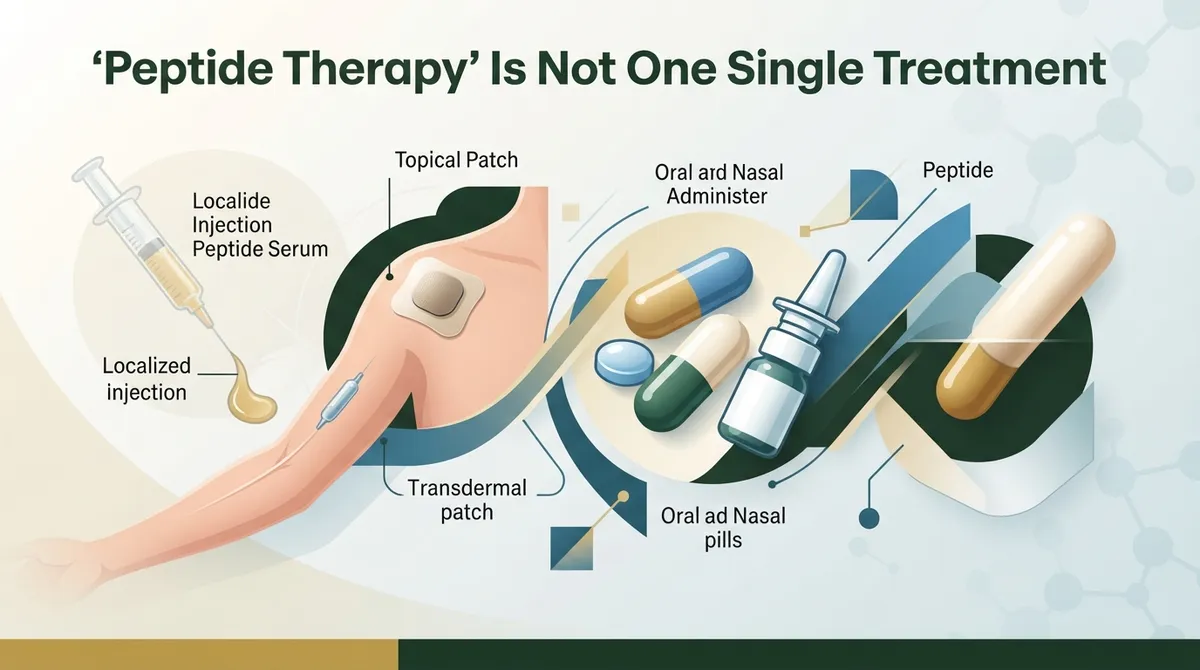
1. “Peptide Therapy” Is Not One Single Treatment
Peptides are short chains of amino acids. Your body makes thousands of them, and they act as messengers. According to WebMD’s overview of what peptides are, they can influence hormones, tissue repair, and more.
But “peptide therapy” covers a huge range of products. Some are FDA-approved medicines. Others are compounded or sold for research use only. Lumping them together is like saying “pills” are one treatment. Always ask which peptide, for which condition, and what the human evidence says.

2. No Peptide Is FDA-Approved to Treat Menopause Itself
This is the most important fact in the whole article. No peptide is FDA-approved to treat menopause, menopausal symptoms broadly, or postmenopausal sexual wellness. Anyone who says otherwise is overstating the science.
That doesn’t mean peptides have no role in a wellness plan. It means we should describe them honestly. If you want to learn how medical options compare, MHT vs. Peptides: Which Helps Menopause More? is a helpful next read.
3. Bremelanotide (PT-141) Is the Best-Known Sexual Wellness Peptide
Bremelanotide, also called PT-141 and sold as Vyleesi, is a synthetic peptide that activates melanocortin receptors. It is thought to act on brain pathways tied to desire, rather than on blood flow alone.
It is the one peptide in this space with an FDA approval. But the approval is narrow, and that’s where many online claims go wrong. Let’s look at exactly what it covers.
4. The FDA Approval Is Only for Premenopausal Women
Bremelanotide is FDA-approved for acquired, generalized hypoactive sexual desire disorder (HSDD) in premenopausal women. The approval came in 2019. It does not cover postmenopausal women, and it does not cover menopause in general.
That detail matters a lot. If you’re past menopause, using PT-141 would be an off-label choice made with a licensed clinician, not an approved use. You can read more in 9 Intimate Wellness Facts About PT-141 in 2026.
| Question | What the Evidence Says |
|---|---|
| Who is PT-141 approved for? | Premenopausal women with acquired, generalized HSDD |
| Is it approved for postmenopausal women? | No |
| Is it approved to treat menopause? | No |
| Does it treat vaginal dryness or painful sex? | No, those need separate evaluation |
5. The Trial Evidence Is Real but Modest
In two 24-week phase 3 RECONNECT trials, bremelanotide improved desire scores versus placebo. The reported between-group changes were 0.30 and 0.42, both statistically significant (p<0.001). Distress about low desire also dropped (−0.37, p<0.001; and −0.29, p=0.005).
Those are real wins, but they are modest on average. Bremelanotide is not a general libido booster, and it doesn’t fix every cause of sexual difficulty. Think of it as one tool for one specific problem.
6. Those Trials Studied Premenopausal Women
Here’s the catch many ads skip. The pivotal trials enrolled premenopausal women with HSDD. We can’t assume the same results apply after menopause.
Postmenopausal sexual concerns often have different drivers, such as tissue changes, pain, medication effects, or relationship stress. A separate 12-week dose-finding study also looked only at premenopausal women, finding about 0.7 more satisfying sexual events per month versus 0.2 with placebo (p=0.018). Again, that is not evidence for postmenopausal women.
7. Side Effects and Safety Rules You Should Know
Bremelanotide’s common side effects include nausea, flushing, and headache. It can also temporarily raise blood pressure. The prescribing information lists uncontrolled hypertension and known cardiovascular disease as contraindications.
Here are the key safety points to review with a clinician:
- Your blood pressure history and any heart conditions
- All current medications and supplements
- How you tolerate nausea or flushing
- The full prescribing information, not just a product page
This is why a medical screening comes first, not last.
8. Many “Menopause Peptides” Are Not Established Therapies
Some clinics promote other peptides for menopause. These may be compounded or sold as research-use products. They should not be treated as proven menopause treatments.
Evidence, product quality, regulatory status, and safety vary a lot. Before you trust any claim, check for human clinical trials and read what the FDA says. Our guide on FDA-Approved vs. Compounded Peptides: What Wins? breaks down the differences.
| Peptide Type | Typical Status | What to Ask |
|---|---|---|
| Bremelanotide (Vyleesi) | FDA-approved, narrow indication | Does my situation match the label? |
| Compounded peptides | Not FDA-approved as finished products | Who compounds it, and how is quality verified? |
| Research-use products | Not for human use | Why is a clinic selling this for people? |
9. Menopause-Related Sexual Symptoms Often Mean GSM
Many women assume low desire is the whole story. In reality, genitourinary syndrome of menopause (GSM) is a very common cause of discomfort. GSM involves vaginal dryness, irritation, urinary symptoms, and pain with sex, all linked to falling estrogen.
If sex hurts, desire often drops as a protective response. Treating the pain can improve interest without touching desire at all. That’s why a peptide aimed at desire may miss the real problem.
10. Evidence-Based GSM Options Exist
The 2025 AUA/SUFU/AUGS guideline on GSM describes supportive evidence for both vaginal and systemic hormonal approaches. It also notes there isn’t enough evidence to say one is better than the other. Choice depends on your symptoms, health history, and preferences.
You can read the research summaries through the National Library of Medicine. And to understand hormone choices, explore 10 Safest Hormone Therapy Options for Women (2026).
11. A Good Evaluation Sorts Out the Real Cause
A thoughtful clinician won’t jump straight to a product. They’ll help you sort out what’s actually happening. Sexual concerns after midlife often overlap, so the details matter.
- Name the concern. Is it low desire, dryness, pain, trouble with arousal, or difficulty with orgasm?
- Check distress. Does it bother you? Distress is part of how clinicians define a disorder.
- Review medications. Antidepressants, blood pressure drugs, and others can affect desire.
- Look at health factors. Sleep, mood, thyroid, stress, and relationship factors all play a role.
- Run labs. Blood work helps spot hormone and metabolic issues worth addressing.
This is the same lab-first approach we describe in 6 Real Treatments for Low Libido in Women (2026).
12. Safe Peptide Care Starts With Labs and a Licensed Provider
If you’re curious about peptides as part of a broader wellness plan, the safest path is medical supervision. That means a licensed provider, real blood work, and a plan built around your goals, not a one-size-fits-all bottle.
At Allura Longevity, clients begin with a $50 virtual consultation and complete blood work through LabCorp. Licensed providers, led by Ashley, a board-certified Family Nurse Practitioner, then design a customized six-month plan. Treatments are delivered to your home, with ongoing monitoring and adjustments. Telehealth is available in Florida, Georgia, Texas, Connecticut, Indiana, Maryland, New York, and California.
Not sure how to begin? How to Start Peptide Therapy Safely and See Real Results walks through the first steps. You can also explore peptides for women to see how personalized care works.
Quick Checklist Before You Try Any Sexual Wellness Peptide
- Confirm the peptide’s regulatory status with the FDA
- Ask for human clinical trial evidence in women like you
- Get blood pressure and cardiovascular risks reviewed
- Rule out GSM, pain, and medication effects first
- Avoid anything labeled “research use only”
- Choose a licensed provider who monitors you over time
Conclusion: Hope Is Real, but So Is Honesty
Changes in intimacy during menopause are common, valid, and often very treatable. The best results come from understanding the real cause, not from chasing a trendy label. Bremelanotide has an FDA-approved role for premenopausal HSDD. Beyond that, most “menopause sexual wellness peptides” claims need healthy skepticism.
The good news is that you have options, from GSM treatments to hormone therapy to carefully supervised peptide plans. You deserve a provider who listens, tests, and tells you the truth. Limited spots are available for new clients each month, so if you’re ready to talk it through, request a consultation with Allura Longevity or call (813) 510-6277. Your comfort, confidence, and vitality are worth a real plan.
FAQs
Q: Are any peptides FDA-approved to treat menopause or postmenopausal low libido?
A: No. No peptide is FDA-approved to treat menopause, menopausal symptoms broadly, or postmenopausal sexual wellness. Bremelanotide (PT-141) is approved only for acquired, generalized HSDD in premenopausal women, so it’s best to talk with a licensed provider about what fits you.
Q: Does PT-141 (bremelanotide) work for women after menopause?
A: We don’t have strong evidence yet. The pivotal trials studied premenopausal women, so those results shouldn’t be assumed to apply after menopause. Any use in postmenopausal women would be off-label and should happen under medical supervision.
Q: What are the side effects and contraindications of bremelanotide?
A: Common side effects include nausea, flushing, and headache. It can also temporarily raise blood pressure, and it’s contraindicated in uncontrolled hypertension or known cardiovascular disease. A clinician should review the full label and your personal risks first.
Q: Can peptides treat vaginal dryness or painful sex after menopause?
A: Peptides aren’t an established treatment for these symptoms. Dryness and pain are often signs of genitourinary syndrome of menopause (GSM), which has evidence-based options like vaginal and systemic hormonal approaches. A proper evaluation helps match the treatment to the real cause.
Q: Are compounded or online peptide products safe and FDA-approved?
A: Not necessarily. Compounded and research-use peptides aren’t FDA-approved as finished products, and quality and safety can vary widely. It’s smartest to work with a licensed provider who uses real lab work and explains exactly what you’re receiving.





