

Key Takeaways
-
Low testosterone requires confirmed lab testing below 300 ng/dL with multiple morning tests before diagnosis; a single low reading is insufficient for hypogonadism confirmation.
-
TRT produces noticeable results in 2-4 weeks while peptide therapy takes 4-12 weeks; choose based on your timeline preferences and whether you want faster or more gradual symptom improvement.
-
Testosterone replacement can suppress natural sperm production and fertility; if you plan to have children soon, discuss this with your provider before starting treatment.
-
Peptide therapy signals your body to produce its own hormones naturally, while TRT directly replaces testosterone—different mechanisms that may affect fertility differently and require different treatment approaches.
-
Compounded bioidentical products have less consistent quality control than FDA-approved therapies; verify the prescribing provider’s credentials and ask about sourcing and testing standards.
-
Personalized, monitored care with regular blood work adjustments is essential; generic treatment protocols don’t work for all men, so data-driven customization based on your specific labs and symptoms matters significantly.
If you’ve been feeling foggy, tired, or just not like yourself lately, you’re not alone. Millions of men hit a point where energy dips, motivation fades, and the gym results just don’t show up like they used to. Bioidentical hormone replacement for men has become one of the most talked-about solutions, and honestly, it’s easy to see why. But between TRT clinics, peptide protocols, and confusing marketing claims, it’s tough to know what’s real and what’s just hype.
That’s exactly why we put together this friendly, no-nonsense guide. We’ll walk through what bioidentical hormone replacement actually means, how it compares to peptide therapy, and what current medical guidance says about safety and results. Whether you’re a busy professional looking for convenient care, a biohacker who loves data, or someone simply trying to feel like yourself again, this list has something for you. Let’s get into the 11 facts every man should know before starting treatment.

1. Bioidentical Hormone Replacement Means Testosterone Identical to Your Own
Bioidentical hormone replacement therapy, often shortened to BHRT, uses hormones that are structurally identical to what your body naturally makes. For men, this almost always means testosterone. The idea is simple: your body can’t tell the difference between the testosterone it produces and the bioidentical version delivered through a gel, injection, or pellet.
This matters because it means the hormone works the way your body expects it to. It’s not a synthetic look-alike. It’s the real molecule, just given from an outside source when your body isn’t making enough on its own.
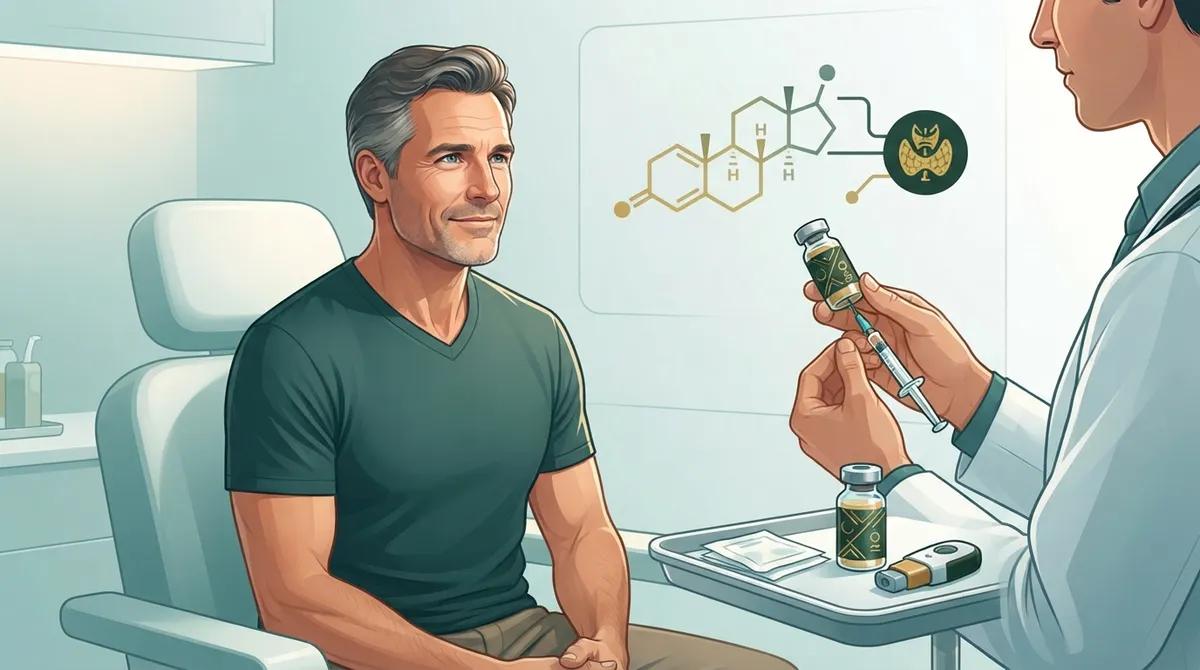
2. TRT Is the Most Common Form of Bioidentical Hormone Therapy for Men
When people say “bioidentical hormone replacement men,” they’re usually talking about testosterone replacement therapy, or TRT. This is the FDA-approved path for men with confirmed low testosterone.
TRT comes in a few forms:
- Topical gels applied daily to the skin
- Injections given weekly or biweekly
- Subcutaneous pellets inserted every few months
- Patches worn on the body
Each option has pros and cons depending on your lifestyle, comfort level, and how consistent you want your hormone levels to stay. If you want a deeper breakdown, our guide on understanding testosterone replacement therapy in 2026 covers the details.
3. Low Testosterone Has a Clear Diagnostic Threshold
You can’t just decide you have low T based on how tired you feel. Doctors look at actual lab numbers. A commonly used cutoff is below 300 ng/dL, though some guidelines use a range of 250 to 350 ng/dL depending on the organization.
Here’s why this matters so much: testosterone naturally fluctuates throughout the day. That’s why guidelines recommend measuring levels on more than one morning test before making a diagnosis. One low reading isn’t enough to confirm hypogonadism.
| Testosterone Level (ng/dL) | General Interpretation |
|---|---|
| Above 350 | Typically considered normal |
| 300–350 | Borderline, may need further testing |
| Below 300 | Often flagged as low testosterone |
| Below 250 | Strong indicator of hypogonadism |
4. Endocrine Guidelines Support TRT for Diagnosed Hypogonadism
This isn’t just a wellness trend. Major medical organizations back TRT when it’s used correctly. The Endocrine Society has stated that TRT has clear benefits for men with properly diagnosed hypogonadism caused by issues affecting the testes, pituitary, or hypothalamus.
A 2026 endocrine statement reaffirmed this, noting that TRT at doses similar to natural production levels offers real benefits for men who meet diagnostic criteria. This is reassuring if you’ve been on the fence about whether treatment is medically legitimate.
5. Peptide Therapy Works Differently Than Hormone Replacement
Here’s where things get interesting for anyone exploring options beyond traditional TRT. Peptide therapy does not directly replace testosterone. Instead, peptides act as signaling molecules that encourage your body to produce more of its own hormones naturally.
Think of it like the difference between refilling a gas tank versus tuning up the engine so it runs more efficiently on its own. Both can get you moving again, but they work through completely different mechanisms. If you want a full breakdown of what these molecules actually do, check out this resource on what are peptides.
6. Some Peptides Support Natural Hormone Production
A few peptide protocols are specifically discussed in the context of hormonal balance. Gonadorelin and kisspeptin are two examples that come up often. These peptides are generally positioned as support for the body’s own production system rather than a replacement for testosterone therapy.
This distinction is important. Peptides aren’t marketed as a substitute for TRT in men with clear hypogonadism. They’re more often used to support the body’s signaling pathways, especially in men who want to preserve fertility or avoid suppressing natural production.
7. Fertility Is a Major Consideration Before Starting TRT
Here’s something a lot of men don’t realize until it’s too late: exogenous testosterone can suppress your body’s own hormone production. This includes sperm production. Guidelines caution against starting testosterone therapy in men who plan on having children soon.
If fertility is on your radar, this is a conversation you absolutely need to have with your provider before starting any hormone treatment. Peptide-based approaches that support natural production may be worth discussing as an alternative or complementary option.
8. Results Timelines Differ Between TRT and Peptides
Patience looks different depending on which path you choose. TRT tends to produce noticeable symptom changes fairly quickly, often within 2 to 4 weeks. Peptide-based approaches are typically slower and more gradual, with noticeable effects showing up around 4 to 12 weeks.
Neither timeline is “better.” It really depends on your goals, how quickly you want results, and whether you’re comfortable with a more gradual, natural-feeling approach. For a detailed look at what to expect, see how long for peptide therapy results really takes.
Quick Comparison Table
| Factor | TRT (Bioidentical Testosterone) | Peptide Therapy |
|---|---|---|
| Mechanism | Directly replaces testosterone | Signals body to produce more hormones |
| Time to Results | 2–4 weeks | 4–12 weeks |
| Fertility Impact | Can suppress natural production | Generally more fertility-friendly |
| Monthly Cost | $200–$500 | $150–$500 (some protocols $1,000+) |
| FDA-Approved | Yes, for diagnosed hypogonadism | Varies by peptide |
9. Compounded Bioidentical Products Aren’t the Same as FDA-Approved Therapies
This is a fact that trips up a lot of people. Bioidentical testosterone is the same molecule as what your body naturally makes. But compounded “bioidentical” products made at specialty pharmacies are not the same as FDA-approved therapies.
According to research published through the National Library of Medicine, compounded products may have less consistent quality control compared to regulated pharmaceutical options. This doesn’t mean compounded products are bad, but it does mean you should ask questions about sourcing, testing, and the credentials of the provider prescribing them.
10. Costs Vary Widely Depending on Your Approach
Budgeting for hormone therapy or peptide protocols can feel a little like guessing in the dark if nobody gives you real numbers. Here’s what current data shows:
- TRT typically runs $200 to $500 per month
- Standard peptide therapy usually falls between $150 and $500 per month
- Some advanced peptide protocols can exceed $1,000 per month
Costs depend on the specific treatment, dosage, delivery method, and whether insurance covers any portion. If you want a full cost breakdown, our article on real testosterone therapy cost facts for 2026 is worth a read. There’s also helpful info on avoiding hormone therapy cost mistakes that drain your wallet.
11. Personalized, Monitored Care Makes All the Difference
Here’s the honest truth: hormone therapy isn’t one-size-fits-all. What works wonders for your buddy at the gym might not be right for you at all. Your labs, your symptoms, your goals, and your health history all matter.
This is where working with a licensed provider really pays off. At Allura Longevity, treatment starts with a simple $50 virtual consultation and full blood work through LabCorp. From there, licensed providers, led by board-certified Family Nurse Practitioner Ashley, build a customized six-month plan based entirely on your results. Everything ships right to your door, and your plan gets adjusted along the way as your body responds.
This kind of ongoing, personalized monitoring is exactly what current medical guidance recommends. It’s not about guessing. It’s about tracking real data and adjusting treatment to match what your body actually needs.
Why Men Are Choosing Peptide Therapy Alongside Hormone Support
A lot of men exploring bioidentical hormone replacement are also curious about peptides for energy, recovery, and overall vitality. It makes sense. Peptide therapy can complement hormone treatment in some cases, supporting things like sleep quality, metabolism, and muscle recovery without replacing testosterone directly.
If you’re new to this space, our guide on what are peptides in 2026 is a great starting point. And if you’re specifically looking at options tailored for men, take a look at our peptides for men page to see what’s available.
Signs You Might Benefit From a Consultation
Not sure if you’re a candidate? Here are a few common signs men report before starting treatment:
- Persistent fatigue that doesn’t improve with sleep
- Reduced muscle mass or strength despite consistent training
- Low motivation or noticeable mood changes
- Decreased libido or sexual performance
- Difficulty losing weight, especially around the midsection
- Brain fog or trouble concentrating
If several of these sound familiar, it might be time to get your levels checked. Our article on how to tell when men need hormone therapy walks through this in more detail.
Steps to Get Started Safely
Ready to take the next step? Here’s a simple sequence to follow:
- Schedule a virtual consultation with a licensed provider
- Complete comprehensive blood work to check hormone levels
- Review your results and discuss symptoms with your provider
- Receive a customized treatment plan based on your specific labs
- Get your medication or peptides delivered directly to your home
- Follow up regularly so your provider can adjust your plan as needed
This process removes the guesswork and puts real data behind every decision. It’s also incredibly convenient for busy professionals who don’t have time to sit in waiting rooms.
Final Thoughts on Bioidentical Hormone Replacement for Men
Bioidentical hormone replacement can be a genuinely life-changing option for men dealing with confirmed low testosterone. But it’s not something to jump into without proper testing and guidance. Understanding the difference between TRT and peptide therapy, knowing the diagnostic criteria, and working with licensed providers all matter more than any quick-fix promise you’ll see online.
If you’re ready to stop guessing and start feeling like yourself again, Allura Longevity makes the process simple, personalized, and convenient. With telehealth care available across Florida, Georgia, Texas, Connecticut, Indiana, Maryland, New York, and California, expert guidance is closer than you think. Spots for new clients are limited each month, so don’t wait too long. Request a consultation today and take the first step toward renewed energy, vitality, and confidence.
FAQs
Q: What does bioidentical hormone replacement mean for men?
A: It means using testosterone that’s structurally identical to what your body naturally makes. Your body can’t tell the difference between the two, which is a big part of why it works so well for men with confirmed low levels.
Q: Is bioidentical testosterone the same as TRT?
A: Pretty much, yes! TRT typically uses bioidentical testosterone, meaning the molecule matches what your body already produces. Just keep in mind that compounded versions aren’t always held to the same quality standards as FDA-approved products.
Q: How does peptide therapy compare with testosterone replacement therapy?
A: Peptides work by signaling your body to produce more of its own hormones, while TRT directly replaces testosterone. Both can help you feel better, but they take different paths to get there, and results timelines vary too.
Q: Does testosterone replacement affect fertility?
A: It can, unfortunately. Exogenous testosterone may suppress your body’s natural production, which can impact fertility. If you’re planning to have kids soon, definitely bring this up with your provider before starting treatment.
Q: What testosterone level qualifies as low T?
A: Most guidelines use below 300 ng/dL as a common threshold, though some organizations use a range of 250 to 350 ng/dL. Doctors usually confirm this with more than one morning blood test before making a diagnosis.





